
Bold colors and clear graphics catch your eye every time you walk past a storefront in major American cities. For local business owners and real estate agents, standing out among competitors is a daily challenge. Effective branding signs are more than nameplates—they help customers recognize your business, create lasting impressions, and foster loyalty. This article explains how custom signage can strengthen your brand identity, improve visibility, and connect you with the right audience.
Table of Contents
- What Are Branding Signs And Their Purpose
- Key Types Of Branding Signs For Businesses
- Design Principles For Effective Signage
- Legal And Permit Requirements In The U.S.
- Cost Factors And Common Mistakes To Avoid
Key Takeaways
| Point | Details |
|---|---|
| Importance of Branding Signs | Branding signs play a crucial role in establishing a company’s identity and attracting customers beyond mere location indication. |
| Design Considerations | Effective signage design should prioritize visibility, legibility, and consistency with brand identity to communicate core messages. |
| Legal Compliance | Understanding local regulations and obtaining necessary permits is essential to avoid legal complications and fines associated with signage. |
| Cost Efficiency | Careful planning and professional design can prevent common mistakes, ensuring signage investments yield long-term benefits and brand visibility. |
What Are Branding Signs And Their Purpose
Branding signs are strategic visual communication tools businesses use to establish their unique identity and attract potential customers. These graphic displays serve multiple critical functions beyond simple identification, creating memorable brand impressions that distinguish companies in competitive markets.
Branding signs encompass a diverse range of visual elements designed to communicate a company’s personality and professional image. They typically include:
- Building-mounted signs
- Window graphics
- Digital displays
- Awning and canopy signage
- Projecting storefront signs
- Wall and fascia signs
The primary purpose of these signs goes far beyond mere location marking. Effective branding signs create emotional connections with customers, build brand recognition, and communicate a company’s core values and professional standards. Visual graphic representations help potential clients understand what makes a business unique before they even step inside.
Companies invest in branding signs to achieve several strategic objectives. These include increasing visibility, establishing credibility, differentiating from competitors, and creating consistent visual messaging across multiple platforms. A well-designed sign acts like a silent ambassador, conveying professionalism, trustworthiness, and brand personality through carefully selected colors, typography, and design elements.
Pro tip: When designing branding signs, focus on creating a consistent visual language that reflects your company’s unique personality and resonates with your target audience.
Key Types Of Branding Signs For Businesses
Businesses have numerous strategic options when selecting branding signs, each designed to maximize visibility and communicate brand identity. Multiple sign types offer unique advantages for different business environments and marketing objectives.
The primary categories of branding signs include:
- Building-Mounted Signs
- Awning signs
- Canopy signs
- Parapet signs
- Projecting signs
- Wall or fascia signs
- Digital Signs
- Electronic message centers
- Dynamic content displays
- Point-of-purchase promotions
- Exterior Signage
- Monument signs
- Pylon signs
- Channel letter signs
- Blade signs
Each sign type serves a specific purpose in brand communication. Window graphics and vehicle wraps provide additional opportunities for businesses to extend their visual messaging beyond traditional stationary signage. Digital signs represent a cutting-edge option, allowing companies to display dynamic content that can be quickly updated to reflect current promotions or messaging.

Businesses must carefully consider location, visibility, and target audience when selecting branding signs. Factors like foot traffic, architectural constraints, and local regulations play crucial roles in determining the most effective signage strategy. A well-designed sign not only marks a business’s physical location but also communicates its professional identity and brand personality.
Here’s a quick overview of how different branding sign types impact business goals:
| Sign Type | Best Use Case | Visibility Level | Branding Impact |
|---|---|---|---|
| Building-Mounted | Storefront identification | High | Establishes location |
| Digital Signage | Promotions & updates | Very High | Drives engagement |
| Exterior Monument | Major street presence | Medium to High | Adds prestige & permanence |
| Window Graphics | Walk-by attention | Medium | Reinforces brand visuals |
| Vehicle Wraps | Mobile advertising | Variable | Extends brand reach |
Pro tip: Select branding signs that align with your architectural space and create a cohesive visual narrative that speaks directly to your target customer.
Design Principles For Effective Signage
Creating impactful signage requires careful consideration of multiple design elements that capture attention and communicate brand messaging effectively. Visibility and legibility are fundamental principles that determine a sign’s success in reaching potential customers.
Key design principles for effective signage include:
- Typography Selection
- Clear, readable fonts
- Appropriate letter size
- High contrast color combinations
- Visual Hierarchy
- Prioritize critical information
- Use size and placement strategically
- Create visual flow
- Color Psychology
- Use brand-aligned colors
- Consider emotional impact
- Ensure readability
Strategic sizing is crucial in sign design. The standard rule suggests one inch of letter height per 25 feet of viewing distance, ensuring maximum readability from various perspectives. This approach helps businesses create signs that are both visually appealing and functionally effective.
Businesses must also consider placement and context when designing signage. Factors like traffic speed, viewing angles, and architectural constraints play significant roles in determining optimal sign design. A well-crafted sign communicates brand identity, provides essential information, and creates a memorable visual experience for potential customers.
Pro tip: Test your sign design by viewing it from multiple distances and angles to ensure maximum visibility and impact.
Legal And Permit Requirements In The U.S.
Navigating the legal landscape of business signage requires understanding complex municipal regulations that vary significantly across different jurisdictions. Municipal sign control involves intricate processes designed to balance public safety, aesthetic considerations, and business interests.
Typical legal requirements for business signs include:
- Permit Prerequisites
- Obtaining local government approval
- Submitting detailed sign plans
- Compliance with zoning regulations
- Size and Placement Restrictions
- Maximum dimensional limitations
- Distance from property lines
- Visibility triangle requirements
- Technical Compliance
- Building code adherence
- Electrical permit requirements
- Safety standard certifications
Permitting processes can differ dramatically between jurisdictions. In major cities like New York, businesses typically must secure explicit approvals before installing most commercial signs. Some municipalities exempt smaller signs under six square feet, but larger or illuminated signs almost always require professional documentation and official permits.
Businesses must carefully research local regulations, as sign laws can involve complex interactions between zoning ordinances, building codes, and free speech considerations. Violations can result in significant fines, mandatory sign removal, or legal complications that disrupt business operations. Consulting local municipal offices or professional sign permit specialists can help navigate these intricate requirements effectively.
Pro tip: Always consult your local city planning department and obtain written confirmation of sign permit requirements before investing in new signage.
Cost Factors And Common Mistakes To Avoid
Designing effective business signage involves carefully managing multiple cost factors and avoiding potential pitfalls that can undermine your investment. Signage best practices reveal critical considerations that directly impact overall sign performance and budget efficiency.
Key cost factors for business signs include:
- Material Selection
- Durability
- Weather resistance
- Maintenance requirements
- Initial production costs
- Design Complexity
- Labor hours
- Graphic design fees
- Custom fabrication expenses
- Installation Requirements
- Professional mounting
- Electrical work
- Permit acquisition
- Structural modifications
Common mistakes in sign development can significantly increase long-term expenses. Businesses often underestimate the importance of professional design, selecting cheap materials that deteriorate quickly or fail to meet local regulations. Poor visibility, inappropriate scaling, and inconsistent brand representation can render expensive signs ineffective.
Successful sign investments require comprehensive planning that balances aesthetic appeal, regulatory compliance, and budget constraints. Professional consultation can help businesses avoid costly errors and create signs that deliver measurable returns through enhanced brand visibility and customer attraction. Ongoing maintenance and periodic design updates are essential for maximizing the sign’s marketing potential.
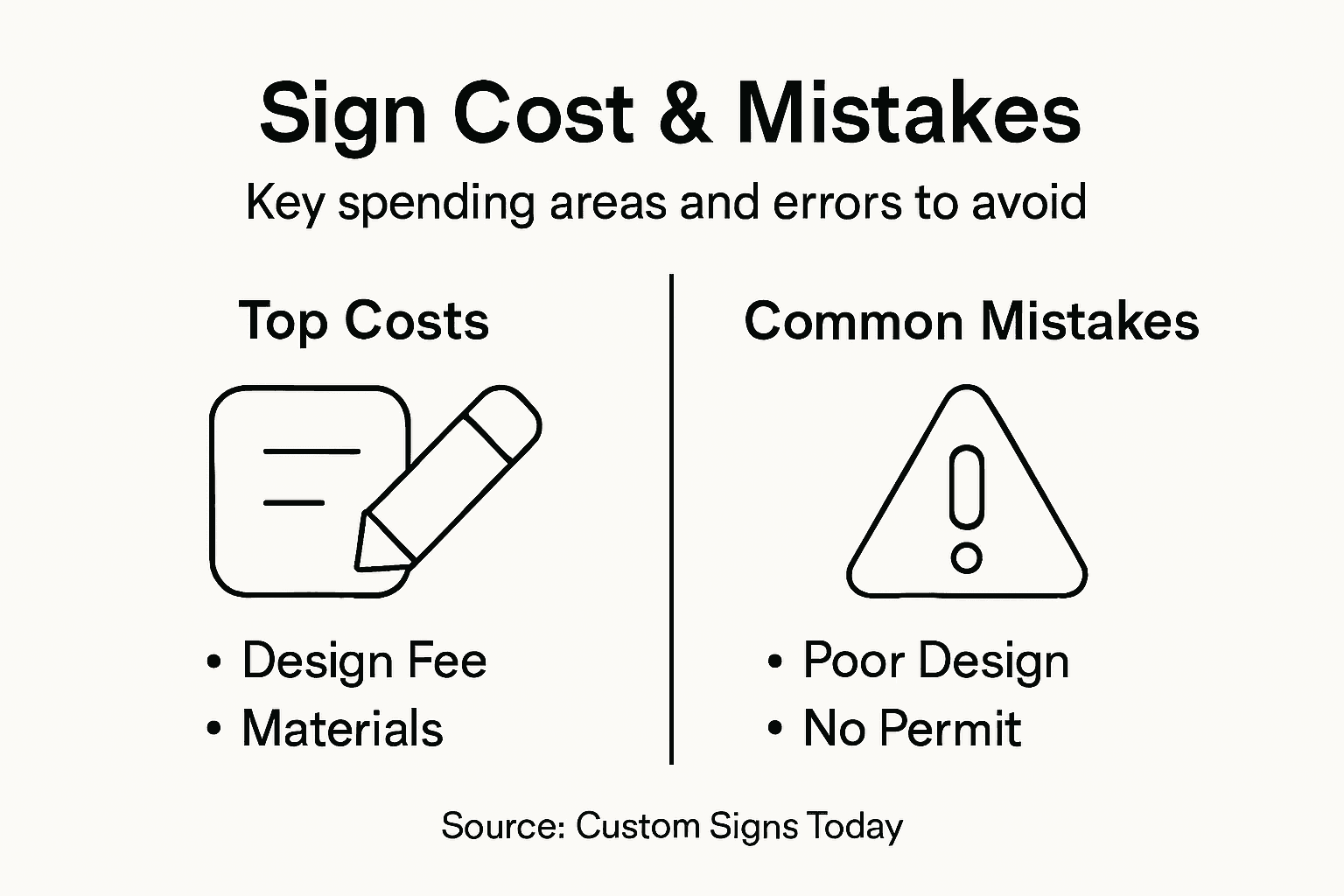
This table summarizes common signage mistakes and their budget consequences:
| Mistake | Negative Outcome | Budget Impact |
|---|---|---|
| Poor material selection | Signs degrade quickly | Higher replacement costs |
| Ignoring regulations | Risk of fines or removal | Unexpected legal expenses |
| Lack of professional design | Brand appears inconsistent | Lost market opportunity |
| Inadequate sizing | Low visibility | Missed customer attention |
Pro tip: Allocate approximately 10-15% of your total sign budget for professional design and ongoing maintenance to ensure long-term effectiveness and value.
Elevate Your Brand Visibility With Custom Branding Signs
Building memorable connections and standing out in crowded markets is no easy task. This article highlights how strategic branding signs create emotional ties with customers and boost business visibility. If you struggle with selecting the right signage that clearly communicates your company personality while complying with legal requirements, you are not alone. Many businesses face challenges in choosing the perfect sign type, design, and placement to maximize impact.
Our Uncategorized category features versatile signage options tailored to your unique branding goals. Whether you need building-mounted signs, vehicle wraps, or digital displays, we provide expert craftsmanship using high-quality materials designed for long-lasting visibility and professional appeal.

Discover how our custom signage solutions at Custom Signs Today can transform your brand presence and drive customer engagement right now. Act today to request a free quote and ensure your signs meet all permit regulations while delivering exceptional impact. Visit our site and take the first step toward making your business unforgettable.
Frequently Asked Questions
What are branding signs?
Branding signs are visual communication tools used by businesses to establish identity, create emotional connections with customers, and convey core values through various graphic displays such as building-mounted signs, window graphics, and digital displays.
Why are branding signs important for a business?
Branding signs are crucial as they enhance visibility, build brand recognition, differentiate from competitors, and provide consistent messaging that represents the company’s professional image, ultimately attracting potential customers.
What design principles should I consider for effective signage?
Key design principles for effective signage include selecting readable typography, creating a visual hierarchy to prioritize information, using brand-aligned colors, and ensuring proper sizing for maximum visibility from various distances.
What are the common mistakes to avoid when designing signage?
Common mistakes include poor material selection that leads to quick degradation, ignoring local regulations which can result in fines, lacking professional design that harms brand consistency, and incorrect sizing that diminishes visibility and customer attention.