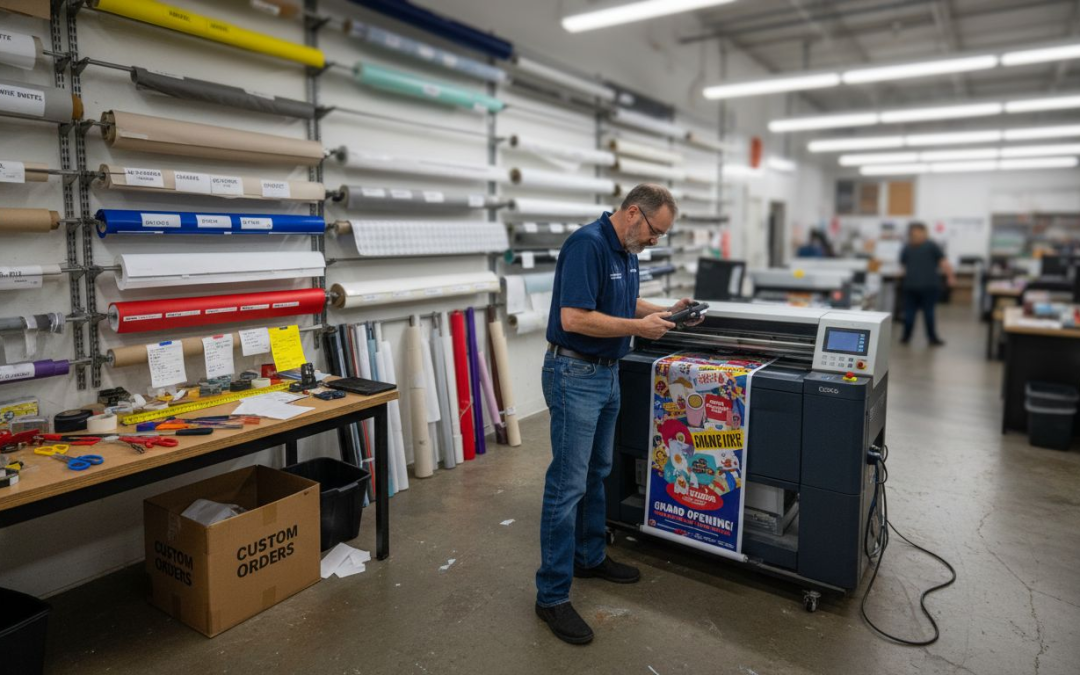
Think digital printing can’t match traditional methods? Modern digital printing now delivers 95-98% of traditional offset quality for short and medium runs while slashing costs and turnaround times. Digital technology eliminates expensive plate preparation, enables rapid production, and supports unlimited customization, making it ideal for businesses seeking fast, flexible custom signage. This guide reveals how digital printing works, its durability for commercial use, cost structures, and why outdated myths no longer hold true in 2026.
Table of Contents
- Understanding Digital Printing: Definition And Basics
- Comparison Of Digital Printing With Traditional Methods
- Durability And Lifespan Of Digital Prints For Signage
- Cost And Economic Factors Of Digital Printing
- Customization And Variable Data Printing
- Common Misconceptions About Digital Printing
- Market Trends And Industry Growth
- Marketing Impact Of Digital Printing In Signage
- Explore Custom Digital Printing Solutions At Custom Signs Today
- Frequently Asked Questions About Digital Printing For Signage
Key Takeaways
| Point | Details |
|---|---|
| Digital printing technology | Prints directly from digital files without plates, enabling faster setup and flexible short runs ideal for custom signage. |
| Cost and speed advantages | Setup costs drop up to 90% on short runs with turnaround times reduced from days to hours compared to traditional methods. |
| Durability for signage | Modern digital prints achieve durability within 10-15% of traditional offset in lightfastness, water, and abrasion resistance tests. |
| Customization capability | Variable data printing allows unique text or images on each piece without additional setup time or cost increases. |
| Marketing impact | Digital signage boosts brand recall by 86% and influences 70% of consumer purchase decisions according to recent studies. |
Understanding Digital Printing: Definition and Basics
Digital printing transforms digital files directly into physical prints without the metal plates required by traditional methods. This plate-free process dramatically reduces setup time and enables businesses to order smaller quantities economically.
Two primary technologies power digital printing. Inkjet systems spray tiny ink droplets onto substrates with precision, while electrophotographic methods use toner and heat similar to office laser printers but scaled for commercial production. Both deliver sharp images and vibrant colors suitable for professional signage.
The flexibility proves invaluable for businesses. You can print 10 banners today and 50 more next month without paying setup fees twice. This adaptability makes digital printing perfect for testing marketing messages, seasonal promotions, or location-specific campaigns where custom sign printing basics matter most.
Key terminology helps clarify the process. Substrates refer to materials receiving the print, from vinyl and paper to polyester and fabric. Print runs indicate the number of copies produced in one order. Variable data describes the ability to change content between individual prints within the same run, a game-changer for personalized marketing.
Pro Tip: Start with a small digital print run to test signage effectiveness before committing to larger quantities, saving money while optimizing your messaging.
Comparison of Digital Printing with Traditional Methods
Traditional offset printing requires creating metal plates for each color, driving up initial costs and extending production timelines. The plate requirement and longer setup make traditional methods optimal only when printing thousands of identical copies. Below 500 units, setup expenses often exceed the per-unit savings.
Digital printing flips this equation. Without plates to create, production starts immediately after file approval. Variable data capability with no additional setup means you can personalize each sign with different names, locations, or promotional codes at the same cost per unit. Traditional methods would require new plates for each variation, making customization prohibitively expensive.
Quality differences have narrowed significantly. Modern digital printing matches traditional offset for most business applications, particularly on runs under 1,000 units. Color accuracy, image sharpness, and finish options now rival traditional methods for commercial signage needs.
| Method | Best For | Typical Turnaround | Customization |
|---|---|---|---|
| Digital | Under 500 units | 1-3 days | Unlimited per piece |
| Traditional Offset | Over 1,000 units | 5-10 days | Expensive per variation |
| Screen Printing | Specialty substrates | 3-7 days | Limited by screens |
Cost-effectiveness depends entirely on volume. Digital printing excels for orders under 500 units where setup savings outweigh slightly higher per-unit ink costs. Traditional offset becomes economical beyond 1,000 units as plate costs spread across more copies. Screen printing serves niche applications requiring specialty inks or unusual substrates.
Key advantages of digital printing include:
- Immediate production start without plate creation delays
- Economic viability for orders as small as one unit
- Perfect color consistency across reprints months apart
- Ability to update content between production runs at no penalty
- Reduced waste from setup testing and plate adjustments
Pro Tip: Calculate your typical order volumes and customization frequency. If you regularly need fewer than 500 signs or require frequent content updates, digital printing will save substantial money and time compared to traditional methods.
Understanding these distinctions helps you select the right custom sign printing comparison approach for your business scale and agility needs.
Durability and Lifespan of Digital Prints for Signage
Modern digital prints deliver durability within 10-15% of traditional offset in rigorous testing of lightfastness, smudge resistance, water resistance, and abrasion tolerance. This performance makes digital printing suitable for most commercial signage applications, both indoor and outdoor.
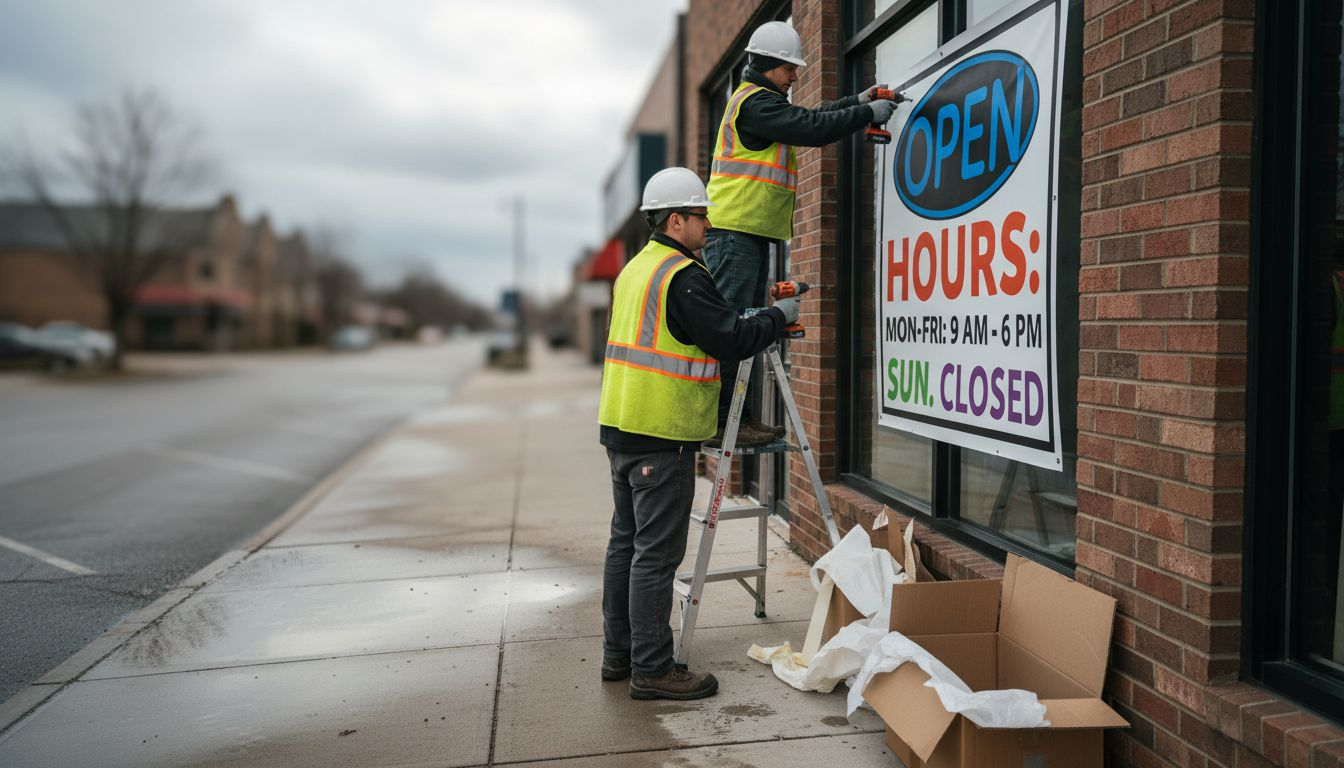
Environmental factors determine how long your signs maintain their appearance. UV exposure from sunlight gradually fades colors, though UV-resistant inks and laminates extend outdoor lifespans to three to five years. Water resistance protects against rain and cleaning. Abrasion resistance matters for high-touch areas like retail displays or directional signs.
Substrate selection dramatically impacts durability. Vinyl withstands outdoor conditions better than paper, while polyester offers superior tear resistance for temporary event signage. Metal and rigid plastic substrates provide the longest lifespans for permanent installations. Matching substrate properties to your environment ensures optimal performance.
Critical durability factors include:
- Lightfastness ratings indicating years of UV exposure tolerance
- Laminate or coating protection against scratches and moisture
- Substrate thickness and material composition for structural integrity
- Ink type selection, with UV-cured and latex inks offering superior outdoor performance
- Installation location, whether sheltered, direct sun, or high-traffic areas
Good practice involves discussing expected signage lifespan with your printer before ordering. Specify whether signs will be indoor or outdoor, the climate conditions they’ll face, and how long you need them to last. This information guides substrate and finishing choices that maximize durability within your budget.
Pro Tip: Request samples of proposed substrate and finish combinations exposed to conditions similar to your installation site. This testing reveals real-world performance before committing to full production.
Understanding signage materials durability helps you specify the right combination of substrate, ink, and protective finishing for your application.
Cost and Economic Factors of Digital Printing
Digital printing eliminates the plate preparation expense that dominates traditional printing costs on short runs. Setup costs drop up to 90% on short runs because production starts directly from digital files without the tooling, chemistry, and skilled labor traditional methods require. A 100-unit digital banner run might cost $3 per unit where traditional offset would demand $1,500 in setup alone.
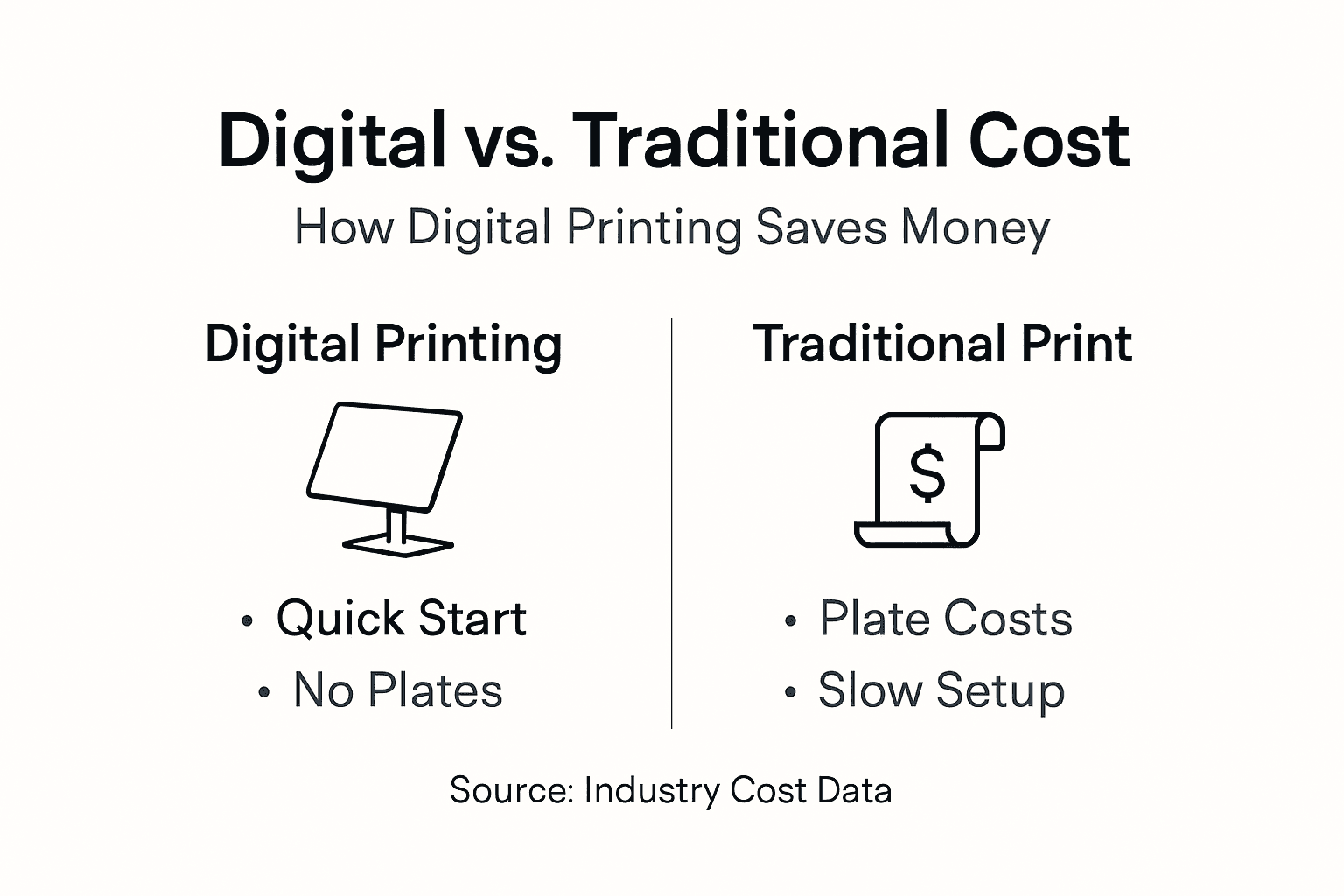
Turnaround speed translates to business agility. Digital printing reduces production from days to hours, enabling rapid response to market opportunities or event deadlines. You can launch a promotion Monday and have signage installed Wednesday, impossible with traditional printing timelines.
Volume determines the crossover point. Digital printing costs remain relatively flat per unit regardless of quantity. Traditional printing spreads fixed setup costs across more units, reducing per-unit prices as volume grows. The break-even typically occurs between 500 and 1,000 units depending on complexity and substrate.
Evaluate your printing costs systematically:
- Calculate your average order size and frequency over the past year
- Identify how often you need content changes or customization between orders
- Estimate the value of faster turnaround for your marketing campaigns
- Compare total annual costs including setup, per-unit prices, and storage for larger traditional runs
- Factor in waste reduction from printing only quantities you need immediately
Hidden savings often exceed obvious per-unit price differences. Digital printing eliminates inventory storage costs because you print on demand. You avoid obsolete signage when promotions end or information changes. Smaller minimums let you test multiple designs rather than betting everything on one approach.
Understanding your specific custom sign workflow volume patterns and agility needs reveals whether digital or traditional printing delivers better total cost of ownership.
Customization and Variable Data Printing
Variable data printing represents digital printing’s most powerful marketing capability. Unique texts or images on each print without slowing production means you can personalize every sign with recipient names, location-specific offers, or sequential numbering at identical per-unit costs. Traditional methods would require separate plate setups for each variation, making personalization economically impossible.
The marketing applications prove transformative. Real estate agents print yard signs with individual agent names and contact details from a single file. Retailers create location-specific promotional banners referencing nearby landmarks. Event organizers number each directional sign sequentially for easy tracking and installation.
Personalization drives measurable engagement increases. Consumers respond more strongly to messages addressing their specific context than generic broadcasts. A sign mentioning your neighborhood by name captures attention better than citywide generic messaging.
Key customization benefits include:
- Enhanced brand relevance through location or audience-specific messaging
- Stronger customer connection via personalized names or references
- Campaign agility allowing rapid testing of multiple message variants
- Efficient production of numbered series for wayfinding or event management
- Reduced inventory complexity by printing custom versions on demand
No time delays or cost penalties occur when switching content between prints. The digital file controls what prints, and modifying that file takes seconds. This capability supports dynamic marketing strategies impossible with traditional printing economics.
Businesses with multiple locations benefit enormously. Print signage for all locations in one run, each customized with the specific address, manager name, and local promotions. The efficiency and consistency would require weeks and substantial expense using traditional methods.
Explore custom signage ideas that leverage variable data capabilities to create more engaging customer experiences.
Common Misconceptions About Digital Printing
Myth one claims digital printing always delivers inferior quality compared to traditional methods. Modern digital printing matches 95-98% of traditional printing quality for most business applications. Color accuracy, resolution, and finish options now rival offset printing for commercial signage. The quality gap has closed dramatically as technology advanced through 2020s.
Myth two assumes digital printing costs more across all scenarios. Reality shows digital printing saves substantially on short runs by eliminating expensive plate setup. The cost advantage reverses only on very large volumes where traditional printing spreads fixed costs across thousands of units. For typical business signage orders under 500 units, digital printing consistently costs less.
Myth three insists traditional printing always provides superior durability. Recent testing reveals digital prints achieve comparable environmental resistance for commercial signage lifespan requirements. Proper substrate and ink selection delivers outdoor durability matching traditional methods in real-world conditions.
Common misconceptions corrected:
- Digital quality is insufficient: Modern digital matches traditional for short and medium runs with identical visual impact
- Digital always costs more: Setup savings make digital economical under 500 units despite slightly higher per-unit ink costs
- Digital prints fade quickly: UV-resistant inks and laminates provide three to five year outdoor lifespans comparable to traditional methods
- Customization adds cost: Variable data printing costs the same per unit whether content is identical or unique on each piece
- Traditional printing is faster: Digital eliminates plate creation, often delivering finished signs days before traditional methods complete setup
These outdated assumptions stem from digital printing’s early limitations in the 1990s and early 2000s. Technology improvements over the past decade transformed digital printing into a viable alternative for professional commercial signage. Evaluate your needs based on current capabilities rather than historical limitations.
Reassess digital printing myths using recent data and testing rather than assumptions formed years ago.
Market Trends and Industry Growth
The signage printing market reached $126.8 billion in 2022 with 6.2% annual growth driven largely by digital printing adoption. Businesses increasingly prioritize speed, customization, and sustainability, advantages where digital methods excel over traditional printing.
Digital printing enables faster, more sustainable practices preferred in modern business operations. Eliminating plates reduces chemical waste and energy consumption. Print-on-demand minimizes inventory waste from obsolete or excess signage. These environmental benefits align with corporate sustainability goals gaining prominence across industries.
The shift from traditional to digital accelerates as businesses recognize agility advantages. Marketing campaigns change faster than ever, requiring signage that adapts quickly. Digital printing supports this pace while traditional methods lock you into longer production cycles and larger minimum orders.
Innovation continues in substrates, inks, and integration with digital marketing strategies. New eco-friendly inks deliver performance matching petroleum-based formulations. Substrate manufacturers develop materials optimized specifically for digital printing processes. Integration with online ordering and design tools streamlines the entire workflow.
Businesses adopting digital signage printing gain competitive advantages in brand visibility and cost management. Faster campaign launches capture market opportunities competitors miss. Lower minimums enable testing multiple approaches rather than committing fully to one strategy. Customization creates more relevant customer experiences that drive engagement.
Staying current with signage sustainability trends positions your business to meet both environmental goals and operational efficiency targets.
Marketing Impact of Digital Printing in Signage
Digital signage delivers measurable marketing performance superior to traditional static signs. Brand recall increases 86% with digital signage compared to static alternatives, and 70% of consumers report digital signage influences their purchasing decisions. These numbers translate directly to sales impact and return on investment.
Customer dwell time increases in environments using dynamic digital signage. Shoppers spend more time engaging with visually interesting displays, creating more opportunities for product discovery and impulse purchases. The movement and color vibrancy possible with digital printing captures attention more effectively than static alternatives.
Retail environments particularly benefit from digital printing’s marketing advantages. Updated promotional signage matches current inventory and pricing without waiting weeks for traditional printing. Seasonal campaigns launch immediately as opportunities arise. Location-specific messaging addresses local customer preferences and competitive dynamics.
Marketing benefits of digital printing signage:
- Enhanced engagement through visually dynamic and frequently updated content
- Stronger brand presence via consistent high-quality imagery across all locations
- Measurable ROI through tracking customer response to specific signage campaigns
- Flexibility to test multiple messages and optimize based on performance data
- Cost-effective personalization creating relevant customer experiences
Integrating digital printing into broader marketing strategies maximizes impact. Coordinate signage with social media campaigns, email marketing, and promotional timing for consistent messaging across channels. Update signage as campaigns evolve rather than waiting for traditional printing cycles.
The data demonstrates digital signage’s effectiveness, but success requires strategic implementation. Consider customer flow patterns, viewing distances, and message clarity when designing signage. Leverage custom signage marketing examples and signage design tips to maximize your investment impact.
Explore Custom Digital Printing Solutions at Custom Signs Today
Now that you understand digital printing’s advantages, Custom Signs Today offers the expertise to transform this knowledge into effective business signage. Their custom digital signs services deliver fast turnaround, durable materials, and precise color matching that maximizes your brand visibility.
Whether you need site signs for construction projects or face change signs for retail promotions, their team ensures your signage meets professional standards while staying within budget. Request a quote today to discover how digital printing technology can elevate your business signage and drive customer engagement.
Frequently Asked Questions about Digital Printing for Signage
Is digital printing suitable for outdoor signage?
Yes, high-quality digital prints on durable substrates with UV and weather-resistant inks can last three to five years outdoors. Proper substrate selection and protective laminates are vital for longevity in outdoor conditions. Discuss your specific climate and exposure conditions with your printer to optimize material choices.
How does the cost of digital printing compare to traditional printing?
Digital printing generally lowers setup costs and proves cheaper for short runs under 500 units by eliminating plate expenses. Traditional printing becomes more cost-effective for very large volumes above 1,000 units due to economies of scale. Calculate your typical order sizes to determine which method optimizes your specific budget.
Can I customize each sign with different text or images using digital printing?
Absolutely, digital printing supports variable data allowing unique text or images on each print without extra cost or time delays. This enables personalized marketing and targeted customer engagement efficiently. You can print 100 completely different signs in one run at the same per-unit price.
What file formats work best for digital printing?
PDF files with embedded fonts and high-resolution images typically work best for digital printing. Vector formats like AI or EPS ensure sharp text and graphics at any size. Consult your printer’s specifications for color profiles and resolution requirements to ensure optimal output quality.
Recommended
- What Is Custom Sign Printing? Complete Guide –
- Custom Signs Today | West Palm Beach Sign Services
- Custom Signs Today | West Palm Beach Custom Printing | Florida
- Custom Signs Today | West Palm Beach Sign Services
- How to Design Custom Slogan Shirts for Unique Expression – ChillStitchApparel
- Fixing Inefficient Procurement: Costs & Digital Solutions – StorsenDigital GBS