
Finding retail signage that stands out and survives daily wear can feel like a balancing act for Marketing Directors seeking both durability and innovation. New research from the Materials Genome Initiative shows that advanced materials are transforming signage, offering enhanced strength and sustainability for demanding environments. This article sheds light on how cutting-edge signage materials can help your brand attract attention while lasting longer, making every dollar invested work harder for your business.
Table of Contents
- Defining Innovations In Signage Materials
- Modern Material Types And Their Advantages
- How Advanced Materials Improve Durability
- Sustainability Trends In Signage Solutions
- Cost, ROI, And Maintenance Implications
Key Takeaways
| Point | Details |
|---|---|
| Prioritize Material Performance | Focus on durability, sustainability, and functional adaptability when selecting signage materials. These factors greatly influence long-term effectiveness and cost-efficiency. |
| Understand Total Cost of Ownership | Evaluate not just initial costs but also maintenance and replacement expenses to determine the true economic impact of signage investments. |
| Leverage Advanced Material Technologies | Explore innovations like smart polymers and composites that offer enhanced durability and interactive features to stand out in competitive retail environments. |
| Commit to Sustainability | Select signage solutions made from eco-friendly materials to align with growing consumer expectations for environmental responsibility. |
Defining Innovations in Signage Materials
The landscape of signage materials is rapidly evolving, driven by technological advancements and emerging market demands. Materials Genome Initiative research demonstrates how modern innovations are transforming traditional signage approaches, introducing materials with unprecedented performance characteristics.
Innovative signage materials now prioritize three critical attributes: durability, sustainability, and functional adaptability. Emerging polymer technologies enable the development of multilayer films that resist environmental degradation, maintain visual clarity, and reduce ecological impact. Researchers at the University of Southern Mississippi are pioneering sustainable multilayer film developments that could revolutionize how businesses approach signage design.
Key innovations in signage materials include advanced composites that offer enhanced resilience, smart polymers capable of color shifting or environmental responsiveness, and lightweight substrates with superior strength-to-weight ratios. These materials are not merely aesthetic improvements but strategic investments that provide retail businesses with competitive communication tools.
Pro Tip: When evaluating new signage materials, prioritize testing durability under your specific environmental conditions to ensure long-term performance and cost-effectiveness.
Modern Material Types and Their Advantages
Retail signage materials have undergone significant transformation, with modern design standards now emphasizing performance, aesthetics, and functionality. Contemporary signage solutions span a diverse range of materials engineered to meet specific business communication needs, each offering unique advantages for different retail environments.
The primary material categories in modern signage include metals, advanced composites, smart polymers, and specialized vinyl substrates. Technical signage guides highlight the critical properties of these materials: lightweight construction, superior durability, ease of fabrication, and enhanced visual impact. Metals like aluminum and stainless steel provide robust outdoor signage solutions, while composite materials offer unprecedented flexibility in design and performance.
Each material type presents distinctive benefits for retail applications. Aluminum signs resist corrosion and maintain visual clarity, acrylic substrates enable complex dimensional designs, and smart polymers can incorporate interactive or color-changing properties. Vinyl materials remain popular for their cost-effectiveness and versatility, allowing businesses to create high-resolution graphics with excellent weather resistance.
Pro Tip: When selecting signage materials, consider not just initial cost but long-term performance, maintenance requirements, and alignment with your specific environmental conditions and brand aesthetic.
Here’s a side-by-side overview of the main signage material types and their key advantages:
| Material Type | Durability Level | Design Flexibility | Ideal Environment |
|---|---|---|---|
| Aluminum | Excellent | Moderate | Outdoor retail spaces |
| Acrylic | Good | High | Indoor displays |
| Smart Polymers | Very high | Interactive features | Modern retail zones |
| Vinyl Substrates | Moderate | Very high | Changing environments |
How Advanced Materials Improve Durability
Durability has become a critical performance metric for retail signage, with advanced materials research revealing innovative approaches to extending material lifespan and performance. Modern signage materials are engineered to withstand extreme environmental conditions, reducing maintenance costs and preserving visual quality over extended periods.

The key strategies for improving signage durability involve multiple technological interventions. Composite materials now integrate protective molecular structures that resist UV degradation, temperature fluctuations, and mechanical stress. Specialized coatings and embedded nanomaterials create barriers against moisture, oxidation, and environmental pollutants, dramatically extending the functional life of retail signage.
Design methodologies are equally crucial in enhancing material durability. Academic research on product design emphasizes strategic material selection and protective finishes that minimize wear and tear. Retailers can now select signage materials with engineered resilience, incorporating advanced alloys, treated polymers, and hybrid composites that maintain structural integrity and visual appeal under challenging conditions.
Pro Tip: Invest in professional material testing and request detailed durability certifications before final signage selection to ensure optimal long-term performance and cost-effectiveness.
This table summarizes advanced strategies that extend signage life and reduce maintenance costs:
| Strategy | Main Benefit | Example Technology | Business Impact |
|---|---|---|---|
| Protective coatings | UV and water resistance | Nanomaterial treatments | Lower repair frequency |
| Composite integration | Enhanced lifespan | Hybrid polymer layers | Reduces total cost of ownership |
| Strategic design choices | Minimized wear | Advanced finishes | Preserves brand image |
Sustainability Trends in Signage Solutions
Retail businesses are increasingly prioritizing sustainable signage solutions, driven by growing environmental consciousness and best practices in material management. The shift towards eco-friendly signage materials represents a strategic approach that balances marketing effectiveness with environmental responsibility, transforming how businesses communicate their brand values.
Emergent sustainability trends are revolutionizing signage design through innovative material technologies. Circular economy principles are driving the development of signage materials that prioritize recyclability, renewable resources, and reduced carbon footprint. Bioplastics, recycled composites, and advanced polymers now offer retailers alternatives that maintain high visual quality while significantly minimizing environmental impact.
The most promising sustainability strategies in signage solutions include using materials with high recycled content, developing modular designs that extend product lifecycle, and selecting manufacturing processes that minimize waste and energy consumption. Retailers can now choose signage solutions that not only communicate their brand message effectively but also demonstrate a genuine commitment to environmental stewardship, creating a powerful narrative of corporate responsibility.
Pro Tip: Request detailed environmental certifications and lifecycle assessments from signage providers to validate the true sustainability credentials of your chosen materials.
Cost, ROI, and Maintenance Implications
Retail businesses must strategically approach signage investments by understanding the comprehensive financial implications beyond initial purchase costs. Signage lifecycle management guidelines emphasize the critical importance of evaluating total cost of ownership, which encompasses material durability, maintenance expenses, and long-term performance potential.
The economic calculus of modern signage solutions involves sophisticated considerations beyond simple price comparisons. Advanced materials that initially appear more expensive often deliver superior return on investment through reduced maintenance requirements, extended lifespan, and enhanced visual performance. Institutional signage standards recommend comprehensive cost analysis that factors in replacement frequencies, repair costs, and potential brand image implications of signage quality.
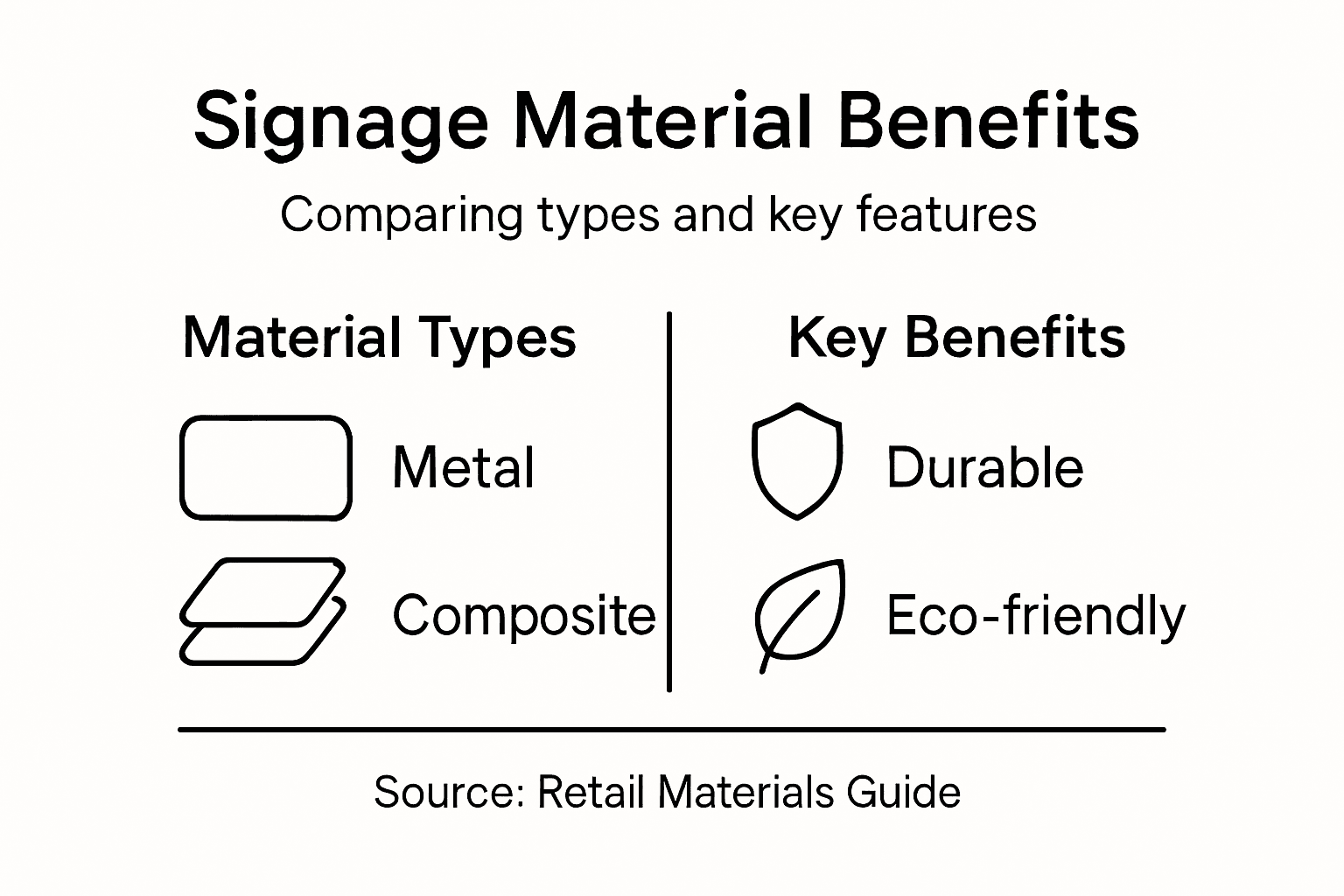
Key financial considerations for retail signage investments include material durability, environmental resistance, color retention, and ease of maintenance. Businesses can optimize their signage ROI by selecting materials that balance upfront costs with long-term performance, considering factors such as UV resistance, structural integrity, and minimal maintenance requirements. Strategic material selection can result in significant cost savings over the signage lifecycle, potentially reducing replacement and repair expenses by up to 40% compared to traditional signage solutions.
Pro Tip: Calculate your total signage lifecycle cost by combining initial material expenses, estimated maintenance costs, expected replacement frequency, and potential brand value impact.
Discover Custom Signage Solutions That Match Innovation and Durability
The growing demand for innovative, durable, and sustainable signage materials presents a real challenge for retail businesses wanting to stand out while minimizing maintenance and environmental impact. If you are looking for signage that leverages advanced materials like smart polymers or premium composites and promises long-lasting performance, we understand your goals. The need for signs that not only look great but also resist weathering and fading is critical to protect your brand image and maximize your investment.
Explore our wide range of custom signs designed with modern materials engineered for durability and visual impact. Visit Uncategorized to see solutions that can be tailored precisely to your retail environment whether indoor or outdoor. Don’t wait to upgrade your visual communication with signage built to last. Request a free quote now at Custom Signs Today and take the first step toward signage that combines innovation, sustainability, and cost-effectiveness for your business.
Frequently Asked Questions
What are the key innovations in signage materials?
Innovations in signage materials include advanced composites with enhanced resilience, smart polymers that can change color or react to environmental conditions, and lightweight substrates that offer superior strength-to-weight ratios, all aiming to improve durability, sustainability, and functional adaptability.
How do modern signage materials improve durability?
Modern signage materials are engineered to withstand extreme environmental conditions through protective molecular structures, specialized coatings, and embedded nanomaterials that resist UV degradation, temperature fluctuations, and mechanical stress, ultimately extending the lifespan of retail signage.
What sustainability trends are influencing signage solutions?
Sustainability trends in signage solutions include the use of materials with high recycled content, bioplastics, and the adoption of circular economy principles. These innovations allow retailers to minimize their environmental impact while maintaining high visual quality in their displays.
How can businesses calculate the total cost of ownership for signage?
Businesses should calculate the total cost of ownership by considering material durability, maintenance expenses, expected replacement frequency, and potential impacts on brand image. This comprehensive approach ensures that initial costs are balanced with long-term performance and maintenance savings.