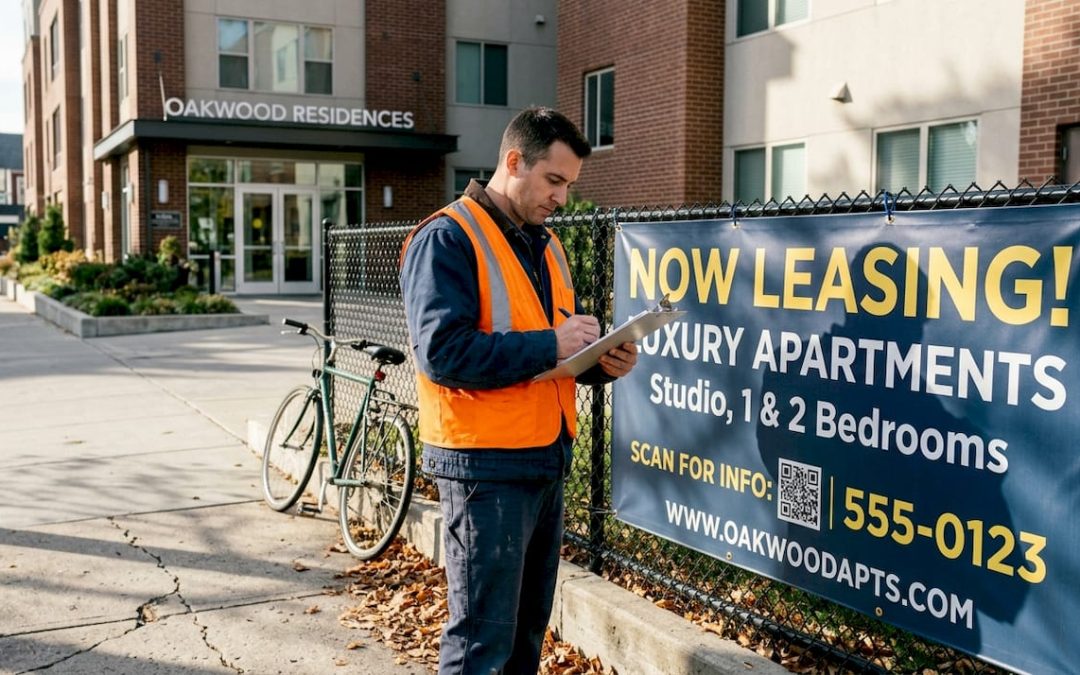
Selecting the right property banner can transform your marketing efforts from invisible to impactful. With dozens of banner types available, each offering distinct advantages for promotional campaigns, branding initiatives, and directional signage, the choice becomes critical for business success. Legal compliance affects banner placement and design decisions, while material durability determines longevity in outdoor conditions. This article reviews top banner types with business use cases, expert insights on messaging optimization, and practical criteria to help you make informed decisions that maximize visibility and return on investment.
Table of Contents
- Key takeaways
- How to evaluate property banners: key criteria for success
- Examples of popular property banner types and their features
- Comparison of property banners: strengths, weaknesses, and ideal uses
- Choosing the right property banner for your business needs
- Discover custom banner solutions for your property marketing needs
- Frequently asked questions about property banners
Key Takeaways
| Point | Details |
|---|---|
| Banner functions | Banners serve promotional, branding, and directional roles, and a variety of banner types supports versatile branding. |
| Legal and property rules | Legal compliance and private property rights govern where and how banners may be installed. |
| Messaging testing | Testing messaging with data driven iterations improves banner effectiveness and should prioritize readability from the target viewing distance. |
| Durability matters | Material durability affects total cost and performance for the chosen installation environment. |
How to evaluate property banners: key criteria for success
Before selecting any banner, establish clear evaluation criteria that align with your marketing goals and operational constraints. Check local ordinances to avoid fines, as regulations vary significantly by municipality and can restrict size, placement, and duration. Private property rights generally protect displays like “For Sale” signs, but public right-of-way installations often require permits. Understanding these legal boundaries prevents costly violations and ensures your marketing investment delivers results.
Banner durability directly affects total cost of ownership. Outdoor exposure demands weather-resistant materials that withstand rain, wind, and UV radiation without fading or tearing. Vinyl and mesh materials excel in harsh conditions, while fabric banners suit sheltered locations. Consider your timeline: temporary promotions lasting weeks need different materials than permanent branding installations expected to perform for years. Material thickness, reinforced edges, and grommets contribute to longevity.
Message clarity determines whether viewers take action. Font size must be readable from your target viewing distance, typically requiring letters at least 10 inches tall for roadside visibility at 100 feet. Calls to action should be specific and urgent, using phrases like “Call Today” or “Limited Time Offer” rather than generic “Learn More.” How to design property signage involves balancing visual elements with readability, ensuring your core message communicates instantly.
Brand consistency strengthens recognition across all marketing touchpoints. Use your established color palette, logo placement, and typography to create cohesive visual identity. Inconsistent branding confuses potential customers and dilutes marketing impact. Every banner should reinforce your brand positioning, whether you emphasize luxury, affordability, or innovation.
Test different messaging and track results using unique phone numbers or promo codes for each banner variation. A/B testing headlines and calls to action reveals which messages resonate with your target audience. Track response rates systematically to identify winning combinations, then scale successful approaches across additional locations. This data-driven iteration transforms guesswork into strategic optimization.
Pro Tip: Photograph your banner from the typical viewer distance before finalizing the design. If you cannot read the message clearly in the photo, neither can your audience.
Essential evaluation criteria:
- Legal compliance with local sign ordinances and zoning regulations
- Material durability appropriate for installation environment and timeline
- Message readability from target viewing distance with clear calls to action
- Brand consistency in colors, fonts, and logo placement
- Testing framework with unique tracking codes for performance measurement
For comprehensive guidance on creating effective real estate displays, explore our real estate banner guide covering industry-specific best practices.
Examples of popular property banner types and their features
Vinyl banners represent the most versatile option for outdoor property marketing. These durable, weather-resistant banners withstand rain, wind, and sun exposure for months or years depending on material weight. Available in weights from 13 oz to 18 oz per square yard, heavier vinyl provides superior longevity for permanent installations. Vinyl accepts vibrant full-color printing with excellent image resolution, making complex graphics and photographs feasible. Reinforced edges and rust-resistant grommets every 24 inches enable secure mounting on fences, building facades, or frame systems. Vinyl banners suit long-term outdoor promotions including property sales, leasing campaigns, and business announcements.
Mesh banners solve a critical challenge in windy locations. The perforated material allows wind to pass through rather than creating sail-like resistance that tears solid banners or damages mounting structures. This wind permeability reduces wear and extends banner life in exposed locations like highway corridors or coastal properties. The tradeoff involves slightly lower image resolution due to the mesh structure, but modern printing technology minimizes this limitation. Mesh banners work exceptionally well for large-format installations where wind load becomes a structural concern.
Fabric banners deliver a premium appearance for indoor or sheltered event use. The textile surface creates an upscale look that elevates brand perception at trade shows, grand openings, and corporate events. Fabric drapes elegantly without the industrial appearance of vinyl, complementing sophisticated brand positioning. However, fabric offers minimal weather resistance and requires protection from moisture. Custom banners in fabric materials suit temporary indoor installations where visual impact outweighs durability concerns.
Retractable banner stands prioritize portability and convenience. These self-contained units feature a spring-loaded mechanism that retracts the banner into a protective base, enabling rapid setup and breakdown for events, presentations, and temporary directional signage. Standard sizes range from 33 to 48 inches wide, providing substantial visibility in compact footprints. The portability makes retractable stands ideal for businesses attending multiple events or rotating displays between property locations. Banner stands offer professional presentation with minimal setup effort.

Coroplast signs use rigid corrugated plastic sheeting similar to cardboard but waterproof and more durable. These lightweight signs suit temporary directional or informational applications like open house announcements, parking directions, or event wayfinding. Coroplast costs less than other options, making it economical for short-term needs. The material accepts direct printing or vinyl graphics application. While not suitable for long-term outdoor exposure due to brittleness in extreme temperatures, coroplast excels for campaigns lasting days or weeks.
Each banner type aligns with specific marketing goals and environmental conditions. Legal compliance protects your displays regardless of material choice, so verify local regulations before installation.
Comparison of property banners: strengths, weaknesses, and ideal uses
Understanding the tradeoffs between banner types enables strategic selection based on your specific requirements. Vinyl banners offer high durability with moderate cost, making them the default choice for long-term outdoor use where weather resistance matters. The material handles temperature extremes, moisture, and UV exposure without significant degradation for one to three years. However, solid vinyl creates wind resistance that requires secure mounting and may not suit extremely windy locations.
Mesh banners reduce wind damage through perforated construction but sacrifice some image resolution. The holes that provide wind relief also interrupt printed graphics, creating a slightly grainy appearance compared to solid vinyl. This tradeoff becomes acceptable for large-format installations where viewing distance minimizes the resolution difference. Mesh banners cost slightly more than comparable vinyl but save money by reducing replacement frequency in windy environments.
Fabric banners provide premium indoor aesthetics but minimal weather resistance. The textile surface communicates quality and sophistication, enhancing brand perception at high-end events or showroom displays. Fabric costs more than vinyl per square foot and requires careful handling to prevent wrinkles or stains. Outdoor use degrades fabric rapidly, limiting applications to sheltered or temporary installations.
Retractable stands prioritize portability and event branding over permanent installation. The self-contained design enables one-person setup in minutes, perfect for businesses attending trade shows or rotating displays between properties. However, retractable stands limit size options and suit only indoor or sheltered outdoor use. The convenience premium increases cost compared to simple banner printing.
Coroplast signs deliver cost-effective temporary solutions but prove fragile in harsh outdoor conditions. The rigid plastic withstands light rain and sun for weeks but becomes brittle in freezing temperatures or intense heat. Coroplast works well for directional signage during events or short-term promotional campaigns where longevity is not required.
| Banner Type | Durability | Cost | Best Use | Weather Resistance | Portability |
|---|---|---|---|---|---|
| Vinyl | High | Moderate | Long-term outdoor | Excellent | Low |
| Mesh | High | Moderate-High | Windy locations | Excellent | Low |
| Fabric | Low | High | Indoor events | Poor | Moderate |
| Retractable | Moderate | High | Portable displays | Fair | Excellent |
| Coroplast | Low | Low | Temporary directional | Fair | High |
A/B testing banner messages and calls to action enhances results across all banner types. Create two versions with different headlines, test them in comparable locations, and track response using unique phone numbers or promo codes. This data-driven approach reveals which messaging resonates with your audience, enabling continuous improvement.
Tracking codes are essential for measuring banner effectiveness. Assign unique identifiers to each banner location or message variation, then monitor response rates systematically. This performance data justifies marketing spend and guides future banner investments toward proven approaches.
Pro Tip: Calculate cost per impression by dividing total banner cost by estimated views over its lifespan. A durable vinyl banner generating 50,000 views over two years often delivers better value than cheaper options requiring frequent replacement.
Selection factors by priority:
- Installation duration determines material durability requirements
- Environmental conditions dictate weather resistance needs
- Budget constraints balance initial cost against replacement frequency
- Brand positioning influences material quality and finish
- Portability needs affect whether permanent or retractable options suit your use case
Explore why use custom banners for deeper insights into strategic banner deployment across marketing channels. Our guide on how to create event banners provides tactical advice for temporary promotional displays.
Choosing the right property banner for your business needs
Matching banner types to specific business scenarios maximizes marketing effectiveness and return on investment. For property sales or leasing campaigns, focus on high-visibility vinyl banners with clear calls to action. Position these banners at maximum visibility points like street-facing fences or building facades where traffic volume is highest. Use large, bold fonts with contrasting colors to ensure readability from passing vehicles. Include essential information like contact phone numbers and property highlights, but avoid cluttering the design with excessive text that reduces impact.
Branding milestones or business announcements benefit from premium presentation materials. Fabric banners or retractable stands offer an upscale look that reinforces quality positioning during grand openings, anniversary celebrations, or new service launches. These displays communicate attention to detail and professionalism, attributes that transfer to customer perceptions of your business. Place fabric banners in protected entry areas or indoor reception spaces where weather is not a concern.
Directional signage serves a functional purpose guiding visitors to property locations, parking areas, or event venues. Rigid coroplast signs or mesh banners in windy zones provide durability for temporary wayfinding needs. Use simple, unambiguous graphics like arrows combined with minimal text for instant comprehension. Directional signs should be readable in seconds, enabling drivers or pedestrians to navigate without confusion.
Always ensure banners conform with local ordinances to avoid fines or forced removal. Research size limits, setback requirements, and duration restrictions before installation. Some jurisdictions prohibit banners in certain zones or require permits for public right-of-way placement. Private property generally allows more flexibility, but homeowner associations or commercial landlords may impose additional restrictions.
Incorporate tracking mechanisms and test alternate messages to optimize marketing outcomes. Use different phone numbers or website landing pages for each banner location, then analyze which placements generate the most inquiries. Test headline variations emphasizing different benefits, such as price versus location versus amenities, to discover what motivates your target audience. This systematic approach transforms banner marketing from guesswork into a measurable, improvable system.
Scenario-based banner selection:
- Property sales campaigns: Vinyl banners with bold CTAs at high-traffic locations
- Branding events: Fabric banners or retractable stands for premium presentation
- Directional signage: Coroplast signs or mesh banners for temporary wayfinding
- Long-term outdoor branding: Heavy-duty vinyl with reinforced construction
- Multi-location events: Retractable stands for easy transport and setup
Understand the role of banners in marketing strategy as part of integrated campaigns combining digital, print, and physical signage. Our outdoor event signs guide covers specialized considerations for temporary installations in challenging environments.
Discover custom banner solutions for your property marketing needs
Transforming banner strategy into reality requires a partner who understands both design principles and production capabilities. Custom Signs Today offers tailored banner solutions for property marketing that align with your specific business goals and environmental requirements. Whether you need durable outdoor vinyl for long-term property promotions or elegant fabric displays for special events, their comprehensive product range covers every scenario.
Their face change signs enable quick message updates without replacing entire installations, perfect for properties with rotating promotions or changing availability. Site signs provide professional permanent installations for construction projects, commercial developments, or business locations requiring ongoing visibility. The custom signs category encompasses specialized solutions tailored to unique marketing challenges that standard products cannot address.
The expert team guides you from initial design concepts through final production, ensuring compliance with local regulations and optimal visibility for your target audience. Personalized consultations match banner specifications to your marketing objectives, budget constraints, and installation environment. This collaborative approach eliminates guesswork and delivers banners that perform as intended from day one.
Frequently asked questions about property banners
Which banner type works best for long-term outdoor property marketing?
Vinyl banners in 15 oz or heavier weights provide the best durability for long-term outdoor use. Reinforced edges and rust-resistant grommets extend lifespan to two or three years with proper installation.
How can I ensure my property banner complies with local regulations?
Contact your local planning or zoning department to verify size limits, placement restrictions, and permit requirements before installation. Private property generally allows more flexibility than public right-of-way locations.
What size should text be for roadside banner visibility?
Letters should be at least 10 inches tall for readability from 100 feet at highway speeds. Increase letter height proportionally for greater viewing distances or faster traffic.
How do I measure the effectiveness of different banner messages?
Assign unique tracking codes, phone numbers, or landing page URLs to each banner variation. Monitor response rates systematically to identify which messages generate the most inquiries or conversions.
Can mesh banners deliver the same image quality as solid vinyl?
Mesh banners have slightly lower resolution due to perforated construction, but modern printing minimizes this difference. The tradeoff becomes worthwhile in windy locations where mesh dramatically reduces wear and tear.
What is the most cost-effective banner option for temporary events?
Coroplast signs offer the lowest cost for events lasting days or weeks. For multi-day events requiring transport between locations, retractable stands provide better value through reusability despite higher initial cost.