
TL;DR:
- Most businesses overlook the value of quality signage, which can increase sales by an average of 10 percent. Effective signs enhance brand recognition, attract foot traffic, and provide around-the-clock marketing without recurring costs. Compliance with safety and legal standards further ensures signs support safety, trust, and legal protection.
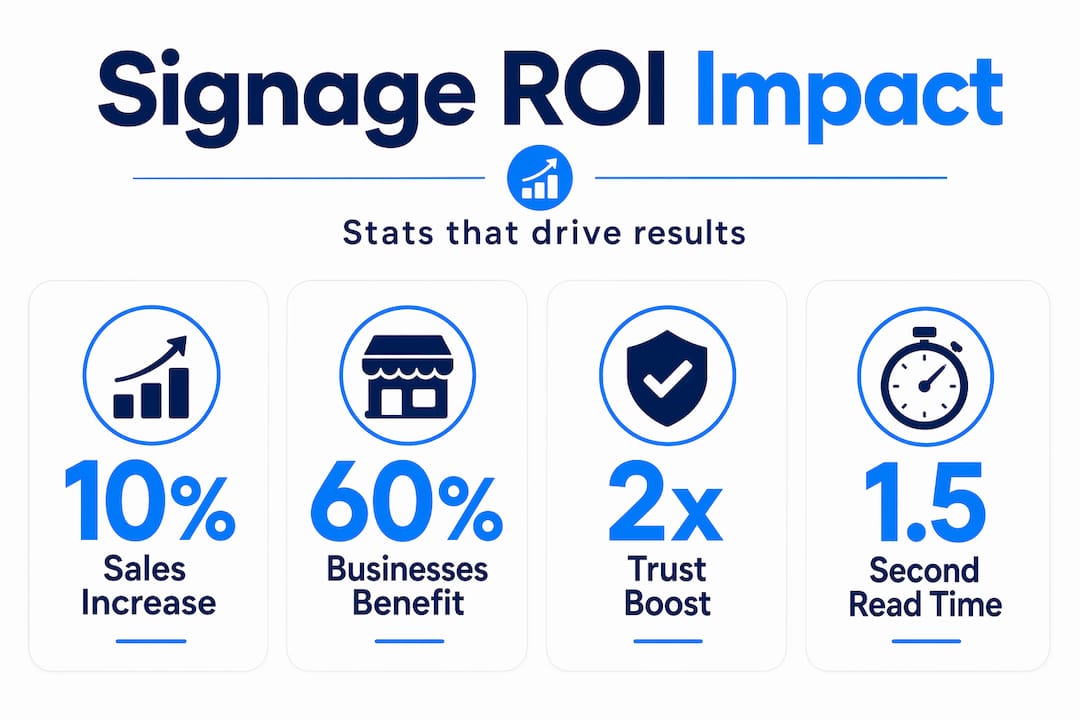
Most business owners spend thousands on digital ads while their physical storefront quietly repels customers. That’s the real cost of ignoring why invest in quality signs matters. 60% of businesses reported a 10% average sales increase after upgrading their signage. That number alone should reframe how you think about signs. They are not a one-time expense or an afterthought. They are a 24/7 marketing asset working for you whether or not you are in the building.
Table of Contents
- Key takeaways
- Why invest in quality signs: the measurable business case
- What actually makes a sign “quality”
- Compliance and technical standards that affect your signage
- How quality signs build your brand and attract customers
- Choosing, placing, and maintaining signs for maximum return
- My take on why businesses keep underinvesting in signage
- Get signage that works as hard as you do
- FAQ
Key takeaways
| Point | Details |
|---|---|
| Signage drives measurable ROI | Businesses upgrading signs see an average 10% sales lift and increased foot traffic. |
| Quality goes beyond looks | Durable materials, readable fonts, and brand alignment define genuinely effective signage. |
| Compliance protects your business | Standards like MUTCD and ISO 7010 affect safety, legibility, and legal standing. |
| Signs are always-on marketing | Unlike paid ads, quality signs work around the clock at zero recurring cost. |
| Maintenance preserves your investment | Faded or broken signs damage trust more than having no sign at all. |
Why invest in quality signs: the measurable business case
Numbers cut through opinion. When you look at what actually happens to revenue after businesses upgrade their signs, the case gets hard to argue against.
A 2023 University of Cincinnati Economic Center study found that businesses upgrading signage experienced an average 10% sales increase alongside measurable gains in foot traffic. For a business doing $500,000 in annual revenue, that is $50,000 in additional sales from a one-time investment. The math works at almost any price point for professional signage.
Here is what drives those results:
- Foot traffic capture: Passersby who notice a clear, attractive sign are more likely to step in, even without prior intent to purchase.
- Brand recognition: Consistent, well-designed signage builds familiarity over time. Customers who see your sign repeatedly develop trust before they ever walk through the door.
- Repeat business: Brand consistency in signage improves customer recognition and loyalty. A mismatch between your sign and your other brand assets confuses customers and costs you return visits.
- Zero recurring cost: Once installed, a quality sign works every hour of every day. No ad budget required.
“Signage functions as an ever-present marketing tool that businesses often underutilize.” This insight from signage research captures what most business owners miss: they treat signs as a one-time setup task rather than a performance asset.
The practical takeaway is simple. Investing in effective signage pays for itself faster than most marketing channels, and it keeps paying long after the initial spend.
What actually makes a sign “quality”
The word “quality” gets thrown around loosely. For signage, it has a specific meaning tied to performance, not just appearance.
People decide within 1.5 seconds whether to keep reading a sign. That window is shorter than most people expect. Your sign has to communicate one clear idea, instantly. That requirement shapes every design decision.
Readability comes first. Font choice, letter size, and color contrast are not decorative decisions. They determine whether someone reads your sign from 30 feet away at 35 miles per hour. Large but unreadable signs provide no value, regardless of how expensive the materials are. High contrast between text and background, combined with simple sans-serif fonts, gives you the best legibility at distance.
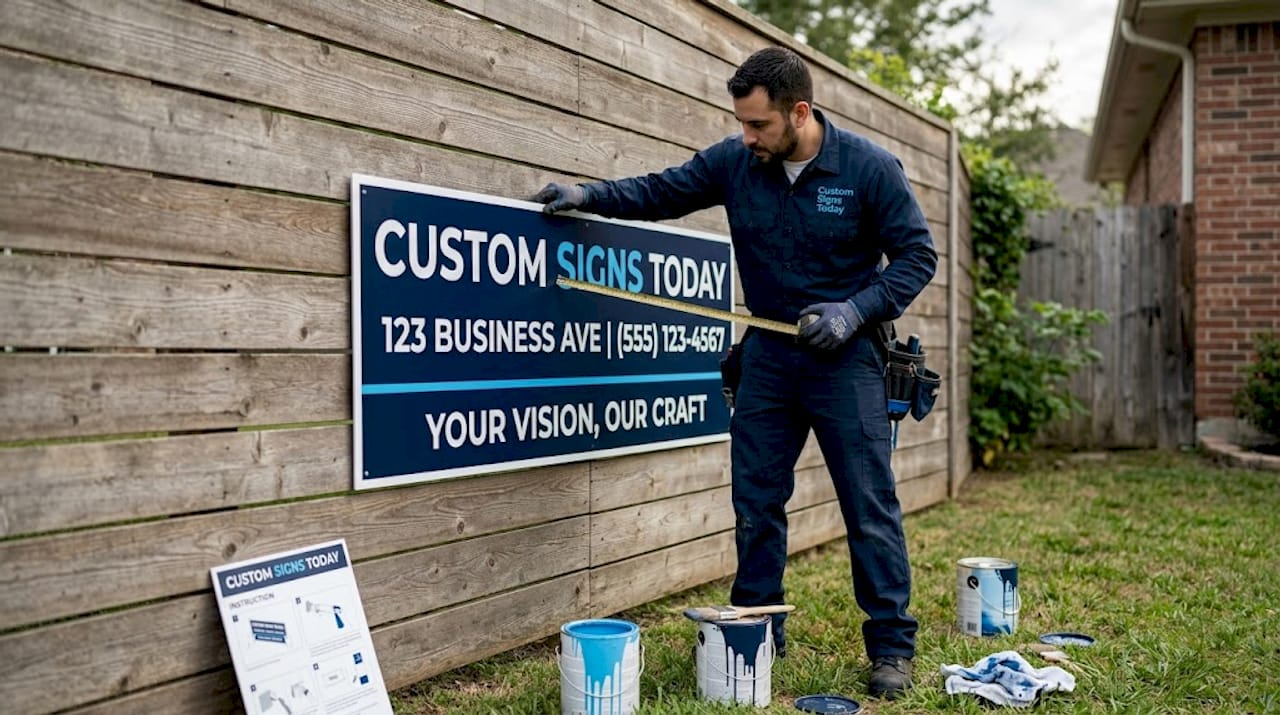
Material durability affects your total cost. A cheap vinyl banner might cost 60% less upfront, but if it fades within a year, you are buying new signage annually. UV-resistant materials, weather-rated substrates, and commercial-grade laminates cost more initially and save money over a three to five year window.
Brand alignment is non-negotiable. Your sign should look like it belongs to the same family as your website, business cards, and social media profiles. When it does not, customers notice. They may not consciously identify the inconsistency, but it creates a subtle sense of distrust.
Common mistakes that undermine signage investment include:
- Faded colors from sun exposure on non-UV-rated materials
- Fonts that look good in print but become illegible at distance
- Signs placed behind obstructions like trees or competing visual elements
- Outdated messaging that no longer reflects the business
Pro Tip: Before finalizing any sign design, test it at the actual viewing distance. Print a scaled version, step back to replicate real-world conditions, and check whether someone unfamiliar with your business can read and understand it within two seconds.
Reviewing the principles of effective sign design before committing to materials and layout can save you from expensive corrections later.
Compliance and technical standards that affect your signage
Signs are not just marketing tools. In many contexts, they carry legal and safety obligations that business owners often discover only after something goes wrong.
The MUTCD 11th Edition, updated in 2026, specifies minimum regulatory sign sizes for public roads, including a minimum 36×36 inch standard for STOP signs. While these standards apply directly to traffic and public infrastructure, the underlying principle of size and visibility requirements translates directly to commercial signage decisions.
For businesses with public-facing facilities, ISO 7010 standards govern safety and emergency signage. ISO 7010 safe condition signs use green backgrounds with white pictograms and must be placed for visibility in emergencies. This includes exit signs, first aid markers, and AED locations. Getting these wrong is not just an aesthetic failure. It creates legal exposure and genuine safety risk.
| Standard | Application | Key Requirement |
|---|---|---|
| MUTCD 11th Edition | Traffic and regulatory signs | Minimum sizes for legibility and safety |
| ISO 7010 | Safety and emergency signs | Correct colors, symbols, and placement |
| ADA Standards | Public-facing business signs | Braille, tactile elements, and mounting height |
Good signage conveys critical information quickly, prevents incidents, and supports institutional trust. When businesses skip compliance details, they risk fines, liability, and reputational damage. Investing in quality signs means investing in signs that meet the standards they are supposed to meet, not just signs that look good.
If your business serves the public, also consider checking your ADA-compliant sign options as part of any signage upgrade.
How quality signs build your brand and attract customers
Think about the last time you chose one business over another on an unfamiliar street. Chances are, the sign played a bigger role than you consciously realized.
Effective signage fades into the background when it is clear and accessible. That is actually the goal. You want customers to absorb your brand message without friction. A confusing or cluttered sign, however, distracts and undermines trust at the exact moment you need to make a good impression.
Here is how quality signage actively works in your favor as a branding and customer attraction tool:
- First impression management: Your exterior sign is often the first physical contact a customer has with your business. It signals your professionalism, attention to detail, and brand character before a single conversation happens.
- Perceived value: A clean, well-made sign tells customers you care about quality. A faded, crooked, or poorly printed sign tells them you might not.
- Wayfinding and experience: Clear directional and informational signs inside your business reduce customer confusion and make the shopping or service experience smoother.
- Competitive differentiation: In a strip mall or busy commercial district, premium signage is visible proof that your business stands out.
Signs also work when you are closed. A well-lit, clearly readable exterior sign with hours and contact information turns late-night foot traffic into future customers. No other marketing format delivers that kind of passive, ongoing exposure.
Knowing why to update business signage regularly helps you stay ahead of the competition rather than reacting after a sign becomes a liability.
Choosing, placing, and maintaining signs for maximum return
You can have a beautifully designed sign that still underperforms. Placement, material choice, and ongoing maintenance all determine whether your signage investment holds its value.
Selecting the right materials for your context:
- Identify your primary sign location. Outdoor signs facing direct sun need UV-resistant materials and lamination. Indoor signs have more flexibility.
- Match materials to your expected lifespan. If you rebrand every two years, a lower-cost solution may make sense. If your brand is stable, invest in materials rated for five to ten years.
- Consider lighting conditions. A sign visible in daylight may be invisible at night without backlighting or reflective elements. For businesses with evening hours, illumination is not optional.
- Factor in local weather. Coastal businesses face salt air corrosion. Businesses in high-wind zones need substrates and mounting hardware rated for those conditions.
Placement matters as much as design. Signs placed too high, too low, or behind visual obstructions lose most of their effectiveness. Eye-level placement for pedestrians and clear sightlines from the road for vehicle traffic should guide your positioning decisions.
Pro Tip: Walk your property at different times of day, from multiple approach directions, and from both pedestrian and vehicle perspectives. You will often find that what looked obvious at the design stage is actually obscured or poorly lit in real-world conditions.
Broken or faded signs harm customer trust more than having no sign at all. Schedule a visual inspection of all exterior and interior signage at least twice a year. Look for color fading, structural damage, outdated messaging, and anything that no longer aligns with your current brand standards.
Budget planning also benefits from understanding how custom sign pricing works before you commit to a project scope.
My take on why businesses keep underinvesting in signage
I have worked alongside dozens of business owners on signage projects over the years, and I see the same pattern repeatedly. The business owner approves a $10,000 digital ad campaign without blinking, then spends three weeks agonizing over whether a sign upgrade is worth $1,500. The psychology is understandable. Digital ads feel measurable. Signs feel permanent and therefore riskier.
What I have learned is that this is backwards. Digital ad performance disappears the moment you stop paying. A quality sign keeps performing for years. I have seen businesses in competitive retail corridors double their walk-in traffic within 90 days of an exterior sign refresh. Not because the sign was fancy, but because the old one was so forgettable that customers were walking past without registering the business existed.
The uncomfortable truth is that most business owners do not think about their signs until something goes obviously wrong, like a letter falls off or the vinyl starts peeling. By that point, the damage to brand perception has already been accumulating for months.
My advice: treat your signage budget as seriously as your digital marketing budget. The ROI, when you factor in longevity and zero recurring cost, frequently beats paid channels. Start with an honest walk-through of your current signs and ask whether they would make you stop and look if you were a first-time visitor. That question alone will tell you what needs to change.
— Yossi
Get signage that works as hard as you do
The benefits described in this article are not theoretical. They are the direct result of businesses choosing to stop treating signage as a background detail and starting to treat it as a front-line marketing tool. Customsignstoday specializes in custom signs built for exactly that purpose, from face change signs that refresh your brand without a full replacement to site signs that anchor your location with authority. The team also offers custom vinyl decals and vehicle lettering for businesses that want brand visibility beyond a fixed address. Every product is built for durability, clarity, and brand alignment. Request a free quote and find out what the right signage upgrade would cost for your specific location and goals.
FAQ
How much can quality signage increase sales?
Research from a 2023 University of Cincinnati study found that 60% of businesses saw an average 10% sales increase after upgrading their signs. Results vary by location, industry, and sign quality.
What makes a business sign high quality?
A high-quality sign combines readable fonts, strong color contrast, durable materials suited to the environment, and visual alignment with the brand. It communicates one clear message within 1.5 seconds of a viewer encountering it.
Do business signs need to meet any legal standards?
Yes. Depending on sign type and location, standards like MUTCD for traffic-adjacent signs, ISO 7010 for safety signs, and ADA requirements for public-facing signage all apply. Non-compliance creates legal liability and safety risk.
How often should business signage be inspected or updated?
A visual inspection at least twice per year is recommended. Faded or damaged signs actively harm customer trust, making timely maintenance as important as the original investment.
Are physical signs still worth investing in when digital advertising exists?
Physical signs have no recurring cost after installation and work continuously, including during hours when digital ads may not be running. They reach customers at the precise physical location where a purchase decision happens, which digital ads cannot replicate.