
TL;DR:
- Double-sided signage doubles a message’s visibility by reaching nearly 100% of passing traffic from opposing directions. It offers versatile formats, cost efficiencies, and a marketing loop effect that reinforces branding inside and outside. For locations with substantial two-way approach traffic, double-sided signs provide a higher return on investment by maximizing audience engagement.
Double-sided signage is a sign format that carries distinct visual messaging on both its front and back faces, effectively doubling the number of people who see your message from a single installation. Where a standard single-sided sign captures roughly 50% of passing traffic, a double-sided sign can reach nearly 100% of foot traffic by addressing audiences approaching from opposite directions or viewing from inside and outside simultaneously. Formats range from vinyl banners and yard signs to LED digital displays, making this one of the most versatile tools in any business or event signage program.
What is double-sided signage and how does it work?
Double-sided signage is built around a single shared frame, mount, or cabinet that supports two outward-facing display surfaces. Each face presents its own graphic or message, but both sides share the same structural support, which keeps the overall footprint compact and the installation straightforward.
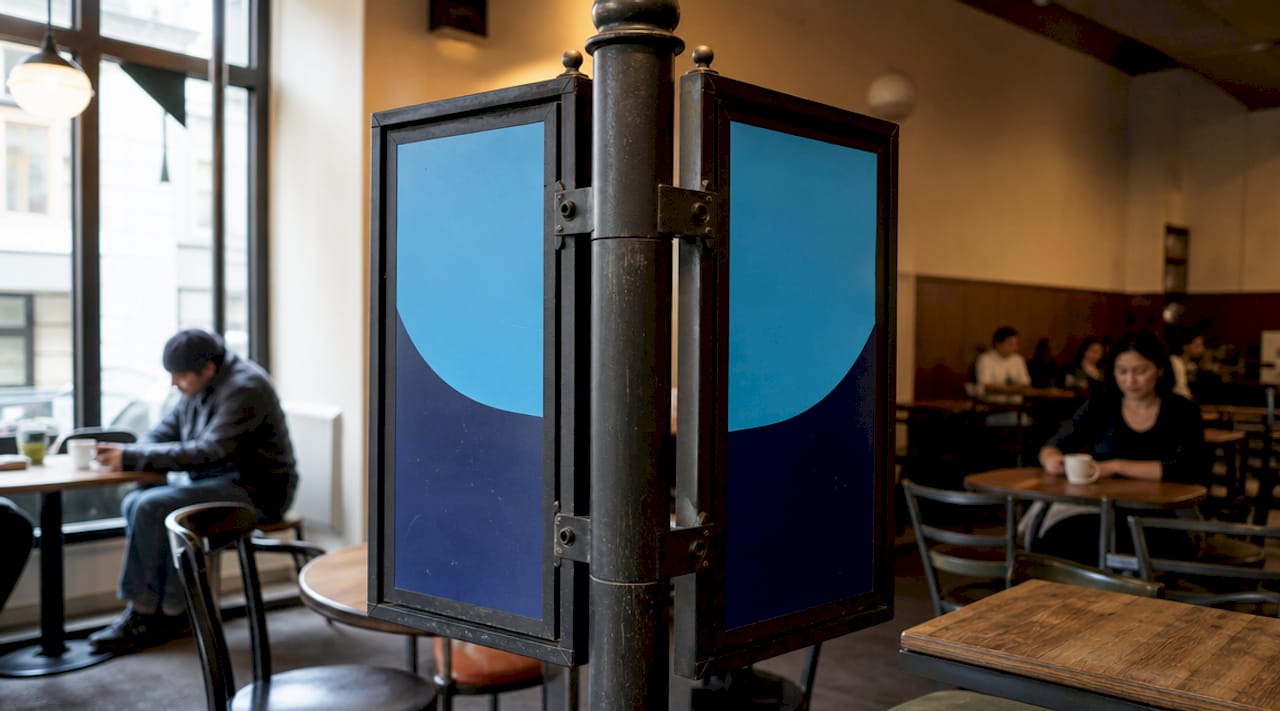
The dual-face design solves a fundamental visibility problem. A pedestrian walking toward your storefront sees one message. A pedestrian walking away, or a driver in the opposite lane, sees a completely different message on the reverse face. This is why businesses using double-sided window graphics reported a 17 to 22% increase in campaign visibility compared to single-sided alternatives. That lift comes directly from capturing an audience that a single-face sign would have missed entirely.
Digital double-sided displays take this further. Modern LED and LCD double-sided units share a single power supply and cooling system between both screens, which reduces operating costs compared to running two independent single-sided units. Content management software lets you schedule different messages on each face simultaneously, so a retailer can run a promotional offer on the street-facing screen while the interior screen reinforces brand loyalty messaging to customers already inside.
Pro Tip: Think of each face as a separate conversation. The outward face opens the door; the inward face closes the sale. Write the copy for each side with that specific audience in mind.
The result is what retail display specialists describe as a marketing loop effect: the street-facing side attracts new customers while the interior-facing side reinforces your brand to people who have already walked in. That dual engagement is difficult to replicate with any single-face format.
What are the main types of double-sided signs?
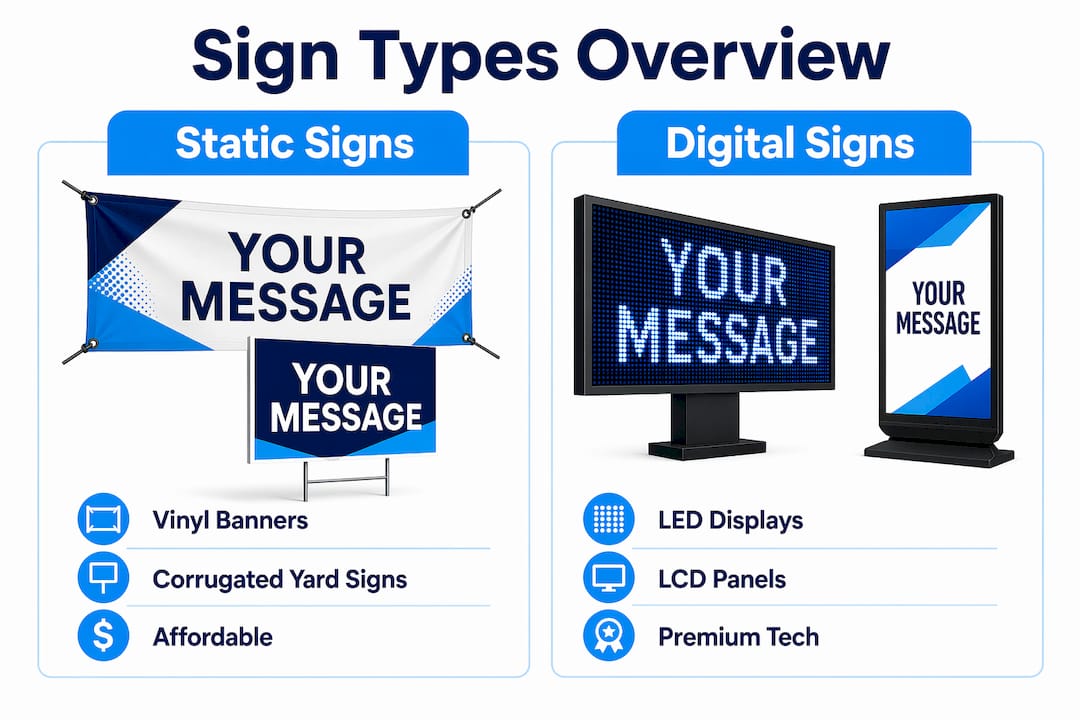
Double-sided signs span a wide range of materials, sizes, and technologies. Choosing the right type depends on your environment, budget, and how long the sign needs to perform.
| Sign type | Best use case | Indoor or outdoor |
|---|---|---|
| Vinyl banners | Events, trade shows, retail promotions | Both |
| Corrugated plastic yard signs | Real estate, elections, short-term campaigns | Outdoor |
| Aluminum or PVC rigid signs | Construction sites, storefronts, long-term display | Both |
| Window graphics (perforated or clear) | Retail storefronts, restaurants | Indoor/window |
| LED digital displays | High-traffic retail, transit hubs, hospitality | Both |
| Carved or dimensional signs | Upscale retail, hospitality, wayfinding | Indoor |
Static formats like vinyl banners and corrugated yard signs are the most affordable entry point. A double-sided vinyl banner hung above a trade show booth communicates your message to attendees walking in either direction along the aisle. Double-sided yard signs are the standard choice for corner placements and two-way traffic streets, where a single-sided sign would be invisible to half the passing cars.
Digital double-sided displays occupy the premium tier. These units use high-brightness LCD or LED panels rated for direct sunlight, making them readable even on a bright Florida afternoon. The shared infrastructure means installation complexity is lower than mounting two separate screens back to back, and the finished cabinet looks professional from every angle. For directional signage in malls, hospitals, or office buildings, a freestanding double-sided digital kiosk handles wayfinding for traffic moving in both directions without requiring two separate installations.
Outdoor signs need UV-resistant inks, weatherproof substrates, and secure mounting hardware. Indoor signs can use lighter materials and more delicate finishes. Maintenance for static signs is minimal. Digital units require periodic software updates and occasional screen cleaning, but their content flexibility more than compensates for that upkeep.
Double-sided vs. single-sided signage: which offers better value?
Single-sided signs are the right tool when your entire audience approaches from one direction. A sign mounted flush against a wall, a banner hung at the back of a booth, or a window decal viewed only from outside all fit this profile. Forcing a double-sided format into these situations adds cost without adding reach.
The decision shifts when traffic flows in two directions. A practical rule from signage professionals: if the reverse-side audience represents 40 to 50% or more of your total viewers, double-sided signage delivers superior return on investment. That threshold is easy to hit at street corners, building entrances, event aisles, and any freestanding display in an open space.
| Factor | Single-sided | Double-sided |
|---|---|---|
| Audience reach | ~50% of passing traffic | Up to ~100% of passing traffic |
| Cost per impression | Higher in two-way traffic | Lower in two-way traffic |
| Installation complexity | Lower | Moderate (shared mount) |
| Aesthetic finish | Back is often unfinished | Finished on both sides |
| Best environment | Wall-mounted, one-direction traffic | Freestanding, two-direction traffic |
One cost consideration that often surprises buyers: single-sided displays typically have plain, unattractive backs that require custom shrouds in upscale retail environments. That shroud adds cost and labor. A double-sided unit is finished on both faces by design, which matters in any location where customers view the sign from multiple angles.
Double-sided signs also offer roughly double the exposure at less than double the cost of two separate single-sided signs, because you pay for one mount, one installation, and one power connection instead of two.
Pro Tip: Before ordering, stand at your planned installation spot and count the percentage of people who would approach from behind the sign. If that number exceeds 40%, double-sided is the smarter spend.
How to plan and install double-sided signs for maximum impact
Effective placement starts with a site analysis, not a design file. Walk the location at the time of day your audience is most active and observe traffic directionality, lighting conditions, and sight lines.
- Map your traffic flow. Identify the primary and secondary approach directions. This determines which message goes on which face and whether the sign needs to be rotated or angled for optimal sightlines.
- Choose the right height and mounting method. Pedestrian signs work best at eye level, roughly 5 to 6 feet from the ground. Vehicle-oriented signs need to be higher and use larger type. For building signage, mounting height directly affects how far away the sign becomes readable.
- Design both faces intentionally. The most common mistake is treating the back face as an afterthought. Each face should carry a complete, standalone message. Avoid mirroring the same graphic on both sides unless your goal is pure brand reinforcement.
- Account for lighting. Backlit and LED signs maintain visibility after dark. Static signs in poorly lit areas lose effectiveness at night. If your location has evening foot traffic, factor illumination into the format decision.
- Use integrated mounts for digital units. Proper double-sided digital sign installation uses shared power and mounting infrastructure, which reduces weight and energy consumption compared to DIY back-to-back configurations.
- Plan for maintenance access. For digital signs, leave clearance around the cabinet for servicing. For static signs, use grommets, reinforced hems, or rigid substrates that allow easy graphic swaps without replacing the entire structure.
The signage installation process for double-sided formats is more forgiving than most people expect, provided the mount is engineered for dual-face loads from the start.
What are the emerging trends in double-sided signage technology?
The double-sided format is evolving faster than most static sign categories, driven by advances in digital display hardware and content management software.
- High-brightness LED panels now reach 2,500 to 5,000 nits, making outdoor double-sided digital signs fully readable in direct sunlight without glare washing out the image.
- Shared power and cooling architecture in modern double-sided digital cabinets cuts energy consumption significantly compared to two independent units, which matters for businesses managing utility costs across multiple locations.
- Cloud-based content management systems like those used with commercial-grade digital signage networks allow operators to update both faces of a sign remotely and in real time, scheduling different content by time of day or audience segment.
- IoT integration is pushing double-sided digital signs toward interactive territory. Sensors can detect audience density and trigger relevant content on the appropriate face, so a busy street-facing screen shows a high-impact promotional message while the quieter interior face runs a loyalty program prompt.
- Transparent and flexible OLED panels are beginning to appear in retail flagship stores, where a double-sided transparent display lets customers see through the sign while still delivering a branded message. This format is still premium-priced but signals where the category is heading.
For businesses investing in property signage design today, specifying a digital-ready double-sided format future-proofs the installation against content changes without requiring a full sign replacement.
Key takeaways
Double-sided signage delivers up to twice the audience reach of single-sided signs from a single installation, making it the higher-ROI choice for any location where traffic approaches from more than one direction.
| Point | Details |
|---|---|
| Dual-face visibility | Double-sided signs can reach nearly 100% of passing traffic versus ~50% for single-sided formats. |
| Cost efficiency | One mount, one installation, and shared power deliver roughly double the exposure at less than double the cost. |
| Format variety | Options range from vinyl banners and yard signs to LED digital displays, covering every budget and environment. |
| ROI threshold | If 40 to 50% or more of your audience approaches from the reverse side, double-sided signage pays for itself. |
| Installation planning | Site analysis, intentional dual-face design, and integrated mounting are the three factors that determine real-world effectiveness. |
Why most businesses underuse their second face
I have reviewed hundreds of double-sided sign installations over the years, and the single most consistent mistake is treating the back face as a bonus rather than a primary communication surface. Businesses spend serious money on the front graphic and then slap a logo on the back. That is a missed opportunity worth real dollars.
The second face is not a duplicate. It speaks to a completely different person at a completely different moment in their relationship with your brand. A restaurant’s street-facing sign should drive foot traffic with an offer or a visual that stops people mid-stride. The interior-facing sign, seen by customers who have already walked in, should reinforce the experience, promote a loyalty program, or upsell a menu item. Same sign, two entirely different jobs.
I also see businesses skip double-sided formats because they assume the cost is prohibitive. In practice, cost-effective signage options for double-sided formats are more accessible than most small business owners realize, especially in static vinyl and corrugated formats. The digital tier is a larger investment, but the shared infrastructure model means the per-impression cost drops sharply in high-traffic locations.
The businesses that get the most from double-sided signage are the ones that treat each face as its own campaign. Brief each side separately, design each side for its specific audience, and measure each side’s contribution independently. That discipline turns a sign into a system.
— Yossi
Get custom double-sided signs built for your location
Customsignstoday specializes in custom signage built around your specific traffic patterns, environment, and brand. Whether you need face change signs that let you swap graphics without replacing the structure, durable site signs for outdoor and construction environments, or a fully custom double-sided display for a retail storefront or event, the team at Customsignstoday handles design, production, and installation guidance from start to finish. Request a free quote and describe your location. The right double-sided format for your audience is closer and more affordable than you might expect.
FAQ
What is double-sided signage used for?
Double-sided signage is used for storefronts, events, real estate listings, construction sites, trade shows, and directional wayfinding anywhere audiences approach from more than one direction. The dual-face format maximizes visibility without requiring two separate sign installations.
How does a double-sided sign differ from two single-sided signs?
A double-sided sign uses one shared frame, mount, and power supply for both faces, which reduces cost, weight, and installation complexity compared to mounting two independent single-sided signs back to back.
When does double-sided signage offer better ROI than single-sided?
Double-sided signage delivers superior ROI when 40 to 50% or more of your total audience approaches from the reverse side of the sign. Corner placements, freestanding displays, and building entrances almost always meet this threshold.
Can both faces of a double-sided digital sign show different content?
Yes. Modern double-sided digital displays use content management software that schedules independent content on each face simultaneously, allowing different messages for different audiences at the same time.
Are double-sided signs more expensive than single-sided?
Double-sided signs cost more than a single single-sided sign but less than two separate units, because both faces share one mount, one installation, and one power connection. The cost-per-impression is lower in any two-direction traffic environment.