
A brand launch is the coordinated introduction of your brand to a target audience with the goal of generating measurable awareness and initial demand. Before anything else, nail down three priorities: a clear positioning statement, your core assets (website, messaging, visuals), and the one primary channel you will lean on first. Everything below gives you the checklist and schedule to make that happen.
TL;DR:
- Ensuring your soft launch validates real demand with actual payment systems can identify issues early and save costs before scaling advertising.
- Matching each marketing channel to specific goals, from SEO and email to signage and PR, improves the effectiveness and measurability of your campaign.
- Disclosing paid endorsements with clear, prominent language is critical to comply with FTC guidelines and avoid potential legal issues.
- Registering your business name, checking trademarks, and completing domain registration before launching reduces legal risks and protects your brand.
- Using signage at physical locations or delivery vehicles extends brand visibility in person, enriching your digital launch and reinforcing recognition.
Table of Contents
- What a brand launch actually means and why a plan matters
- Pre-launch checklist: audience, legal, assets, and validation
- Shaping your launch strategy: channels, timeline, and budget
- Your multi-week launch plan: ramp-up and day-of execution
- Common launch mistakes and the compliance steps that prevent them
- Channel playbooks: social, paid, email, PR, SEO, and signage
- Using signage to extend your launch beyond the screen
- The one thing to get right before you spend on ads
- How Custom Signs Today supports your launch day visibility
- FAQ
- Sources
- Primary sources and next steps
What a brand launch actually means and why a plan matters
A brand launch introduces a new company, product line, or repositioned identity to the people you want as customers. It differs from a product launch, which rolls out a single item under an established name, and from a rebrand, which replaces an existing identity rather than introducing a new one. Confusing the three leads to muddled messaging and wasted budget.
The point of a launch is not just visibility. You want awareness that converts into demand, distribution that gets your product or service in front of buyers, and in some cases, partners who agree to carry or promote what you sell.
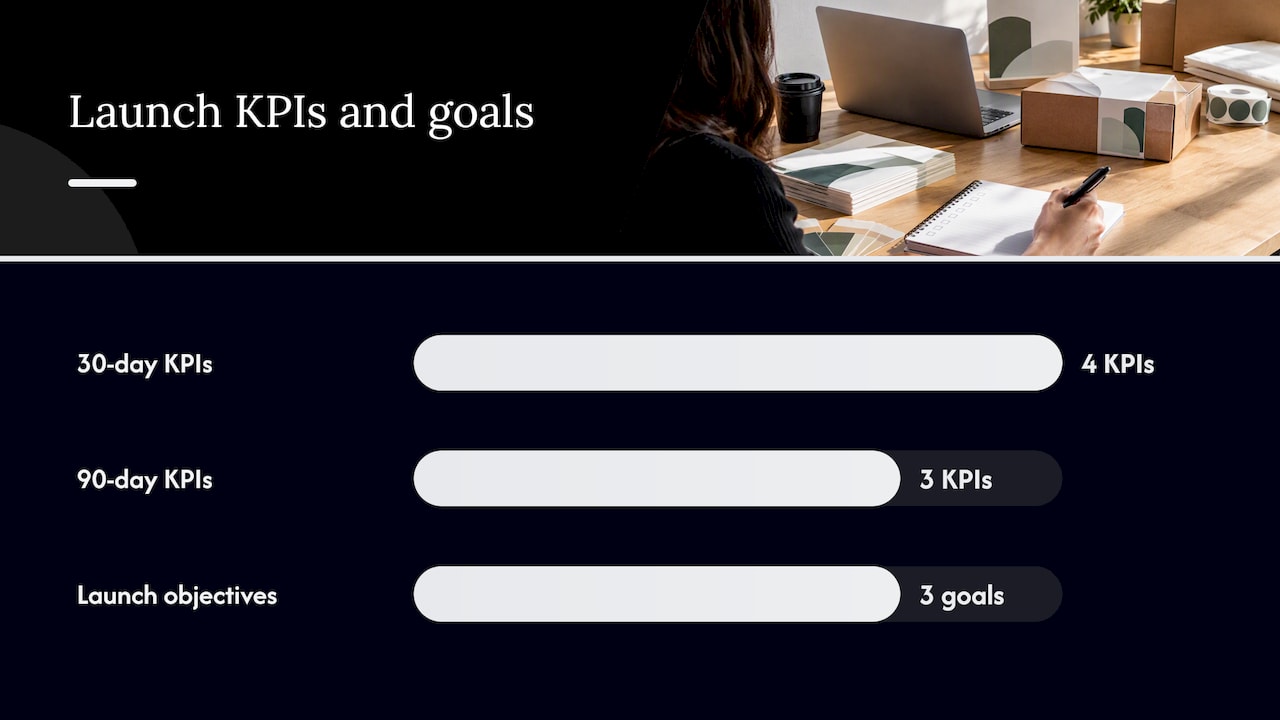
Track progress with KPIs set for two windows:
- 30 days: website traffic, social following growth, email signups, and press mentions.
- 90 days: conversion rate, repeat purchase or inquiry rate, and revenue or booked-quote volume.
Without these markers, you cannot tell whether your launch worked or just made noise. A plan built around specific numbers, even modest ones, keeps spending and effort tied to outcomes instead of activity.
Pre-launch checklist: audience, legal, assets, and validation
The weeks before launch determine whether the launch day itself goes smoothly or turns into a scramble. Work through these steps in order.
- Research your audience and write a one-sentence positioning statement that names who you serve, what problem you solve, and why you are different.
- Check your name, domain, and trademark availability, then complete basic registration steps. The Small Business Administration recommends registering your business name, considering trademark protection, and completing entity and domain registration before you promote anything publicly.
- Build your core assets: a website landing page, a short messaging document your whole team can use, launch creatives (images, video, signage artwork), and a simple press kit with your story, founder background, and product photos; for practical guidance on adding physical merchandise or apparel, see how to launch a successful merch line for your brand or business.
- Confirm operational readiness: test your payment processing, fulfillment or service delivery, return or refund policy, and customer support channel before you drive traffic to them.
- Run a soft launch through a beta group, pre-orders, or a waitlist to validate demand and catch problems while the stakes are still low.
The SBA’s 10 steps to start a business frame market research, a business plan, funding, and registration as foundational work that should happen before marketing begins, not alongside it.
Pro Tip: Run your soft launch with real payment and fulfillment systems, not a mockup. Problems that show up with ten customers are far cheaper to fix than problems that show up with a thousand.

Shaping your launch strategy: channels, timeline, and budget
Your strategy decides where effort and money go before a single ad runs. Get these five pieces right and the rest of execution gets easier.
- Blend short-term and long-term channels: paid ads and PR generate an initial spike, while SEO and email compound over months and keep momentum from collapsing once the launch buzz fades.
- Build a simple timeline with named owners for each task; a plan nobody owns rarely gets finished on schedule.
- Allocate budget toward early tests first, holding back a reserve to double down on whatever channel performs once you have real data instead of guesses.
- Use owned assets and partners for amplification, including your email list, existing customer base, and any complementary businesses willing to cross-promote.
- Disclose paid endorsements clearly. The FTC’s endorsement guidance recommends simple, prominent language such as “Paid ad,” “#ad,” or “Sponsored by [brand]” placed close to the endorsement itself, not buried in fine print.
A launch plan that treats channels as a single bet usually underperforms one that spreads risk across a few, measures results weekly, and reallocates fast.
Your multi-week launch plan: ramp-up and day-of execution
Turning strategy into execution means putting dates on a calendar and assigning specific tasks to specific weeks.
- Weeks 6 through 4: finalize audience research, lock your positioning statement, and start producing core assets.
- Weeks 3 through 2: test creative variations, book any vendors you need (printers, photographers, sign fabricators), and finalize your press kit.
- Week 1: run technical checks on your website and payment systems, brief your team, and open your soft launch or waitlist.
- Day 0: execute the full playbook below.
This sequencing follows the same logic the SBA outlines for new business formation: foundational work first, validation next, public rollout last.
On launch day itself, work through this checklist:
- Confirm your website, checkout, and tracking pixels are functioning before you send any traffic.
- Publish scheduled social posts, send your launch email, and activate any paid campaigns at the planned time.
- Brief customer support on messaging so answers stay consistent across channels.
- Post any physical signage, banners, or vehicle graphics tied to a local event or storefront opening.
In the first 30 to 90 days, monitor your KPIs daily at first, then weekly. Collect customer feedback actively rather than waiting for it to arrive, and treat early complaints or confusion as a signal to adjust messaging or product details quickly.
Common launch mistakes and the compliance steps that prevent them
Most launch failures trace back to a handful of repeatable mistakes.
- Betting everything on one channel, which leaves you with no backup when that channel underperforms.
- Skipping real testing, so bugs or fulfillment problems surface in front of your full audience instead of a small test group.
- Ignoring operational gaps like support staffing or inventory, which turn a successful marketing push into a service failure.
Compliance deserves equal attention. The FTC’s advertising guidance states that truth-in-advertising is a core responsibility for businesses, meaning every claim you make about your product needs to be accurate and backed by evidence you actually have. Influencer and endorsement disclosures are not optional: the FTC’s endorsement guides call for disclosures that are simple, prominent, and placed near the endorsement itself.
Protecting your brand name matters just as much as protecting your claims. SBA launch guidance walks through registering your business name, checking trademark conflicts, and completing entity registration, steps that are far cheaper to handle before launch than after a conflict surfaces. Write refund and guarantee policies that match what you can actually deliver, since a mismatch between promise and delivery is one of the fastest ways to lose early trust.
Channel playbooks: social, paid, email, PR, SEO, and signage
Match each channel to a specific job instead of running all of them the same way.
- Social media: post a mix of behind-the-scenes content and direct offers in the two weeks before launch to build anticipation.
- Paid search and social ads: start with a small test budget split across two or three audience segments, then shift spend to whichever segment converts.
- Email: send a three-part sequence, teaser, launch announcement, and a follow-up with social proof or a limited-time incentive.
- PR: pitch a specific angle (a founder story, a local tie-in, a notable first customer) rather than a generic announcement.
- SEO: publish one or two cornerstone pages targeting your core keywords before launch so they have time to start indexing.
- Physical signage: use banners, window decals, or vehicle wraps for local activations, pop-up events, or a storefront opening where foot traffic and drive-by visibility matter.
Track impressions and click-through for awareness channels, conversion rate and cost per acquisition for paid channels, and foot traffic or redemption codes for physical signage. Our custom signage step-by-step guide walks through using signage specifically to raise visibility during a launch window.
Pro Tip: Give every channel its own trackable link or code so you know which one actually drove the result, not just which one felt busiest.
Using signage to extend your launch beyond the screen
Signage earns its place in a launch plan whenever people need to find you in person: a pop-up shop, a grand opening, a trade show booth, or a fleet of vehicles doing deliveries during your first month. A storefront banner or a wrapped vehicle keeps your brand visible to people who will never see your ads.
When you brief a sign vendor, specify:
- File format (vector PDF or AI) so artwork reproduces cleanly at any size.
- Exact dimensions with bleed and the substrate (PVC, coroplast, vinyl) suited to indoor or outdoor exposure.
- Color calls in Pantone or CMYK so your brand colors match across signage and digital assets.
- Installation timeline and any local permits required for exterior or vehicle signage.
Our outdoor signage and branding guide and custom sign workflow guide cover these specs and installation steps in more detail.
The one thing to get right before you spend on ads
If there is a single priority worth protecting, it is validating real demand before scaling paid spend. A soft launch that confirms people actually want what you are offering is worth more than a flashy debut built on guesses. Momentum from a launch does not sustain itself. It takes 90 days of consistent follow-through, customer feedback, and small adjustments to turn a launch into a business. Use the checklist above, watch what customers actually do, and adjust fast.
— Yossi
How Custom Signs Today supports your launch day visibility
Launch day visibility does not stop at your website. We produce banners, vehicle wraps, storefront signage, and event signs built for the specific moment a pop-up, grand opening, or local promotion needs them most.
- Fast turnaround keeps signage ready for your launch date, not weeks after it.
- Durable materials hold up through outdoor exposure, vehicle wear, and repeated events.
- Compliance guidance on permits and installation helps you avoid last-minute local violations.
If your launch plan includes a physical presence anywhere, request a quote on our custom signs page and we will scope the right materials and sizes for your timeline.
FAQ
What is a brand launch exactly?
A brand launch is the coordinated introduction of a new brand, product line, or identity to a target audience, aimed at generating measurable awareness and early demand. It differs from a product launch, which introduces one item under an existing brand, and from a rebrand, which replaces an identity already in the market.
How long should a brand launch plan take to prepare?
A practical ramp runs about six to eight weeks, with early weeks spent on audience research and asset production, the middle weeks on creative testing and vendor bookings, and the final week on technical checks and a soft launch. The SBA’s step-by-step guidance supports this sequence of research, planning, and registration before a public rollout.
Do I need to disclose paid endorsements during a launch?
Yes. The FTC’s endorsement guidance recommends clear, prominent disclosure language such as “Paid ad,” “#ad,” or “Sponsored by [brand]” placed near the endorsement itself rather than hidden in a bio or footnote.
What should I register before launching a brand?
Before you launch publicly, register your business name, check for trademark conflicts, and complete entity and domain registration. SBA launch guidance treats these as prerequisites to marketing, not steps to handle after the fact.
Does signage still matter for a mostly digital launch?
Signage matters whenever your launch includes a physical touchpoint, such as a pop-up event, a storefront opening, or a delivery vehicle fleet, since it reaches people who never see your digital ads. Pairing a storefront banner or vehicle wrap with consistent messaging from your digital campaign reinforces recognition across both channels.
Sources
- Advertising and Marketing Basics | Federal Trade Commission
- FTC’s Endorsement Guides: What People Are Asking | Federal Trade Commission
- Launch your business – Small Business Administration
- 10 steps to start your business | U.S. Small Business Administration
Primary sources and next steps
Use these primary sources for the legal and operational tasks covered above, alongside our own guides for signage specifications and production.
- FTC advertising guidance for truth-in-advertising basics.
- FTC endorsement guides for disclosure language and examples.
- SBA launch guidance for name registration and trademark steps.
- SBA’s 10 steps to start a business for foundational planning tasks.
- Custom signage step-by-step guide for using signage during a launch window.
- Outdoor signage and branding guide for aligning signage with brand strategy.
- Custom sign workflow guide for vendor briefing and installation steps.