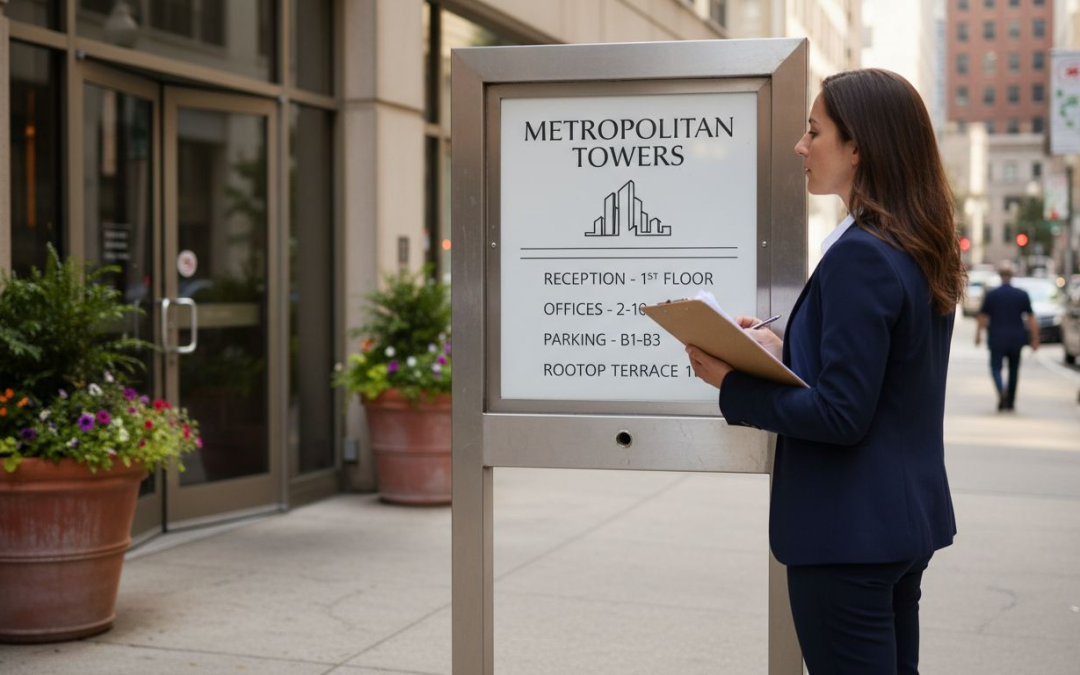
First impressions can make or break a property showing, especially when potential buyers are searching for clear direction and confidence in your brand. For American real estate agents, effective architectural signage delivers more than basic navigation—it becomes a visual anchor that welcomes clients and strengthens identity. By investing in architectural signage that is both visually compelling and ADA compliant, you enhance property visibility, support client accessibility, and reinforce your agency’s reputation in every interaction.
Table of Contents
- Defining Architectural Signage In Real Estate
- Types Of Architectural Signage Solutions
- Key Features And Design Considerations
- Compliance, Regulations, And Durability Factors
- Branding Benefits For Property Visibility
Key Takeaways
| Point | Details |
|---|---|
| Architectural Signage Importance | Essential for navigation, branding, and first impressions in real estate environments. |
| Types of Signage | Includes exterior, interior, and specialty signage tailored to specific needs. |
| Design Considerations | Focus on typography, material selection, and accessibility to enhance visitor experience. |
| Branding Benefits | Signage serves as a marketing tool, increasing visibility and promoting professional identity. |
Defining Architectural Signage in Real Estate
Architectural signage represents critical visual communication systems that help identify, direct, and inform people within buildings and properties. These specialized signs go far beyond simple directional markers, functioning as essential navigational and branding tools for real estate professionals.
According to official ADA accessibility guidelines, architectural signage serves multiple critical purposes in identifying permanent rooms and spaces. These signs typically include:
- Room number identification
- Area labels (conference rooms, lobbies)
- Directional navigation markers
- Accessibility information markers
- Building entry and exit signage
In the real estate context, architectural signage plays a pivotal role in creating first impressions and establishing professional brand identity. Graphic design standards emphasize that these signs must integrate seamlessly with architectural environments while communicating clear, professional information.
Real estate architectural signage accomplishes several key objectives. It provides critical wayfinding information, communicates property details, and represents the professional brand of agents and agencies. Well-designed signs can transform an ordinary property visit into a memorable, navigable experience that reflects organizational quality and attention to detail.
Pro tip: Invest in architectural signage that matches your agency’s professional aesthetic and provides clear, accessible information for potential property buyers and visitors.
Types of Architectural Signage Solutions
Architectural signage solutions encompass a diverse range of visual communication systems designed to meet specific navigational, informational, and branding needs within real estate environments. These specialized signs are strategically developed to address various functional requirements across different property spaces.
Campus signage standards reveal multiple critical categories of architectural signage that real estate professionals can leverage:
- Exterior Signage
- Building identification markers
- Property entrance signs
- Parking directional indicators
- Interior Signage
- Room number plaques
- Directional wayfinding systems
- Regulatory information displays
- Specialty Signage
- Donor recognition panels
- Digital information displays
- Interactive property navigation screens
According to comprehensive signage manuals, architectural signage solutions are meticulously designed to serve multiple purposes. They not only guide visitors through complex spaces but also communicate essential property information, enhance brand perception, and create memorable visual experiences.
Real estate professionals must carefully select architectural signage that aligns with their brand identity, property characteristics, and functional requirements. The right signage can transform a simple property visit into an engaging, informative journey that leaves a lasting impression on potential buyers and visitors.
Here’s a summary comparing major types of architectural signage used in real estate:
| Signage Type | Key Purpose | Common Locations | Distinctive Benefit |
|---|---|---|---|
| Exterior Signage | Property identification | Entrances, parking lots | Enhances first impressions |
| Interior Signage | Wayfinding and information | Hallways, rooms | Improves navigation experience |
| Specialty Signage | Donor or digital recognition | Lobbies, main areas | Elevates brand engagement |
Pro tip: Develop a cohesive signage strategy that integrates your agency’s visual brand elements while prioritizing clarity and accessibility for all property visitors.
Key Features and Design Considerations
Architectural signage design represents a complex intersection of functionality, aesthetics, and communication strategies that real estate professionals must carefully navigate. The visual and practical elements of signage can significantly impact how potential clients perceive and interact with a property or agency.
Interior signage standards reveal critical design considerations that professionals must address:
- Typography Considerations
- Legible font selections
- Appropriate font sizes
- High contrast color combinations
- Material Selection
- Durability
- Weather resistance
- Aesthetic compatibility
- Mounting and Installation
- Precise location planning
- Accessibility compliance
- Structural integrity
According to facility design guidelines, effective architectural signage must balance multiple technical and aesthetic requirements. Professional designers categorize signs into specific functional types: regulatory, identification, directional, and informational, each serving a unique communicative purpose.

Successful architectural signage goes beyond mere visual communication. It creates a cohesive brand narrative, guides visitor experiences, and reflects the professional standards of real estate organizations. Every design element—from color palette to material selection—contributes to the overall perception of quality and attention to detail.
The following table outlines design features and their positive impacts on property perception:
| Design Feature | Real Estate Benefit | Visitor Experience Impact |
|---|---|---|
| High-contrast colors | Increases visibility and clarity | Enhances readability for all users |
| Durable materials | Maintains quality over time | Conveys professionalism |
| Accessible placement | Meets ADA and inclusivity standards | Ensures all visitors feel welcome |
Pro tip: Conduct a comprehensive audit of your current signage to identify opportunities for improving visual consistency, readability, and brand representation.
Compliance, Regulations, and Durability Factors
Architectural signage regulations represent a complex framework of legal and technical requirements that real estate professionals must carefully navigate. These standards ensure safety, accessibility, and effective communication across various property environments.
ADA accessibility standards mandate critical compliance requirements for architectural signage:
- Accessibility Requirements
- Tactile text and braille integration
- Specific mounting height regulations
- High contrast color specifications
- Design Compliance
- Font size and readability standards
- Clear visual communication guidelines
- Universal design principles
- Durability Specifications
- Environmental resistance
- Material strength requirements
- Long-term performance standards
According to institutional design guidelines, professional signage must simultaneously meet multiple regulatory objectives. These include local building codes, brand identity standards, and accessibility laws that govern every aspect of sign design and implementation.
Real estate professionals must understand that compliance is not just a legal requirement but a critical component of effective property communication. Signage that meets rigorous standards communicates professionalism, demonstrates attention to detail, and creates a welcoming environment for all potential clients and visitors.
Pro tip: Consult with a professional signage designer who specializes in ADA compliance to ensure your architectural signs meet all regulatory requirements while maintaining your brand’s visual identity.
Branding Benefits for Property Visibility
Property branding through architectural signage represents a strategic communication approach that transforms visual elements into powerful marketing tools for real estate professionals. These carefully designed signs do more than provide information—they create lasting impressions and communicate organizational identity.
Brand identity standards reveal critical branding benefits for property visibility:
- Visual Communication
- Consistent color palette representation
- Logo integration
- Uniform design language
- Strategic Positioning
- Enhanced property recognition
- Immediate brand recall
- Professional perception development
- Marketing Impact
- Increased property attractiveness
- Differentiation from competitors
- Memorable visual storytelling
According to institutional communication guidelines, effective architectural signage serves as a silent ambassador for your brand. These visual communication systems communicate institutional values, professionalism, and unique market positioning through carefully crafted design elements.
Successful real estate branding transcends traditional marketing approaches by embedding brand narratives within physical spaces. Architectural signage becomes a critical touchpoint that connects potential clients with your organizational identity, creating emotional and visual connections that extend far beyond simple directional information.
Pro tip: Develop a comprehensive signage style guide that ensures consistent visual representation across all your property marketing materials and physical locations.
Elevate Your Property’s Brand with Custom Architectural Signage
Architectural signage is more than just wayfinding—it is a powerful branding tool that shapes first impressions and guides visitors smoothly through your spaces. If you are looking to overcome challenges like unclear navigation, lack of brand consistency, or signage that fails to meet accessibility standards, investing in professional custom signage is essential. At Uncategorized, you can explore versatile signage solutions designed to enhance visibility, durability, and aesthetic appeal in all real estate environments.
Why settle for ordinary when you can showcase your properties with high-quality, custom-made signs that reflect your agency’s unique identity? Visit Custom Signs Today now to request a free quote and start transforming your property’s visual communication. Clear, professional, and compliant signage awaits to create lasting impressions and boost your real estate brand visibility today.
Frequently Asked Questions
What is architectural signage?
Architectural signage refers to visual communication systems that identify, direct, and inform individuals within buildings and properties. These signs serve as essential tools for navigation and branding in various real estate environments.
How does architectural signage impact branding in real estate?
Architectural signage significantly enhances branding by creating first impressions and establishing a professional identity. Well-designed signs communicate property details and contribute to the overall perception of quality and attention to detail.
What are the main types of architectural signage used in real estate?
The main types include exterior signage (such as property identification and entrance signs), interior signage (like room number plaques and wayfinding systems), and specialty signage (including donor recognition panels and digital displays).
What key design considerations should be taken into account for architectural signage?
Key design considerations include typography (legible fonts and color contrast), material selection (durability and aesthetic compatibility), and compliance with accessibility standards to ensure the signage is effective and welcoming for all visitors.