Poor directional signage costs businesses customers every day. Visitors who cannot find their way quickly become frustrated and leave, taking their business elsewhere. Whether you run a retail store, manage a large venue, or organize events, effective directional signs transform confusion into confidence. This guide walks you through every step of creating custom directional signs that improve customer flow, reduce frustration, and boost your bottom line.
Table of Contents
- Assess Your Site And Define Signage Goals
- Choose Materials And Design With Visibility In Mind
- Create And Install Your Directional Signs Effectively
- Measure The Impact And Refine Your Signage
- Explore Custom Directional Signage Solutions For Your Business Or Event
Key takeaways
| Point | Details |
|---|---|
| Start with assessment | Conduct a physical site walkthrough to identify bottlenecks and decision points where visitors need guidance |
| Design for visibility | Choose high-contrast colors, large fonts, and weather-resistant materials suited to your indoor or outdoor environment |
| Track effectiveness | Measure foot traffic and sales before and after installation to quantify signage impact and guide improvements |
| Update strategically | Use face change systems or digital displays for venues requiring frequent message updates without full replacement |
Assess your site and define signage goals
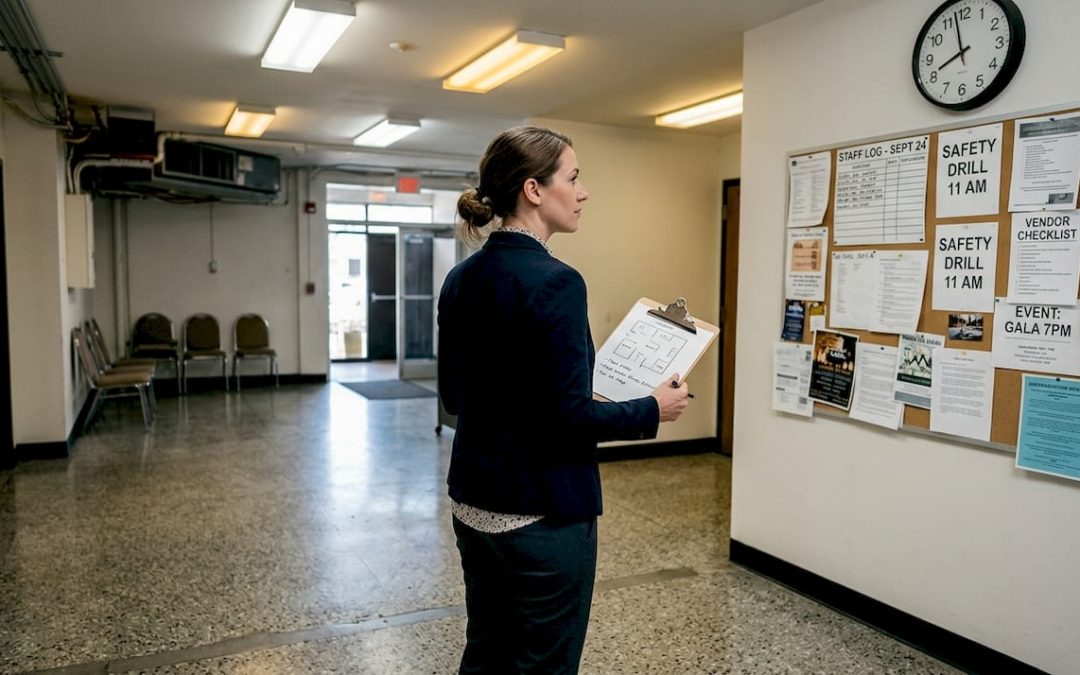
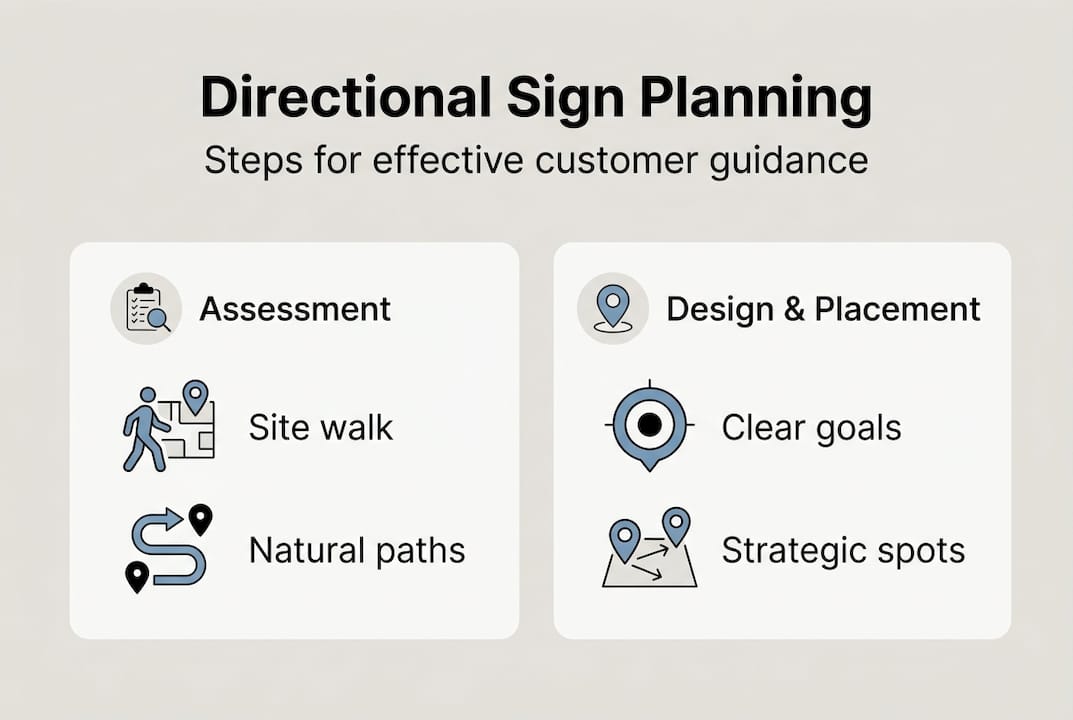
Before ordering a single sign, walk through your venue as if you were a first-time visitor. Note every point where someone might pause, look around confused, or head in the wrong direction. These moments reveal where directional signage basics become essential. Document entry points, intersections, stairways, restrooms, and any area where multiple paths diverge.
Pay attention to natural customer pathways. Where do people naturally walk? Where do they slow down or stop? Photograph these locations from various angles to review later when planning sign placement. Your photos become a reference tool that helps you visualize how signs will appear in context and whether they will be visible from key approach angles.
Define specific goals for each sign location. One sign might reduce confusion at a complex intersection, while another highlights a promotional area or directs traffic away from congested zones. Start with site audit and templates to establish baseline metrics before installation. Clear objectives make it easier to measure success later and justify your signage investment to stakeholders.
Consider the types of directional signs that fit your context. Permanent installations work well for fixed features like restrooms and exits. Temporary signs suit events or seasonal promotions. Some venues benefit from a hybrid approach combining static wayfinding with changeable message boards for time-sensitive information.
Pro Tip: Create a simple map marking every proposed sign location with notes about what information each sign should communicate and which direction visitors will approach from.
Choose materials and design with visibility in mind
Material selection directly impacts how long your signs last and how well they perform. Indoor signs can use lighter materials like foam board or basic vinyl, while outdoor installations demand weather-resistant options. Metal signs withstand years of sun and rain but cost more upfront. Rigid plastic offers a middle ground with decent durability at moderate prices. Vinyl works beautifully for temporary events or short-term campaigns.

Visibility depends on contrast and scale. Dark text on light backgrounds or light text on dark backgrounds ensures readability from a distance. Avoid color combinations that blend together or create eye strain. Font size matters more than you think. Text that looks large on your computer screen often appears tiny when mounted ten feet away on a wall.
Your signage should reinforce brand identity without sacrificing clarity. Incorporate your logo and brand colors, but never let design flourishes interfere with the primary function of guiding visitors. A beautiful sign that people cannot read quickly fails its purpose. Customizable solutions include templates and professional options that balance aesthetics with functionality.
Consider using 11×17 holders for events where you need to swap messages frequently. These frames protect paper signs from weather while allowing quick updates between sessions or days. For permanent installations, invest in professionally printed signs with UV protection to prevent fading.
| Material | Best Use | Durability | Cost |
|---|---|---|---|
| Vinyl | Temporary events, indoor | 6-12 months outdoors | Low |
| Rigid Plastic | Semi-permanent, outdoor | 2-3 years | Medium |
| Metal | Permanent outdoor | 5-10+ years | High |
| Foam Board | Indoor only | 1-2 years indoors | Very Low |
Pro Tip: Order one test sign first and view it installed before committing to a full order, ensuring colors and sizing work in your actual environment.
Create and install your directional signs effectively
Designing effective directional sign designs starts with clarity. Each sign should communicate one clear message or direction. Avoid cramming multiple instructions onto a single sign, which creates visual clutter and slows comprehension. Simple arrows paired with concise text work better than paragraph-length explanations.
Templates allow quick setup and real-time updates when you use design software or content management systems. Many professional sign providers offer customizable templates that maintain consistent branding across all your directional signage. Start with a template, adjust colors and text to match your needs, then export files ready for printing.
Follow these steps for smooth execution:
- Design all signs in your chosen software, maintaining consistent fonts, colors, and sizing across the set.
- Print signs yourself for small projects or send files to a professional printer for larger, more durable installations.
- Visit each planned location with signs in hand to confirm placement makes sense and nothing blocks visibility.
- Mount signs securely using appropriate hardware for your surface type and sign weight.
- Step back and view each installed sign from multiple approach angles to verify visibility.
Installation height significantly affects effectiveness. Mount signs at eye level, typically 60-65 inches from the ground to the sign center. Angle signs slightly downward if mounted high to improve readability. Ensure no pillars, plants, or displays obstruct sightlines to your signs.
For complex venues, consider hybrid solutions combining static directional signs with digital displays. Static signs handle permanent wayfinding while digital screens provide real-time updates about events, wait times, or temporary closures. Refer to sign installation tips and signage installation guide for detailed mounting techniques.
Pro Tip: Install signs in phases, starting with the most critical decision points, then add secondary signs based on observed visitor behavior and feedback.
Measure the impact and refine your signage
Tracking effectiveness separates successful signage programs from wasted investments. Before installing signs, document baseline metrics. Count how many visitors pass key locations during specific time periods. Note common questions staff receive about directions. Record sales figures for areas you want to drive more traffic toward.
After installation, repeat these measurements. Compare foot traffic patterns to your baseline data. Has the flow improved? Are fewer people backtracking or appearing lost? Measure ROI via foot traffic and sales to quantify the business impact of your directional signage investment.
Direct feedback provides qualitative insights numbers cannot capture. Survey visitors about signage clarity. Ask staff if they receive fewer directional questions. Mystery shop your own venue to experience the signage from a customer perspective. Small adjustments based on real feedback often yield significant improvements.
Some venues benefit from heat mapping technology that tracks movement patterns throughout the space. This data reveals whether signs successfully guide people along intended paths or if certain signs get ignored. While more expensive than manual counting, automated tracking provides continuous data without labor costs.
| Tracking Method | Cost | Accuracy | Best For |
|---|---|---|---|
| Manual Counting | Low | Moderate | Small venues, limited budget |
| Staff Feedback | Very Low | Low to Moderate | Qualitative insights |
| Customer Surveys | Low | Moderate | Understanding experience |
| Heat Mapping Tech | High | High | Large venues, ongoing optimization |
Refine your signage based on data. If certain signs get ignored, they may be poorly placed or poorly designed. If visitors still get lost at specific points, you may need additional signs or clearer messaging. Signage is never truly finished. Continuous improvement based on real-world performance keeps your directional system effective as your venue and customer needs evolve.
Revisit your custom sign evaluation periodically to ensure signs remain in good condition and messages stay current. Faded or damaged signs communicate neglect and reduce trust in your brand.
Pro Tip: Schedule quarterly signage audits to check for damage, fading, or outdated information before customers notice problems.
Explore custom directional signage solutions for your business or event
Creating effective directional signs requires planning, design skill, and quality materials. Professional custom directional signs eliminate guesswork by providing expert design services and durable materials suited to your specific environment. Whether you need permanent wayfinding for a retail complex or temporary signs for a weekend event, working with experienced sign providers ensures your investment delivers results.
Face change signs offer flexibility for venues requiring frequent message updates without replacing entire sign structures. These systems let you swap printed inserts quickly, perfect for event schedules, promotional campaigns, or directories with changing tenant information. Site signs provide comprehensive solutions for construction projects, real estate developments, and large facilities needing cohesive wayfinding throughout multiple buildings or outdoor areas. Explore these options to find solutions that match your specific guidance needs and budget.
FAQ
How durable are directional signs for outdoor events?
Most outdoor directional signs use weather-resistant materials like vinyl and metal that withstand rain and sun exposure. Professional options often include UV protection that prevents fading and extends lifespan to several years even in harsh conditions. Temporary event signs made from treated materials typically last through multiple events when stored properly between uses.
Can I update directional signs during an event easily?
Digital content management systems allow real-time updates to electronic signs without physical access to the display. Face change signs offer quick manual updates where you simply open the frame and swap printed inserts without removing the entire sign structure. Both approaches eliminate the cost and hassle of replacing complete signs for routine message changes.
What is the best placement for directional signs in a venue?
Place signs at key decision points and intersections where visitors need guidance to choose between multiple paths. Ensure signs mount at eye level, typically 60-65 inches from ground to sign center, and remain unobstructed by furniture, plants, or displays. Position signs far enough before intersections that visitors have time to read and react without stopping abruptly.
How do I measure if my directional signs are effective?
Track foot traffic patterns and sales figures before and after sign installation to quantify impact on customer flow and revenue. Collect visitor feedback through brief surveys asking about signage clarity and helpfulness. Monitor staff reports about directional questions received, which should decrease significantly if signs work properly. Compare these metrics quarterly to identify areas needing refinement.