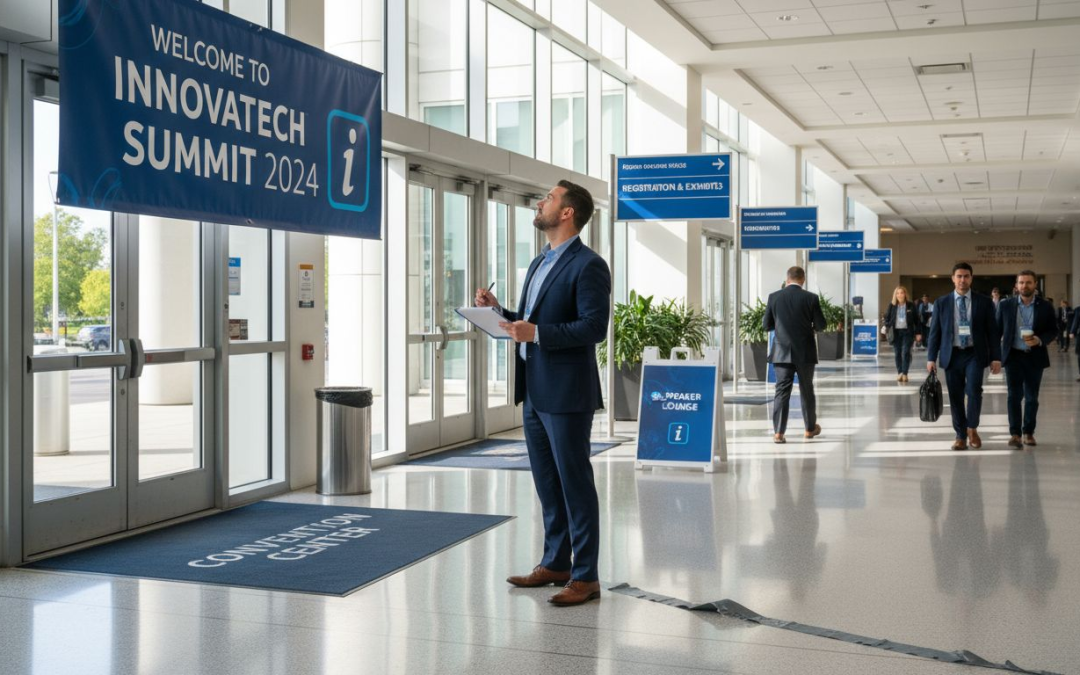
Consistent brand presentation across all event touchpoints can increase revenue by up to 20% through higher attendee engagement and word of mouth promotion. For event organizers and marketing professionals, this statistic reveals a powerful truth: strategic event branding is not just about aesthetics. It directly impacts your bottom line. Custom signage serves as the backbone of effective branding, creating memorable experiences that drive engagement and loyalty. This guide will walk you through practical strategies to elevate your event branding using custom signage solutions.
Table of Contents
- Understanding Event Branding: Definition And Importance
- The Strategic Role Of Custom Signage In Event Branding
- Attendee-Centric Design Principles For Effective Event Branding
- Current Trends And Innovations In Event Signage For 2025-2026
- Common Misconceptions About Event Branding And Signage
- Framework For Designing And Executing Event Branding Strategies
- Practical Tips For Maximizing Brand Visibility With Custom Signage
- Maximize Your Event’s Impact With Custom Signs Today
- Frequently Asked Questions About Event Branding And Signage
Key Takeaways
| Point | Details |
|---|---|
| Revenue Impact | Consistent branding across touchpoints can increase event revenue by 20% through enhanced engagement. |
| Signage Function | Custom signage boosts brand visibility while improving attendee navigation and reducing confusion. |
| Design Priority | Attendee-centric design creates emotional connections that strengthen brand loyalty and perception. |
| Modern Trends | Sustainability and digital integration are shaping event signage strategies in 2026. |
| Strategic Planning | A structured framework from objectives to execution ensures cohesive branding across all elements. |
Understanding Event Branding: Definition and Importance
Event branding integrates names, symbols, colors, messaging, and imagery to create a unique, memorable identity that differentiates an event and shapes attendee experience. It goes far beyond slapping a logo on materials. Think of it as the personality of your event, expressed through every touchpoint an attendee encounters.
In crowded markets where hundreds of events compete for attention, strong branding makes you stand out. A well-branded event tells attendees what to expect before they arrive, guides them through the experience, and leaves lasting impressions that drive future attendance. The data backs this up: consistent brand presentation across all event touchpoints can increase revenue by up to 20% through higher attendee engagement and word of mouth promotion.
Effective event branding relies on several key elements working in harmony:
- Logo design that captures your event’s essence
- Color palette that evokes desired emotions
- Messaging and tone that resonates with your audience
- Visual imagery that tells your story
- Signage that guides and reinforces brand identity
Each element shapes how attendees perceive and remember your event. When these components align consistently, they create an immersive experience that feels intentional and professional. Attendees notice the difference, even if they cannot articulate why one event feels more polished than another.
Strong event branding transforms a gathering into an experience. It turns passive attendees into active participants who feel connected to something bigger than themselves.
Your event branding guide should start with understanding your audience deeply. What motivates them? What problems do they need solved? How do they want to feel during your event? Answering these questions helps you craft branding that resonates on an emotional level, building connections that last long after the event ends.
The Strategic Role of Custom Signage in Event Branding
Custom event signage acts as a strategic tool to establish brand presence from arrival, guide attendees efficiently, and elevate the event’s visual identity. It serves multiple purposes simultaneously: wayfinding, brand reinforcement, and atmosphere creation. Done right, signage becomes invisible infrastructure that attendees rely on without conscious thought.
Consider the moment attendees first arrive at your event. Large-format banners and entrance signage create immediate visual impact, setting expectations and building excitement. These first impressions matter tremendously. Directional wayfinding signs then guide attendees smoothly through registration, sessions, and amenities, reducing confusion and frustration.
Several signage types work together to support comprehensive branding:
- Banners for high-impact brand visibility at entrances and stages
- Wayfinding signs for clear navigation throughout the venue
- Backdrop displays for photo opportunities and sponsor recognition
- Digital displays for dynamic content and real-time updates
- Table signage for session identification and sponsor branding
Each type serves specific functions while reinforcing your overall brand identity. The key is coordination. When all signage elements share consistent colors, fonts, and design language, they create a cohesive environment that feels professionally orchestrated. This consistency builds trust and credibility with attendees.
Branding with custom signage extends across diverse event types. Trade shows use bold booth displays to attract visitors. Conferences rely on directional signage to manage complex schedules across multiple rooms. Festivals employ durable outdoor banners to withstand weather while maintaining brand visibility. Understanding effective event signage strategies helps you select the right solutions for your specific needs.
Signage should work like a silent concierge, answering questions before attendees need to ask them. When attendees move confidently through your event, they have more mental energy to engage with content and connections.
The strategic value of custom signage lies in its ability to scale your brand presence without scaling your staff. Well-placed signs handle repetitive information delivery, freeing your team to focus on personalized interactions. This efficiency improves both attendee experience and operational effectiveness.
Attendee-Centric Design Principles for Effective Event Branding
Event branding that prioritizes attendee-centric design enhances emotional connection and engagement through consistent tone and style across signage, digital check-ins, and refreshment areas. You must think beyond what looks good to what actually helps attendees navigate, understand, and enjoy your event. Every design choice should serve attendee needs first.
Consistent tone and voice across all signage creates familiarity and trust. If your event brand is playful and energetic, your signage language should reflect that personality. If your event is professional and data-driven, your messaging should be precise and authoritative. Mixed signals confuse attendees and weaken brand impact.
Signage design directly influences attendee emotions. Warm colors create excitement and energy. Cool colors promote calm and focus. Clear typography reduces stress by making information instantly readable. Thoughtful spacing prevents visual overwhelm. These elements combine to shape how attendees feel as they move through your event.
Effective attendee-focused signage elements include:
- Large, high-contrast text readable from distance
- Intuitive icons that transcend language barriers
- Logical placement at decision points where attendees need guidance
- Adequate spacing between information elements to prevent confusion
- Consistent design language that becomes familiar quickly
Environmental elements complement signage to create immersive branding. Lighting highlights key signage and creates ambiance. Floor graphics guide traffic flow while adding visual interest. Branded seating areas provide rest spots that reinforce identity. These touches work together to envelope attendees in your brand story.
Pro Tip: Conduct informal attendee interviews during your event to gather real-time feedback on signage clarity and emotional impact. Ask simple questions: “Did you find what you needed easily?” and “How does this space make you feel?” Their answers reveal gaps between your intentions and their experience, allowing quick adjustments.
Sign design tips for engagement emphasize simplicity and clarity. Remove every word that does not add value. Use active voice that speaks directly to attendees. Create visual hierarchy so the most important information stands out immediately. Test your designs by viewing them from typical attendee distances and angles.
The best attendee-centric event branding anticipates questions before they arise. Where will attendees naturally pause and look for information? What concerns might they have at each stage of their journey? Answering these questions through strategic signage placement demonstrates care and professionalism that attendees notice and appreciate.
Current Trends and Innovations in Event Signage for 2025-2026
Minimalist design in event signage reduces visual clutter and improves communication efficiency, especially for wayfinding and schedule listings. Clean lines, generous white space, and focused messaging help information land instantly. In contrast, retro aesthetics make bold statements through vintage typography and vibrant colors, creating nostalgic emotional connections.
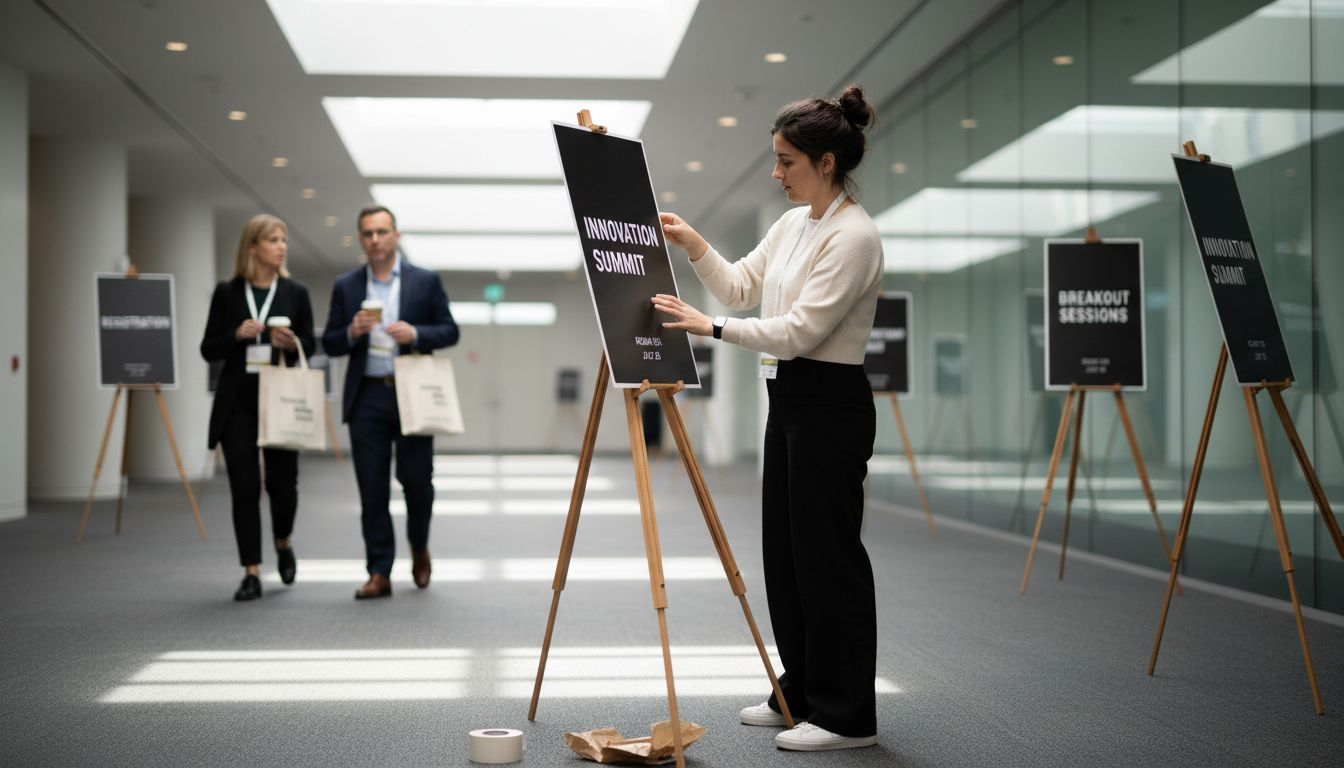
Both approaches have merit depending on your event identity. Minimalism excels when clarity and sophistication matter most. Retro design shines when you want to stand out and evoke specific era associations. The wrong choice confuses your brand message, so align your aesthetic with your core event identity.
Sustainable, reusable, and recyclable materials for event signage not only reduce waste but also enhance brand reputation among environmentally conscious attendees. Fabric banners replace vinyl. Modular displays allow reconfiguration across events. Digital displays eliminate printed schedule updates. These choices demonstrate values that resonate with modern audiences.
Sustainability extends beyond materials to lifecycle thinking. Design signage systems that adapt across multiple events rather than single-use solutions. Use QR codes to deliver detailed information digitally, reducing printed collateral. Partner with vendors who prioritize eco-friendly production processes. Every sustainable choice strengthens your brand while protecting the planet.
Digital integration transforms static signage into dynamic communication tools. LED displays show real-time schedule updates, eliminating outdated information. Interactive touchscreens let attendees explore content at their own pace. Social media walls display live attendee posts, encouraging engagement. These technologies create responsive environments that feel modern and attendee-focused.
Personalization and data-driven branding represent the cutting edge. Digital signage can display customized messages based on attendee segments. Name badges with RFID chips trigger personalized greetings on screens. Post-event analytics reveal which signage placements drove the most engagement. This data informs continuous improvement across future events.
| Aspect | Digital Signage | Static Signage |
|---|---|---|
| Content Updates | Instant remote changes | Requires physical replacement |
| Initial Cost | Higher upfront investment | Lower entry cost |
| Flexibility | Highly adaptable content | Fixed messaging |
| Sustainability | Reusable across events | Often single-use |
| Power Requirement | Needs electrical infrastructure | No power needed |
| Visual Impact | Dynamic motion attracts attention | Classic, timeless appeal |
Understanding minimalist design signage trends and sustainable event signage options helps you make informed choices. The best approach often combines both digital and static elements, leveraging each format’s strengths. Use digital displays where information changes frequently. Use static signage for permanent wayfinding and branding.
Common Misconceptions About Event Branding and Signage
A common misconception is that event branding is just about visual elements; however, it encompasses the entire event experience including messaging and attendee emotions. Visuals matter, but they represent only one dimension of comprehensive branding. How staff interact with attendees, the quality of content delivered, and the overall atmosphere all contribute to brand perception.
Five prevalent misconceptions that limit event branding effectiveness:
-
Branding is purely visual: Effective branding integrates visual, verbal, experiential, and emotional elements into a cohesive whole that attendees feel throughout their entire journey.
-
Signage setup is a one-time task: Quality signage requires monitoring and maintenance throughout the event to ensure visibility, accuracy, and professional appearance as conditions change.
-
Attendee preferences don’t matter: Ignoring how attendees actually use and perceive signage leads to wasted investment in materials that fail to serve their intended purpose.
-
More signage is always better: Excessive signage creates visual noise that overwhelms attendees, making it harder to find important information and weakening overall brand impact.
-
Sustainability is just a buzzword: Environmental responsibility significantly influences brand perception, especially among younger demographics who expect organizations to demonstrate genuine commitment to reducing waste.
Signage maintenance proves crucial for multi-day events. Weather damages outdoor displays. High traffic areas accumulate wear. Tape loses adhesion over time. Damaged signage signals neglect and unprofessionalism, undermining your brand even if the rest of your event excels. Schedule regular walk-throughs to catch problems early.
Attendee-centric design impacts loyalty and perception in ways that outlast the event itself. When attendees feel understood and well-served, they associate those positive feelings with your brand. They return for future events and recommend you to peers. Poor navigation or confusing signage creates frustration that colors their entire experience, no matter how good your content.
Pro Tip: Create a signage audit checklist covering visibility, accuracy, condition, and placement effectiveness. Walk the venue twice: once before doors open and once mid-event. Bring replacement materials and repair supplies. Proactive maintenance prevents small issues from becoming attendee pain points.
Understanding event branding misconceptions helps you avoid common pitfalls. The most successful event organizers think holistically, recognizing that every touchpoint either strengthens or weakens their brand. Signage represents a visible, tangible expression of your commitment to attendee experience and professional excellence.
Framework for Designing and Executing Event Branding Strategies
A cohesive event branding strategy includes digital elements like event apps and social media aligned with physical signage to create a unified brand experience. This integration ensures attendees encounter consistent messaging whether they interact with your brand online, on mobile devices, or through physical materials. Disconnects between channels create confusion and weaken trust.
Three core pillars support effective event branding:
-
Identity Definition: Clarify your event’s unique value proposition, personality, and visual language that will differentiate you from competitors.
-
Audience Engagement: Design every element to serve attendee needs, enhance their experience, and create emotional connections that drive loyalty.
-
Implementation Tactics: Execute your strategy through coordinated physical signage, digital platforms, and environmental design that brings your brand to life.
A practical step sequence guides successful implementation:
-
Define objectives: Establish clear goals for what your branding should accomplish, from awareness to engagement to conversion metrics.
-
Develop theme: Create a cohesive visual and verbal identity that captures your event essence and resonates with your target audience.
-
Plan signage and placement: Map attendee journeys to identify critical touchpoints where signage delivers maximum value and impact.
-
Integrate digital: Align event apps, social media, email, and websites with physical branding for seamless multi-channel experiences.
-
Maintain quality: Monitor signage condition throughout the event, making repairs and adjustments to ensure consistent professional presentation.
Each step builds on the previous one, creating a logical progression from strategy to execution. Skipping steps or reversing the order leads to disjointed results that confuse attendees and waste resources.
| Stage | Key Tasks | Expected Outcomes |
|---|---|---|
| Planning | Audience research, goal setting, theme development | Clear brand direction and objectives |
| Design | Visual identity creation, signage layouts, digital mockups | Cohesive brand materials ready for production |
| Production | Printing, fabrication, digital content creation | High-quality branded materials |
| Installation | Strategic placement, testing visibility, staff training | Effective signage deployment |
| Maintenance | Regular monitoring, damage repair, accuracy updates | Sustained professional presentation |
| Evaluation | Attendee feedback, analytics review, ROI assessment | Insights for continuous improvement |
Aligning physical and digital branding creates immersive experiences that feel intentional and sophisticated. When your event app uses the same color palette as your banners, attendees subconsciously recognize cohesion. When social media graphics match on-site photography backdrops, you extend your brand reach beyond the physical venue. This integration amplifies impact while reinforcing memory.
The complete event branding framework recognizes that successful branding is both art and science. Creative expression captures attention and evokes emotion. Strategic planning ensures every element serves specific objectives and delivers measurable results. Balance both dimensions for maximum effectiveness.
Practical Tips for Maximizing Brand Visibility with Custom Signage
Top event branding strategies for a successful event in 2026 include focused signage design and optimization for visibility and engagement. Implementation matters as much as strategy. You need practical tactics that translate concepts into results attendees can see, touch, and experience.
Selecting appropriate signage types starts with understanding your venue and event flow. Large banners work for high ceilings and distant viewing. Table tents suit intimate settings where attendees are seated. Floor decals guide traffic in open spaces. Matching format to context ensures your message reaches attendees effectively.
Design principles that maximize visibility and impact:
- Clarity first: Every sign should communicate one primary message instantly recognizable from intended viewing distance.
- Brand alignment: Colors, fonts, and imagery must consistently reflect your established brand identity across all materials.
- Readability: Use font sizes appropriate for viewing distance, typically 1 inch of letter height per 10 feet of viewing distance.
- Contrast: High contrast between text and background ensures legibility in varying lighting conditions.
- Hierarchy: Size and color should guide eyes to most important information first, then supporting details.
Strategic placement amplifies signage effectiveness exponentially. Position welcome banners at main entrances where attendees naturally look upon arrival. Place directional signs at every intersection or decision point. Install informational signage near gathering areas where attendees pause naturally. Bathroom corridors offer captive audiences for sponsor recognition.
Maintenance best practices preserve brand impact throughout your event. Inspect signage during setup to catch damage before attendees arrive. Assign staff to walk the venue every few hours, looking for wear, displacement, or accuracy issues. Keep backup materials and repair supplies readily accessible. Quick responses to problems maintain the professional polish that reflects your brand standards.
Pro Tip: Choose durable, weather-resistant materials for outdoor signage to maintain brand quality regardless of conditions. Vinyl banners with reinforced grommets withstand wind. UV-resistant inks prevent fading in sun. Waterproof substrates protect against rain. Investing in quality materials costs more upfront but saves money by eliminating mid-event replacements while demonstrating your commitment to sustainability.
Implementing business sign design tips and top signage tips elevates your event branding immediately. Small refinements in design and placement compound into significant improvements in attendee experience and brand perception. The custom signage branding guide offers deeper exploration of these principles.
Successful event branding strategies in 2026 combine proven fundamentals with innovative approaches. Stay grounded in what works while experimenting with new formats and technologies. Test different approaches across events, measure results, and continuously refine your tactics based on real attendee feedback and engagement data.
Maximize Your Event’s Impact with Custom Signs Today
Transforming your event branding strategy from concept to reality requires a partner who understands both design principles and production excellence. Custom Signs Today specializes in high-quality event signage that elevates brand visibility while enhancing attendee experience. Whether you need bold banners for trade show booths or sophisticated directional signage for multi-day conferences, we deliver solutions tailored to your specific requirements.
Our face change signs offer remarkable flexibility for events with changing sponsors or daily themes, allowing you to update messaging without replacing entire displays. For venue branding and wayfinding, our site signs for events provide durable, professional solutions that withstand the demands of high-traffic environments. Every product combines quality materials with expert craftsmanship to ensure your brand looks exceptional throughout your event.
Get a custom quote today and discover how professional signage solutions can amplify your event branding while simplifying logistics. Our team provides consultation to match your vision with the most effective signage types, materials, and placement strategies. From initial concept through final installation, we support your success with reliable, customized solutions for any event type or scale.
Frequently Asked Questions about Event Branding and Signage
What defines effective event branding?
Effective event branding creates a cohesive identity through consistent visual elements, messaging, and experiences that resonate emotionally with your target audience. It differentiates your event from competitors while building recognition and loyalty that extends beyond a single gathering.
How do physical and digital event signage differ?
Physical signage provides permanent, no-power wayfinding and branding with lower upfront costs, while digital signage offers dynamic content updates and interactivity at higher initial investment. The best events combine both formats strategically, using each where it delivers maximum value.
What materials work best for outdoor event signs?
Vinyl banners with reinforced grommets, coroplast boards, and aluminum composite panels offer excellent weather resistance for outdoor events. UV-resistant inks prevent fading, while waterproof substrates maintain appearance through rain, ensuring your brand looks professional regardless of conditions.
How can I measure success of event branding efforts?
Track attendee satisfaction scores, social media engagement with branded content, post-event survey responses about navigation ease, and revenue metrics compared to previous events. Direct feedback during the event provides qualitative insights that complement quantitative data.
What are best practices for maintaining signage quality during multi-day events?
Schedule regular venue walk-throughs to inspect signage condition, keep backup materials and repair supplies accessible, and assign staff responsibility for monitoring specific zones. Address damage or displacement immediately to maintain professional presentation throughout the event duration.