TL;DR:
- Effective open house banners should be designed with clear visual hierarchy, using the right materials and sizes to guide buyers from the road to the door. Proper placement and coordinated signage systems are essential to attract maximum traffic and convey professionalism, while maintaining consistency in design. Utilizing AI tools and proper print preparation ensures high-quality, durable banners that enhance real estate marketing efforts.
Open house banners are the first physical touchpoint between your listing and a potential buyer driving past. A well-designed banner stops traffic, communicates the key details in under three seconds, and directs buyers straight to your door. Knowing how to create open house banners that actually work requires more than picking a template. You need the right materials, a clear visual hierarchy, print-ready files, and a placement strategy that guides buyers from the nearest intersection to your front door. This guide covers every step.
How to create open house banners: tools, sizes, and materials
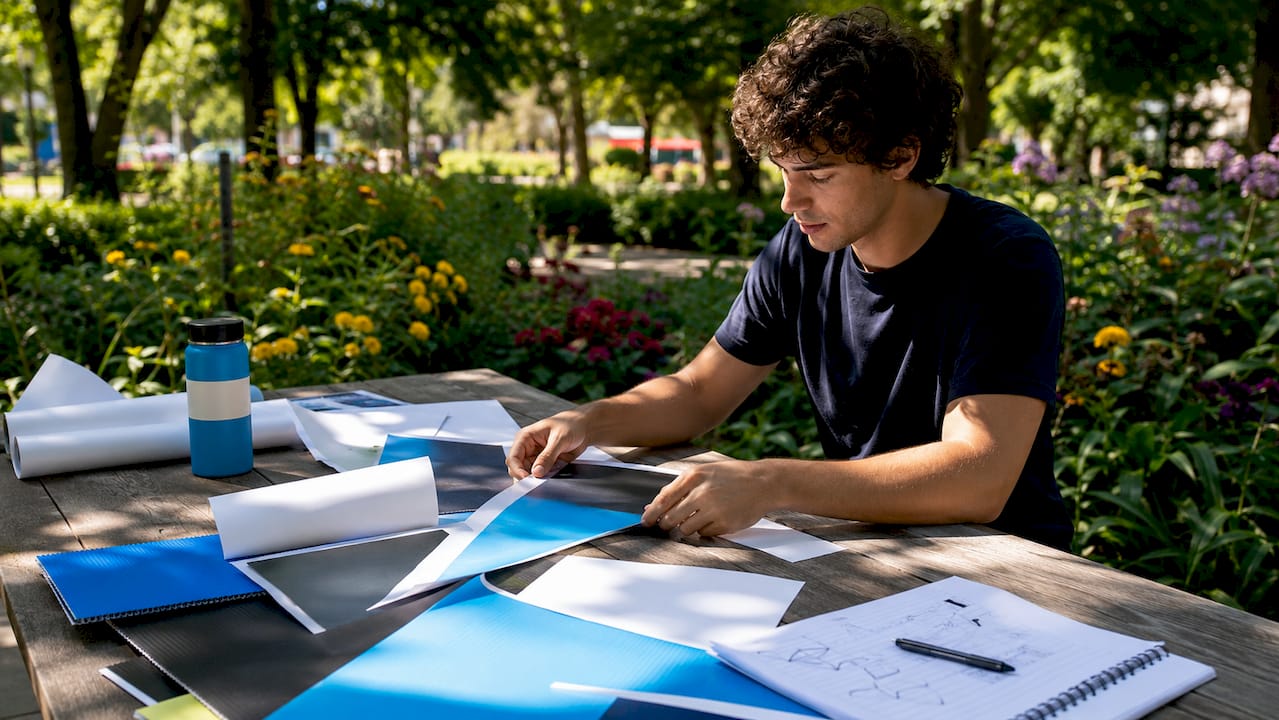
The foundation of any effective open house banner is choosing the right size and material before you open a design program. Standard yard sign size is 18×24 inches for readability and portability, while 24×36 inches is recommended at the property front for maximum visibility. These two sizes cover the two jobs your signage needs to do: guide buyers from a distance and make a strong impression at the property itself.
Material choice determines how your banner holds up through a full weekend event. Weatherproof coroplast and 80 lb (216 gsm) cardstock are the two most practical options for most agents. Coroplast is a corrugated plastic board that resists rain and wind. Cardstock works for indoor use or short events in dry weather. Synthetic papers, such as Yupo, sit between the two: water-resistant and tear-resistant without the bulk of coroplast.
Here is a quick comparison to help you choose:
| Material | Durability | Best use | Relative cost |
|---|---|---|---|
| Coroplast | High (outdoor, weatherproof) | Yard signs, directional signs | Low |
| 80 lb cardstock | Low (indoor only) | Table signs, flyers | Very low |
| Synthetic paper (Yupo) | Medium (water-resistant) | Short outdoor events | Medium |
| Vinyl banner | Very high (all weather) | Large format, property front | Medium to high |
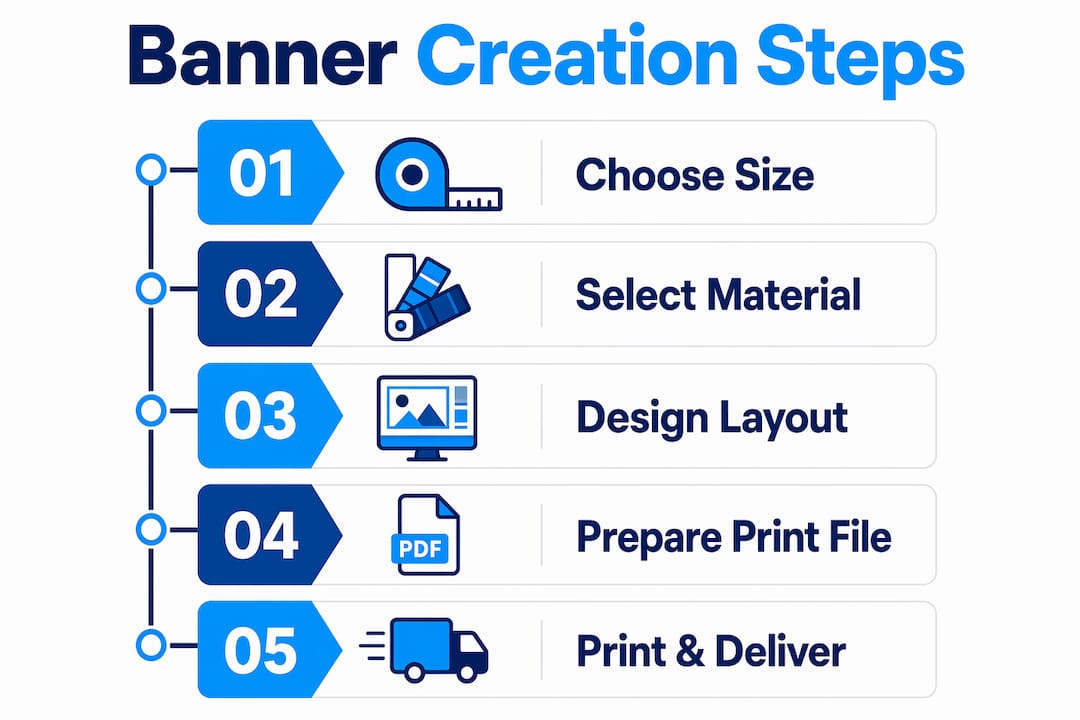
For design software, Adobe Illustrator and Canva Pro both export print-ready files at the correct specifications. AI-driven tools can reduce banner design and collateral creation time to under one hour by enhancing photos and generating print-ready files at 300 DPI. That time savings matters when you are managing multiple listings simultaneously.
Pro Tip: Order one coroplast sign and one vinyl banner per listing. Use the coroplast for directional signs and the vinyl banner at the property entrance. This combination covers every placement scenario without overspending.
What makes an open house banner design actually work?
Design is where most agents lose buyers before the event even starts. Make “Open House” the primary visual focus to catch attention quickly. Excessive text causes drivers to tune out. Visual hierarchy solves this: the most important information is the largest, and everything else is secondary.
Follow these design rules for banners that get read at 30 mph:
- Primary message: “Open House” in the largest font on the sign, at least 40% of the total text area
- Secondary details: Date, time, and address in a clearly readable but smaller font
- Contact info: Your name and phone number at the bottom, smaller still
- Optional QR code: Link to the listing or a virtual tour for buyers who want more detail on the spot
High-contrast color combinations such as black on white, red on white, or blue on yellow increase readability under strong sunlight and outdoor conditions. Avoid glossy finishes, which create glare and make text harder to read in direct sun. Matte or satin finishes perform better outdoors.
Font choice matters more than most agents realize. Sans-serif fonts like Arial, Helvetica, or Montserrat read faster at a distance than serif fonts. Stick to two fonts maximum: one for the headline and one for the body details. More than two fonts creates visual noise.
A clear directional arrow increases visitor arrival rate significantly. Place the arrow prominently on directional signs so buyers never have to guess which way to turn. On the property banner itself, replace the arrow with your brokerage logo or a property photo.
Pro Tip: Print a black-and-white test version of your design before ordering. If the hierarchy and readability hold up without color, your layout is strong. Color should enhance a good design, not rescue a weak one.
For a deeper look at property signage design principles that apply across listing types, the Customsignstoday resource library covers the full range.
Step-by-step process for printing your open house banner
Getting your design right is half the job. Preparing it correctly for print is the other half. Follow these steps to avoid wasted materials and reprints.
- Set your resolution to 300 DPI. Print-ready files at 300 DPI produce crisp text and sharp graphics on banners and flyers. Files below 150 DPI will look blurry when printed at full size.
- Use CMYK color mode, not RGB. RGB is for screens. CMYK is the standard for physical print. Colors shift when you convert at the print stage, so set CMYK from the start in Adobe Illustrator, InDesign, or Canva Pro.
- Add bleed margins. Set a 0.125-inch bleed on all four sides. This prevents white edges from appearing if the cut is slightly off.
- Test print on regular paper first. Test printing on regular paper confirms alignment and color accuracy before the final print run. Adjust margins and colors as needed to avoid wasted materials.
- Choose your print type. Digital print works for short runs and fast turnaround. Vinyl banners handle large format and outdoor exposure. Feather flags add height and movement, which draws the eye from a greater distance.
- Consider lamination. A matte laminate finish protects the surface from rain and UV fading. It also eliminates glare, which improves outdoor readability.
- Batch print when possible. Batch printing features reduce time and improve consistency across multiple signs. If you are running several open houses in the same month, print your directional signs in one order.
Pro Tip: Save your final print file as a PDF/X-1a. This format flattens transparency, embeds fonts, and locks in CMYK values. Most professional printers accept it without issue, and it eliminates the most common file-related print errors.
For a broader look at banner materials and formats, Customsignstoday covers the six material types most relevant to event and real estate signage.
Where and how to place banners for maximum open house traffic
A great banner placed in the wrong location does almost nothing. Placement strategy is what converts a well-designed sign into actual foot traffic.
Use 6 to 10 directional signs in suburban areas and 3 to 5 in urban areas to guide buyers without creating clutter. The goal is a breadcrumb trail effect: each sign reassures buyers they are heading the right way, reducing the chance they give up and turn around before reaching the property.
Key placement rules to follow:
- Place your largest banner (24×36 inches) at the property entrance, facing the direction of incoming traffic
- Set directional signs at every turn between the nearest major intersection and the property
- Position signs at eye level, roughly 3 feet off the ground, so they are visible from a car
- Arrive at least 45 minutes before the open house starts to place all signs and check that none have fallen or shifted
- Remove all signs immediately after the event ends to maintain a professional image and comply with local ordinances
Banners work best as part of a coordinated marketing push. Pair your physical signage with a digital listing update, social media posts showing the banner and property, and printed flyers available at the door. Coordinated directional sign kits significantly improve visitor arrival by providing reassurance along the route to the property. Buyers who see consistent, professional signage from the main road to the front door arrive with more confidence and a better first impression.
For a complete breakdown of directional signage solutions specific to open house events, Customsignstoday has a dedicated guide covering placement, quantity, and sign types.
The agents who consistently draw the most traffic to open houses treat signage as a system, not an afterthought. Every sign from the highway exit to the front door is part of one coordinated message.
Key takeaways
Effective open house banners combine the right materials, a clear visual hierarchy, print-ready file preparation, and a strategic placement system to drive buyer traffic from the road to the front door.
| Point | Details |
|---|---|
| Use standard sizes | 18×24 inches for directional signs; 24×36 inches at the property entrance for maximum visibility. |
| Choose weatherproof materials | Coroplast and vinyl banners hold up outdoors; reserve cardstock for indoor use only. |
| Lead with “Open House” | Make the primary message the largest element; keep secondary details small and readable. |
| Prepare files at 300 DPI | Set CMYK color mode, add bleed margins, and test print before the final run to avoid errors. |
| Deploy as a sign system | Use 6–10 directional signs in suburbs and 3–5 in urban areas to guide buyers without clutter. |
What most agents get wrong about open house signage
I have reviewed hundreds of open house sign setups over the years, and the most common mistake is not bad design. It is information overload. Agents try to fit their headshot, brokerage logo, tagline, website, phone number, email, and property details onto a single 18×24 sign. The result is a sign that communicates nothing because it tries to communicate everything.
The second mistake is inconsistency. An agent will print a sharp vinyl banner for the property front, then use handwritten cardboard arrows for the directional signs. That inconsistency signals to buyers that the agent is disorganized, and that impression carries into the showing itself.
The agents I have seen run the most successful open houses treat their signage the way a retail brand treats its store windows. Every sign in the system uses the same color palette, the same font, and the same logo placement. Experienced agents maintain a strict visual hierarchy that prioritizes “Open House” text, with secondary info kept minimal to aid readability at quick-glance speeds. That discipline is what separates a professional setup from an amateur one.
AI design tools have made this easier than it has ever been. You can now generate a full coordinated sign kit, from the property banner to the directional arrows, in under an hour using tools that export directly to print-ready formats. There is no excuse for inconsistent signage in 2026. The tools exist. The templates exist. The only thing left is the decision to use them.
— Yossi
Get professional open house banners from Customsignstoday
Customsignstoday produces custom banners, face change signs, and site signs built specifically for real estate marketing in West Palm Beach and across Florida. Every order is printed on durable, weather-resistant materials with full customization on size, color, and layout. Whether you need a single property banner or a full directional sign kit for a weekend event, Customsignstoday handles the production so you can focus on the showing. Request a free quote today and get print-ready banners that match your brand and hold up through every open house.
FAQ
What size should an open house banner be?
The standard open house sign size is 18×24 inches for directional and yard signs. Use 24×36 inches at the property entrance for maximum visibility from the road.
What is the best material for outdoor open house signs?
Coroplast (corrugated plastic) is the most practical outdoor material. It is weatherproof, lightweight, and durable enough for a full weekend event without warping or fading.
How many directional signs do I need for an open house?
Use 6 to 10 directional signs in suburban areas and 3 to 5 in urban areas. Place one at every turn between the nearest major intersection and the property.
What information should I include on an open house banner?
Include “Open House,” the date, time, address, and your contact details. A QR code linking to the listing or a virtual tour is a strong optional addition for buyers who want more detail on the spot.
What resolution do I need for print-ready banner files?
Set your design file to 300 DPI resolution and use CMYK color mode. Files below 150 DPI will print blurry at banner size, and RGB files will shift color when converted at the print stage.