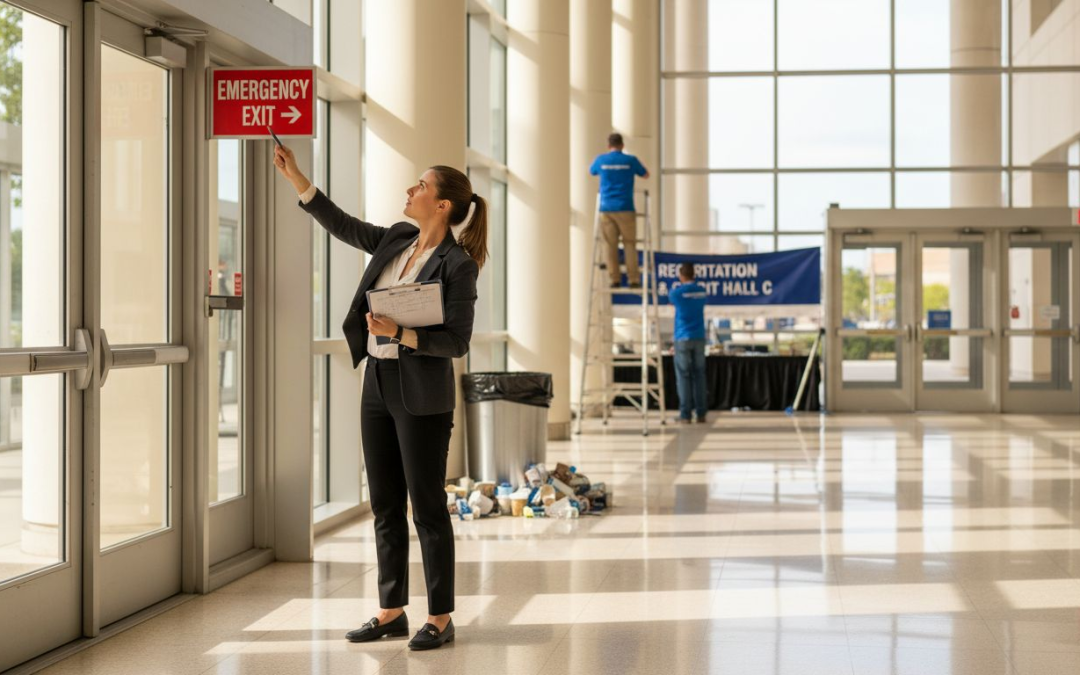
Planning a safe event in the United States means more than just checking off the basics. Every crowded hallway, busy entrance, and outdoor festival brings unique risks that demand attention. For event planners, effective event safety signage solutions are the backbone of a strong risk management strategy. Discover how coordinated signage, smart design, and clear compliance can protect attendees and staff while meeting local safety standards.
Table of Contents
- Defining Event Safety Signage Solutions
- Types of Safety Signage for Events
- Key Design Features That Enhance Safety
- Legal Standards and Compliance in the U.S.
- Risks of Poor or Missing Signage
- Common Mistakes and Liability Issues
Key Takeaways
| Point | Details |
|---|---|
| Effective signage is crucial for event safety. | A comprehensive approach to signage enhances communication of emergency procedures and hazard awareness to attendees. |
| Custom solutions are necessary for different events. | Signage must be tailored to the venue layout and specific risks to address unique challenges effectively. |
| Compliance with legal standards is mandatory. | Ensuring signage meets OSHA and ANSI regulations prevents liability exposure and enhances attendee safety. |
| Frequent audits are vital. | Regularly inspecting signage for visibility and accuracy prevents potential hazards and legal issues during events. |
Defining Event Safety Signage Solutions
Event safety signage solutions represent a coordinated system of visual communication tools designed to protect attendees, staff, and workers from hazards before, during, and after live events. These solutions go far beyond simple directional signs or emergency exit markers. They encompass an integrated approach that combines emergency planning, crowd management, and site design into a cohesive safety communication strategy. According to comprehensive event safety standards, effective signage works alongside other safety measures to help event professionals identify risks and communicate critical information quickly when every second counts.
What makes a signage solution truly effective for event safety? It must accomplish several distinct goals simultaneously. First, signs need to guide attendees safely through entry points, seating areas, and restroom facilities without creating bottlenecks or confusion. Second, they must clearly communicate emergency procedures, evacuation routes, and assembly points that attendees can find and understand instantly under stressful conditions. Third, signs must identify hazards like uneven surfaces, restricted areas, or equipment zones that could cause injury. Fourth, they establish clear communication pathways for staff and security personnel to manage crowd flow. Unlike standard venue signage, effective event signage design requires careful consideration of sight lines, lighting conditions, and the specific demographics attending your event.
Your event’s signage solutions should be tailored to the specific risks and layout of your venue. A festival held outdoors faces different signage challenges than an indoor conference. A music concert with 10,000 attendees requires different crowd communication strategies than a corporate gala with 200 guests. According to the Event Safety Alliance, safety signage solutions remain accessible and adaptable regardless of event size or location, meaning you can implement professional safety communication at any scale. This flexibility allows event planners to customize solutions that address their unique venue layout, expected attendance, weather conditions, and local regulations. The key is identifying what hazards exist at your specific event and designing signage that directly addresses those risks.
Pro tip: Before designing your event signage, walk your venue during similar weather and lighting conditions to identify sightlines where signs will be hard to read or easily missed. This practical walkthrough prevents costly design mistakes and ensures attendees can actually see and understand your safety signage when it matters most.
Types of Safety Signage for Events
Event safety requires different types of signage working together to communicate specific messages to different audiences. You cannot use the same sign to guide people to an emergency exit and warn them about a slippery floor. Each sign type serves a distinct function, and understanding these categories helps you plan comprehensive safety communication for your event. The main categories include emergency exit signs, hazard warnings, directional wayfinding, and fire safety notices, though your specific event may require additional specialized signage depending on venue layout and potential risks.
Emergency exit signs are non-negotiable at any event. These high-visibility signs must clearly indicate evacuation routes from every area of your venue, including seating sections, vendor areas, and backstage zones. Exit signs need to remain visible even in low light or smoky conditions, which is why many event planners use illuminated options. Hazard warnings address specific dangers present at your venue such as uneven surfaces, wet floors, low ceilings, or overhead equipment. Unlike exit signs, hazard warnings target specific locations where injuries could occur if attendees are not paying attention. Directional wayfinding signs guide people safely through your event space to restrooms, first aid stations, parking areas, and information booths without creating dangerous congestion. Finally, fire safety notices communicate procedures for what to do in case of fire, including assembly point locations and staff roles during emergencies.
Beyond these standard categories, modern event planners can leverage different signage types including static signs, illuminated signs, and digital displays depending on your venue and communication needs. Static signs provide consistent visual messaging that doesn’t require power and works reliably in any weather condition. Illuminated signs enhance visibility in low-light environments like evening concerts or indoor venues. Digital signage offers real-time flexibility for updating information about crowd flow, weather changes, or emergency situations as they develop. The choice between these formats depends on environmental context, visibility requirements, and your local regulatory standards. Most successful events use a combination of formats to ensure comprehensive safety coverage across different zones and lighting conditions.
Here’s a summary of common event safety sign types and their main purposes:
| Sign Type | Primary Audience | Key Purpose |
|---|---|---|
| Emergency Exit | All attendees | Guide safe evacuation |
| Hazard Warning | Attendees, staff | Alert to location-specific risks |
| Directional Wayfinding | Attendees | Simplify venue navigation |
| Fire Safety Notice | Attendees, staff | Communicate fire emergency steps |
| Digital Signage | All audiences | Deliver real-time updates |
Pro tip: Create a detailed signage map showing every safety sign placement before your event, then conduct a walk-through where you view each sign from different angles and distances to ensure attendees can actually read and understand every message.
Key Design Features That Enhance Safety
Not all signs communicate equally. A poorly designed safety sign might look professional but fail to convey its message when attendees need it most. The difference between an effective safety sign and an ineffective one comes down to specific design features that work together to grab attention and communicate instantly. High visibility stands as the foundation of any safety sign. This means choosing colors that contrast sharply against their background, using large fonts that remain readable from distance, and positioning signs where people naturally look as they move through your venue. A sign mounted at eye level on a bright yellow background communicates urgency far more effectively than a small sign tucked behind a doorframe.

Legibility and consistency prevent confusion when attendees encounter multiple signs throughout your event. When your emergency exit signs all use identical fonts, colors, and symbols, people learn to recognize them instantly without having to read every word. This matters tremendously during emergencies when attendees are stressed and decision-making slows down. The ANSI Z535.3 standard establishes design criteria for safety symbols that communicate hazards through clear iconography and standardized colors, which reduces response times during critical moments. Standardized symbols work across language barriers, meaning international attendees or those with visual impairments can understand your safety messages without relying on words alone. Strategic placement amplifies these design principles. A hazard warning sign placed at the exact location where the danger exists works far more effectively than a general warning posted elsewhere. Your first aid station sign should be visible from multiple angles within your venue. Exit route signs must be spaced close enough together that attendees never lose sight of the path even in reduced visibility.
Contrast, color psychology, and material durability complete the picture. Red conveys danger and demands attention. Green indicates safety and exits. Yellow warns of caution. These color associations are recognized internationally and help attendees process information faster than reading text alone. Your signs must also withstand your event environment. Outdoor events require weather resistant materials that maintain visibility through rain or sun exposure. Indoor venues with smoke machines need signs that remain visible despite reduced visibility. Material quality directly impacts how long your signs remain readable throughout your event duration.
Pro tip: Test your final sign designs by viewing them from the farthest point in your venue where attendees will need to read them, and have team members review them under the actual lighting conditions your event will experience to catch legibility problems before the event begins.
Legal Standards and Compliance in the U.S.
Ignoring legal standards for event signage is not an option. In the United States, event planners operate within a strict regulatory framework designed to protect attendees and minimize liability. The primary governing bodies establishing these requirements are OSHA (Occupational Safety and Health Administration) and ANSI (American National Standards Institute). These organizations set specific, enforceable standards that your signage must meet, and failure to comply can result in significant penalties, lawsuits, and most importantly, preventable injuries at your event. As the event planner, you bear legal responsibility for ensuring your signage meets these standards before attendees arrive.
OSHA regulations apply to public events and establish detailed requirements for hazard communication, emergency response procedures, and safety instructions. OSHA signage requirements mandate proper placement, maintenance, and periodic review to ensure signs remain effective throughout your event. This means your signs cannot simply be posted and forgotten. They must be inspected regularly for damage, fading, or obstruction that could reduce effectiveness. ANSI standards complement OSHA requirements with specific guidance on sign design, including the ANSI ES1.4 standard for event fire safety signage. This standard addresses emergency exit markings, fire evacuation procedures, and crowd control signage that must be clearly visible and understood by all attendees regardless of language or literacy level.
Non-compliance carries real consequences. Beyond potential fines and legal action, inadequate signage directly increases liability if an injury or emergency occurs. If an attendee is injured and you failed to post required warnings, your liability exposure increases dramatically. Insurance companies may deny claims if they determine your signage was insufficient. Local fire marshals conduct inspections and can shut down events that do not meet safety standards. Meeting these standards is not bureaucratic overhead; it is foundational risk management that protects your attendees and your event. Different event types and venues may have additional local requirements, so you must verify what applies to your specific situation with your local fire department and venue management before finalizing your signage plan.
The following table offers a quick comparison of regulatory focus for U.S. event signage:
| Standard/Agency | Core Responsibility | Impact on Events |
|---|---|---|
| OSHA | Hazard communication rules | Enforces safe sign placement |
| ANSI | Design and symbol criteria | Sets readable, universal symbols |
| Local Fire Marshal | Event-specific requirements | Approves signage compliance |
Pro tip: Contact your local fire marshal and venue management at least three months before your event to request a list of specific signage requirements, then have your signage design reviewed by these officials before production to avoid costly last-minute changes or event delays.
Risks of Poor or Missing Signage
A single missing sign can set off a chain reaction of problems that escalates quickly during emergencies. When attendees cannot find exit routes, hazard warnings, or critical safety information, confusion spreads faster than you can manage it. Poor or missing signage creates cascading risks that impact not just individual attendees but your entire event’s safety infrastructure. The consequences range from minor injuries to tragic outcomes that might have been prevented with proper communication. Studies of emergency incidents demonstrate that failure to have dynamic signage results in increased casualties, as people take unsafe routes or delay evacuation when they cannot see clear directions. This is not theoretical risk. Event planners who cut corners on signage investments often face outcomes they never anticipated.
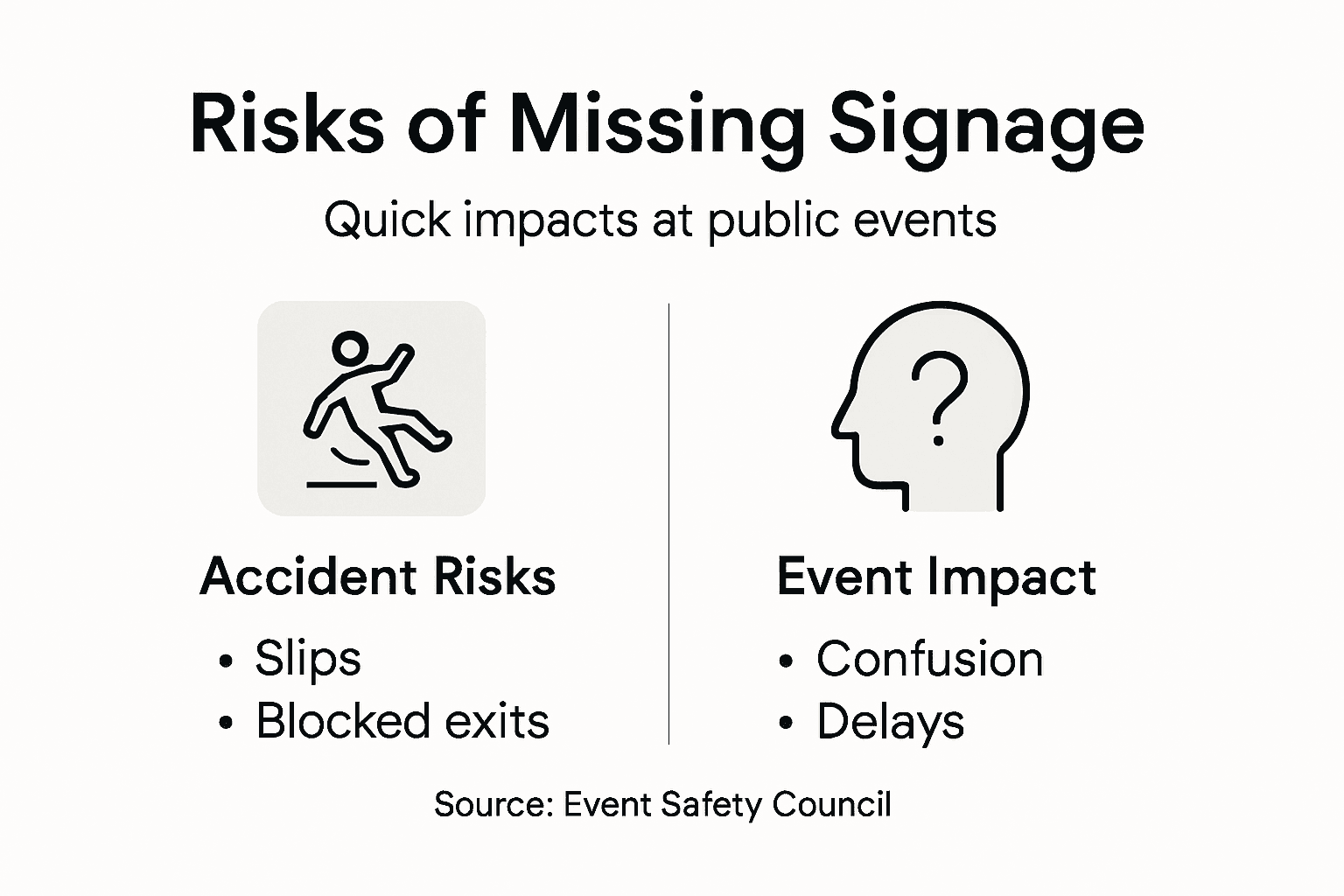
Accidents caused by inadequate signage follow predictable patterns. Attendees slip on wet floors because no hazard warning was posted. People become trapped in dead-end corridors because exit routes were not clearly marked. During actual emergencies, insufficient signage has contributed to tragic outcomes by impairing hazard awareness and emergency navigation. In high-stress situations, people do not stop to read complex instructions or search for information. They follow visible cues and make split-second decisions based on what they see. If your signage fails to communicate clearly, attendees will guess, and guessing during emergencies creates injuries. Beyond physical injuries, missing signage creates enormous liability exposure. When an incident occurs and you cannot demonstrate that you posted required safety warnings, your legal position collapses. Insurance companies investigate whether proper signage was in place before approving claims.
The financial and reputational damage extends far beyond immediate incident costs. A single serious injury at your event generates lawsuits, investigation reports, and media coverage that can destroy your reputation and business. Other event venues may refuse to work with you. Your insurance premiums skyrocket or coverage gets cancelled. Attendees who experience preventable injuries become vocal advocates against your brand. Missing signage also triggers regulatory action. Local fire marshals can issue citations, require expensive corrective measures, or shut down future events you plan to host. The cost of proper signage planning and production is minimal compared to the fallout from preventable injuries.
Pro tip: Create a comprehensive audit checklist of every sign location your event requires, then physically inspect each location one week before your event and again two hours before attendees arrive to catch any missing, damaged, or obscured signage.
Common Mistakes and Liability Issues
Event planners often repeat the same signage mistakes that expose them to serious liability. These are not obscure problems hidden in regulatory fine print. They are common oversights that happen repeatedly because planners prioritize budget and speed over safety planning. Understanding these mistakes helps you avoid them and protect both your attendees and your business. The most frequent errors include improper sign placement, using outdated information, failing to comply with standards, and neglecting contingency planning for changing threats. When these mistakes lead to injuries, the legal consequences are swift and devastating. Courts assume that event organizers knew these standards existed and chose not to follow them, which transforms negligence into gross negligence in the eyes of juries.
Improper placement tops the list of common mistakes. A sign posted in a location where people cannot see it might as well not exist. Many planners place exit signs where they assume people will look rather than where attendees actually look during movement and emergencies. Others mount hazard warnings at chest height when visibility is blocked by crowds or merchandise displays. Liability issues often arise from failure to follow signage regulations and neglecting to maintain signs, creating exposure that extends throughout your event and beyond. Signs also deteriorate over time. A sign that was perfectly visible six months ago may be faded, partially obscured, or damaged by the time your event occurs. Event planners who fail to inspect and maintain signage throughout their events create documented evidence of negligence if an injury happens. Outdated information is equally problematic. If your emergency assembly point sign directs people to a location that no longer exists or your evacuation route has changed due to venue modifications, your signage actively creates confusion during emergencies.
Non-compliance with standards generates automatic liability. When investigators examine an incident, they compare your signage against OSHA and ANSI requirements. If your signs fall short of these standards, you have no defense. Common mistakes include improper placement, non-compliance with standards, outdated information, and lack of contingency for changing threats, all of which expose event organizers to legal liability. Documentation matters tremendously in liability cases. If you can prove you conducted safety audits, consulted with fire marshals, updated signage regularly, and trained staff on safety procedures, you demonstrate due diligence that protects you legally. If you have no documentation, you appear to have ignored safety entirely. Event planners should maintain written records of all signage decisions, placements, inspections, and staff training related to safety communication.
Pro tip: Photograph every safety sign location from multiple angles before your event, keep these images with dated documentation, and repeat the process after your event concludes to create an irrefutable record that proper signage was in place should any liability question arise later.
Enhance Your Event Safety with Customized Signage Solutions
Managing the safety of thousands of attendees demands clear, effective communication to prevent confusion and reduce risks. The core challenge event planners face is ensuring every safety sign is visible, legible, and compliant with legal standards. This article highlights how poor signage placement, inadequate design, and non-compliance with OSHA and ANSI can expose your event to dangerous situations and costly liabilities. Your goal is to create an integrated signage system that guides attendees smoothly through emergency procedures and everyday navigation without delay or uncertainty.
At Uncategorized we understand the critical role signage plays in your event’s safety infrastructure. Our custom-made signs are designed with high visibility, durable materials, and precise compliance to help you meet all legal requirements and provide peace of mind. Whether you need emergency exit signs, hazard warnings, or real-time digital displays to adapt to evolving conditions, we have the expertise to deliver exactly what your event needs.
Don’t risk your reputation and attendee safety with generic signage. Act now to secure professional, customized safety communication solutions from https://customsignstoday.us. Request a free quote today and ensure your event signage is as safe and efficient as your emergency plans demand.
Frequently Asked Questions
What is the purpose of event safety signage?
Event safety signage provides critical information to guide attendees, communicate emergency procedures, and identify hazards, thus enhancing safety for everyone at the event.
What types of signage are essential for event safety?
Essential types of signage include emergency exit signs, hazard warnings, directional wayfinding signs, and fire safety notices, each serving a specific function to ensure attendee safety.
How can I ensure my event signage is effective?
To ensure effectiveness, signage should be high visibility, legible, and consistent in design. Placement should be strategic, where attendees naturally look as they navigate the venue.
What legal standards should I be aware of when designing event signage?
Event planners must comply with OSHA and ANSI standards, which include proper sign placement, maintenance, and design criteria to minimize liability and enhance attendee safety.