
TL;DR:
- Temporary signage is a short-term communication tool used for events, sales, or directions. Proper planning and compliance can improve its effectiveness and safety. Its success relies on strategic placement, timely removal, and choosing appropriate materials.
Temporary signage is defined as any sign designed for short-term use to communicate time-sensitive messages, directions, or promotions. Understanding temporary signage is the first step toward using it as a real business tool rather than a last-minute fix. Business owners, event organizers, and property managers who treat these signs as part of a planned communication strategy consistently get better results than those who order them the week before an event. This guide covers what temporary signage is, how regulations shape it, which materials and formats work best, and how to deploy it for maximum impact.
What are the regulatory standards for temporary signage?
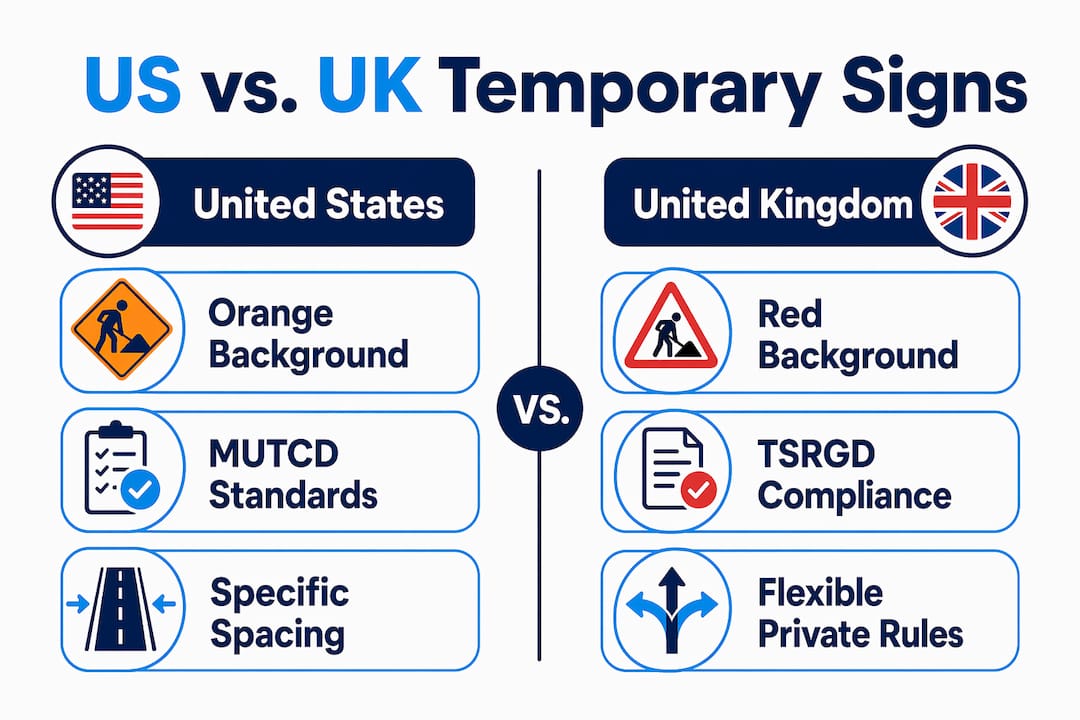
Temporary signage in the United States is governed primarily by MUTCD Part 6, which sets enforceable standards for design, placement, and removal of temporary traffic control signs. The standard divides work zones into four sequential areas: advance warning, transition, activity, and termination. Each zone requires specific sign types placed at defined intervals. This zone-based approach ensures drivers receive progressive warnings at the speed they are traveling.
Advance warning sign spacing is not arbitrary. Spacing ranges from 100 ft in low-speed urban zones to 2,640 ft on freeways, based on Table 6C-1. Getting this wrong does not just risk a fine. It impairs driver response time and raises accident risk at your worksite.
In the United Kingdom, the Traffic Signs Regulations and General Directions (TSRGD) governs public road signage. UK temporary signs use yellow backing boards to distinguish them from permanent signs, which use white. This color distinction is legally mandated, not a design preference. Any sign placed on a public highway in the UK must be authorized and conform to precise design attributes.
US vs. UK temporary signage: key differences
| Requirement | United States (MUTCD) | United Kingdom (TSRGD) |
|---|---|---|
| Background color | Orange with black legend | Yellow backing board |
| Governing document | MUTCD Part 6 | TSRGD |
| Advance warning spacing | 100 ft to 2,640 ft by speed | Scaled to road speed and sign size |
| Authorization required | Yes, by traffic control authority | Yes, legally mandated |
| Private property rules | More flexible, fewer restrictions | More flexible, fewer restrictions |
Private property is a different story on both sides of the Atlantic. Custom signage on private property faces far fewer legal restrictions, giving business owners and event organizers real creative freedom. You still need to think about visibility and durability, but you are not bound by the same color or spacing rules that apply on public roads.
What are the common types and materials used for temporary signs?
Temporary signage for business marketing covers a wide range of formats, from outdoor banners and yard signs to construction site signs and event wayfinding displays. Each format serves a different purpose and calls for a different material. Choosing the wrong material for the environment is one of the most common and costly mistakes business owners make.
Here is a breakdown of the most common types by use case and typical material:
- Vinyl banners: Used for grand openings, seasonal promotions, and event backdrops. Vinyl is weather-resistant, lightweight, and prints in full color. Best for short to medium-term outdoor use.
- Coroplast yard signs: Corrugated plastic signs used in real estate, political campaigns, and retail promotions. Lightweight, inexpensive, and easy to stake into the ground.
- Aluminum site signs: Used on construction sites and property developments. Materials like aluminum balance outdoor durability with ease of installation and removal. Aluminum resists rust and holds up through extended projects.
- Foam board posters: Used indoors for trade shows, retail displays, and event signage. Lightweight and easy to mount, but not suited for outdoor conditions.
- Mesh fabric banners: Used on construction fencing and building facades. Mesh allows wind to pass through, reducing the risk of the sign tearing or pulling down its mounting hardware.
- Traffic control signs: Used in work zones and road construction. Must meet MUTCD reflectivity and color standards for public road use.
Installation and removal matter as much as material choice. A coroplast yard sign that takes 30 seconds to stake in also takes 30 seconds to pull out. An aluminum site sign bolted to a fence post requires tools and a planned removal date. Build removal into your project timeline from day one.
Pro Tip: Order a small quantity of a new sign format before committing to a large run. Test it in your actual environment, whether that is direct sun, wind, or foot traffic, before scaling up.

Why use temporary signage? Benefits for businesses and events
Temporary signage is one of the highest-return communication tools available to business owners and event organizers. The cost per impression is low, the lead time is short, and the message can be changed between campaigns. Treating signage as a marketing campaign touchpoint rather than a logistics afterthought materially improves brand visibility and attendee experience.
The core benefits break down clearly:
- Speed to market. A vinyl banner or yard sign can go from design to installation in days. That speed matters for flash sales, pop-up events, and construction project updates.
- Cost-effectiveness. Temporary signs cost a fraction of permanent installations. You can refresh messaging seasonally without a major budget commitment.
- Flexibility. Face change signs let you update the message on an existing sign frame without replacing the whole structure. That is a significant cost saver for property managers and retailers.
- Targeted placement. You place temporary signs exactly where your audience is. A real estate banner goes on the property. An event wayfinding sign goes at the parking lot entrance.
- Event navigation. Poor directional signage at entrances can misroute attendees and reduce event ROI even when every other element is well-executed. Good wayfinding signs solve this before it becomes a problem.
- Construction communication. Temporary signs on active job sites communicate project status, safety zones, and access restrictions to workers and the public.
Pro Tip: Plan your event signage at the same time you plan your event program. Signage ordered as an afterthought rarely covers all the decision points attendees need. Map out every entrance, fork, and parking area first, then design signs for each location.
For event organizers, the examples of event signage that perform best are placed at decision points, not just at the main entrance. Attendees make navigation decisions at every turn. A sign at the front door does not help someone who parked in the back lot.
How do you plan, deploy, and maintain effective temporary signage?
Effective temporary signage follows a lifecycle: design, production, delivery, installation, inspection, and removal. Skipping any phase creates problems that show up at the worst possible moment, usually during the event or project itself.
Design for legibility first
Sign legibility depends on three variables: font size, contrast, and viewing distance. A sign read from a moving car needs much larger text than one read by a pedestrian at a trade show booth. Sign sizing must correspond to operating speeds and viewing distances to meet both MUTCD and TSRGD frameworks. For business signage on private property, the same principle applies even without a legal mandate. If your audience cannot read the sign in the time they have, the sign failed.
Use high-contrast color combinations: dark text on a light background, or light text on a dark background. Avoid decorative fonts for any sign read at a distance. Limit each sign to one primary message. A sign trying to say three things says nothing.
Installation and placement
Place signs at decision points, not just at destinations. A banner on your storefront tells people you are there. A yard sign at the intersection two blocks away tells people how to find you. Both serve different functions and both are necessary. For construction sites, the outdoor signage installation guide from Customsignstoday covers placement procedures that keep both workers and the public safe.
Inspection and removal
Temporary signs require daily inspections during active projects to confirm they remain visible, undamaged, and relevant. A faded or fallen sign is worse than no sign. It signals neglect and, in a work zone, creates a genuine safety hazard. Build a removal date into every sign order. Prompt removal when conditions change prevents confusion and keeps your signage credible.
Pro Tip: Assign one person on your team to own the signage inspection schedule. When everyone is responsible, no one checks. A single point of accountability prevents the common problem of outdated signs staying up weeks after an event or project ends.
Key Takeaways
Temporary signage delivers the highest return when it is planned as a communication strategy, not ordered as a last-minute detail.
| Point | Details |
|---|---|
| Define the use case first | Match sign type and material to the environment: vinyl for outdoor events, aluminum for construction sites. |
| Know your compliance rules | US work zones follow MUTCD Part 6; UK public roads follow TSRGD; private property allows more creative freedom. |
| Place signs at decision points | Entrances and destinations are not enough. Cover every turn and fork your audience will encounter. |
| Build in a removal plan | Assign a removal date and a responsible person before the sign is ever installed. |
| Treat signage as marketing | Signs designed as campaign touchpoints outperform signs treated as logistics. |
Why I think most businesses underinvest in temporary signage
Most business owners I have worked with treat temporary signs as a commodity. They order the cheapest option, place it at the front door, and call it done. That approach wastes most of the sign’s potential.
The real value of temporary signage is in placement strategy, not production cost. A well-placed coroplast yard sign at a busy intersection outperforms an expensive banner hung where foot traffic is already committed. The sign that changes behavior is the one placed before the decision is made, not after.
The other mistake I see constantly is treating removal as optional. Outdated signs do real damage to your brand. A “Grand Opening” banner still flying three months later tells customers you are not paying attention. A construction zone sign left up after the project ends creates confusion and liability. Removal is not an afterthought. It is part of the sign’s job.
The businesses that get the most from temporary signage are the ones that plan it alongside their marketing calendar. They know which signs go up in march for spring promotions, which ones support their summer events, and which ones come down the day after. That level of planning is not complicated. It just requires treating signage as a real communication tool rather than a box to check.
— Yossi
Professional temporary signage from Customsignstoday
Customsignstoday produces custom temporary signs for business owners, event organizers, and property managers across West Palm Beach and Palm Beach County. Whether you need outdoor site signs for a construction project or fast-turnaround banners for an upcoming event, the team delivers quality materials with expert guidance on placement and sizing.
Customsignstoday also offers face change signs for property managers and retailers who need to update messaging without replacing the entire sign structure. Request a free quote directly through the website and get a recommendation tailored to your project timeline, environment, and budget. Fast production, durable materials, and local expertise make Customsignstoday the practical choice for temporary signage that actually works.
FAQ
What is temporary signage?
Temporary signage is any sign designed for short-term use to communicate time-sensitive messages, directions, or promotions. Common applications include construction sites, events, real estate listings, and seasonal retail promotions.
What materials are used for temporary signs?
The most common materials are vinyl, coroplast, aluminum, foam board, and mesh fabric. Material choice depends on the environment, the duration of use, and whether the sign is indoors or outdoors.
Do temporary signs require permits or compliance?
Signs on public roads in the US must comply with MUTCD Part 6, and in the UK with TSRGD. Signs on private property face fewer restrictions but must still meet local zoning rules.
How long can a temporary sign stay up?
Duration depends on the application and local regulations. Construction zone signs must be removed or updated when conditions change. Event signs should come down immediately after the event ends to avoid confusion and maintain brand credibility.
What is the difference between temporary and permanent signage?
Permanent signs use more durable materials and fixed mounting designed for years of use. Temporary signs use lighter materials built for easy installation and removal, and are intended for weeks or months rather than years.