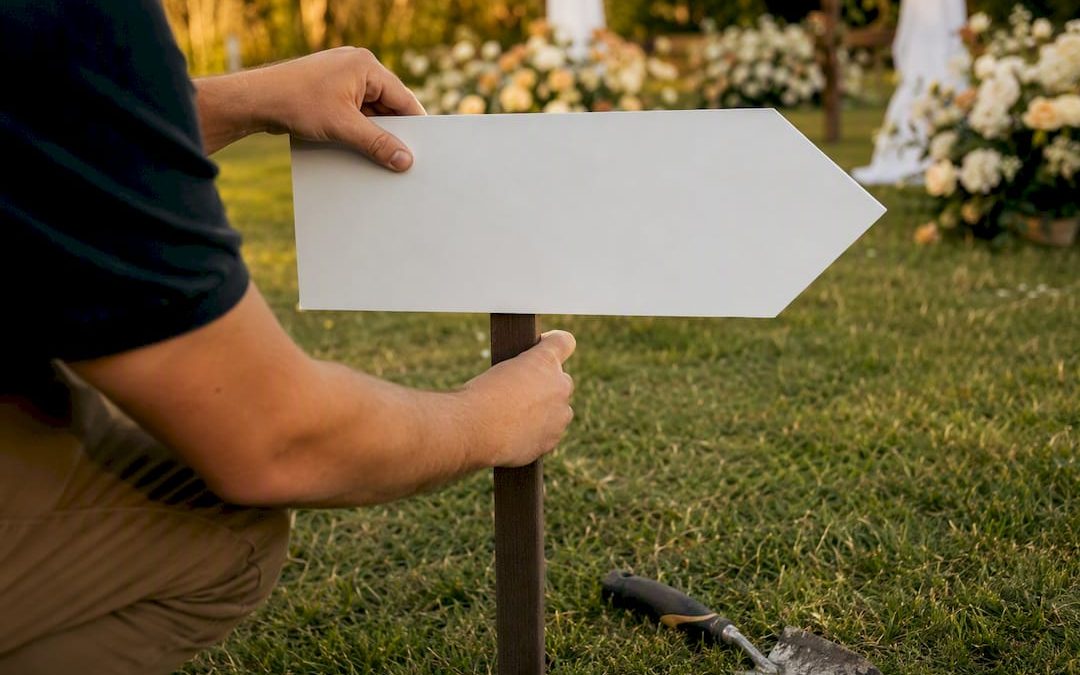
Order custom, weatherproof arrow signs sized for 15 to 20 feet of readability, and do it before you consider anything else. That single decision solves the two problems that actually derail wedding day-of signage: guests squinting at text they can’t read from the parking lot, and cardboard arrows curling in the grass by cocktail hour.
DIY only makes sense under specific conditions: a tight budget, one small indoor or covered venue, and a guest list under 30 where confusion has low stakes. Skip DIY if you’re outdoors, expecting more than 50 guests, or dealing with a sprawling property with multiple decision points. Custom Signs Today produces weatherproof arrow signs in the materials and sizes this guide recommends, built to survive a full outdoor reception without falling apart.
- Order custom if: outdoor venue, 50+ guests, multiple buildings or parking areas, or a date more than 6 weeks out
- DIY if: small indoor venue, under 30 guests, and a same week budget crunch
- Never mix the two approaches for the same decision point. Guests notice inconsistency faster than you’d think.
TL;DR:
- Use signs with at least one inch of letter height per ten feet of viewing distance to ensure legibility from the road or parking lot.
- Choose weatherproof materials like vinyl or mesh for outdoor sites with wind, sun, or moisture risk, and reserve corrugated plastic for sheltered, short-term use.
- Count the total signs based on guest number and venue complexity, generally needing three to fifteen signs to guide guests effectively.
- Position signs at actual decision points, walking the route at the same time of day to verify visibility and glare conditions.
- Hire a professional sign shop to produce weatherproof signs that match your venue exposure, ensuring durability and visual cohesion across all signage.
Table of Contents
- What to Buy: Materials, Ink, and Sizing Rules for Wedding Arrow Signs
- How Many Wedding Directional Arrows Do You Actually Need?
- Choosing Fonts, Arrow Styles, and Wording That Guests Can Actually Read
- DIY Wedding Arrow Signs: What Works and What Fails
- Ordering Timeline: When to Finalize and Place Your Order
- Why a Professional Sign Shop Beats a Last-Minute DIY Fix
- Do You Need Venue Permission for Wedding Arrow Signs?
- Eco-Friendly Materials for Wedding Directional Signage
- Making Wedding Directional Arrows Match Your Other Signage
- Common Mistakes That Ruin Wedding Arrow Sign Setups
- A Planner’s Honest Take on Wedding Arrow Signs
- Get Custom Weatherproof Wedding Arrow Signs From Custom Signs Today
- Key Takeaways
- Sources
What to Buy: Materials, Ink, and Sizing Rules for Wedding Arrow Signs
Corrugated plastic, PVC (often called Foamex), vinyl, and mesh each solve a different exposure problem. Corrugated plastic is light and cheap, fine for a covered ceremony or a single afternoon, but it dents and can warp if rain gets in. PVC holds a crisp edge and rigid shape, making it the standard choice for A-frame arrow signs at a fixed spot. Vinyl banners flex without cracking and shrug off moisture, which is why they show up on multi-day event signage. Mesh is the answer for windy sites; it lets air pass through instead of catching it like a sail.
Sizing follows a simple formula: letter height should run about one inch for every ten feet of viewing distance, so a sign guests need to read from 20 feet away needs letters at least two inches tall. Arrow graphics should be at least as bold as the largest word on the sign, not a decorative afterthought.
Ink matters as much as material. Standard inks without UV protection can fade after just 6 to 8 hours of direct sun exposure, which means a sign printed Tuesday can look washed out by your Saturday cocktail hour. UV-resistant or solvent-based inks, paired with a laminate layer, push that lifespan out to multiple seasons of outdoor use.
Pro Tip: Ask your sign shop for a lamination sample before you order the full set. A matte laminate cuts glare in afternoon sun, which matters more than most couples expect until they’re squinting at their own welcome sign.
Spending more upfront on UV-treated vinyl or laminated PVC usually costs less than reprinting a faded batch two days before the wedding. That’s the real math behind “buy once.”
How Many Wedding Directional Arrows Do You Actually Need?
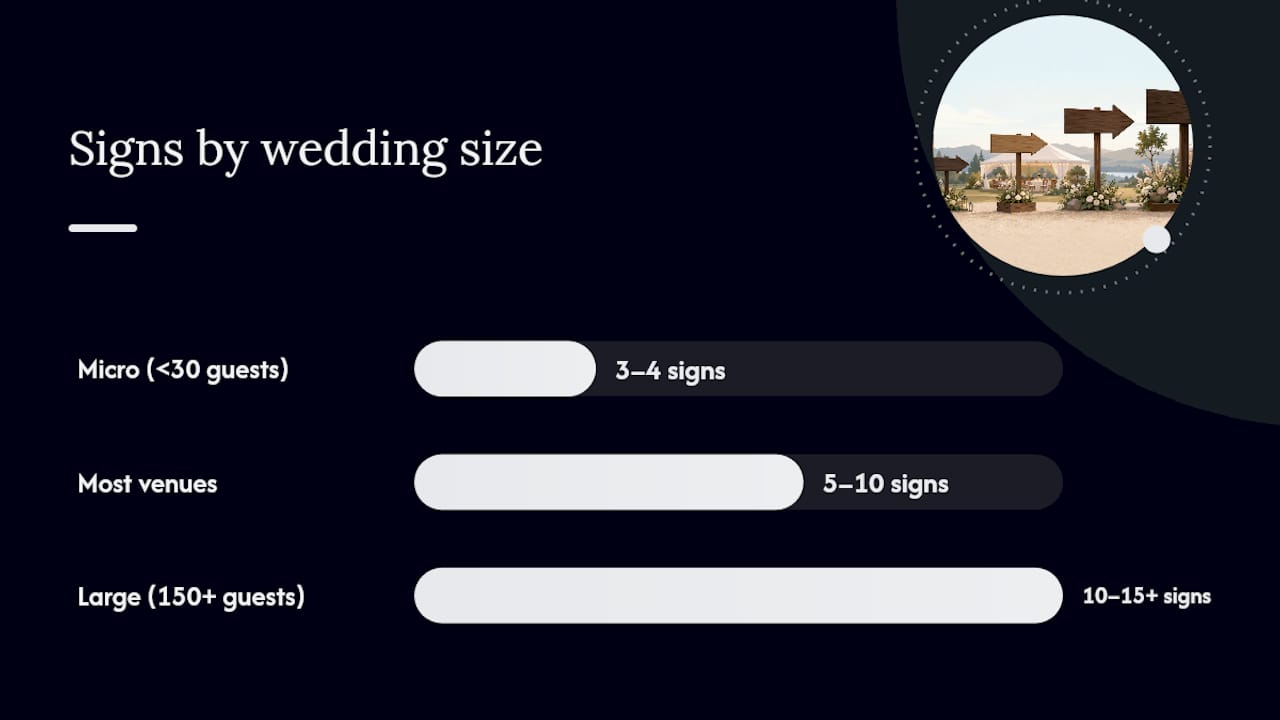
Guest count and venue layout drive the number more than personal preference. Intimate weddings under 30 guests typically need only 3 to 4 core signs, while events topping 150 guests often require 10 to 15 or more, factoring in wayfinding across multiple buildings, parking lots, and restroom locations. Most venues land somewhere in between, running comfortably on five to ten total signs.
- Micro weddings (under 30 guests): One directional arrow at the entrance, one at the ceremony site, one pointing to the reception.
- Small weddings (30 to 75 guests): Add signs for parking, restrooms, and the ceremony to reception transition.
- Mid-size weddings (75 to 150 guests): Layer in signs for a second parking area, a covered walkway, and any indoor to outdoor shift.
- Large weddings (150+ guests): Plan for wayfinding at every fork in the path, plus repeat signage if the venue spans multiple buildings.
Place signs at decision points, not after them. A sign posted right at a fork in the driveway does its job; one posted 30 feet past the fork does nothing. Industry placement guidance calls this the walk-through method: physically walk the route at your ceremony’s scheduled time, checking for glare, shadows, and whether the sign is even visible from where a guest would naturally look.
Pro Tip: If your reception runs into evening, do the walk-through again after sunset. A sign that reads perfectly at 2 p.m. can disappear entirely once the venue’s path lighting kicks on and casts a glare across the laminate.
Restrooms and transportation pickup points deserve their own signs even on a tight budget. Guests interrupting the reception to ask where the bathroom is is a small annoyance that a $20 sign eliminates completely. If your guest list includes non-English speakers, consider simple icon-based arrows or bilingual labels rather than relying on text alone.
Choosing Fonts, Arrow Styles, and Wording That Guests Can Actually Read
One sign, one message, one arrow. Resist the urge to combine “Ceremony This Way” with a list of other directions on the same board; guests scanning at walking pace need a single instruction, not a paragraph.
- Keep wording to three or four words maximum: “Reception,” “Parking,” “Restrooms This Way”
- Choose a bold sans serif font over a script or cursive style; scripts look romantic on invitations and unreadable at 15 feet
- Aim for high contrast: dark text on a light background, or the reverse, never a mid tone on a mid tone
- Make the arrow at least as visually heavy as the text so it reads at a glance, not after a second look
Decorative touches like foil accents, laser cut edges, or painted wood backing work fine as long as they don’t compete with the message. A gold foil arrow on a cream background still reads clearly if the contrast ratio holds. Cohesion across your welcome sign, seating chart, and directional arrows makes the whole property feel intentional rather than assembled from three different vendors, and guests process that consistency without consciously noticing it. Match font family and color palette across every piece, even if the shapes differ.
DIY Wedding Arrow Signs: What Works and What Fails
Corrugated plastic yard signs, foamboard, and painted plywood can all work for a single sheltered event on a real budget. Their limits show up fast outdoors: foamboard absorbs moisture and sags within hours of rain, and painted plywood needs a sealant coat or the ink bleeds.
- Use a printable template sized to your venue’s viewing distance, not a generic downloaded file
- Test legibility by taping the printed sign to a wall and reading it from 15 feet before committing to the final print
- Mount with metal stakes for lawns, zip ties for fence posts and rails, or a weighted base for hard surfaces like patios or parking lots
Pro Tip: Print a paper test copy at full size before ordering the final material. Typos and cramped spacing are far cheaper to fix on a home printer than on a finished board.
Order custom instead of DIY once your event is outdoors, multi-day, or guest count climbs past 75. That’s the point where a warped sign or a fallen stake stops being a minor fix and starts being a wedding day problem.
Ordering Timeline: When to Finalize and Place Your Order
Standard production runs 2 to 4 weeks, so lock your wording and layout early enough to leave a buffer for shipping and a final proof review.
- 8 weeks out: Confirm venue layout, decide sign count, and draft wording for each sign.
- 6 weeks out: Submit your order with final wording, sizing, and material choices.
- 3 to 4 weeks out: Review your proof for spelling, color contrast, and correct scale against the mockup.
- 1 to 2 weeks out: Confirm shipping arrival and assign someone specific to installation, not “whoever gets there early.”
- Day before: Walk the venue with a printed map marking every sign’s exact spot, so setup takes minutes instead of guesswork.
Costs vary by material and size, but corrugated plastic runs cheapest, PVC and vinyl sit in the middle, and mesh with a frame costs more due to the hardware. Factor shipping lead time separately from production time, since rural venues sometimes add days to delivery.
Why a Professional Sign Shop Beats a Last-Minute DIY Fix
A shop that specializes in outdoor signage brings weatherproof inks, correct material selection for your specific venue’s exposure, and mounting hardware sized for the actual ground conditions, not guesswork.
- Directional sign production and custom ordering built specifically for wedding wayfinding
- Weatherproofing guidance covering ink, lamination, and mounting hardware
- Material selection matched to your venue’s wind, sun, and moisture exposure, decided before printing rather than after a sign fails
Do You Need Venue Permission for Wedding Arrow Signs?
Most venues have their own rules about outdoor signage, and skipping that conversation is one of the more avoidable mistakes couples make. Some properties restrict where stakes can go into the ground, especially on historic estates or venues with irrigation lines just under the lawn. Others ban adhesive mounting on painted surfaces, stone walls, or windows, since decals and tape can strip finish or leave residue.
Ask your venue coordinator directly about three things: ground penetration limits for stakes, any restrictions on attaching signs to gates, doors, or walls, and whether the property requires signs to be removed the same night. Many venues that host weddings back to back will insist on immediate teardown so the next event’s setup isn’t delayed.
Public roads and shared driveways introduce a separate layer. If your ceremony sits on a property that borders a public street, placing directional signs on the roadside itself may fall under a local municipality’s rules rather than the venue’s. This varies widely by city and county, so a quick call to the venue or a local sign permit office beats guessing. It’s a five minute question that avoids a sign getting pulled down by a code officer hours before your ceremony.
Rental properties and short term event spaces sometimes bundle signage restrictions into the rental contract itself. Read that section before ordering; a $200 custom sign set is a bad surprise if the contract turns out to ban ground stakes entirely and you’ve already ordered stake mounted signs instead of an easel or weighted base.
Eco-Friendly Materials for Wedding Directional Signage
Sustainable signage options have expanded well beyond the flimsy recycled cardboard that used to be the only “green” choice. Reusable materials top the list for genuine environmental impact: a well made PVC or vinyl arrow sign can be repainted or relabeled for a future event, cutting down on single use waste entirely.
Recyclable corrugated plastic is a solid middle ground. It’s not biodegradable, but many manufacturers now offer versions made from post consumer recycled content, and the material itself is fully recyclable at the end of its life rather than landfill bound. Painted wood signs, especially reclaimed lumber, appeal to couples chasing a rustic wedding signs aesthetic while keeping the material footprint low. A cutout wooden arrow with painted lettering does double duty as both eco-conscious and on theme for a barn or vineyard wedding.
Digital alternatives cut physical sign count altogether. QR codes linking to a venue map or wedding website can handle secondary wayfinding, like detailed parking instructions or a full site map, while physical arrows cover the primary decision points guests hit while walking. This works especially well for tech-comfortable guest lists and can shrink your total sign order by a few pieces.
If sustainability matters to your planning, ask your sign shop directly about recycled substrate options and water-based inks rather than solvent-based ones. The tradeoff: water-based inks generally have a shorter outdoor lifespan, so match that choice to a single day event rather than a multi-day destination wedding.
Making Wedding Directional Arrows Match Your Other Signage
A directional arrow that looks like it was ordered from a different vendor than your welcome sign creates a strange visual hiccup, even if guests can’t articulate why. The fix is straightforward: pick one font family, one color palette, and one material family, then apply that combination across every printed piece from the welcome sign at the entrance to the seating chart at the reception.
Start the coordination decision with your welcome sign, since it usually sets the tone for the whole property. If it’s a painted wood sign with hand lettering, your arrows should echo that with painted wood or a printed finish that mimics the same texture. If your welcome sign is a sleek acrylic piece with modern sans serif type, mesh or PVC arrows in a matching font carry that same feel through the property.
Color consistency matters more than most couples budget time for. If your seating chart uses a sage green and cream palette, arrows printed in gold and white will read as mismatched even if both colors technically appear elsewhere in your décor. Bring a swatch or a printed color code to your sign order conversation so the shop can match, not approximate.
Material texture is the detail that’s easiest to overlook. A rigid PVC arrow next to a soft canvas banner reads as inconsistent up close, even at matching colors. If budget allows, order your full signage suite, welcome sign, seating chart, table numbers, and directional arrows, from the same production run so texture and finish match exactly rather than close enough.
Common Mistakes That Ruin Wedding Arrow Sign Setups
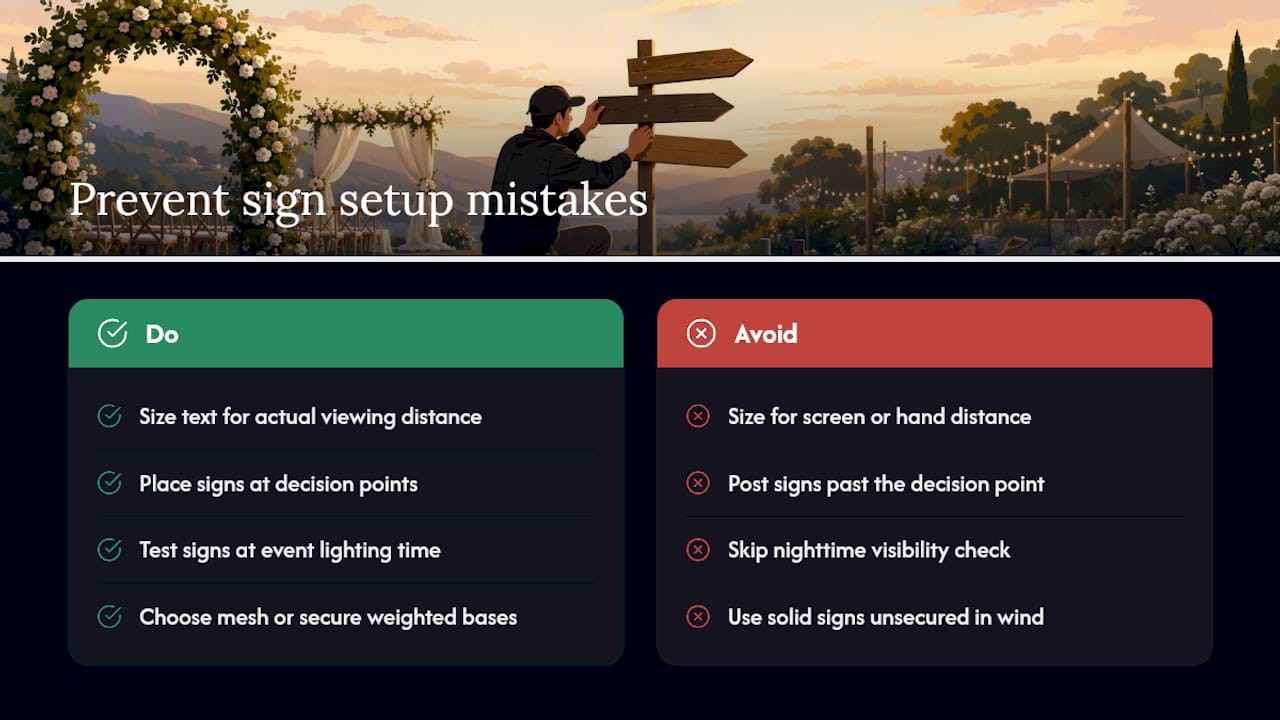
The single most common failure is sizing text for a close read instead of a walking-past glance. Couples proof their sign on a screen or hold it in their hands and it looks perfectly legible, then it goes up 20 feet from the road and shrinks into an unreadable blur. Always size for the actual viewing distance, not the distance you’re standing at when you approve the proof.
Placing signs after the decision point instead of at it is the second big mistake. A sign posted just past a fork in the driveway has already let confused guests make the wrong turn. The fix costs nothing: walk the actual path guests will take and place each sign exactly where a choice needs to be made, not nearby.
Skipping a nighttime check trips up more evening weddings than couples expect. A sign that’s perfectly legible at 3 p.m. can vanish into shadow once venue lighting shifts after sunset, or a glossy laminate can throw glare under string lights. Test at the actual time your guests will be walking that route.
Underestimating wind is a classic mesh-versus-solid mistake. A solid vinyl or PVC arrow sign on a tall stake acts like a sail in open, windy venues, and a gust can send an unsecured sign tumbling across a ceremony space mid-vow. Choose mesh for exposed sites or make sure solid signs sit on weighted or staked bases rated for wind.
Finally, ordering too late leaves no room for a proof review, and typos on a wedding sign are far more visible and far more permanent looking than a typo anywhere else in your planning. Build in the 2 to 4 week production window and an actual proof check, not a rushed glance at a phone screen the night before pickup.
A Planner’s Honest Take on Wedding Arrow Signs
The biggest gap I see between what couples expect and what actually works comes down to one habit: proofing signs on a screen instead of at the real distance guests will read them from. A sign that looks great on your laptop can be functionally invisible from 20 feet away, and that gap is where most wedding day confusion actually starts.
Pro Tip: Print a full size paper mockup, tape it to a wall or fence, and walk away until you have to squint. That’s your real answer, not the zoomed in preview on your phone.
Walk your venue in person, mark every decision point on a simple map, and finalize your sign list against that map rather than against a Pinterest board.
— Yossi
Get Custom Weatherproof Wedding Arrow Signs From Custom Signs Today
Custom Signs Today is the alternative to piecing together DIY boards from three different craft stores. You get one shop handling material selection, sizing, and mounting hardware together, so the arrow that survives your outdoor reception is designed for that from the first proof, not patched together after something fails.

Custom Signs Today produces wedding directional arrows in corrugated plastic, PVC, vinyl, and mesh, with mounting options including ground stakes, A-frame easels, weighted bases, and hanging hardware for gates or arbors. Every material choice gets matched to your venue’s actual exposure, whether that’s full sun, wind, or a covered but humid tent.
Requesting a quote is simple: send photos of your venue’s key decision points, list how many signs you need and where each one goes, and specify your preferred material if you already have one in mind. From there, expect a design proof within a few business days and a production timeline that fits comfortably inside the outdoor event signage process the shop uses for every outdoor order. Start that quote request now so your sign order is locked in well before your final walk-through.
Key Takeaways
Custom, weatherproof arrow signs sized for 15 to 20 feet of readability prevent the guest confusion and material failures that ruin day-of wedding signage.
| Point | Details |
|---|---|
| Size for real distance | Use one inch of letter height per ten feet of viewing distance so signs read from the road, not just up close. |
| Match material to exposure | Choose vinyl or mesh for windy or sunny sites; save corrugated plastic for short, sheltered use only. |
| Count signs by guest size | Plan for 3 to 4 signs at intimate weddings and 10 to 15 or more at events over 150 guests. |
| Place at decision points | Walk the venue at your ceremony’s actual time and set signs exactly where guests must choose a direction. |
| Order from a specialist | Custom Signs Today builds weatherproof arrow signs with material and mounting matched to your specific venue. |
Sources
- Paperlust — Wedding Signs: The Complete Guide to Every Type and Display Option
- ParcelPuffin — Outdoor event signage materials guide
- Sortra — How to choose wedding signage: style, readability, and guest flow
- Love & Lavender — Wedding signage checklist: every sign you need