TL;DR:
- Custom vinyl lettering is precision-cut, background-free text made from durable vinyl film that looks painted-on. It is widely used for storefronts, vehicles, and interior signs, offering affordability and professional appearance. Proper selection, application, and maintenance ensure long-lasting branding with minimal costs, making it an effective marketing tool.
Most people assume custom vinyl lettering is just a fancier version of sticker sheets from a craft store. It is not. What is custom vinyl lettering, really? It is precision-cut text and shapes made from professional-grade vinyl film, with no background material, applied directly to any smooth surface. The results look painted on, not pasted. For small businesses and individuals looking to build a recognizable presence without spending thousands on traditional signage, vinyl lettering sits at a genuinely useful intersection of affordability, flexibility, and professional appearance.
Table of Contents
- Key Takeaways
- What custom vinyl lettering actually is
- How long vinyl lettering actually lasts
- Design choices that determine whether lettering works
- Where vinyl lettering actually gets used
- How to order and apply vinyl lettering correctly
- My take on vinyl lettering as a branding investment
- Get professional vinyl lettering from Customsignstoday
- FAQ
Key Takeaways
| Point | Details |
|---|---|
| Precision-cut, not printed | Vinyl lettering is cut from solid color film, giving a clean, painted look without any background layer. |
| Transfer tape makes it easy | Letters ship on transfer tape so the entire design applies in one step, preserving spacing and alignment. |
| Durability varies by grade | Indoor vinyl lasts many years; quality outdoor vinyl rated by brands like 3M and Oracal lasts 5 to 10 years. |
| Works on nearly any surface | Vinyl lettering applications include windows, vehicles, walls, doors, and more. |
| Cost-effective branding tool | Custom vinyl lettering starts at accessible price points and installs without professional labor for smaller projects. |
What custom vinyl lettering actually is
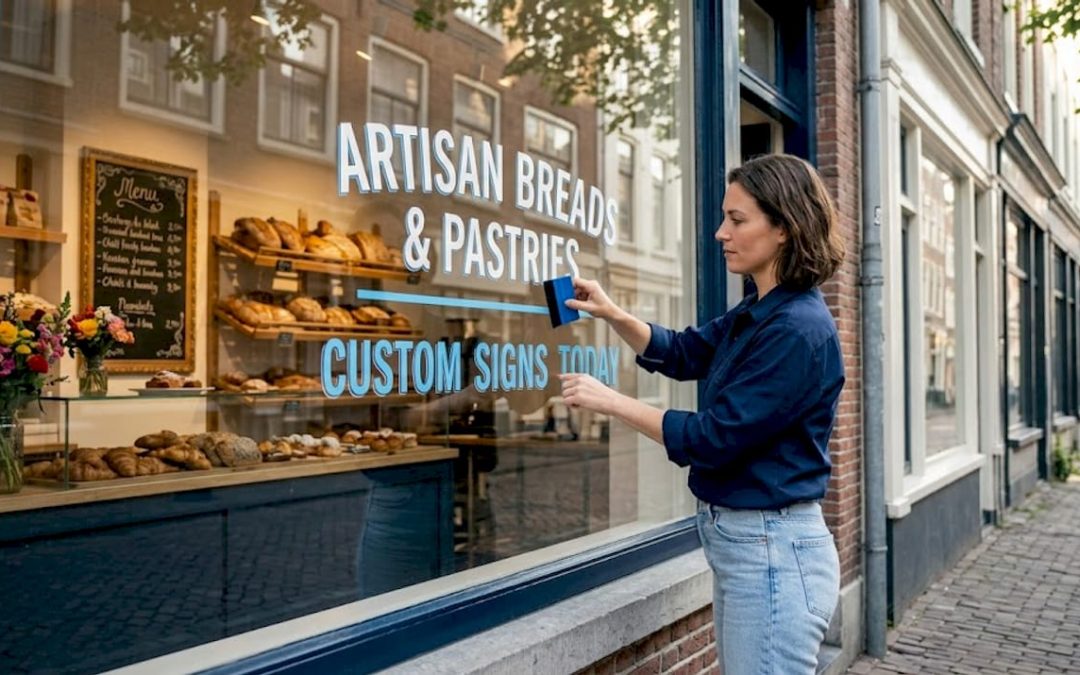
Custom vinyl lettering is not a printed graphic. It starts as a flat sheet of solid-colored vinyl film, and a computer-controlled cutting machine traces your chosen text with a blade, removing everything except the letters themselves. What you get is pure letterform with no surrounding material and no white box behind the words. Place it on a window and you see right through it, except for the letters. That clean, no-background look is exactly why storefronts, vehicles, and office walls use it rather than printed labels.
The vinyl itself is typically 2 to 3 mil thick, which is thin enough to conform to flat and gently curved surfaces but durable enough to resist tearing during application. Most manufacturers produce two grades: an indoor version optimized for controlled environments, and an outdoor version formulated to resist UV radiation, rain, and temperature swings.
Here is what sets a custom order apart from off-the-shelf lettering kits:
- Font variety. You select from hundreds of typefaces rather than being limited to a handful of pre-cut options.
- Color matching. Premium vinyl comes in dozens of stock colors, and many suppliers offer finishes like matte, gloss, chrome, and even brushed metallic.
- Custom sizing. Letters can be ordered at virtually any height, from a few inches for interior use to several feet for large-format outdoor signs.
- Layout control. Multi-word phrases, logos incorporated with text, and precise kerning are all possible because the design is handled digitally before the blade ever touches the material.
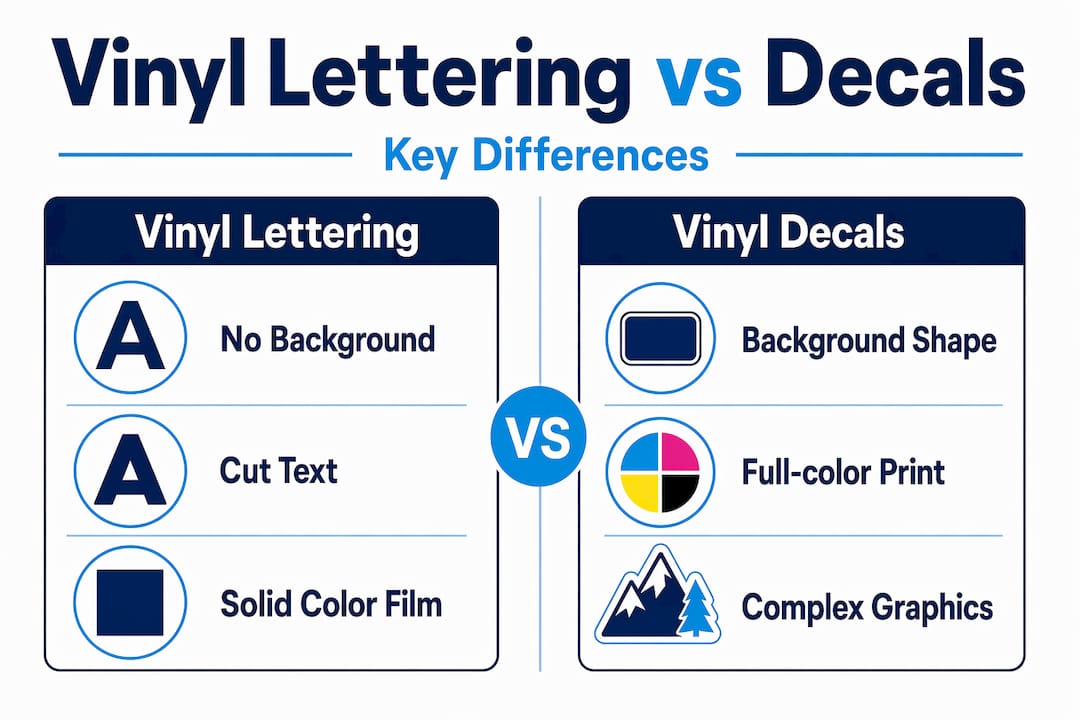
The difference between vinyl lettering and custom vinyl decals is worth clarifying. Decals usually include a background shape or a full-color printed image. Lettering is text only, cut to shape, with no background. Dimensional letters, by contrast, are three-dimensional characters made from acrylic or metal, which cost significantly more and require mounting hardware.
Pro Tip: Before you order, request a digital proof showing your text on a scaled drawing of the surface where it will be applied. This one step prevents the most common ordering mistake, which is letters that are technically correct but visually too large or too small for the space.
How long vinyl lettering actually lasts
Durability is where buyers often get surprised, both pleasantly and unpleasantly, depending on which grade they purchased. Basic indoor vinyl placed in a protected environment can last well beyond five years without fading or peeling. The same material stuck to a south-facing vehicle hood in Florida may fail in under 18 months.
The following table breaks down what to expect from common vinyl grades:
| Vinyl grade | Typical lifespan | Best applications |
|---|---|---|
| Economy indoor | 1 to 2 years | Temporary promotions, event signage, interior walls |
| Standard outdoor | 2 to 4 years | Vehicle doors, exterior walls, standard storefronts |
| Premium outdoor (3M, Oracal) | 5 to 10 years | Fleet vehicles, permanent signage, high-UV environments |
| Specialty (reflective, chrome) | 3 to 5 years | Safety markings, display windows, accent lettering |
The enemies of outdoor vinyl are UV exposure, standing moisture, and temperature cycling. UV causes color fading and makes the adhesive brittle. Moisture that gets under lifted edges accelerates peeling. Freezing and thawing stress the bond between vinyl and substrate. Choosing a higher-grade material upfront costs modestly more per character but avoids the much larger cost of reordering and reapplying within a year or two.
For reference, dimensional signage avoids fading and peeling that vinyl can develop over long durations in harsh conditions. If you are placing letters on a monument sign that faces direct sun all day, dimensional letters are the smarter long-term call. For everything else, quality vinyl performs well.
Pro Tip: Clean vinyl lettering monthly with a soft cloth and mild soap. Never use ammonia-based cleaners or abrasive pads. Keeping the surface free of dirt and road grime is the single most effective maintenance step for extending outdoor vinyl life.
Design choices that determine whether lettering works
Good-looking vinyl lettering comes down to four decisions: font, color, size, and spacing. Make all four correctly and the result looks like it was designed by a professional. Get one wrong and the whole thing reads as amateur.
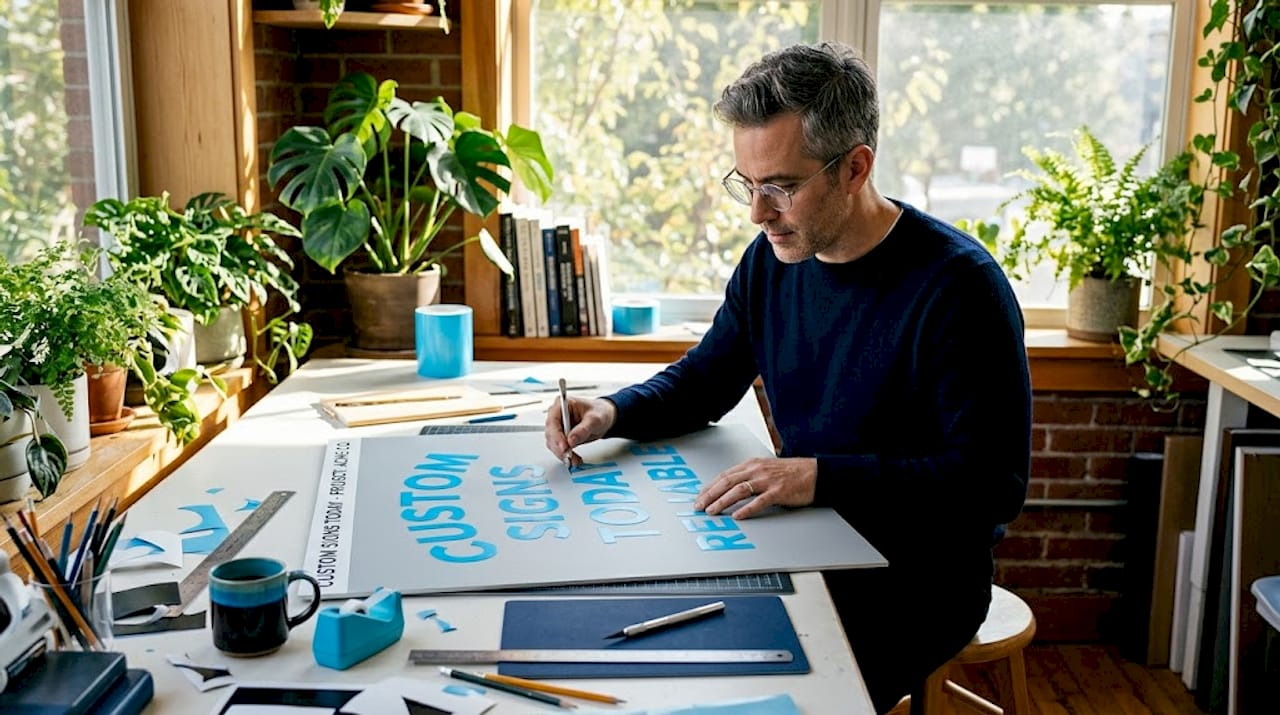
Font selection matters more than most people expect. Script and decorative fonts look elegant in small samples but collapse into illegible shapes at a distance. For any application where people will read the lettering while moving, whether driving past a storefront or walking down an aisle, stick with clean sans-serif or bold serif fonts. Reserve script styles for short words or names where legibility is less critical.
Color contrast is the factor that determines whether letters are actually read. White letters on a pale yellow wall will disappear at 20 feet even though both colors are individually visible up close. The standard rule is to use a letter color that sits on the opposite end of the value scale from the surface. Dark surfaces get light letters. Light surfaces get dark letters. High contrast wins every time.
Here are the most common design mistakes to avoid:
- Choosing a font that looks great on screen but has thin strokes that nearly vanish when cut in small sizes
- Ordering letters that are too small for the viewing distance (a general rule is 1 inch of letter height per 10 feet of viewing distance)
- Ignoring kerning, which is the spacing between individual letter pairs, because default spacing on some fonts looks uneven when cut
- Using too many colors in one phrase, which fragments the visual message instead of reinforcing it
- Forgetting to account for the color of the surface itself when picking vinyl color
Transfer tape packaging solves the spacing problem during application. Because all your letters arrive pre-spaced on a single sheet of tape, you apply the whole phrase at once rather than placing letters individually. This is where custom lettering beats DIY craft store sheets every single time.
Where vinyl lettering actually gets used
The range of vinyl lettering applications is wider than most small business owners realize until they start looking for it. Once you know what precision-cut vinyl looks like, you see it everywhere.
Here are the most practical and highest-impact uses for businesses and individuals:
- Storefront windows. Window graphics with vinyl lettering transform plain glass into marketing space. Hours of operation, taglines, social handles, and promotional messages all work here without any renovation or permanent commitment.
- Vehicle branding. Company name, phone number, and website on a vehicle door create a moving advertisement. A single vehicle branded with vinyl on smooth surfaces like doors and rear windows creates thousands of impressions per day in local markets.
- Interior office walls. Mission statements, brand values, and wayfinding text on painted walls give a space a polished identity without the cost of framing or dimensional letters.
- Retail product displays. Pricing, category labels, and promotional callouts on shelving and display cases are fast to produce and easy to update seasonally.
- Event and trade show signage. Temporary personalized vinyl signs on foam board, acrylic, or fabric backdrops give booths a professional finish at a fraction of the cost of printed backdrops.
- Home décor and personal projects. Quotes on walls, custom name lettering for nurseries, and personalized glass etching effects using frosted vinyl are all growing uses outside the business context.
The core financial advantage is that pricing can start around $0.82 per character for smaller sizes and scale up based on material and complexity. For a small business placing its name and tagline on a storefront window, the total cost often falls under $100 while the branding impact is immediate and professional.
How to order and apply vinyl lettering correctly
Getting a quality result depends as much on the ordering and installation process as it does on the design. Here is how to approach it step by step:
- Measure your surface first. Record the full width and height of the area where letters will go. Leave breathing room on all sides. Most designers recommend the lettering cover no more than 60 to 70 percent of the available width so it does not feel crammed.
- Use an online design tool. Most suppliers, including Customsignstoday, offer browser-based tools where you type your text, select a font, pick a color, and preview the result at scale before placing an order.
- Request and review a proof. Before anything is cut, confirm a digital proof shows your text exactly as ordered with correct spelling, sizing, and proportions.
- Prepare the surface. The application surface must be clean, dry, and free of wax, oil, or residue. Rubbing alcohol on a lint-free cloth works well. Cold temperatures below 50°F will weaken adhesion, so apply indoors or on a warm day.
- Apply using the hinge method. Tape the transfer tape sheet to the surface with a single horizontal strip of painter’s tape as a hinge along the top edge. Peel the backing slowly while pressing the tape down with a squeegee or credit card to eliminate air bubbles.
- Remove the transfer tape slowly. Pull at a low angle, nearly parallel to the surface, rather than straight back. This keeps the letters adhered to the surface rather than lifting with the tape.
For larger projects, such as vinyl exceeding 10 feet, the lettering typically ships in multiple panels. Align the first panel, then butt the second panel against it carefully. Professional installation is worth the cost for vehicle wraps and large-format wall graphics where misalignment is expensive to fix.
Pro Tip: On windows, consider applying vinyl lettering to the inside of the glass using reverse-cut lettering that reads correctly from outside. Indoor application protects the vinyl from weather and dramatically extends its life.
My take on vinyl lettering as a branding investment
I have seen small businesses spend thousands of dollars on elaborate printed banners that fade within a season, and I have seen a single $75 storefront window application carry a brand identity for four years without a single touch-up. The difference is almost always one thing: material choice paired with correct application.
The businesses that get the most from vinyl lettering treat it as a permanent element of their brand environment, not a temporary fix. They choose outdoor-grade material even for semi-sheltered windows. They hire installation for anything over four feet wide. And they think about the lettering as part of the overall visual system rather than something slapped on after the fact.
The common pitfall I see is cheap vinyl ordered in a hurry. The economics look attractive until the edges start peeling in month eight and the whole thing has to come down. At that point the real cost is not just the reorder. It is the staff time, the adhesive residue removal, and the days your storefront looks neglected.
My honest advice: treat the material grade as non-negotiable for outdoor use. Budget for premium. Get the proof right. If the project is larger than a door panel, pay for professional installation once rather than doing it twice yourself.
— Yossi
Get professional vinyl lettering from Customsignstoday
If reading this made you realize your storefront, vehicle, or office space could use sharper, more professional branding, Customsignstoday has the tools and materials to make it happen. The team specializes in custom vinyl signs for businesses across West Palm Beach and beyond, from single-window lettering jobs to full vehicle branding campaigns. You can also explore vinyl decal options for more complex branded graphics, or check out face change signs if your existing sign structure needs a refresh. Every order comes with expert design support, material guidance, and fast turnaround so your branding does not sit in a queue for weeks. Request a free quote today and get clarity on what your project will actually cost.
FAQ
What is custom vinyl lettering made from?
Custom vinyl lettering is precision-cut from solid-color vinyl film, typically 2 to 3 mil thick, with no background material. It ships on transfer tape so the full design applies in one step.
How long does outdoor vinyl lettering last?
It depends on the material grade. Economy vinyl may last about 2 years outdoors, while premium brands like 3M or Oracal are rated for 5 to 10 years with proper application and maintenance.
Can vinyl lettering be applied to any surface?
Vinyl lettering adheres best to smooth, clean, non-porous surfaces like glass, painted metal, and finished walls. Textured, rough, or dirty surfaces weaken the adhesive bond and shorten the lifespan.
What is the difference between vinyl lettering and vinyl decals?
Vinyl lettering is cut text with no background. Custom vinyl decals typically include a background shape or full-color printed imagery. Both use similar materials but serve different visual purposes.
How much does custom vinyl lettering cost?
Pricing typically starts around $0.82 per character for smaller sizes and increases with letter height, material grade, and design complexity. Most small storefront or vehicle applications fall well under $200 total.