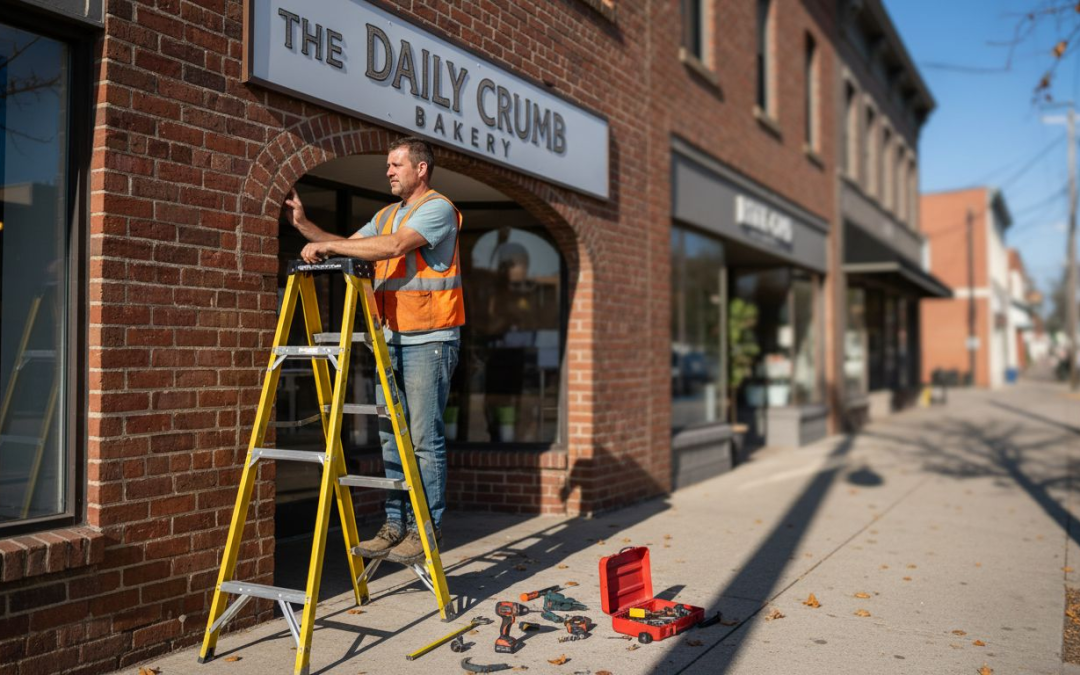
Over 65 percent of American businesses report that professionally installed signs dramatically increase customer visibility. Choosing the right sign installation goes far beyond visual appeal—it shapes first impressions, builds brand presence, and ensures compliance with critical local requirements. Understanding what makes sign installation effective can help companies avoid costly mistakes while maximizing every opportunity for public connection.
Table of Contents
- Defining Sign Installation for Businesses
- Types of Signs and Their Installation Methods
- Step-by-Step Process of Sign Installation
- Legal, Safety, and Permit Requirements
- Common Sign Installation Mistakes to Avoid
Key Takeaways
| Point | Details |
|---|---|
| Sign Installation Importance | Proper sign installation enhances visibility and compliance with local regulations. It requires a detailed understanding of technical aspects and safety protocols. |
| Types of Signage | Different sign types, such as wall-mounted and channel letters, necessitate unique installation techniques and considerations for safety and aesthetics. |
| Permit and Regulation Compliance | Securing the appropriate permits and abiding by municipal guidelines are essential to avoid costly fines and installation issues. |
| Common Mistakes to Avoid | Businesses should ensure proper mounting hardware, electrical connections, and adherence to local zoning to prevent instability and legal complications. |
Defining Sign Installation for Businesses
Sign installation represents a critical process for businesses seeking visual communication and brand representation through physical signage. At its core, sign installation involves carefully mounting, positioning, and securing signs at strategic locations to maximize visibility and convey essential business information. The process extends far beyond simply hanging a sign – it requires technical expertise, understanding of local regulations, and strategic planning.
The sign installation process typically involves several key components that businesses must carefully consider. Local regulations and permit requirements play a significant role in determining how and where signs can be mounted. Professional installers assess factors like structural integrity, surface compatibility, lighting conditions, and municipal zoning restrictions to ensure compliant and effective sign placement. These professionals utilize specialized mounting hardware, precision measurement techniques, and safety protocols to guarantee signs are securely positioned and visually appealing.
Businesses can choose from multiple sign installation approaches depending on their specific needs. These might include wall-mounted signs, freestanding monument signs, illuminated channel letter installations, window graphics, and exterior building signage. Each installation type requires unique technical considerations, such as electrical wiring for illuminated signs, structural reinforcement for heavy signage, and weather-resistant mounting techniques. Professional sign installation resources emphasize the importance of understanding these nuanced requirements to prevent potential safety issues or regulatory complications.
Pro Tip: Site Survey First: Before scheduling sign installation, conduct a comprehensive site survey to identify potential mounting challenges, verify local permit requirements, and assess the best visual placement for maximum business visibility.
Types of Signs and Their Installation Methods
Businesses have a diverse array of sign types that serve unique communication and branding objectives. Signage categories range from exterior building signs to interior directional markers, each requiring specialized installation techniques. Outdoor signage installation demands particular attention to environmental factors, structural requirements, and visual impact.
The primary sign types businesses typically utilize include wall-mounted signs, monument signs, channel letter signs, window graphics, vehicle wraps, and freestanding signs. Wall-mounted signs attach directly to building exteriors and require precise mounting hardware that can support weight while maintaining aesthetic appeal. Monument signs, which are ground-level structures, involve complex installation processes including concrete foundations, electrical connections for illumination, and careful alignment. Channel letter signs – individual three-dimensional letters often used for storefront branding – require specialized mounting techniques to ensure proper spacing, levelness, and secure attachment.

Installation methods vary significantly depending on sign type and location. Interior signs might use adhesive mounting, while exterior signs often need robust anchoring systems like concrete footings, steel supports, or specialized wall mounting brackets. Professional installers assess multiple factors including surface material, wind load requirements, electrical considerations, and local building codes. Promotional signage strategies play a crucial role in determining the most appropriate installation approach for each unique business environment.
Here’s a summary comparing popular business sign types and their primary installation challenges:
| Sign Type | Typical Installation Location | Main Installation Challenge |
|---|---|---|
| Wall-Mounted Sign | Building exterior or interior | Weight support, level mounting |
| Monument Sign | Ground-level, entryways | Foundation and alignment |
| Channel Letters | Storefront facade | Wiring, spacing, secure anchoring |
| Window Graphics | Glass surfaces | Surface prep, bubble prevention |
| Freestanding Sign | Outdoor locations | Structural integrity, wind load |
Pro Tip – Material Matching: Always match your mounting hardware and installation technique precisely to your sign’s weight, material, and environmental conditions to ensure long-term stability and professional appearance.
Step-by-Step Process of Sign Installation
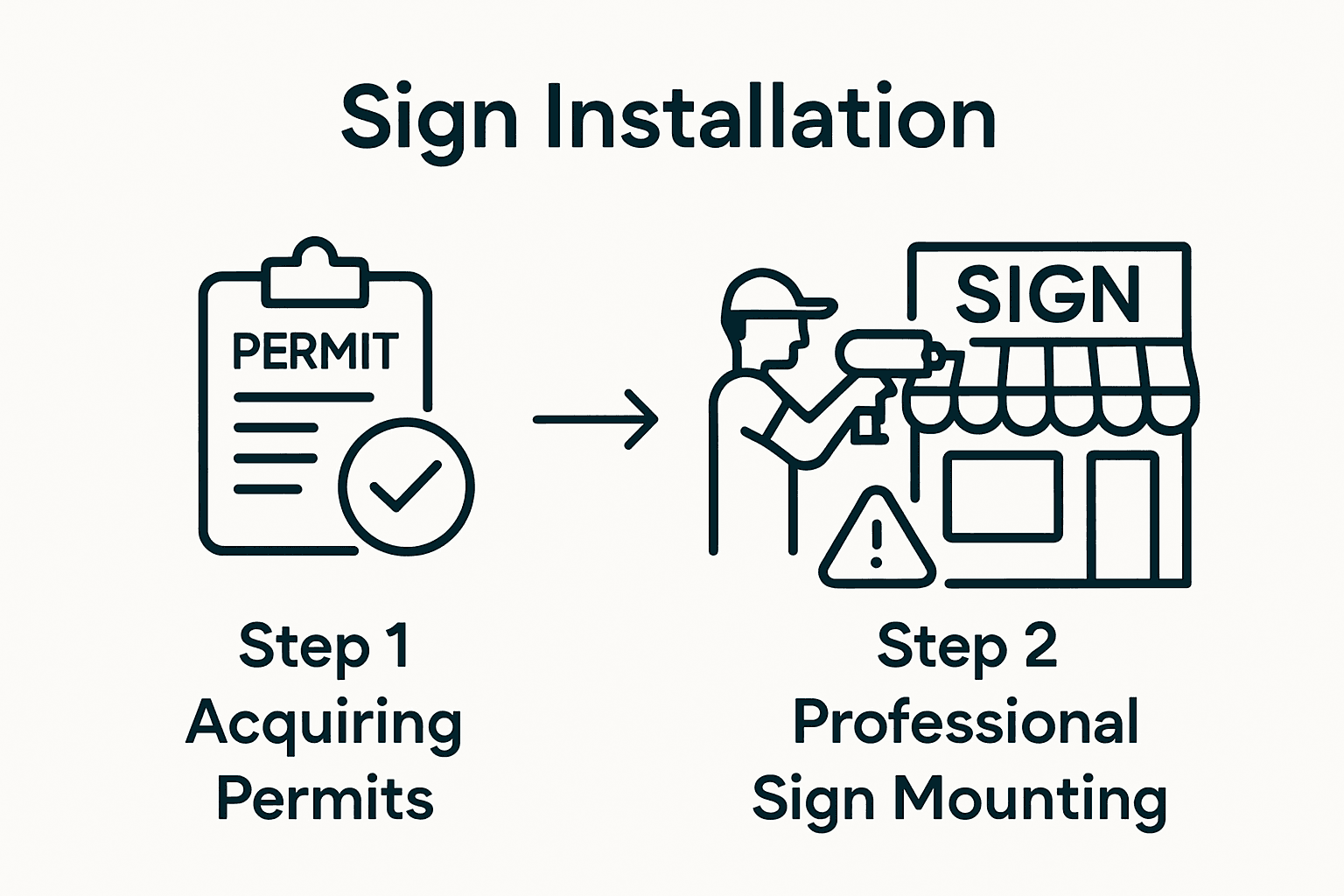
Sign installation involves a comprehensive process that requires careful planning, technical expertise, and adherence to local regulations. Zoning and permit requirements represent the critical first step in ensuring a legally compliant sign installation. Businesses must first conduct thorough research into municipal guidelines, which typically involve submitting detailed sign designs, obtaining necessary permits, and verifying that the proposed signage meets all local architectural and safety standards.
The actual installation process generally follows a structured sequence of technical steps. Professionals begin with a comprehensive site survey, carefully assessing the mounting surface, structural integrity, and potential environmental challenges. This initial evaluation helps determine the appropriate mounting hardware, electrical requirements, and installation technique. Critical considerations include surface material compatibility, wind load calculations, electrical connection methods, and precise measurement for optimal positioning. Professional installation training emphasizes the importance of precision during each stage of the mounting process.
Technical installation typically involves several key stages: preparing the mounting surface, marking precise installation points, drilling or anchoring mounting hardware, securely attaching the sign structure, and completing electrical connections for illuminated signs. Specialized tools like laser levels, industrial drills, concrete anchors, and electrical testing equipment are essential for achieving a professional, secure installation. Professional installers must also ensure that the sign meets aesthetic requirements, is perfectly level, and provides maximum visibility while maintaining structural integrity and compliance with local building codes.
Pro Tip – Professional Assessment: Always schedule a professional site survey before sign installation to identify potential mounting challenges, verify structural requirements, and ensure a seamless, code-compliant installation process.
Legal, Safety, and Permit Requirements
Sign installation involves complex legal and safety considerations that businesses must carefully navigate to ensure compliance and prevent potential penalties. Municipal regulations for business signage establish strict guidelines that dictate everything from sign dimensions and placement to electrical requirements and structural integrity. Local governments typically mandate detailed permit applications, site inspections, and adherence to zoning restrictions that vary significantly between different jurisdictions.
Safety standards represent a critical component of sign installation regulations. Professional installers must comply with multiple layers of legal requirements, including building codes, electrical safety standards, and structural mounting specifications. National traffic sign standards provide additional guidelines that impact signage design, particularly for signs visible from public roadways. These regulations address critical factors such as visibility, reflectivity, size limitations, and potential interference with traffic signals or pedestrian safety.
The permit acquisition process typically involves submitting comprehensive documentation to local authorities. Businesses must prepare detailed sign plans, including precise measurements, materials specifications, mounting method descriptions, and electrical diagrams for illuminated signs. Many municipalities require professional certification or licensed contractor involvement to ensure installations meet rigorous safety and structural standards. Potential requirements might include structural engineer assessments, electrical compliance certificates, and proof of adherence to local zoning regulations.
Pro Tip – Documentation Preparation: Gather all necessary documentation, including site plans, sign specifications, and contractor certifications before initiating the permit application process to streamline approval and avoid potential installation delays.
Common Sign Installation Mistakes to Avoid
Businesses frequently encounter critical errors during sign installation that can compromise both regulatory compliance and visual effectiveness. Municipal sign installation guidelines highlight numerous common mistakes that can result in costly penalties and potential removal of improperly installed signage. These errors often stem from insufficient planning, inadequate understanding of local regulations, and overlooking critical technical requirements that ensure safe and legal sign placement.
One of the most significant mistakes involves improper mounting techniques and structural considerations. Professional installers warn against using incorrect mounting hardware, failing to account for wind load requirements, or neglecting surface compatibility assessments. Safety protocols for sign installation emphasize the importance of precise measurement, appropriate anchoring methods, and thorough structural evaluation. Businesses frequently underestimate the complexity of mounting signs on different surfaces, which can lead to signs that are unstable, misaligned, or prone to damage during adverse weather conditions.
Regulatory non-compliance represents another critical area of potential mistakes. Many businesses inadvertently violate local zoning restrictions by installing signs without proper permits, exceeding approved dimensions, or placing signs in prohibited locations. Additional common errors include improper electrical connections for illuminated signs, neglecting visibility requirements, and failing to obtain necessary professional certifications. These oversights can result in significant financial penalties, mandatory sign removal, and potential legal complications that can damage a business’s reputation and operational capabilities.
To help prevent costly errors, here is a comparison of common sign installation mistakes and how to avoid them:
| Frequent Mistake | Negative Outcome | Prevention Strategy |
|---|---|---|
| Incorrect Mounting Hardware | Instability or sign failure | Match hardware to sign and surface |
| Ignoring Permit Requirements | Fines, forced removal | Research and secure all needed permits |
| Neglecting Surface Compatibility | Poor adhesion or sign misalignment | Assess and prep each installation surface |
| Faulty Electrical Connections | Safety hazard, sign malfunction | Hire certified electrician |
Pro Tip – Compliance Verification: Always consult local building authorities and obtain comprehensive written guidelines before initiating any sign installation project to ensure full regulatory compliance and avoid potential costly mistakes.
Secure Your Business Advantage with Expert Sign Installation
Navigating the complex world of sign installation requires more than just mounting a display. The article highlights challenges such as meeting local permit requirements, ensuring structural stability, and achieving optimal visibility to attract customers effectively. These obstacles can cause costly delays or compliance issues without the right expertise.
At Custom Signs Today, we specialize in addressing these crucial pain points by offering custom sign solutions tailored to your exact site conditions and regulatory standards. Whether you need durable outdoor banners, precision-mounted channel letters, or eye-catching vehicle wraps, our professional team ensures every detail—from material selection to installation—is handled with care and precision. Discover how our Uncategorized category provides insight into diverse signage options and expert craftsmanship.

Take control of your local business visibility now by choosing trusted experts who understand the importance of expert sign installation and legal compliance. Visit Custom Signs Today to request a free quote and start your custom signage project with confidence today.
Frequently Asked Questions
What is sign installation?
Sign installation is the process of mounting, positioning, and securing signs at strategic locations to enhance visibility and convey important business information. It involves technical expertise, adherence to local regulations, and precise planning.
Why is professional sign installation important?
Professional sign installation is essential because it ensures compliance with local regulations, provides expertise in mounting techniques, and helps prevent issues such as structural instability or visibility problems that could negatively impact a business’s branding efforts.
What are the common types of signs used in business installation?
Common types of signs include wall-mounted signs, monument signs, channel letter signs, window graphics, vehicle wraps, and freestanding signs. Each type requires specific installation techniques and considerations related to placement, weight, and materials.
What are the critical steps in the sign installation process?
The critical steps in sign installation include conducting a site survey, understanding zoning and permit requirements, preparing the mounting surface, marking installation points, securely anchoring the sign, and making any necessary electrical connections for illuminated signs.