
{
“@type”: “Article”,
“image”: {
“url”: “https://csuxjmfbwmkxiegfpljm.supabase.co/storage/v1/object/public/blog-images/organization-6408/1774831205930_Marketing-manager-reviewing-brand-displays.jpeg”,
“@type”: “ImageObject”,
“caption”: “Marketing manager reviewing brand displays”
},
“author”: {
“url”: “https://customsignstoday.us”,
“name”: “Customsignstoday”,
“@type”: “Organization”
},
“@context”: “https://schema.org”,
“headline”: “9 types of promotional displays for brand visibility”,
“publisher”: {
“url”: “https://customsignstoday.us”,
“name”: “Customsignstoday”,
“@type”: “Organization”
},
“inLanguage”: “en-US”,
“articleBody”: “Discover 9 types of promotional displays, compare costs and ROI, and learn how to choose the right format for every campaign goal and environment.”,
“description”: “Discover 9 types of promotional displays, compare costs and ROI, and learn how to choose the right format for every campaign goal and environment.”,
“datePublished”: “2026-03-30T00:40:17.404Z”
}
Choosing the right promotional display for your brand feels straightforward until you’re staring at a catalog of dozens of options, each promising maximum impact. Banner stands, floor graphics, kiosks, wall murals — the list goes on, and every vendor claims theirs is the best. The reality is that the wrong display choice wastes budget, misses your audience, and can even create compliance headaches. This guide cuts through the noise and gives you a clear, practical framework for selecting displays that actually deliver results, whether you’re running a short-term product launch or building long-term brand presence.
Table of Contents
- How to evaluate promotional displays for your brand
- Temporary displays: Fast, flexible, and budget-friendly
- Permanent displays: For long-term brand impact
- 9 effective types of promotional displays (with practical examples)
- Key comparison: Which display type fits your campaign?
- Display compliance and measuring ROI: Mistakes to avoid
- Get expert help designing your next display campaign
- Frequently asked questions
Key Takeaways
| Point | Details |
|---|---|
| Choose by campaign goals | Your preferred display type should match the duration, scale, and objectives of your marketing campaign. |
| Temporary vs. permanent | Temporary displays offer flexibility for short-term promotions, while permanent displays boost brand impact long-term. |
| Compliance is critical | Improper setup can undermine ROI, so always follow guidelines and check for regulatory requirements. |
| Measure display success | Track key metrics like sales lift and dwell time to evaluate each display’s effectiveness. |
How to evaluate promotional displays for your brand
Before you commit to any display format, you need a solid evaluation framework. The first question is always duration. Are you running a two-week promotion or building a permanent retail fixture? Displays by longevity fall into two categories: temporary (cardboard, lightweight materials for short campaigns) and permanent (metal, wood, built for years of use). Getting this wrong means either overspending on a display you’ll throw away or underspending on one that falls apart in three months.
Beyond duration, evaluate every option against five core factors:
- Location: Indoor, outdoor, or both? Outdoor displays need weather-resistant materials.
- Audience: High foot traffic areas need bold, fast-reading visuals.
- Durability: Match material quality to expected wear and tear.
- Compliance: Local regulations, retailer rules, and zoning laws all apply.
- ROI potential: Estimate impact before you spend.
Speaking of ROI, up to 40% of displays are set up incorrectly, which directly kills their effectiveness. Track your results using sales lift, sell-through rate, dwell time, and average transaction value. Understanding business signage installation requirements upfront saves you from costly rework. And if you want displays that last, prioritize durable signage materials from the start.
Pro Tip: Before ordering any display, request a full installation guide from your vendor. Reviewing it in advance reveals hidden complexity and prevents the most common setup errors.
Temporary displays: Fast, flexible, and budget-friendly
Temporary displays are the workhorses of short-term marketing. They’re affordable, fast to produce, and easy to swap out when your campaign ends. Temporary display types include cardboard point-of-purchase (POP) units, window clings, countertop displays, and foam board signs. These are built for campaigns measured in days or weeks, not years.
Here’s where temporary displays shine:
- Product launches: Get a new SKU noticed fast without a major capital investment.
- Seasonal promotions: Holiday sales, back-to-school pushes, and limited-time offers.
- Events and trade shows: Set up quickly, break down faster.
- Testing new markets: Try a display concept before committing to a permanent version.
The trade-off is durability. Cardboard warps in humidity. Window clings peel if applied to dirty glass. Poor setup leads to displays that look unprofessional within days. Explore promotional signage examples to see how other businesses execute temporary campaigns effectively.
Pro Tip: Always choose vendors who include detailed installation guides with their temporary displays. A cling applied with air bubbles or a countertop unit assembled incorrectly undermines your brand image immediately.
Permanent displays: For long-term brand impact
When your brand needs a consistent, lasting presence, permanent displays are the right investment. Permanent display materials like metal, wood, and acrylic are built to withstand daily use, weather exposure, and years of customer interaction. Think endcap displays in retail stores, illuminated light boxes, branded kiosks, and exterior monument signs.
The advantages are significant:
- Durability: Quality materials mean fewer replacements and lower long-term costs.
- Brand consistency: A permanent display reinforces your identity every single day.
- Higher ROI over time: The cost per impression drops dramatically as months pass.
- Security: Permanent fixtures are harder to move, damage, or steal.
For outdoor permanent displays, material selection is critical. Understanding lawn sign materials gives you a foundation for choosing weather-resistant options. And if you want to stay ahead of the curve, innovative signage materials are changing what’s possible for retail environments.
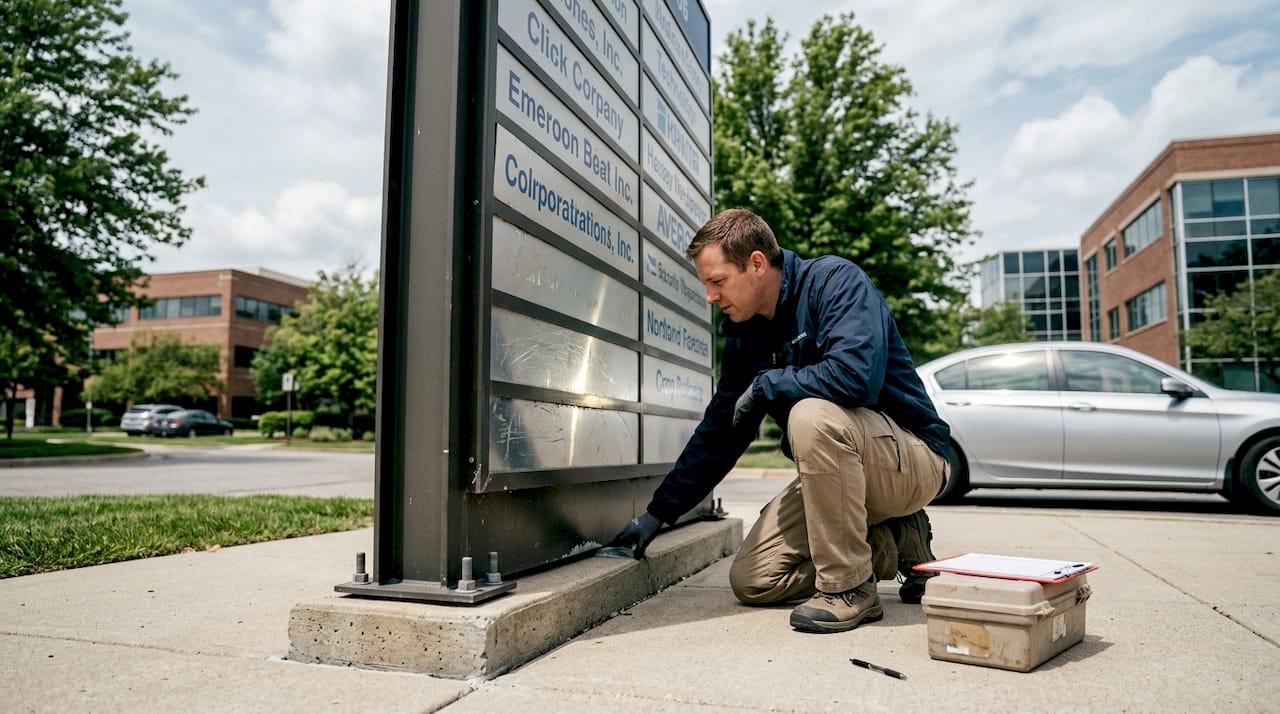
Pro Tip: Schedule a maintenance review for every permanent display at least once a year. Faded colors, cracked panels, or loose hardware signal neglect to customers and erode brand trust faster than you’d expect.
9 effective types of promotional displays (with practical examples)
Now let’s get specific. Here are nine display formats worth knowing, each with a clear use case.
- Banner stands: Retractable or fixed, these are portable and versatile. Perfect for trade shows, lobbies, and retail floors.
- Window clings: Adhesive graphics applied directly to glass. Great for storefronts promoting sales or new arrivals.
- Countertop displays: Small units placed at checkout or service counters. Ideal for impulse purchases and add-on promotions.
- Endcap displays: Positioned at the end of retail aisles, these capture high-traffic attention. Best for featured products.
- Kiosks: Freestanding structures for product demos, information, or self-service. Common in malls and airports.
- Sidewalk signs: A-frame or chalkboard signs placed outside entrances. Effective for restaurants, salons, and boutiques.
- Floor graphics: Vinyl graphics applied to floors to guide traffic or promote products. Surprising and highly memorable.
- Interactive displays: Touchscreen or motion-activated units that engage customers directly. Strong for tech brands and experiential marketing.
- Wall murals: Large-format graphics covering entire walls. Powerful for brand storytelling and creating shareable spaces.
Remember, up to 40% of displays are installed incorrectly. Proper setup is not optional. Understanding the indoor signage role helps you place each format where it will perform best.
| Display type | Cost range | Durability | Best industry |
|---|---|---|---|
| Banner stands | Low to medium | Medium | Events, retail, healthcare |
| Window clings | Low | Low | Retail, food service |
| Countertop displays | Low | Low to medium | Retail, pharmacy |
| Endcap displays | Medium | Medium to high | Grocery, big-box retail |
| Kiosks | High | High | Mall, airport, hospitality |
| Sidewalk signs | Low | Medium | Restaurant, salon, boutique |
| Floor graphics | Low to medium | Medium | Retail, events, museums |
| Interactive displays | High | High | Tech, automotive, luxury |
| Wall murals | Medium to high | High | Hospitality, retail, offices |
Key comparison: Which display type fits your campaign?
Choosing the right format comes down to matching your campaign objective to the display’s strengths. Here’s a quick matchmaking guide:
- Best for trade shows: Banner stands, portable kiosks, interactive displays
- Best for retail foot traffic: Endcaps, floor graphics, countertop displays
- Best for outdoor visibility: Sidewalk signs, wall murals, permanent monument signs
- Best for brand storytelling: Wall murals, interactive displays, light boxes
- Best for budget-conscious campaigns: Window clings, sidewalk signs, banner stands
- Best for long-term ROI: Kiosks, endcaps, wall murals
When comparing options, score each display against cost, durability, compliance risk, and environment fit. Use ROI metrics like sales lift, sell-through rate, dwell time, and average transaction value to validate your choice after launch. Check out this event signage comparison for a deeper look at outdoor event-specific options.
| Display type | Cost | Durability | Compliance risk | Best environment |
|---|---|---|---|---|
| Banner stands | Low | Medium | Low | Indoor events |
| Window clings | Low | Low | Medium | Retail storefronts |
| Countertop displays | Low | Low | Low | Point of sale |
| Endcap displays | Medium | High | Medium | Retail aisles |
| Kiosks | High | High | High | Public spaces |
| Sidewalk signs | Low | Medium | High | Outdoor entrances |
| Floor graphics | Medium | Medium | Medium | Indoor retail |
| Interactive displays | High | High | Medium | Showrooms |
| Wall murals | Medium | High | Low | Interior walls |
“Up to 40% of promotional displays are set up incorrectly. Compliance and proper installation are not afterthoughts — they are the difference between a display that drives sales and one that creates liability.”
Display compliance and measuring ROI: Mistakes to avoid
Even the best display design fails if it’s installed wrong or placed without checking local rules. Common compliance mistakes include:
- Installing displays without retailer or landlord approval
- Ignoring local zoning laws for outdoor signage
- Using materials that don’t meet fire safety codes in indoor venues
- Placing displays that block emergency exits or ADA pathways
- Skipping permits for permanent exterior signs
Up to 40% of displays are set up incorrectly, and many of those errors are compliance-related. Review your outdoor signage installation process carefully, and consult a sign compliance guide before finalizing any placement.
For ROI tracking, focus on these four metrics after every campaign:
- Sales lift: Compare sales during the display period to a baseline.
- Sell-through rate: How quickly did promoted inventory move?
- Dwell time: Are customers stopping and engaging with the display?
- Customer feedback: Are shoppers noticing and responding positively?
Pro Tip: Build a simple compliance checklist for every new campaign. Include permit requirements, installation specs, material approvals, and placement rules. Running through it before launch takes 20 minutes and can save thousands in fines or rework.
Get expert help designing your next display campaign
If you’re ready to maximize your next campaign’s impact with professional support, Custom Signs Today has the expertise to make it happen. From concept to installation, the team handles design, material selection, and compliance guidance so you don’t have to figure it out alone.
Whether you need a fast-turnaround temporary display or a permanent branded fixture built to last years, custom signage solutions are available for every industry and budget. Explore specialty options like face change signs for versatile, updatable displays, or get started with a custom sign quote tailored to your specific campaign goals. The right display, done right, is one of the highest-ROI investments your marketing budget can make.
Frequently asked questions
What is the difference between temporary and permanent promotional displays?
Temporary displays are designed for short campaigns using lightweight materials like cardboard, while permanent displays use durable materials like metal or wood for long-term brand presence.
How can I measure the ROI of my promotional displays?
Track sales lift, sell-through rate, dwell time, and average transaction value after each campaign to get a clear picture of display performance.
What are the most common compliance mistakes with promotional displays?
Up to 40% of displays are set up incorrectly, with the most frequent errors being unapproved placements, missing permits, and failure to follow retailer or local regulations.
Which display types work best for trade shows?
Banner stands, portable kiosks, and interactive displays are the top choices for trade shows because they combine portability, visual impact, and easy setup in high-traffic environments.