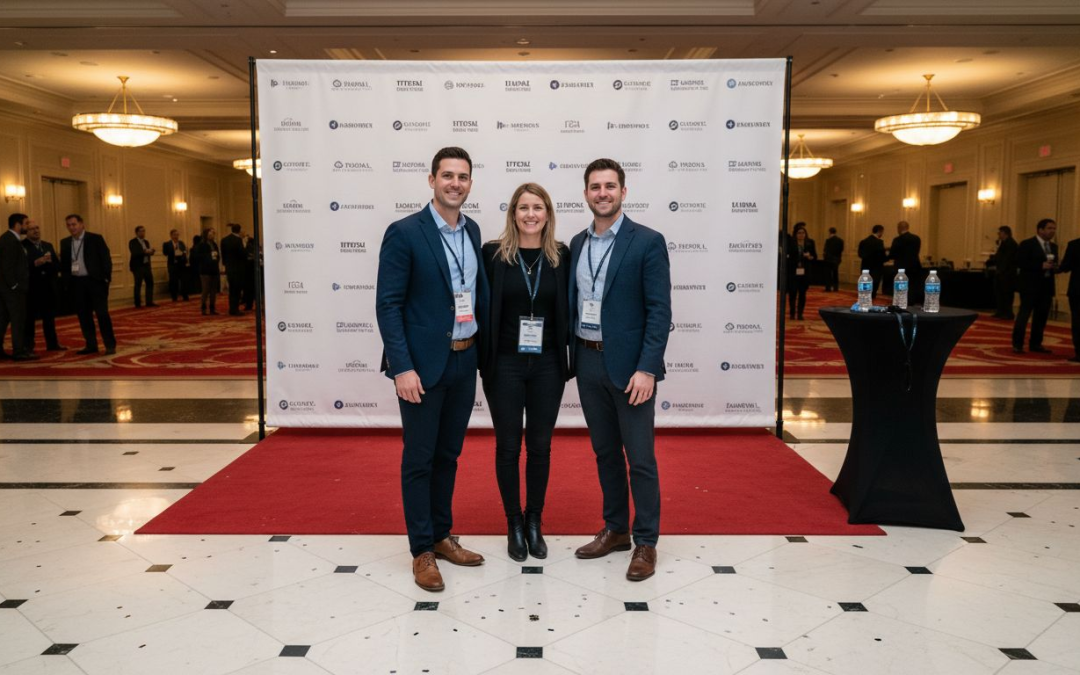
Many event organizers assume step and repeat banners are simply printed patterns with repeating logos. The reality extends much deeper. These banners merge strategic design with active guest participation, creating a powerful branding tool that ensures your message appears consistently across event photography and social media. This guide unpacks what step and repeat banners truly are, why they deliver results, and how you can leverage them to maximize visibility at your 2026 events.
Table of Contents
- What Is A Step And Repeat Banner?
- Origins And Naming Of Step And Repeat Banners
- Design And Material Considerations For Effective Branding
- Benefits Of Step And Repeat Banners For Event Branding And Marketing
- Common Misconceptions About Step And Repeat Banners
- Practical Application: Strategic Placement And Usage
- Summary And Next Steps For Event Organizers
- Enhance Your Event Branding With Custom Step And Repeat Banners
- Frequently Asked Questions
Key takeaways
| Point | Details |
|---|---|
| Definition and function | Step and repeat banners display repeating logos designed to maintain consistent brand visibility in every event photo regardless of positioning. |
| Naming origin | The term reflects both the repeated logo pattern and guests stepping into position to be photographed against the backdrop. |
| Material selection matters | Fabric minimizes glare and wrinkles for superior photo quality indoors, while vinyl offers durability for outdoor events. |
| Marketing advantages | These banners amplify brand exposure, increase sponsor satisfaction, encourage social media sharing, and remain reusable across multiple events. |
| Strategic placement drives results | Position banners in high-traffic photo zones with proper lighting to maximize guest interaction and brand capture in images. |
What is a step and repeat banner?
Step and repeat banners are large printed backdrops featuring logos or branding elements arranged in a repeating pattern across the entire surface. Their primary purpose centers on creating photo opportunities at events where every captured image displays your brand consistently. Whether you’re hosting a red carpet premiere, trade show booth, corporate conference, or charity gala, these banners transform ordinary photo moments into branding opportunities.
The repeating pattern serves a critical function. No matter where guests position themselves for photos, at least one complete logo appears clearly in the frame. This design strategy prevents awkward cropping that might cut off your branding in shared images. The banners act as promotional tools for both primary event hosts and sponsors, ensuring visibility across photography, media coverage, and social sharing.
Common applications include:
- Red carpet events where celebrities and VIPs pose for photographers
- Trade show booths creating branded photo zones for attendee engagement
- Corporate conferences establishing professional backdrops for speaker presentations
- Product launches generating shareable branded content
- Award ceremonies and galas adding elegance while promoting sponsors
Standard sizes vary based on venue scale and expected crowd size. An 8×8 foot banner works well for intimate indoor gatherings, while larger outdoor events benefit from 8×12 foot or 10×16 foot formats. For comprehensive planning strategies, explore our detailed event banners guide covering sizing, placement, and design considerations specific to different event types.
Origins and naming of step and repeat banners
The term “step and repeat” carries dual meaning that explains both guest behavior and design execution. “Step” describes guests stepping into position before the banner for photo opportunities. “Repeat” references the repeating logo pattern printed across the banner surface. This combination creates a continuous branding cycle where guest participation generates branded content.
Historically, these banners emerged from Hollywood red carpet culture. Film studios and event producers recognized that celebrity photos would circulate through media channels, offering free brand exposure if logos appeared in backgrounds. The practice quickly expanded beyond entertainment into corporate events, nonprofit fundraisers, and trade shows as organizers realized the marketing value.
The brilliance lies in how both elements work together. Without guest participation (the “step”), the banner remains static decoration. Without the repeating pattern (the “repeat”), photos risk missing branding entirely if guests stand in wrong positions. Together, they create automatic brand integration into every photo captured at your event.
Key aspects of the naming connection:
- Guest interaction drives the promotional cycle by creating shareable branded content
- Logo repetition guarantees visibility regardless of photographer angles or guest positioning
- Media circulation amplifies reach far beyond the physical event attendees
- Social sharing extends brand exposure through attendee networks organically
This dual function transforms a simple backdrop into an active marketing asset. Every guest who steps up for a photo becomes a potential brand ambassador when they share images across their social networks. The repeating logos ensure your message travels with those images, multiplying your event’s promotional impact exponentially.
Design and material considerations for effective branding
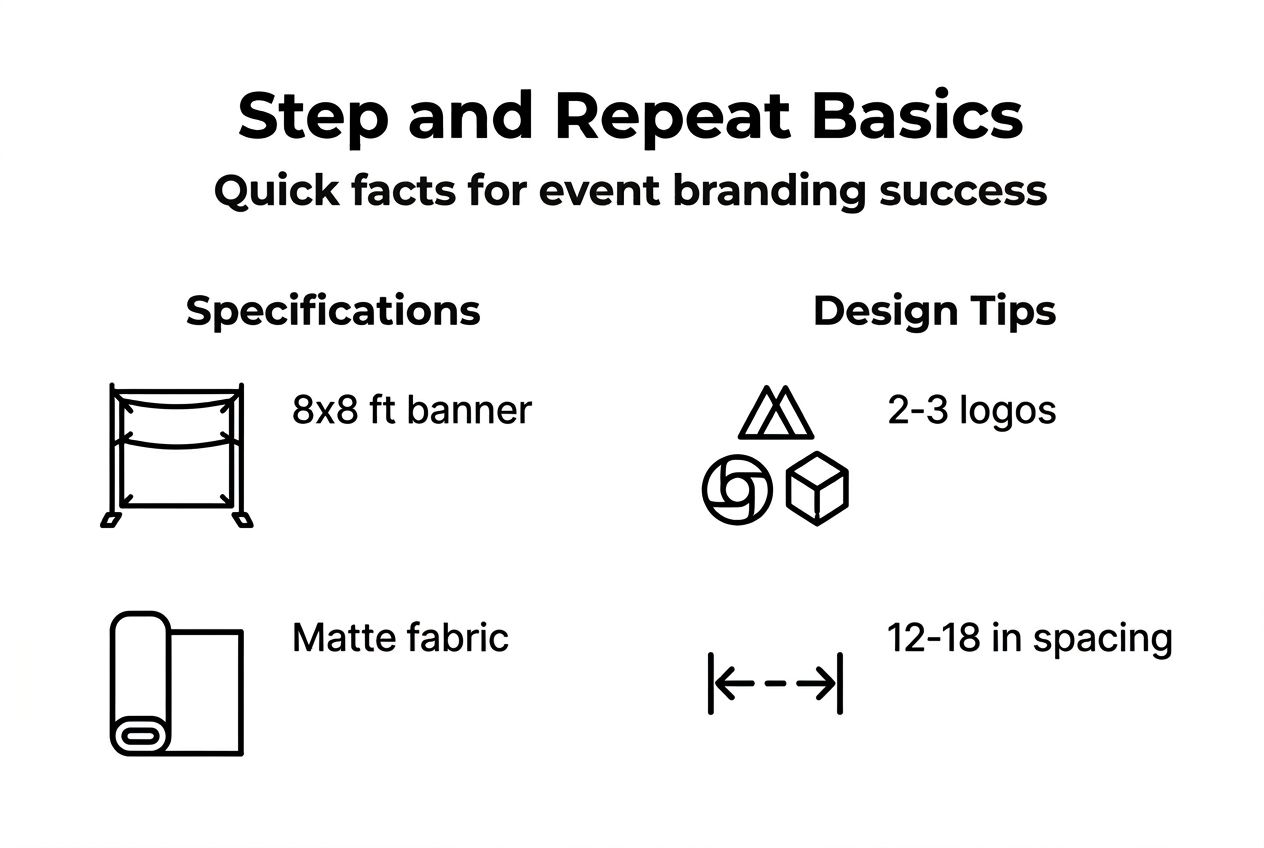
Selecting appropriate banner specifications directly impacts photo quality and brand visibility. Size selection depends on venue dimensions and expected crowd size. Small indoor events hosting 50 to 100 guests typically use 8×8 foot banners, providing adequate backdrop coverage without overwhelming intimate spaces. Medium events accommodating 100 to 300 attendees benefit from 8×10 foot or 8×12 foot formats. Large outdoor festivals or conferences with 300+ guests require 10×16 foot or larger banners to maintain presence in expansive venues.
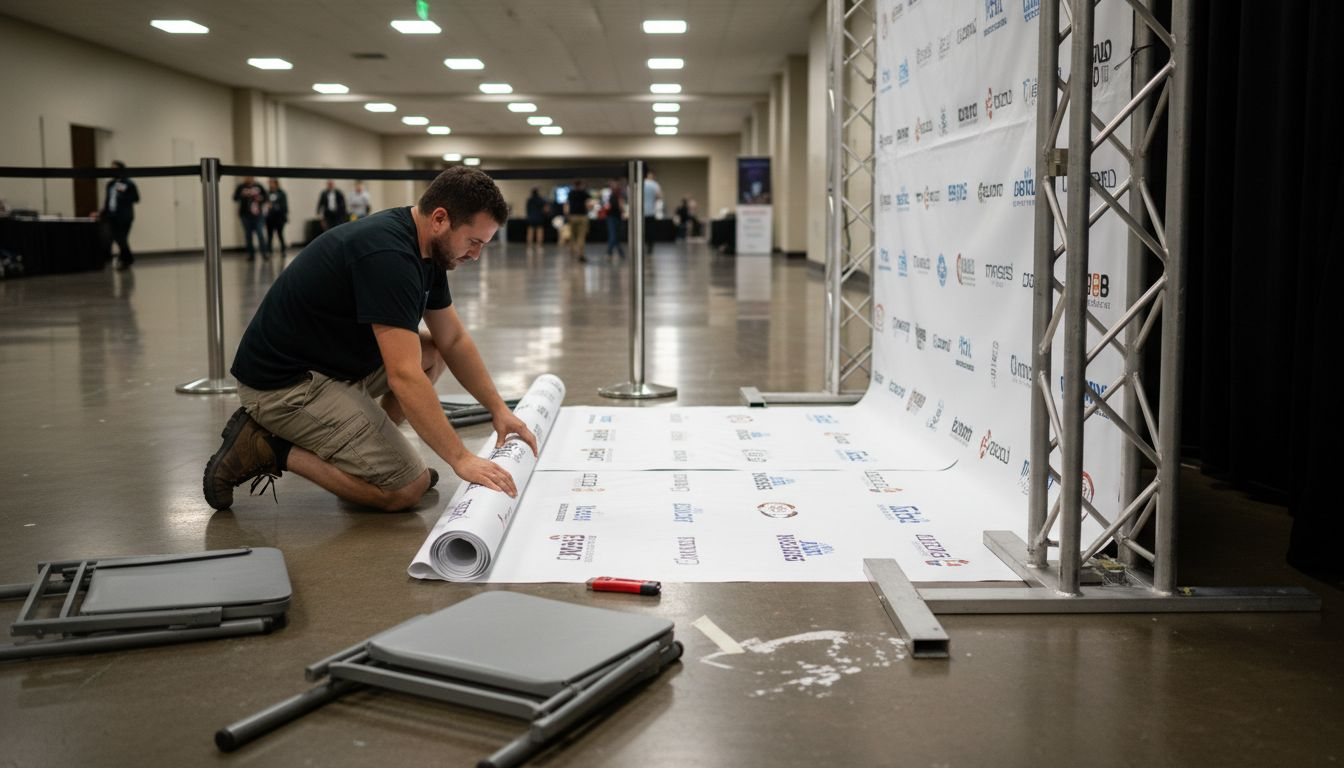
Material choice affects both appearance and durability. Fabric banners provide better photo quality indoors by resisting wrinkles and minimizing glare under flash photography. Fabric also transports easily and sets up quickly without visible creases. Vinyl delivers superior weather resistance for outdoor events but can produce glare under direct lighting and shows wrinkles more prominently if not stretched properly.
| Material | Best Use Case | Advantages | Drawbacks |
|---|---|---|---|
| Fabric | Indoor events, frequent reuse | Wrinkle-resistant, no glare, lightweight | Less weather-resistant, higher cost |
| Vinyl | Outdoor events, budget-conscious projects | Durable, weather-proof, economical | Prone to glare, shows wrinkles |
| Mesh | Outdoor windy conditions | Wind passes through, reduces movement | Lower image quality, not ideal for photos |
Design best practices keep branding clear and professional:
- Limit logos to 3 or fewer to prevent visual clutter
- Space logos 12 to 18 inches apart horizontally and vertically for clean repetition
- Use vector graphics ensuring sharp printing at large sizes
- Choose contrasting colors between logos and background for maximum readability
- Avoid busy patterns or gradients that distract from primary branding
- Maintain consistent brand colors matching your event materials
Pro Tip: Choose matte finishes over glossy surfaces to eliminate flash glare in photos. Matte fabric produces the most professional results for indoor photo opportunities where lighting varies.
These specifications work together. A well-sized fabric banner with properly spaced logos creates photo backdrops that elevate your brand presentation while ensuring every captured image serves as promotional content. For additional banner design guidance, review our event banners guide covering color psychology, typography choices, and layout strategies.
Benefits of step and repeat banners for event branding and marketing
Step and repeat banners deliver measurable marketing advantages that extend well beyond event day. Brand visibility multiplies as every photo captures your logos, creating countless branded impressions across media coverage, social posts, and attendee albums. This consistent exposure reinforces brand recognition and recall long after events conclude.
Sponsor satisfaction increases dramatically when their logos appear prominently in event photography. Sponsors measuring ROI through brand impressions appreciate tangible proof their investment generated visibility. This satisfaction translates to easier sponsor retention for future events and stronger renewal rates. Many sponsors now specifically request step and repeat placement in sponsorship packages.
Social media engagement soars when you provide attractive photo backdrops. Attendees naturally gravitate toward visually appealing spaces for selfies and group photos. When those spaces feature your branding, every shared image becomes organic marketing reaching the poster’s entire network. This user-generated content carries more authenticity and trust than traditional advertising.
Key marketing benefits include:
- Guaranteed logo visibility in professional event photography and candid attendee photos
- Enhanced sponsor value propositions improving future sponsorship sales
- Organic social media reach through attendee-generated branded content
- Professional atmosphere elevating perceived event quality and organization
- Cost efficiency through banner reusability across multiple events annually
Banners remain reusable for years when properly stored, spreading initial investment across numerous events. A quality fabric banner withstands 10 to 15 events before showing significant wear. This longevity makes step and repeat banners one of the most cost-effective event marketing tools available.
The professional appearance also matters. Events featuring step and repeat backdrops signal organization and attention to detail. Attendees perceive these events as higher quality, increasing satisfaction scores and word-of-mouth recommendations. This perception extends to sponsors and partners evaluating whether to maintain relationships.
For broader event branding strategies, explore our resources on event signage examples, banner stands overview, and comprehensive event banners guide showing how multiple signage types work together.
Common misconceptions about step and repeat banners
Several myths prevent event organizers from maximizing step and repeat effectiveness. Clearing these misconceptions helps you make informed decisions and set appropriate expectations.
-
Misconception: Step and repeat refers only to the printed pattern. The term actually encompasses both the repeating logo design and guest participation through stepping up for photos. Without guest interaction, you simply have a branded backdrop. The marketing power emerges when guests actively engage with the banner, creating shareable branded content.
-
Myth: These banners serve purely decorative purposes. Step and repeat banners function as active marketing tools generating measurable brand impressions. Every photo captured and shared multiplies your reach. Treating them as decoration undervalues their promotional potential and leads to poor placement decisions.
-
Belief that vinyl always outperforms fabric. While vinyl offers weather resistance, fabric produces superior photo quality indoors by eliminating glare and wrinkles. The best material depends on your specific event environment and primary goals. Indoor photo-focused events benefit from fabric, while outdoor festivals requiring durability favor vinyl.
-
Confusion between step and repeat and scenic backdrops. Scenic backdrops create thematic environments without branding focus. Step and repeat banners prioritize logo visibility and brand messaging. While both serve as photo backgrounds, their purposes differ significantly. Mixing these categories leads to design choices that fail both objectives.
-
Assumption that more logos mean better branding. Cluttered designs with excessive logos create visual chaos that photographs poorly. Clean layouts with 2 to 3 well-spaced logos deliver stronger brand impact and more professional photos that attendees willingly share.
Understanding these distinctions helps you set realistic goals and make design choices that support your actual objectives. The most successful step and repeat implementations recognize both the design requirements and the behavioral aspects driving guest engagement.
Practical application: strategic placement and usage
Banner placement determines whether guests naturally engage with your photo opportunity or ignore it entirely. Position banners in high-traffic areas where attendees already congregate. Red carpet entrances, registration desk areas, and spaces near food or bars work exceptionally well. Avoid tucking banners in corners or low-traffic zones where guests won’t naturally encounter them.
Encourage interaction through simple tactics:
- Station event staff or volunteers near the banner to welcome guests and offer to take photos
- Provide props related to your event theme that guests can hold while posing
- Create gentle lighting that flatters subjects without causing harsh shadows or glare
- Display example photos nearby showing how professional the setup looks
- Run social media contests encouraging attendees to post photos with event hashtags
Lighting setup separates amateur from professional results. Avoid positioning banners directly under bright overhead lights that create glare on vinyl or wash out fabric colors. Side lighting or diffused lighting from 45-degree angles produces the most flattering results. Test lighting before guests arrive by taking sample photos from multiple positions.
For group photos, ensure adequate space allows 4 to 6 people to stand comfortably in front of the banner without crowding. Mark optimal standing positions on the floor using subtle tape indicators. This spacing ensures all guests fit within the frame while maintaining clear logo visibility.
Pro Tip: Coordinate your step and repeat design with broader event branding including name badges, signage, and promotional materials. Consistent visual identity across all touchpoints reinforces brand recognition and creates a cohesive professional atmosphere that impresses attendees and sponsors.
Multiple banner locations work well for large events spanning multiple rooms or outdoor areas. Place a primary banner at the main entrance for arrivals and a secondary banner near key program elements like stages or award presentation areas. This strategy captures different moments throughout the event, multiplying photo opportunities.
For complete event branding strategies, review our guides on business banners, banners in marketing, event branding, and banner investment benefits showing how these tools integrate into broader promotional campaigns.
Summary and next steps for event organizers
Step and repeat banners combine strategic design with guest engagement to create powerful branding tools that work long after events end. The repeating logo pattern ensures consistent brand visibility regardless of photo angles or guest positioning. Guest participation through posing and sharing photos multiplies reach exponentially across social networks and media channels.
Success requires attention to practical details. Choosing appropriate size, material, and placement directly impacts results. Fabric delivers superior photo quality indoors, while vinyl withstands outdoor conditions. Strategic placement in high-traffic areas encourages natural guest interaction. Proper lighting eliminates glare while flattering subjects.
These banners deliver measurable marketing value by increasing sponsor visibility, generating organic social media content, and establishing professional event atmospheres. Their reusability spreads costs across multiple events, making them among the most cost-effective promotional tools available.
Now is the ideal time to plan your step and repeat banner for upcoming 2026 events. Whether you’re organizing conferences, galas, product launches, or trade show appearances, these backdrops transform ordinary photos into branded marketing assets. Contact professional custom signs services to design and produce banners tailored to your specific event goals and branding requirements.
Enhance your event branding with custom step and repeat banners
Ready to elevate your event marketing impact? Custom step and repeat banners from professional signage providers ensure your branding appears consistently across all event photography. Expert designers help optimize logo placement, select ideal materials for your venue conditions, and recommend sizes that match your space and crowd expectations.
Complement your step and repeat setup with additional signage solutions. Face change signs allow quick updates for multi-day events or rotating sponsor displays. Site signs guide attendees through venues while reinforcing branding at key decision points. Together, these elements create cohesive visual experiences that attendees remember and share.
Pro Tip: Partner with experienced sign services to streamline production timelines and avoid common pitfalls like incorrect sizing or material choices that photograph poorly. Professional providers handle design, printing, and delivery, letting you focus on event logistics while ensuring your branding tools perform flawlessly.
Visit our custom signs page to start your order and transform your next event into a branded experience that generates lasting marketing value.
Frequently asked questions
What size step and repeat banner do I need for a small indoor event?
For indoor events hosting 50 to 100 guests, an 8×8 foot banner provides adequate coverage without overwhelming the space. This size accommodates 2 to 4 people comfortably in photos while maintaining clear logo visibility. Larger gatherings benefit from 8×10 or 8×12 foot formats.
Can fabric step and repeat banners be used outdoors?
Fabric banners work outdoors in protected areas without direct weather exposure, such as covered patios or tents. For fully exposed outdoor venues, vinyl offers better weather resistance and durability. Consider wind conditions too, as lightweight fabric may require additional securing.
How many logos should be included on a step and repeat banner?
Limit designs to 2 or 3 logos maximum to maintain visual clarity and professional appearance. Space logos 12 to 18 inches apart to ensure clean repetition across the banner. More logos create cluttered designs that photograph poorly and dilute individual brand impact.
What lighting works best to avoid glare on step and repeat banners?
Position lighting at 45-degree angles from either side of the banner rather than directly overhead or straight-on. Use diffused lighting sources instead of harsh spotlights. Matte fabric finishes naturally reduce glare compared to glossy vinyl, making them ideal for indoor photo setups.
Are step and repeat banners reusable?
Yes, quality step and repeat banners remain reusable for years when properly stored. Fabric banners typically withstand 10 to 15 events before showing significant wear. Roll banners loosely without sharp creases, store in protective tubes or bags, and keep them in climate-controlled environments to maximize lifespan.