
Well-designed signage can boost brand recognition by up to 75%, making it one of the most cost-effective tools for business visibility. Signage encompasses visual displays that communicate critical messages to your customers, guide their experience, and reinforce your brand identity. This guide explains what signage is, explores different types and materials, debunks common myths, and provides a step-by-step implementation framework to help you leverage signage effectively for your business or event in 2026.
Table of Contents
- Understanding Signage: Definition And Core Functions
- Types Of Signage And Their Roles In Branding And Communication
- Materials And Durability: Choosing Signs For Indoor And Outdoor Use
- Common Misconceptions About Signage And Their Corrections
- Comparative Framework: Selecting The Right Signage Type And Material For Your Needs
- Implementing Custom Signage Effectively: A Step-By-Step Guide
- Explore Custom Signage Solutions With Custom Signs Today
- Frequently Asked Questions
Key takeaways
| Point | Details |
|---|---|
| Signage serves three core functions | Branding, guiding, and informing customers are the primary roles effective signage fulfills in commercial environments. |
| Material selection matters significantly | Choose vinyl, acrylic, metal, or digital displays based on whether your sign will be used indoors or outdoors and how long it needs to last. |
| Customization drives communication effectiveness | Aligning signage design with your brand identity and environmental context ensures your message reaches and resonates with your target audience. |
| Common myths limit signage potential | Bigger isn’t always better, small businesses benefit equally, and poor signage directly damages perceived brand credibility. |
| Structured implementation ensures success | Following a clear process from needs assessment through design, material selection, installation, and maintenance maximizes your signage investment. |
Understanding signage: definition and core functions
Signage refers to visual displays designed to communicate specific messages to defined audiences in commercial, public, or event settings. These displays range from simple directional arrows to elaborate illuminated storefront signs that establish brand presence.
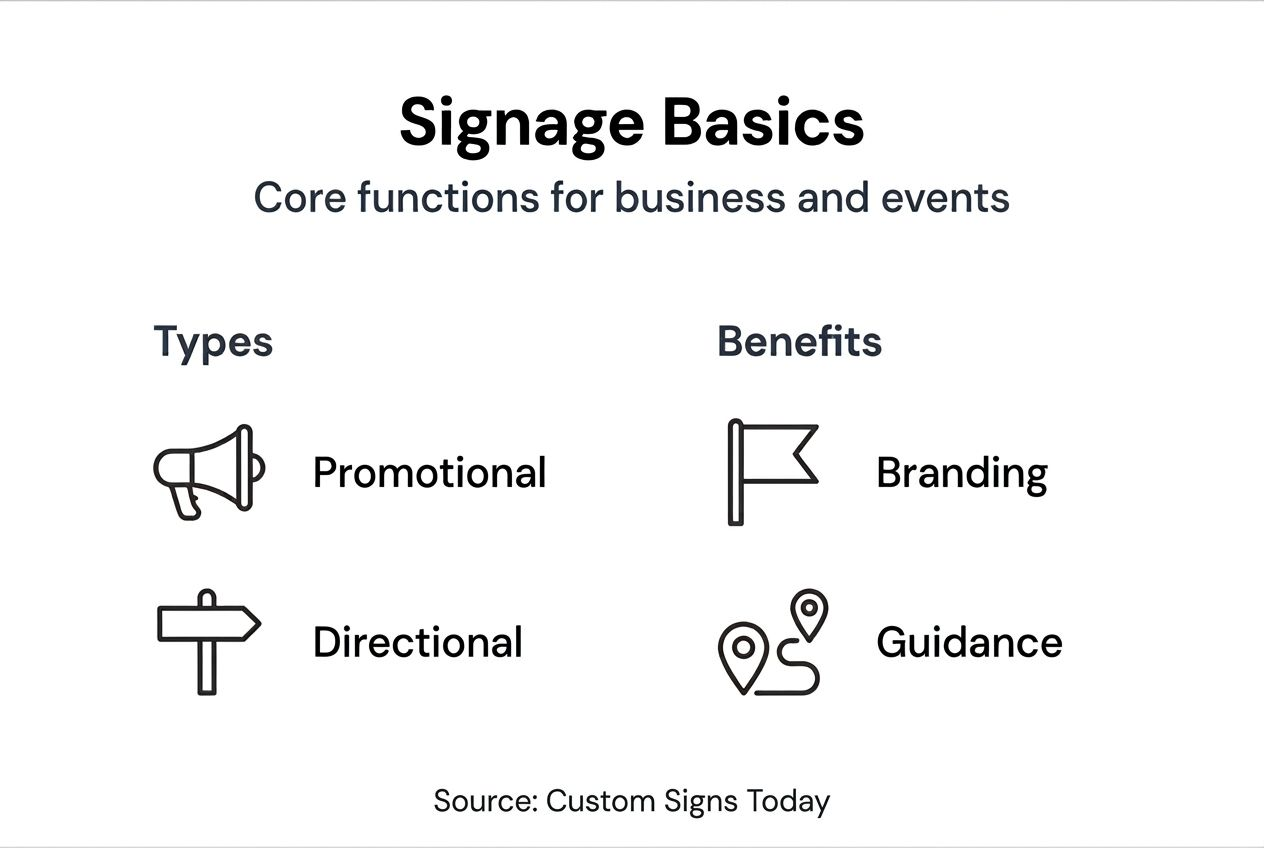
Signage serves mainly to brand, guide, and inform customers effectively in commercial environments. The branding function strengthens recognition and differentiates your business from competitors through consistent visual elements. Directional signage guides customer flow, reducing confusion and improving the overall experience. Informational signs share operational details like hours, policies, or product specifications.
Common signage types include:
- Storefront signs establishing street-level brand presence
- Interior directional signs guiding customers through spaces
- Promotional banners highlighting sales or special offers
- Event boards displaying schedules and registration information
- Vehicle wraps turning transportation into mobile advertising
Signage shapes customer perceptions from first contact. A professional, well-maintained sign signals reliability and attention to detail. Conversely, faded or damaged signage suggests neglect and can drive potential customers away. Understanding why signage boosts sales helps business owners recognize its strategic value beyond simple decoration.
Effective signage integrates seamlessly with broader marketing strategies. Your signs should echo the colors, fonts, and messaging used across your website, social media, and print materials. This consistency reinforces brand memory and builds trust through repeated exposure to cohesive visual elements.
Types of signage and their roles in branding and communication
Signage categorizes into promotional, directional, and informational types which guide material and design decisions. Promotional signage focuses on advertising products, services, or special offers. These include window displays, sale banners, and vehicle graphics designed to capture attention and drive purchase decisions.
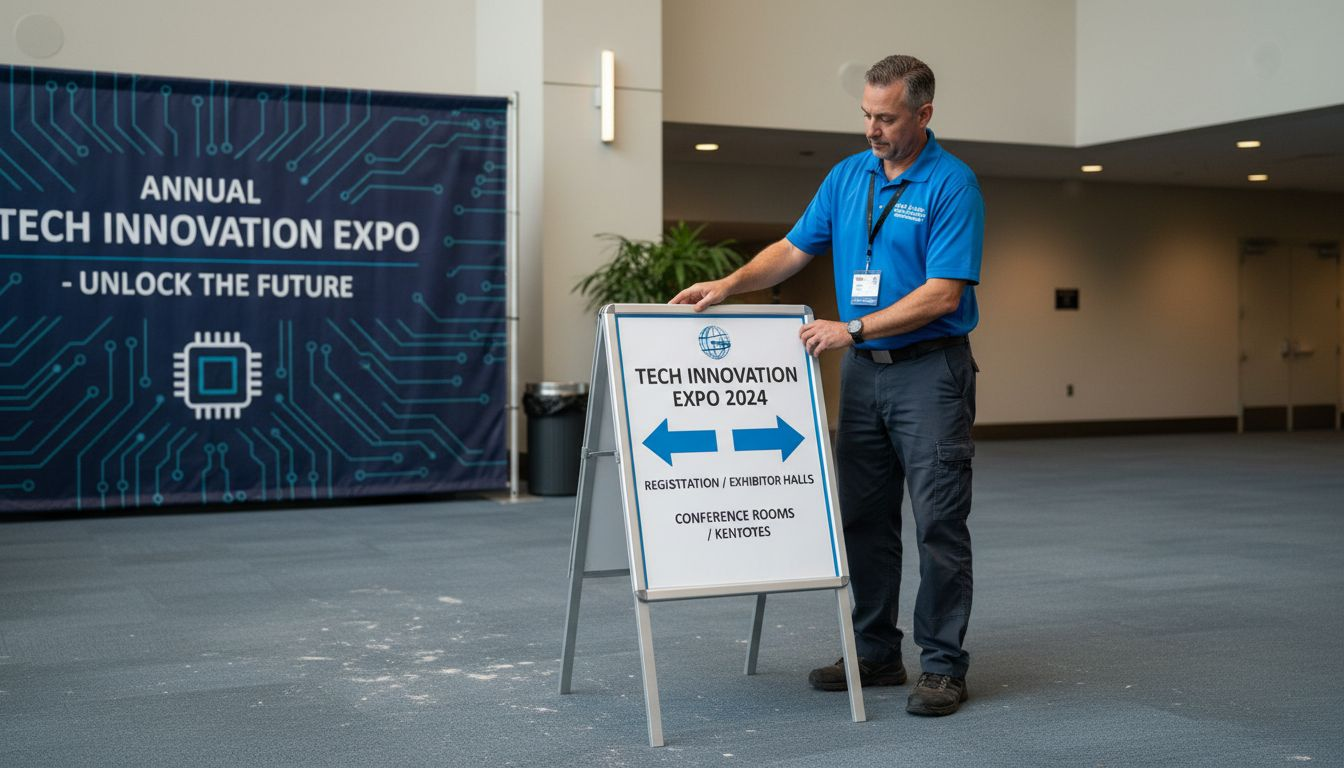
Directional signage facilitates navigation through physical spaces. Parking signs, wayfinding arrows, room labels, and exit markers fall into this category. Effective directional signs reduce customer frustration, improve traffic flow, and enhance safety by clearly marking paths and important locations.
Informational signage provides operational details customers need. Business hours posted at entrances, menu boards in restaurants, pricing displays, and policy notices serve this function. Clear informational signage reduces repetitive customer inquiries and sets appropriate expectations.
Digital signage represents a growing trend offering dynamic content capabilities. Electronic displays allow you to update messages instantly, rotate multiple promotions, and incorporate motion to capture attention. Traditional static signs remain valuable for permanent installations where message consistency and lower maintenance matter more than flexibility.
Event-specific signage addresses unique temporary needs:
- Registration and check-in signs directing attendees to appropriate stations
- Sponsor boards acknowledging financial supporters prominently
- Schedule displays keeping participants informed about timing
- Venue maps helping guests navigate unfamiliar spaces efficiently
Understanding how to design custom signs for branding ensures your signage aligns with your overall visual identity. Learning to customize signs for events helps create cohesive experiences that reflect your event theme and professionalism.
Materials and durability: choosing signs for indoor and outdoor use
Material selection directly impacts signage longevity, appearance, and effectiveness. Vinyl offers versatility and affordability for both indoor and outdoor applications. Vinyl signs withstand weather exposure reasonably well and allow full-color printing for complex designs.
Acrylic provides a premium appearance with excellent clarity and durability. It resists fading better than vinyl and maintains professional aesthetics for 5 to 10 years outdoors. Acrylic works exceptionally well for illuminated signs where light transmission matters.
Metal signs deliver maximum durability for permanent outdoor installations. Aluminum resists rust, withstands impacts, and maintains appearance for decades with minimal maintenance. Metal suits high-end branding applications where longevity justifies higher initial costs.
Digital displays offer dynamic content capabilities but require electrical infrastructure and ongoing maintenance. LED screens provide bright, attention-grabbing visuals perfect for high-traffic areas where changing messages add value.
| Material | Best Use | Typical Lifespan | Key Advantage |
|---|---|---|---|
| Vinyl | Indoor/outdoor temporary | 3 to 5 years | Cost-effective, versatile printing |
| Acrylic | Indoor/outdoor permanent | 5 to 10 years | Premium appearance, weather resistant |
| Metal | Outdoor permanent | 15+ years | Maximum durability, professional look |
| Digital | High-traffic indoor | 5 to 7 years | Dynamic content, instant updates |
Visibility factors extend beyond material choice. High contrast between text and background ensures readability from intended viewing distances. Font size matters more than style, with letters needing sufficient height relative to how far away viewers will stand. Reflective coatings enhance nighttime visibility without requiring electrical lighting.
Maintenance requirements vary by material and environment. Outdoor signs accumulate dirt and weather damage faster than indoor installations. Regular cleaning preserves appearance and readability. Inspect mounting hardware periodically to prevent signs from becoming loose or falling.
Pro Tip: Balance material cost against expected signage lifespan and replacement frequency. A durable metal sign costing three times more than vinyl but lasting five times longer delivers better long-term value for permanent locations. Reserve premium materials for high-visibility brand statements and use economical options for temporary promotions.
Exploring custom signs options helps you understand which materials suit your specific application, budget, and aesthetic preferences.
Common misconceptions about signage and their corrections
Myth 1 claims bigger signs always attract more customers. Reality shows placement, visibility, and message clarity matter more than sheer size. A well-positioned smaller sign at eye level often outperforms a large sign mounted too high or in a cluttered visual environment. Local regulations frequently limit sign dimensions, making strategic design and placement crucial within allowed parameters.
Myth 2 suggests signage primarily benefits large businesses with substantial marketing budgets. Small businesses actually gain proportionally greater advantages from effective signage because it represents a larger share of their total customer touchpoints. A compelling storefront sign can be the deciding factor when potential customers choose between competing small businesses on the same street.
Myth 3 assumes poor signage doesn’t significantly affect perceived professionalism. Research consistently shows customers form immediate judgments about business quality based on signage appearance. Faded colors, spelling errors, or damaged signs signal inattention to detail and lower quality standards. Customers unconsciously extend these perceptions to your products and services.
Key misconceptions include:
- Believing signage is a one-time expense rather than an ongoing branding asset requiring maintenance
- Assuming generic templates work as well as custom designs aligned to brand identity
- Thinking digital always outperforms traditional when static signs often deliver better ROI for permanent messaging
- Underestimating regulatory compliance requirements leading to costly reinstallation
“Your signage serves as a silent salesperson working 24/7. Investing in professional design and quality materials pays dividends through enhanced credibility and customer confidence that translate directly to revenue.”
These misconceptions lead business owners to underinvest in signage quality or make poor design choices that undermine effectiveness. Understanding the real factors driving signage success helps you allocate resources strategically. Learning more about signage myths and facts provides additional context for making informed decisions.
Comparative framework: selecting the right signage type and material for your needs
A structured framework simplifies signage selection by linking purpose to appropriate types and materials. Categorizing signage by purpose with material pros and cons guides effective selections.
| Signage Purpose | Recommended Types | Best Materials | Typical Applications |
|---|---|---|---|
| Brand establishment | Monument signs, channel letters | Metal, illuminated acrylic | Storefront identity, corporate headquarters |
| Customer guidance | Directional arrows, wayfinding | Vinyl on substrate, acrylic | Parking lots, building interiors, event venues |
| Promotional messaging | Banners, window graphics | Vinyl, fabric | Sales announcements, seasonal promotions |
| Information delivery | Menu boards, policy notices | Acrylic, metal, digital | Restaurants, offices, public spaces |
Material selection depends on environmental factors and message longevity. Indoor signs face minimal weather exposure, allowing lighter materials and more delicate finishes. Outdoor installations require weather-resistant materials, UV protection, and secure mounting systems to withstand wind and precipitation.
Technology considerations balance innovation against practical needs. Digital signage excels where messages change frequently or dynamic content adds value. Static signs cost less upfront, require no electricity, and need minimal ongoing maintenance. Digital displays make sense for menu boards with changing prices or event schedules with rotating information.
Follow this decision sequence:
- Define your primary signage purpose (branding, directing, informing, promoting)
- Assess environmental conditions (indoor vs outdoor, weather exposure, lighting)
- Determine message permanence (temporary promotion vs long-term brand statement)
- Evaluate budget constraints including installation and maintenance costs
- Consider regulatory requirements and obtain necessary permits
- Select appropriate type and material combinations matching your criteria
Pro Tip: Emerging technologies like QR code integration and augmented reality features can enhance traditional signage without requiring full digital conversion. Adding a QR code to a static sign bridges physical and digital experiences cost-effectively.
Understanding the custom sign workflow helps you navigate the selection process efficiently. Learning how to order custom signs and how to design property signage provides practical implementation guidance.
Implementing custom signage effectively: a step-by-step guide
Successful signage implementation follows a systematic process ensuring your investment delivers intended results. Start by thoroughly assessing your needs.
-
Conduct a comprehensive needs assessment identifying specific communication goals, target audience characteristics, physical location constraints, and budget parameters. Walk through your space or event venue noting where customers naturally look and where information gaps create confusion.
-
Choose appropriate signage types and materials based on your assessment. Match promotional, directional, or informational categories to specific needs. Select materials suited to indoor or outdoor placement and expected lifespan requirements.
-
Design signs consistent with your brand identity while optimizing for readability. Use brand colors, fonts, and logos consistently across all signage. Ensure text size allows reading from intended viewing distances. Maintain high contrast between text and background. Limit word count to essential messages customers can absorb quickly.
-
Plan installation logistics including mounting methods, electrical requirements for illuminated signs, and permit acquisition timelines. Professional installation prevents damage and ensures signs remain secure through weather exposure. Factor installation costs and lead times into project planning.
-
Establish maintenance schedules addressing cleaning, damage inspection, and eventual replacement. Regular maintenance preserves appearance and prevents minor issues from escalating into costly repairs. Budget for periodic updates keeping signage current with evolving brand guidelines.
-
Measure effectiveness through customer feedback, staff observations, and business metrics. Track whether customers find locations easily, sales increase during promotional campaigns, or complaints decrease after installing informational signage.
Pro Tip: Working with professional sign makers ensures compliance with local regulations, proper material selection for conditions, and quality fabrication preventing premature failure. Professionals bring expertise in permitting processes, structural engineering for large installations, and design optimization you may lack in-house.
Exploring resources like the custom sign workflow for businesses provides detailed guidance on managing the process. Learning how to design custom signs helps you create effective designs before fabrication. The interior signage step-by-step guide offers specific recommendations for indoor applications.
Explore custom signage solutions with Custom Signs Today
Now that you understand signage fundamentals, types, materials, and implementation strategies, consider partnering with experts who bring your vision to life. Custom Signs Today specializes in creating high-quality custom signs tailored to your specific business or event needs.
Whether you need durable face change signs for rotating messages or robust site signs for construction and development projects, professional guidance ensures your signage investment delivers maximum impact. Custom Signs Today offers comprehensive consultation helping you select optimal signage types, materials, and designs that align with your brand identity and communication goals. Their expertise in fabrication, installation, and compliance streamlines the process, saving you time and preventing costly mistakes. Reach out today to discuss how custom signage can enhance your business visibility and customer experience in 2026.
Frequently asked questions
What exactly is signage in a business context?
Signage encompasses any visual display communicating messages to customers, including storefront signs, directional arrows, promotional banners, and informational notices. It serves branding, navigation, and communication functions simultaneously.
What are the main types of signage used by businesses?
Businesses primarily use promotional signage for advertising, directional signage for navigation, and informational signage for operational details. Each type serves distinct communication purposes and requires different design approaches.
How do I choose the right signage material for durability?
Select vinyl for cost-effective temporary applications, acrylic for premium permanent installations, and metal for maximum outdoor longevity. Match material durability to your expected signage lifespan and environmental exposure conditions.
Does signage really affect how customers perceive my business?
Professional, well-maintained signage signals quality and attention to detail, building customer confidence. Conversely, poor signage creates negative impressions that customers extend to your products and services.
What steps should I follow to implement effective custom signage?
Start with needs assessment, select appropriate types and materials, design for brand consistency and readability, plan installation logistics, establish maintenance schedules, and measure effectiveness through customer feedback and business metrics.