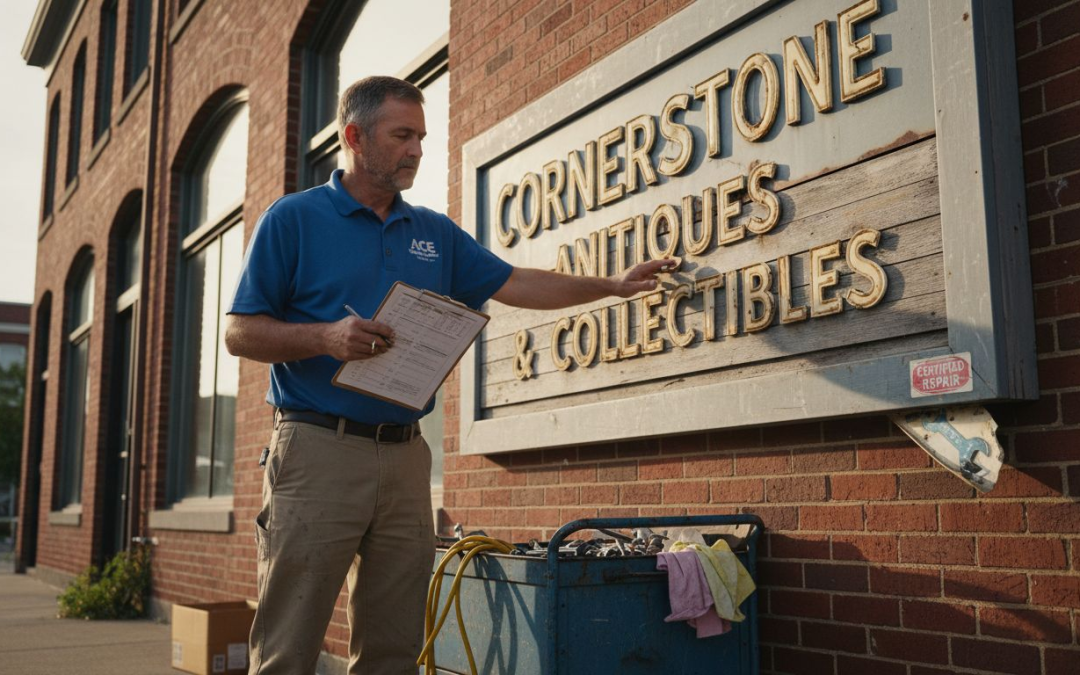
Spotting faded colors or loose hardware on your store’s outdoor sign can quickly turn into a bigger concern for your American business. Well maintained signage draws customers in and strengthens local brand recognition, making it much more than just decoration. Discover practical steps for assessing your sign’s condition, cleaning with recommended methods, repairing damage, and preserving long-term visibility so your retail presence stays strong and consistent.
Table of Contents
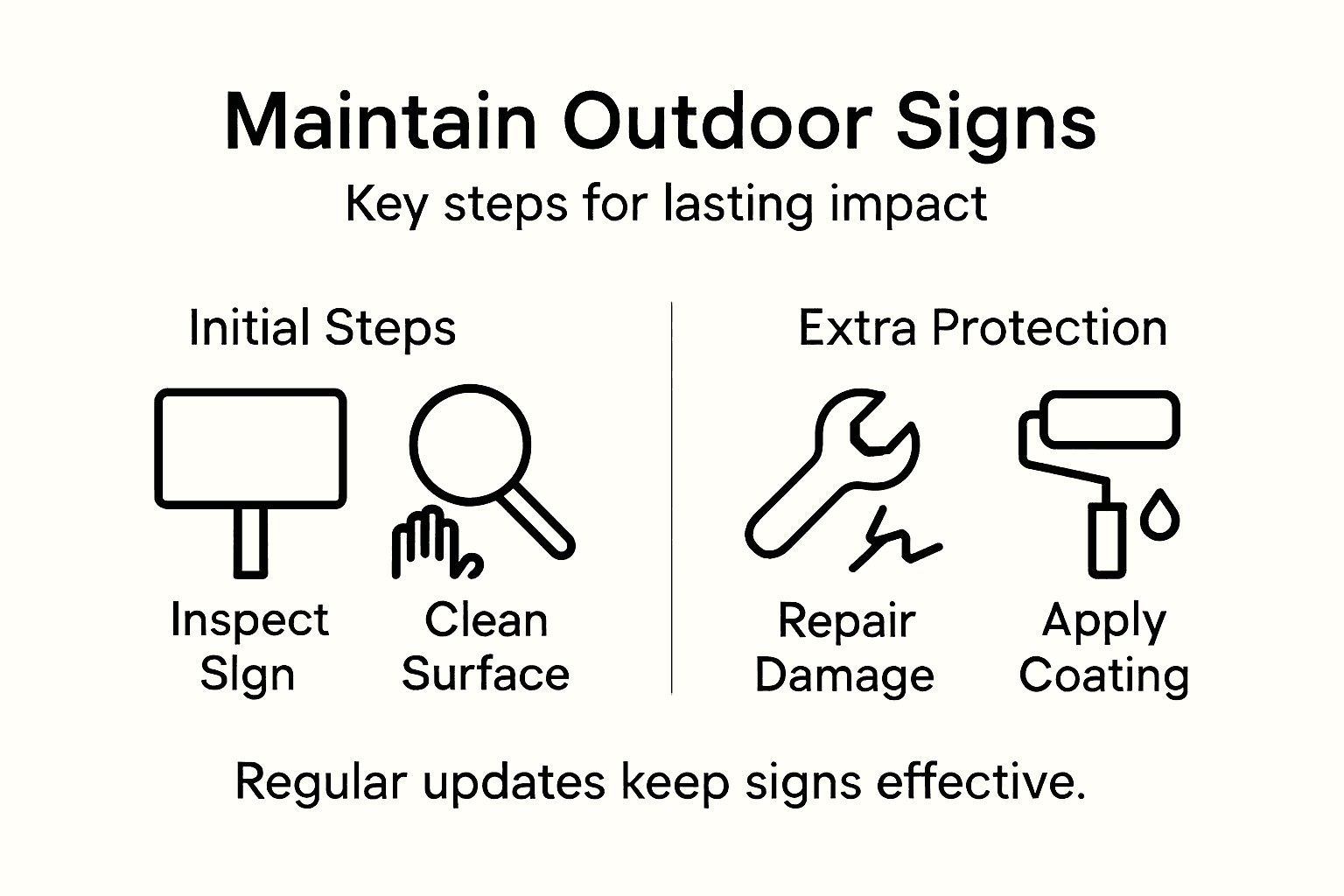
- Step 1: Assess Sign Condition And Gather Supplies
- Step 2: Clean Sign Surfaces With Recommended Methods
- Step 3: Inspect For Damage And Address Repairs
- Step 4: Apply Protective Coatings For Longevity
- Step 5: Check Visibility And Update Messaging
Quick Summary
| Key Point | Explanation |
|---|---|
| 1. Conduct a Thorough Condition Assessment | Examine signs for wear and damage, documenting findings for future reference and proactive maintenance planning. |
| 2. Use Appropriate Cleaning Methods | Clean signs with mild soap and soft cloths, avoiding harsh scrubbing to prevent damage. |
| 3. Prioritize Inspection for Repairs | Identify and address any damage promptly, prioritizing repairs based on severity to maintain sign integrity. |
| 4. Apply Protective Coatings | Use tailored protective coatings to shield materials from environmental wear, enhancing durability and appearance. |
| 5. Ensure Sign Visibility and Relevance | Regularly assess sign visibility and update messaging to maintain clarity and compliance with current standards. |
Step 1: Assess Sign Condition and Gather Supplies
Maintaining your outdoor sign starts with a thorough condition assessment. This critical first step helps you understand exactly what maintenance your sign needs and prepares you for targeted repairs. Systematic condition reporting involves carefully examining every aspect of your sign to identify potential issues before they become serious problems.
Begin by conducting a comprehensive visual inspection of your sign. Look carefully for signs of wear such as fading paint, rust, loose mounting hardware, cracks, or weather damage. Take clear photographs from multiple angles to document the current condition. Pay special attention to areas exposed to direct sunlight, rain, or extreme temperatures these spots often show the first signs of deterioration. Make detailed notes about specific damage types, measurements of affected areas, and the overall structural integrity of your sign.
Next, gather the necessary supplies for potential repairs and maintenance. Your toolkit should include cleaning materials like soft cloths, mild detergent, rust remover, touch up paint matching your sign’s color, sandpaper, protective gloves, and appropriate mounting hardware. Having these items ready will allow you to address minor issues immediately and prevent further damage.
Pro tip: Create a baseline condition report with dated photographs and notes to track your sign’s maintenance history and help plan future repairs.
Step 2: Clean Sign Surfaces with Recommended Methods
Cleaning your outdoor sign is a critical maintenance step that preserves its appearance and longevity. Understanding proper surface cleaning techniques will help you remove dirt and prevent potential damage effectively.
Start by removing loose dirt and debris using a soft brush or cloth. For most outdoor signs, create a cleaning solution using mild soap and warm water. Use soft cloths or non abrasive sponges to gently wash the surface, working in small sections and being careful not to scratch the sign material. Rinse thoroughly with clean water to remove all soap residue, which can leave streaks or attract additional dirt if not completely removed. Pay special attention to areas with heavy dirt buildup or stains, using gentle circular motions to lift grime without damaging the sign surface.
After washing, dry the sign completely using clean microfiber towels to prevent water spots and potential rust formation. For metal or plastic signs, consider using specialized cleaning products designed for those specific materials. Always test cleaning solutions on a small inconspicuous area first to ensure they will not cause discoloration or damage.
Pro tip: Clean your outdoor sign during mild weather conditions and avoid direct sunlight to prevent rapid drying that can leave cleaning solution residue.
Compare how different cleaning methods affect various types of sign surfaces:
| Cleaning Method | Suitable Surfaces | Caution Needed |
|---|---|---|
| Mild soap & water | Metal, plastic, wood | Avoid harsh scrubbing |
| Gentle scrubbing pad | Metal, composite | Test plastic for damage |
| Microfiber cloth | All | Use clean cloths only |
| Commercial cleaner | Metal, select plastics | Test in hidden area |
Step 3: Inspect for Damage and Address Repairs
Careful inspection is crucial for maintaining your outdoor sign’s structural integrity and visual appeal. Regular sign damage assessment helps you catch potential issues before they become costly problems.
Begin your detailed inspection by examining the sign from multiple angles. Check for visible signs of wear such as paint fading, rust spots, cracks in mounting hardware, loose connections, or structural warping. Pay special attention to areas exposed to harsh weather conditions like direct sunlight, heavy rain, or extreme temperature fluctuations. Look closely at mounting brackets, ensuring they remain securely fastened and show no signs of metal fatigue or corrosion. Photograph any areas of concern to track changes over time and create a comprehensive maintenance record.
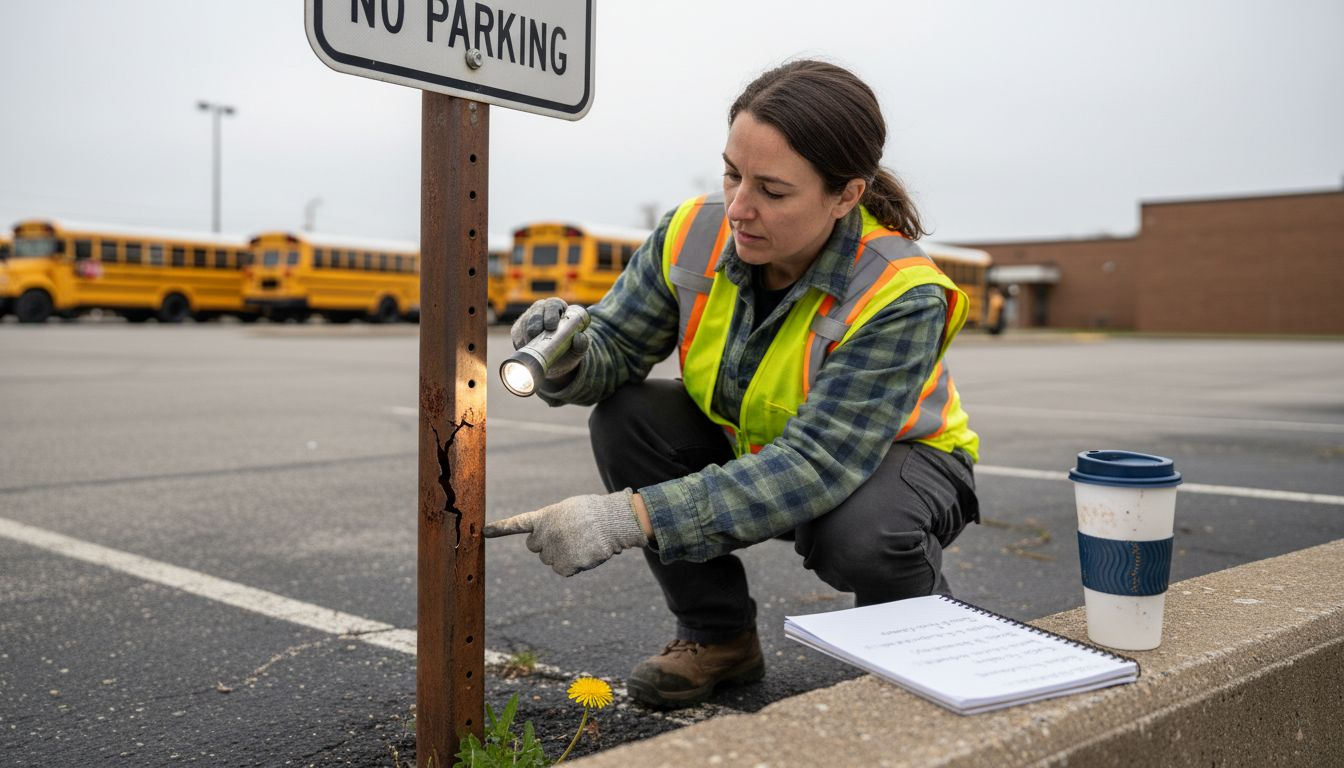
Once you have identified specific damage, prioritize repairs based on severity. Minor issues like small paint chips can often be addressed with touch up paint and careful application. More significant structural problems might require professional intervention or complete panel replacement. For metal signs, use rust neutralizing products and protective coatings to prevent further deterioration. Plastic or wooden signs may need specialized repair techniques depending on their material composition.
Pro tip: Create a digital maintenance log with dated photographs and repair notes to track your sign’s condition and help predict future maintenance needs.
Step 4: Apply Protective Coatings for Longevity
Protective coatings are your outdoor sign’s primary defense against environmental damage and wear. Protective coating techniques create a critical barrier that shields your sign from moisture, UV radiation, and potential corrosion.
Prepare the sign surface thoroughly before applying any protective coating. Clean the surface completely, removing all dirt, rust, and loose paint. Use sandpaper to create a smooth surface that will help the coating adhere properly. Choose a coating specifically designed for your sign’s material type metal, wood, or plastic. For metal signs, start with a rust inhibiting primer that prevents future corrosion. Apply the primer evenly using a high quality brush or spray equipment, ensuring complete coverage without drips or uneven patches. Allow the primer to dry completely according to manufacturer instructions before applying the topcoat.
Select a protective coating that matches your sign’s environmental conditions. Outdoor signs exposed to intense sunlight require UV resistant paints, while signs in coastal areas need additional corrosion protection. Apply the protective coating in thin, even layers using smooth consistent strokes. Allow each layer to dry completely before applying the next coat. Multiple thin layers provide better protection and a more uniform finish than a single thick application. Pay special attention to edges, corners, and mounting areas where moisture and environmental stress tend to concentrate.
Here’s a summary of sign material options and unique maintenance considerations:
| Sign Material | Common Issues | Best Protective Measure |
|---|---|---|
| Metal | Rust, fading | Rust-inhibiting primer, UV paint |
| Plastic | Cracking, discoloration | Mild cleaners, UV-resistant coating |
| Wood | Warping, decay | Waterproof sealant, regular repainting |
| Composite | Peeling, delamination | Gentle cleaning, edge sealing |
Pro tip: Choose coatings with warranties and apply during mild temperatures between 50 and 85 degrees Fahrenheit for optimal adhesion and drying.
Step 5: Check Visibility and Update Messaging
Ensuring your outdoor sign communicates clearly and effectively is crucial for maintaining its impact and relevance. Sign visibility standards provide essential guidelines for creating readable and compliant signage that captures attention and conveys your message.
Conduct a comprehensive visibility assessment by viewing your sign from multiple perspectives and distances. Start by checking the sign during different times of day and lighting conditions. Walk across the street and approach from various angles to verify text legibility and overall visual clarity. Assess whether landscaping, street furniture, or other obstacles might obstruct the sign’s view. Check that text size, color contrast, and font remain crisp and easily readable. Pay special attention to areas with glare from sunlight or nighttime lighting that might reduce message comprehension.
Update your sign’s messaging to reflect current information, branding, or regulatory requirements. Remove outdated content, replace faded lettering, and ensure all information remains accurate and relevant. Consider consulting local regulations or professional designers if you are unsure about messaging guidelines. For businesses, this might mean updating contact information, service offerings, or promotional details. For public signs, this could involve refreshing directional information or safety messages. Use high contrast colors and clear fonts to maximize readability and impact.
Pro tip: Photograph your sign from multiple angles and distances to objectively evaluate its visibility and messaging effectiveness.
Keep Your Outdoor Signs Looking Their Best with Custom Solutions
Maintaining outdoor signs involves tackling challenges like weather damage, fading, and structural wear to ensure lasting impact. This article highlights essential steps such as condition assessment, cleaning, damage repair, and protective coatings to extend your sign’s life and preserve its message. If you want signs built to withstand tough outdoor conditions and minimize maintenance headaches, turning to professionals who specialize in durable and high-quality signage is key.

Explore Uncategorized for versatile signage options that meet your unique needs. At Custom Signs Today, we provide custom-made banners, decals, and more crafted to endure outdoor elements and maintain visibility over time. Don’t wait until your sign fades or wears out. Contact us now to request a free quote and get expert advice on the best materials and protective finishes for your business or event signage.
Frequently Asked Questions
How often should I assess the condition of my outdoor sign?
Regularly assess your outdoor sign at least twice a year or after severe weather events. Conduct a comprehensive visual inspection to identify any potential issues and address them promptly to maintain your sign’s condition.
What cleaning methods are best for maintaining outdoor signs?
Use mild soap and warm water to clean most outdoor sign surfaces. Start by removing loose dirt, then wash gently with a soft cloth or non-abrasive sponge, drying the sign completely afterward to prevent water spots.
How can I effectively document my sign’s condition over time?
Create a digital maintenance log with dated photographs and detailed notes about any damage or repairs. Record each inspection and maintenance step to track changes and help plan future upkeep.
What protective coatings should be used on outdoor signs?
Select a protective coating based on your sign’s material, such as a rust-inhibiting primer for metal signs or UV-resistant paint for signs in direct sunlight. Apply multiple thin layers for better protection and let each layer dry completely before adding another.
How do I ensure my outdoor sign remains visible and its message clear?
Conduct visibility assessments by checking your sign from various distances and angles, especially in different lighting conditions. Update any outdated information, replace faded lettering, and use high-contrast colors to maximize readability.
What steps should I take if I notice significant damage to my sign?
Prioritize repairs based on the severity of the damage. Minor issues can often be addressed with touch-up paint, while more significant problems may require professional assistance or replacing entire panels. Address these issues promptly to avoid further deterioration.