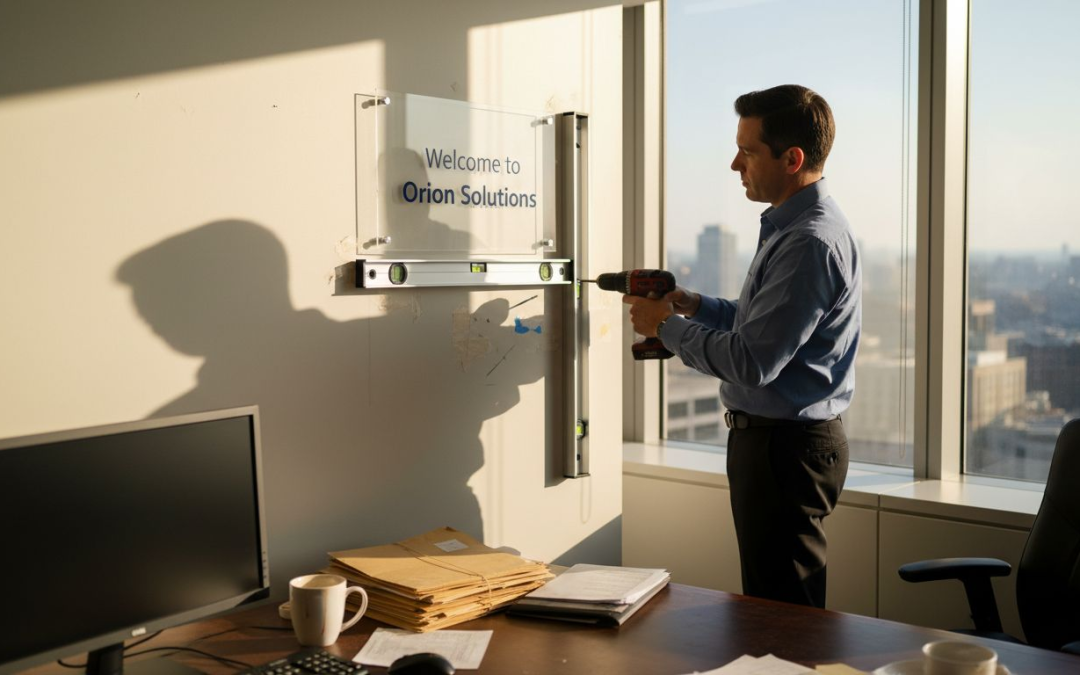
Choosing the right office signage can feel like a puzzle when you need to balance branding with everyday practicality. Office signs do more than display names or directions—they shape the first impression visitors get and help employees navigate your space with confidence. By focusing on a thorough site evaluation, smart material choices, and clear design, you create a workplace that feels both professional and welcoming. Strategic signage not only improves navigation but also reinforces your brand at every turn.
Table of Contents
- Step 1: Assess Office Signage Needs
- Step 2: Select Signage Types And Materials
- Step 3: Design Custom Office Signage
- Step 4: Install Signage In Strategic Locations
- Step 5: Verify Visibility And Compliance
Quick Summary
| Key Takeaway | Explanation |
|---|---|
| 1. Assess Office Signage Needs | Evaluate layout and communication needs to enhance navigation and branding. |
| 2. Choose Appropriate Sign Types | Select signage types such as identification or directional based on specific functionality. |
| 3. Design for Consistency | Use a unified design approach that incorporates brand colors, logos, and typography for maximum impact. |
| 4. Strategically Install Signs | Place signage in visible, high-traffic areas where they guide and inform effectively. |
| 5. Verify Compliance and Visibility | Conduct checks to confirm signs meet visibility standards and accessibility regulations. |
Step 1: Assess Office Signage Needs
Assessing your office signage needs is a critical first step in creating an effective visual communication strategy for your workspace. By carefully evaluating your current signage and understanding your branding and functional requirements, you’ll develop a comprehensive plan that enhances navigation and reinforces your company’s professional image.
To begin your assessment, consider several key factors that will guide your signage strategy. Start by conducting a comprehensive site evaluation, which involves examining your office layout, traffic patterns, and specific communication objectives. Signage placement guidelines recommend analyzing your physical space to determine optimal sign locations and visibility.
Key elements to assess include:
- Current wayfinding challenges in your office
- Areas requiring directional or informational signage
- Spaces that need identification markers
- Potential branding opportunities through strategic sign placement
Carefully measure distances and viewing angles to ensure your signs will be readable from necessary perspectives. Consider factors like lighting conditions, wall space, and potential visual obstructions that might impact sign effectiveness. Pay special attention to high-traffic areas where clear, prominent signage can significantly improve office navigation and professional appearance.
Pro tip: Take digital photos of your current office layout to help visualize potential signage placements and identify gaps in your current communication strategy.
Step 2: Select Signage Types and Materials
Selecting the right signage types and materials is crucial for creating a professional and effective office communication strategy that aligns with your brand identity and functional requirements. Your choices will impact not just visual appeal but also durability, readability, and overall workplace navigation.
Start by understanding the various signage types and materials that can meet your specific office needs. Different sign types serve unique purposes within your workspace:
- Identification Signs: Room and department markers
- Directional Signs: Guiding traffic flow and navigation
- Informational Signs: Displaying policies, announcements, and guidelines
- Regulatory Signs: Highlighting safety and compliance information
When evaluating materials, consider factors like durability, aesthetic compatibility, and maintenance requirements. Common signage materials include:
- Metal (aluminum, stainless steel)
- Acrylic
- Vinyl
- Digital display screens
- Dimensional lettering
Choose materials that not only look professional but can withstand your office environment’s specific conditions. For instance, high-traffic areas might require more robust materials like metal or thick acrylic that resist wear and maintain clarity.

Here’s a summary of common office signage materials and where they perform best:
| Material Type | Best Application Area | Durability Level |
|---|---|---|
| Metal (Aluminum) | High-traffic hallways | Very high |
| Acrylic | Reception and meeting rooms | High |
| Vinyl | Temporary or flexible areas | Moderate |
| Digital Screens | Lobbies, visitor kiosks | High |
| Dimensional Letters | Main entries, branding walls | Very high |
Matching your signage materials to your brand’s visual identity creates a cohesive and memorable workplace aesthetic.
Pro tip: Request material samples and test them in your actual workspace lighting and conditions before making a final investment.
Step 3: Design Custom Office Signage
Designing custom office signage is a critical step in transforming your workspace into a professional and visually cohesive environment that communicates your brand’s unique identity. Effective sign design requires careful consideration of multiple design elements that go beyond simple aesthetics.
Your custom signage design should incorporate several key branding and functional components:
- Brand Color Palette: Use your company’s specific color scheme
- Typography: Select fonts that match your brand’s personality
- Logo Integration: Strategically place your logo for maximum impact
- Readability: Ensure text is clear and legible from various distances
- Material Consistency: Match signage materials to your brand’s visual style
When developing your design, focus on creating a unified visual language that speaks to your company’s professionalism. This means maintaining consistent design principles across different types of signs, from room markers to directional signage. Consider elements like font size, color contrast, and spacing to ensure maximum visibility and comprehension.
A well-designed sign system transforms your office from a generic workspace into a powerful brand communication tool.
Pro tip: Create a digital mockup of your signage design and review it in different lighting conditions to ensure optimal visibility and aesthetic appeal.
Step 4: Install Signage in Strategic Locations
Installing your custom office signage requires strategic planning to maximize visibility, functionality, and brand impact. Wayfinding signage guidelines emphasize the critical importance of precise placement to enhance navigation and communication within your workspace.
When determining strategic installation locations, consider these key positioning principles:
- Traffic Flow: Install signs where people naturally pause or change direction
- Line of Sight: Ensure signs are visible from multiple approach angles
- Lighting Conditions: Place signs where they are well-illuminated
- Height Considerations: Mount signs at consistent, readable heights
- Clear of Obstructions: Avoid placing signs behind furniture or equipment
Implement a systematic approach to sign installation by creating a comprehensive signage map. This helps ensure consistent placement and eliminates redundant or confusing signage. Measure and mark exact mounting points, and use professional installation techniques that maintain your signs’ alignment and professional appearance.
Strategic signage placement transforms your office from a mere workspace into an intuitive, navigable environment.
Pro tip: Use painter’s tape to create precise placement templates before drilling any permanent mounting holes, ensuring perfect alignment and minimizing wall damage.
Step 5: Verify Visibility and Compliance
Verifying the visibility and compliance of your office signage is a critical final step that ensures your signs are not just aesthetically pleasing, but legally and functionally effective. Signage standards provide comprehensive guidelines for evaluating your signage system’s performance and regulatory adherence.
To thoroughly verify your signage, conduct a comprehensive assessment across multiple dimensions:
- Visibility Test: Check readability from various distances and angles
- Lighting Assessment: Evaluate sign legibility under different lighting conditions
- Accessibility Compliance: Confirm ADA and Americans with Disabilities Act requirements
- Color Contrast: Verify sufficient color contrast for readability
- Mounting Height: Ensure signs meet standard height and placement regulations
Use a systematic verification process that involves multiple stages of review. This includes visual inspections, measurements, and potentially engaging an external accessibility consultant to provide an objective evaluation. Pay special attention to tactile features, braille requirements, and international symbol standards that ensure your signage is inclusive and universally understandable.
Use this table to identify potential issues and solutions in sign visibility and compliance checks:
| Issue Detected | Possible Cause | Recommended Action |
|---|---|---|
| Sign not readable | Poor contrast or lighting | Increase contrast, add lighting |
| Obstructed signage | Furniture blocking view | Relocate sign, rearrange layout |
| Too high/low mount | Incorrect placement | Adjust to standard height |
| Lacks accessibility | No braille/ADA features | Add tactile and ADA elements |
Comprehensive signage verification transforms compliance from a checkbox into a commitment to workplace accessibility.
Pro tip: Take high-resolution photographs of each installed sign during your verification process to document compliance and create a visual reference for future updates.
Elevate Your Office Branding with Custom Signage Solutions
The “Office Signage Setup Guide for Effective Branding” highlights the challenges of assessing signage needs, selecting the right materials, and ensuring visibility and compliance. You want your workspace to communicate professionalism, guide visitors smoothly, and reflect your unique brand identity clearly. Achieving this means overcoming pain points like poor sign placement, material mismatches, or unclear messaging that hurt first impressions and workplace navigation.
At Custom Signs Today, we specialize in transforming these challenges into impactful visual solutions. From personalized banners and dimensional letters to durable acrylic and metal signs, our expertise covers every aspect of office signage design and installation. Explore our range of customizable options in the Uncategorized section and discover how strategic signage enhances brand consistency and accessibility.

Ready to upgrade your office environment now Visualize your brand with custom-made signage that fits your exact needs and spaces. Visit Custom Signs Today to request a free quote and take the first step toward seamless, professional signage that speaks volumes the moment your clients and employees walk in.
Frequently Asked Questions
How do I assess my office signage needs?
To assess your office signage needs, conduct a site evaluation to analyze your office layout, traffic patterns, and communication goals. Focus on identifying challenges in wayfinding, areas requiring directional signage, and potential branding opportunities.
What types of office signage should I consider for effective branding?
Consider using identification signs, directional signs, informational signs, and regulatory signs to meet your office’s branding and functional needs. Each type serves a specific purpose, enhancing both navigation and your professional image.
How can I ensure my custom office signage is visually effective?
To ensure your signage is visually effective, incorporate your brand’s color palette, typography, and logo into the design. Prioritize readability and material consistency to create a unified look that enhances your brand identity.
What factors should I consider when installing office signage?
When installing signage, consider traffic flow, line of sight, lighting conditions, and height for optimal visibility. Proper placement in high-traffic areas will enhance navigation and improve the overall user experience in your workspace.
How do I verify the visibility and compliance of my office signage?
Verify visibility and compliance by checking readability from various distances, assessing lighting, and ensuring adherence to accessibility standards. Conduct thorough inspections and make any necessary adjustments to meet required guidelines.
What should I do if my signage is not meeting visibility standards?
If your signage is not meeting visibility standards, consider increasing contrast or adding lighting for improved legibility. Reassess placement to ensure it is unobstructed and adjust mounting height to comply with regulations.