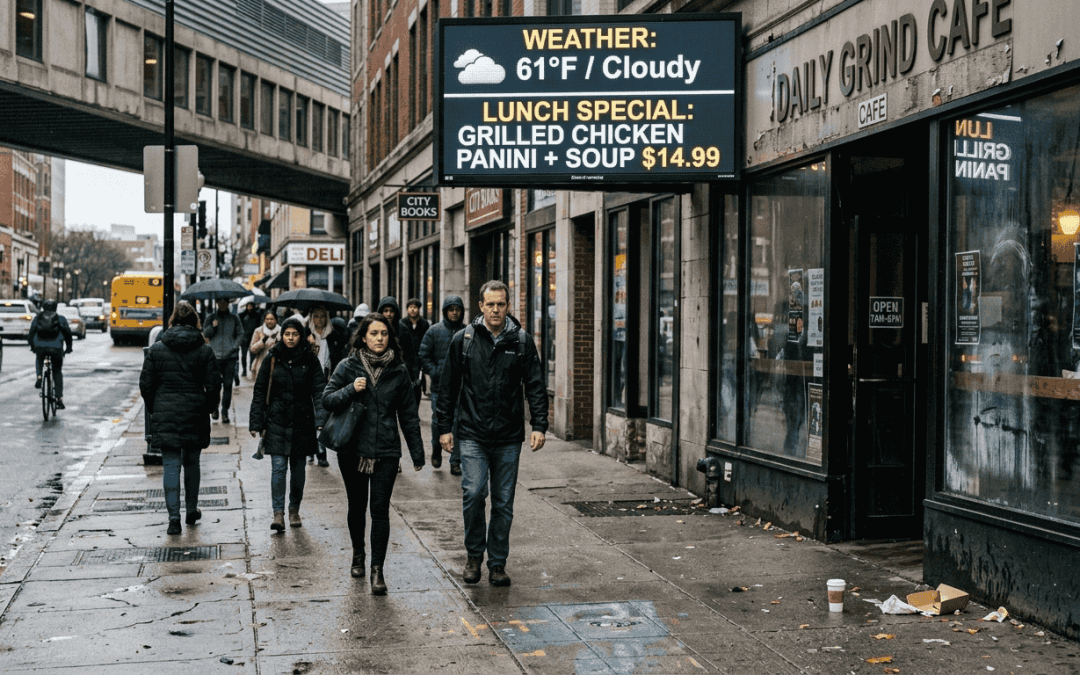
Choosing the right signage in 2026 feels overwhelming. Technology evolves rapidly, consumer expectations shift, and every business wants maximum brand visibility without wasting budget. You need a clear framework to evaluate emerging signage options and select solutions that genuinely boost engagement and ROI. This article breaks down the most impactful 2026 signage trends, backed by data, so you can make strategic decisions that elevate your brand presence and connect with audiences more effectively than ever before.
Table of Contents
- How To Evaluate Signage Trends In 2026: Key Criteria For Success
- Top Signage Trends Of 2026: AI-Powered Personalization And Dynamic Content
- Emerging Hardware And Network Innovations Enhancing Signage Effectiveness
- Comparison Of 2026 Signage Types: Digital, Static, And AI-Powered Networks
- Enhance Your Branding With Custom Signage Solutions Today
- Frequently Asked Questions About 2026 Signage Trends
Key takeaways
| Point | Details |
|---|---|
| AI personalization doubles engagement | Tailored content captures attention far better than generic messaging |
| Dynamic content outperforms static by 83% | Digital displays with changing visuals dramatically improve recall and brand awareness |
| Centralized management scales efficiently | Cloud and edge systems let you control multi-location signage from one dashboard |
| Privacy and speed matter equally | On-device analytics and anonymized data protect customers while delivering real-time personalization |
| ROI is measurable and significant | Expect 12% sales lifts and 40% longer dwell times with smart signage investments |
How to evaluate signage trends in 2026: key criteria for success
Before diving into specific trends, you need a solid evaluation framework. Not every shiny new technology delivers real value. Focus on four core criteria when assessing signage options for your business or event.
First, measure engagement uplift. AI-powered signage networks measurably boost engagement and ROI compared to static alternatives. Look for solutions that demonstrate quantifiable improvements in viewer attention, dwell time, or interaction rates. Dynamic content consistently outperforms static displays because it captures eyes and holds interest longer.
Second, prioritize personalization capabilities. Generic messaging no longer cuts through the noise. Modern audiences expect relevant, timely content that speaks directly to their needs. Signage that adapts based on audience demographics, time of day, or environmental factors creates stronger connections and drives action. Why personalized signage guide explores how tailored messaging transforms viewer response.
Third, evaluate scalability and management ease. If you operate multiple locations or run frequent events, you need centralized control. Cloud-based content management systems let you update hundreds of displays instantly from one interface. Edge computing balances speed with flexibility, processing data locally while syncing with central servers.
Fourth, calculate ROI potential. Track metrics that matter: sales conversion rates, foot traffic increases, average transaction values, and customer dwell time. The best signage investments pay for themselves through measurable business outcomes, not just aesthetic improvements.
Pro Tip: Start with a pilot program at your highest-traffic location. Test engagement metrics for 30 days before rolling out network-wide to validate ROI assumptions with real data.
- Define your primary goal (brand awareness, sales conversion, wayfinding, event promotion)
- Set baseline metrics for current signage performance
- Identify budget constraints and timeline requirements
- Prioritize features that directly support your goal
- Request demos or case studies from vendors showing proven results in your industry
Top signage trends of 2026: AI-powered personalization and dynamic content
AI-driven personalization leads the pack in 2026 signage innovation. These systems analyze audience characteristics in real time and serve tailored content that resonates. Digital displays with dynamic content can lift recall by up to 83% over static alternatives, making them essential for competitive brand visibility.
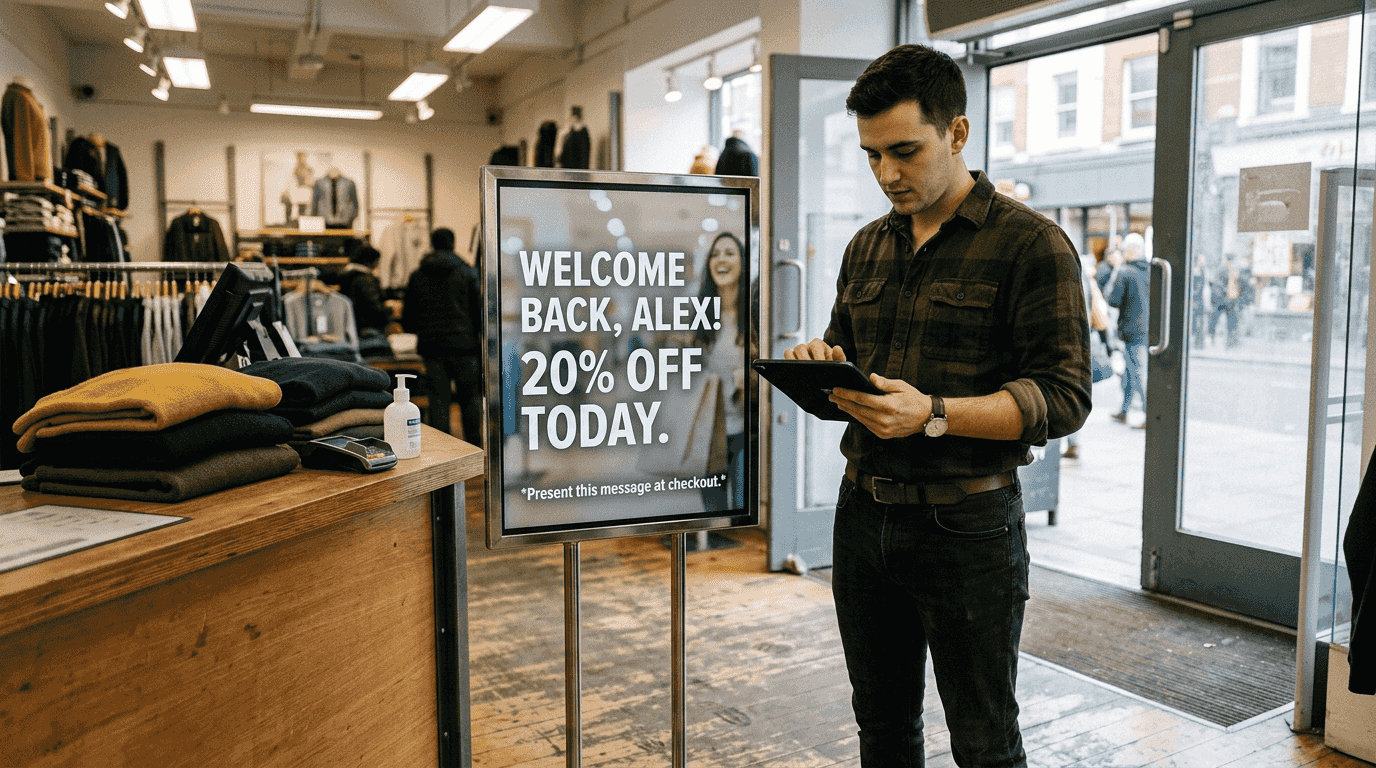
The technology works through computer vision and machine learning. Cameras detect viewer demographics like age range and gender without storing personal data. The system instantly selects appropriate messaging from your content library. A coffee shop might show espresso drinks to morning commuters and iced beverages to afternoon shoppers. This relevance doubles viewer attention compared to generic advertisements.
Dynamic menu boards represent another high-impact application. Quick-service restaurants using AI-optimized digital menus report sales increases of 8 to 12 percent. The displays adjust featured items based on inventory levels, weather conditions, peak hours, and historical purchase patterns. Promoting hot soup on cold days or highlighting items with expiring ingredients reduces waste while boosting revenue.
Personalization is improving engagement and yielding better ROI on signage content across industries. Retail stores see 40 percent higher dwell times when displays adapt to shopper profiles. Event organizers capture more registrations by showing different calls to action based on attendee type.
Generative AI now creates content at scale. Instead of designing dozens of static images, you provide brand guidelines and key messages. The AI generates variations optimized for different audiences, times, and contexts. This drastically reduces production costs while maintaining visual consistency.
Pro Tip: Combine AI personalization with A/B testing. Let the system try different messaging variations and automatically optimize based on which content drives the most engagement or conversions.
- Real-time audience analytics inform instant content decisions
- Privacy-safe detection methods avoid facial recognition or personal data collection
- Content libraries organize hundreds of variations for automated deployment
- Machine learning improves targeting accuracy over time as the system learns what works
- Integration with inventory and CRM systems enables sophisticated cross-selling
“AI signage transforms passive displays into active conversations with customers. The technology finally makes one-to-one marketing possible at physical scale.” – Digital Signage Industry Report 2026
Custom messages on signs explains how tailored communication builds stronger brand connections even in traditional formats.
Emerging hardware and network innovations enhancing signage effectiveness
The hardware powering 2026 signage has evolved dramatically. High-brightness displays now deliver 2,500 to 5,000 nits, ensuring visibility in direct sunlight. This makes outdoor digital signage practical for storefronts, events, and transit advertising. Energy-efficient LED backlighting reduces operating costs while maintaining brilliant color reproduction.
Media players have become more powerful and compact. Modern systems run complex AI algorithms locally, processing video analytics and content decisions without cloud latency. This edge computing approach delivers instant personalization while reducing bandwidth requirements and improving reliability.
Network architectures balance edge and cloud capabilities strategically. AI signage relies on rapid data collection, processing, and content publishing with edge-based and cloud-driven systems working together. Edge devices handle real-time analytics and immediate content switching. Cloud platforms manage content libraries, schedule campaigns, and aggregate performance data across your entire network.
Privacy safeguards have become standard requirements. Best practices suggest on-device analytics processing and anonymized audience data transmission to protect customer privacy while enabling personalization. No facial images leave the device. Only aggregated demographic counts sync to central servers. This approach complies with privacy regulations while delivering the targeting precision businesses need.
Centralized content management systems streamline multi-location operations. You upload content once and deploy it across hundreds of displays instantly. Schedule different campaigns by location, time, or triggered events. Monitor display health, content performance, and audience metrics from a single dashboard. This efficiency makes sophisticated signage networks accessible to businesses of all sizes.
- 4K and 8K resolution displays provide stunning visual clarity at any viewing distance
- Touchscreen capabilities enable interactive experiences and self-service applications
- Weatherproof enclosures extend display lifespan in harsh outdoor environments
- Modular designs allow easy component replacement and upgrades without full system replacement
- 5G connectivity enables high-bandwidth content streaming and real-time updates
| Hardware Component | Key 2026 Specifications | Business Benefit |
|---|---|---|
| Display brightness | 2,500 to 5,000 nits | Outdoor visibility in direct sunlight |
| Media player processing | 8-core CPUs with AI acceleration | Real-time personalization without lag |
| Network bandwidth | 5G and fiber connectivity | Instant content updates across locations |
| Storage capacity | 256GB to 1TB local | Extensive content libraries on-device |
Innovations signage materials explores how material advances complement digital technology for comprehensive branding solutions.
Comparison of 2026 signage types: digital, static, and AI-powered networks
Understanding performance differences between signage types helps you allocate budget effectively. Static signage still has a place for permanent branding and directional needs. Digital displays excel at dynamic, timely messaging. AI-powered networks deliver the highest engagement and ROI through personalization.
Static signs offer simplicity and permanence. They require no power, generate no operating costs after installation, and work reliably for years. Use them for building identification, parking directions, or evergreen brand messaging that rarely changes. Their limitation is inflexibility. Updating static signage means reprinting and reinstalling, which adds cost and downtime.
Digital signage offers greater brand awareness and engagement than static and traditional media. Digital displays let you change content instantly, test different messages, and schedule campaigns around events or promotions. Animated content captures attention better than static images. Video demonstrations explain complex products more effectively than text.
AI-powered digital networks represent the premium tier. They combine digital flexibility with intelligent targeting. These systems double viewer attention compared to generic digital ads by serving relevant content to each audience segment. The upfront investment is higher, but ROI justifies the cost through measurable sales lifts and engagement improvements.
Consider your update frequency when choosing. If messaging changes weekly or daily, digital makes sense. If you need different content for morning versus evening crowds, AI personalization delivers maximum value. If your message stays constant for months, static signage costs less.
| Signage Type | Engagement Rate | Recall Improvement | Personalization | Update Speed | Best Use Case |
|---|---|---|---|---|---|
| Static printed | Baseline | 0% (reference point) | None | Days to weeks | Permanent branding, directional |
| Digital generic | 2x static | 45% vs static | Limited scheduling | Minutes | Promotional campaigns, menus |
| AI-powered digital | 4x static | 83% vs static | Real-time audience targeting | Instant | High-traffic retail, events |
- Static signage works best for unchanging information and tight budgets
- Digital displays justify investment when content updates frequently
- AI personalization maximizes ROI in high-traffic environments with diverse audiences
- Hybrid approaches combine static brand elements with digital promotional zones
Retail signage explained breaks down how different signage types work together in comprehensive retail strategies.
Enhance your branding with custom signage solutions today
You now understand which 2026 signage trends deliver real business results. Translating this knowledge into action means partnering with providers who offer flexible, customizable solutions that match your specific needs and budget.
Custom signs tailored to your brand guidelines ensure consistent visual identity across all customer touchpoints. Whether you need traditional printed signage for permanent installations or modern solutions incorporating the latest trends, customization lets you stand out in crowded markets. Exterior lightbox signs provide 24/7 visibility with illuminated displays that attract attention day and night. Face change signs offer the flexibility to update messaging without replacing entire sign systems, bridging the gap between static and fully digital solutions. Explore these options to find the right balance of impact, flexibility, and investment for your specific branding and promotional goals.
Frequently asked questions about 2026 signage trends
How does AI-powered personalization improve signage ROI?
AI analyzes viewer demographics in real time and serves tailored content that resonates with each audience segment. This relevance doubles attention rates and increases sales by 8 to 12 percent compared to generic messaging. The technology pays for itself through measurable improvements in conversion rates, dwell time, and customer engagement. Why personalized signage guide explains the specific mechanisms that drive these results.
What is the main difference between digital and static signage effectiveness?
Digital signage improves recall by 45 to 83 percent over static displays because dynamic content captures and holds attention more effectively. You can update digital content instantly to stay relevant, test different messages, and schedule campaigns around events. Static signage works well for permanent information but cannot adapt to changing circumstances or audience needs without physical replacement.
What ROI should I expect from upgrading to smart signage in 2026?
Typical results include 8 to 12 percent sales increases for dynamic menu boards, 40 percent longer customer dwell times with personalized content, and 83 percent higher brand recall versus static alternatives. ROI timelines vary by industry and implementation quality, but most businesses see payback within 12 to 18 months through increased revenue and reduced content production costs. Track baseline metrics before upgrading to measure your specific results accurately.
What should event organizers prioritize when selecting 2026 signage?
Focus on flexibility and attention-grabbing capability. Events need signage that adapts quickly to schedule changes, highlights different sponsors or sessions, and stands out in busy environments. Digital displays with centralized management let you update content across multiple locations instantly. Why signage boosts event attendance explores how strategic signage placement and messaging drive registration and participation rates.
Are there privacy concerns with AI-powered signage analytics?
Modern systems use privacy-safe methods that detect general demographics without identifying individuals. Cameras analyze age range and gender but do not perform facial recognition or store personal images. All processing happens on-device, and only anonymized aggregate data transmits to central servers. This approach complies with privacy regulations while enabling effective personalization that respects customer privacy.
How do I choose between edge and cloud-based signage systems?
Edge systems process data locally for instant response and work reliably even with internet disruptions. Cloud platforms excel at centralized management, content distribution, and aggregated analytics across networks. The best 2026 solutions combine both: edge devices handle real-time personalization while cloud platforms manage content libraries and performance tracking. Choose hybrid architectures that balance speed, reliability, and management convenience for your specific deployment scale.