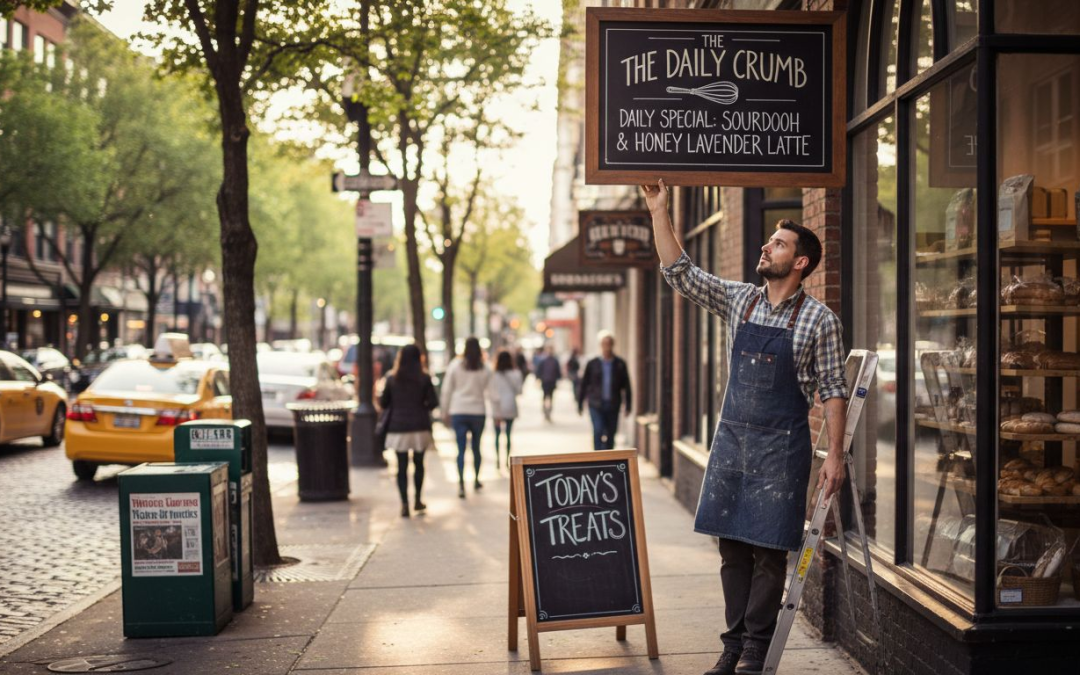
Outdoor signage increases brand recall by 47%, making it a powerful tool for businesses competing for customer attention. Brand visibility determines how easily consumers recognize your business, directly influencing purchase decisions and market success. This guide shows you how to strategically use signage to amplify your brand presence and drive measurable growth.
Table of Contents
- Role Of Signage In Enhancing Brand Visibility
- Measuring Brand Visibility And Impact
- Common Misconceptions About Brand Visibility
- Framework For Effective Signage Strategies
- Case Studies Linking Signage To Brand Growth
- Applying Brand Visibility Insights To Your Business
- Enhance Your Brand With Custom Signage Solutions
Key takeaways
| Point | Details |
|---|---|
| Brand visibility drives recognition | How well customers see and remember your brand directly affects purchasing behavior and market competitiveness. |
| Custom signage boosts engagement | Tailored signs attract significantly more foot traffic and customer attention than generic alternatives. |
| Metrics guide optimization | Tracking brand recall, recognition rates, and traffic helps refine signage strategies for maximum ROI. |
| Strategic planning matters most | Balancing location, design hierarchy, durability, and messaging creates the highest visibility impact. |
| Real results prove effectiveness | Case studies demonstrate signage can increase sales by 21% and brand recognition by 75%. |
Role of signage in enhancing brand visibility
Signage serves as your brand’s physical voice in the customer environment. It communicates your identity, values, and offerings at critical decision points where potential customers are already engaged with their surroundings.
Brand visibility definition and impact extends beyond simple logo placement. It encompasses every touchpoint where your brand enters consumer awareness. Effective signage creates these touchpoints strategically, transforming passive viewers into active prospects.
Outdoor signs specifically deliver remarkable results. Research shows outdoor signs boost brand recall by 47%, nearly doubling the likelihood customers remember your business when making purchase decisions. Custom signage outperforms generic alternatives consistently, driving higher foot traffic and deeper engagement.
Different signage types fulfill distinct visibility roles:
- Exterior signs establish your physical presence and attract passing traffic
- Directional signage guides customers while reinforcing brand identity at each touchpoint
- Promotional banners highlight specific offers and create urgency
- Lightbox displays maintain visibility during evening hours when many purchasing decisions occur
- Vehicle wraps transform transportation into mobile brand ambassadors
Consistent messaging across all signage formats strengthens brand identity recognition. When customers encounter the same visual language, colors, and messaging repeatedly, neural pathways associated with your brand deepen. This psychological reinforcement makes your business the default choice when needs arise.

Branding with custom signage requires understanding your audience’s visual environment. A sign competing with dozens of others needs exceptional clarity and contrast. Your exterior signs must communicate your core message in under three seconds, the average time passersby dedicate to peripheral signage.
Custom messages on signs tailored to location context perform better than generic branding. A coffee shop near a university might emphasize late hours and wifi, while the same brand near offices highlights quick service and meeting spaces. This contextual customization demonstrates understanding of customer needs, building immediate rapport.
Pro Tip: Position your most important signage where customers naturally pause or slow down, such as intersections, building entrances, or checkout areas, maximizing exposure time and message absorption.
Measuring brand visibility and impact
Quantifying visibility transforms signage from expense to investment. Without measurement, you’re guessing which efforts drive results and which waste resources.
Key metrics reveal signage effectiveness:
- Brand recall rates measure how many people remember your business unprompted after exposure
- Recognition percentages track how many identify your brand when prompted with visual cues
- Foot traffic counts before and after signage installation show direct behavioral impact
- Sales conversion tracking links signage exposure to actual purchases
- Customer survey responses identify which signage elements resonated most
Establish baseline measurements before implementing new signage. This benchmark allows accurate ROI calculation and strategy refinement. Many businesses skip this step, making it impossible to demonstrate signage value or optimize placement.
Foot traffic monitoring provides immediate feedback. Simple manual counts during peak hours, video analytics, or door sensors quantify how signage changes customer behavior. Compare traffic patterns on days with and without promotional signage to isolate impact.
Customer surveys offer qualitative insights numbers alone miss. Ask how customers discovered your business, what caught their attention, and which messages they remember. These responses guide messaging refinements and identify high-performing visual elements worth emphasizing.
Digital tools enhance measurement precision. QR codes on signage track engagement rates and conversion paths. Unique phone numbers or URLs on different signs attribute leads to specific placements. This granular data reveals which locations and designs deliver the strongest returns.
Branding with custom signage success depends on continuous optimization. Review visibility data monthly, adjusting messaging, placement, or design based on performance trends. What worked last quarter may underperform as seasons, competitors, or customer priorities shift.
ROI calculations should account for both direct and indirect benefits. Direct revenue from signage-driven traffic is measurable. Indirect benefits like enhanced brand perception, reduced customer acquisition costs, and increased referral rates contribute substantial long-term value.
Common misconceptions about brand visibility
Many businesses sabotage visibility efforts through widespread misconceptions. Understanding these myths prevents costly strategic errors.
Visibility extends far beyond logos and color schemes alone. While consistent visual identity matters, strategic placement, message clarity, and environmental context determine whether anyone notices your carefully crafted brand elements. A perfectly designed sign in a poor location delivers zero visibility.
Mere signage presence doesn’t guarantee impact. Businesses often assume installing signs automatically boosts visibility. Reality is more nuanced. Generic, poorly positioned, or visually cluttered signs can actually harm brand perception by appearing unprofessional or desperate.
Research demonstrates visual coherence across signage increases brand consistency perception by 48%. This holistic approach means every sign, from storefront to directional markers to promotional displays, should share unified design language. Inconsistent signage confuses customers and dilutes brand identity.
Key misconceptions to avoid:
- Believing bigger always means better visibility; strategic placement often outperforms size
- Assuming one-time signage installation suffices; visibility requires ongoing maintenance and updates
- Thinking generic templates save money; custom designs drive significantly higher engagement
- Neglecting lighting considerations; signs invisible after dark waste 50% of potential visibility
- Ignoring competitor signage environment; your signs must differentiate, not blend in
Many businesses focus solely on attracting new customers through signage. Equally important is reinforcing brand recognition among existing customers. Repeated exposure through branding with custom signage builds loyalty and increases customer lifetime value.
Pro Tip: Integrate location-specific messaging with your core brand identity for maximum resonance. A national brand’s local franchise gains visibility by acknowledging community context while maintaining corporate visual standards.
Weather resistance and durability often receive insufficient attention during planning. Faded, damaged, or illegible signage actively damages brand perception, suggesting neglect or poor quality. Budget for materials and maintenance that preserve visibility over time.
Framework for effective signage strategies
A systematic approach ensures signage investments deliver maximum visibility returns. This framework guides you from assessment through implementation and optimization.
-
Assess current brand visibility metrics and identify gaps. Measure baseline recognition, recall, and foot traffic. Survey customers about brand awareness sources. Document existing signage performance and condition.
-
Identify high-traffic customer pathways and decision points. Map where target audiences travel, pause, and make purchasing decisions. Prioritize locations offering sustained exposure or capturing customers at critical moments.
-
Design signs with clear visual hierarchy and consistent branding. Lead with your most important message, typically brand name or key benefit. Use size, color contrast, and positioning to guide eye movement through secondary information.
-
Select durable materials appropriate for each location’s conditions. Exterior signs need weather-resistant substrates and UV-stable inks. High-traffic areas require impact-resistant materials. Budget considerations should balance upfront costs against replacement frequency.
-
Implement signage with professional installation ensuring optimal angles and lighting. Poor installation undermines even excellent designs. Consider sight lines from multiple approaches and lighting conditions throughout the day.
-
Monitor performance continuously and adjust based on data. Track metrics weekly initially, then monthly once patterns emerge. Test variations in high-value locations to optimize messaging and design.
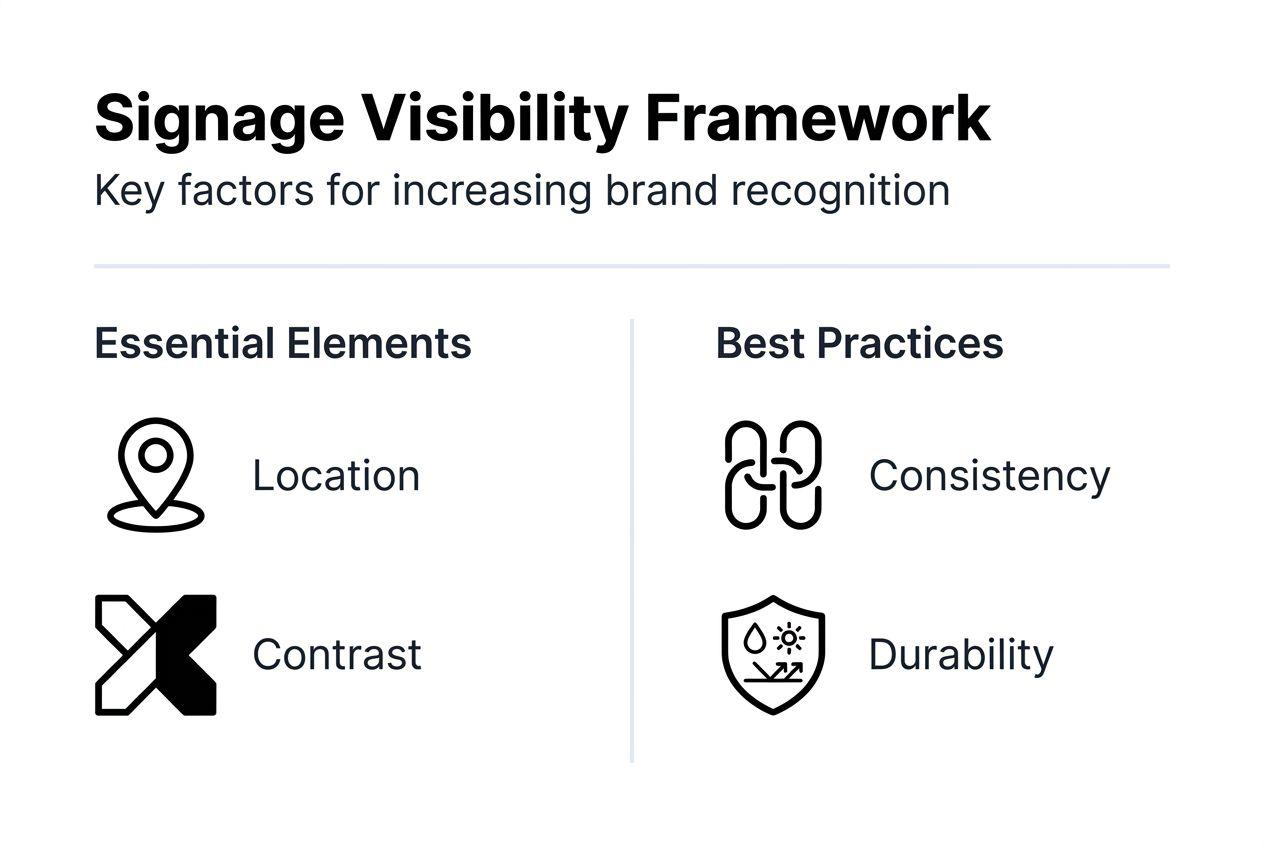
| Factor | Importance | Considerations |
|---|---|---|
| Location | Critical | Visibility, traffic volume, dwell time, competitor proximity |
| Design hierarchy | High | Message clarity, visual flow, brand consistency |
| Durability | High | Material quality, weather resistance, maintenance requirements |
| Lighting | Medium-High | Day/night visibility, energy costs, maintenance |
| Messaging | Critical | Brevity, relevance, call-to-action clarity |
How to design business signs effectively requires balancing aesthetic appeal with functional communication. Beautiful signs that fail to communicate clearly waste resources. Conversely, clear messaging in unappealing designs may inform but won’t engage emotionally.
Top signage design tips for small businesses emphasize starting with core objectives. Define what you want each sign to accomplish: attract attention, provide direction, communicate offers, or reinforce brand presence. This clarity prevents trying to accomplish too much with a single sign.
Pro Tip: Outdoor signs require exceptional lighting and weather-resistant materials to maintain visibility year-round. Invest in LED illumination and marine-grade substrates for signs exposed to elements, preventing the faded, damaged appearance that undermines brand credibility.
Color contrast drives legibility more than any other factor. High-contrast combinations like dark text on light backgrounds or vice versa remain readable from greater distances and in varied lighting. Avoid low-contrast combinations that look sophisticated in isolation but fail in real-world conditions.
Case studies linking signage to brand growth
Real-world examples demonstrate signage’s tangible impact on business outcomes. These cases show how strategic visibility investments drive measurable results.
A regional retail chain struggling with declining foot traffic implemented comprehensive custom signage across 15 locations. They replaced generic storefront signs with illuminated displays featuring current promotions. Directional signage guided customers through stores more effectively. Within six months, the chain documented:
- 38% increase in brand visibility based on customer surveys
- 21% sales uplift compared to pre-signage baseline
- 15% improvement in average transaction value
- 42% better customer navigation and reduced staff direction requests
The investment paid for itself within eight months through increased revenue alone, not accounting for operational efficiency gains.
An event organizer used examples of event signage to transform their convention presence. Custom banners, directional signs, and branded booth displays created cohesive visual identity across a major industry event. Post-event surveys revealed 75% of attendees recognized their brand unprompted, compared to 28% at the previous year’s event with minimal signage.
A local service business invested in vehicle wrap graphics for their fleet. Each wrapped vehicle generated an estimated 30,000-70,000 daily impressions in their service area. Brand recognition surveys showed 52% awareness growth over 12 months, with vehicle wraps mentioned as the primary brand touchpoint by 34% of new customers.
| Business Type | Visibility Increase | Sales Impact | Implementation Period |
|---|---|---|---|
| Retail chain | 38% | +21% sales | 6 months |
| Event organizer | 75% recognition | +45% leads | 1 event |
| Service business | 52% awareness | +34% new customers | 12 months |
Retail signage explained through these examples reveals common success factors. Each business combined multiple signage types rather than relying on single solutions. They prioritized consistency across all touchpoints. Most importantly, they measured results and refined strategies based on data.
The retail chain’s success came partly from addressing a previously overlooked factor: evening visibility. Their illuminated signs maintained brand presence during peak evening shopping hours when old signs became invisible. This extended their effective visibility window by 40%, capturing an entirely new customer segment.
These results aren’t exceptional outliers. Businesses consistently see double-digit visibility and revenue improvements when applying strategic signage frameworks. The key is treating signage as an integrated marketing system rather than isolated purchases.
Applying brand visibility insights to your business
Translate these principles into action with practical steps tailored to your specific context. Generic approaches deliver mediocre results; customization based on your unique situation maximizes impact.
Select signage types matching your business model and customer journey:
- Retail locations benefit most from exterior signs, window graphics, and in-store directional signage
- Service businesses gain visibility through vehicle graphics and job site signage
- Office environments use signage for wayfinding, brand reinforcement, and professionalism
- Events require portable, high-impact displays that assemble quickly and transport easily
Prioritize durability investments for outdoor and high-traffic applications. Cheap materials seem cost-effective initially but require frequent replacement, ultimately costing more while creating periods of reduced visibility. Quality exterior signage lasts 5-7 years with minimal maintenance, spreading costs across extended timelines.
Ensure messaging cohesion across all brand touchpoints. Your signage should echo website copy, marketing materials, and customer communications. This consistency compounds recognition, making each exposure more memorable and reinforcing previous impressions.
How to design business signs effectively means understanding your specific audience’s visual preferences and decision-making context. B2B signage emphasizes professionalism and expertise. B2C retail signage highlights benefits and emotional appeal. Event signage creates excitement and urgency.
Lighting extends visibility beyond daylight hours. LED illumination offers energy efficiency and longevity, paying for itself through reduced operating costs while maintaining consistent brand presence. Consider ambient lighting conditions at each location; signs near bright competitors need extra illumination to avoid getting lost visually.
Office signage ideas for brand visibility emphasize creating professional impressions while guiding visitors effortlessly. Reception area signage sets tone immediately. Conference room signs reinforce brand presence during client meetings. Wayfinding signage demonstrates organizational competence.
Signage design tips for business success include testing designs with actual target customers before full implementation. Show mockups to 10-15 customers and ask what they notice first, what message they receive, and what action they’d take. Their feedback often reveals clarity issues designers miss.
Pro Tip: Schedule quarterly signage audits to assess condition, relevance, and performance. Regular reviews catch fading, damage, or outdated messaging before they undermine brand perception. This proactive approach maintains consistent visibility and prevents the gradual decline many businesses overlook until it becomes severe.
Start with high-impact, high-traffic locations first. Prove ROI in priority areas before expanding to secondary locations. This staged approach builds internal support and refines your strategy based on real performance data.
Enhance your brand with custom signage solutions
Ready to transform your brand visibility through strategic signage? Professional solutions tailored to your specific needs deliver results generic approaches can’t match.
Custom signage services boost brand visibility by creating cohesive visual identity across all customer touchpoints. From initial consultation through design, production, and installation, expert guidance ensures your signage investment delivers maximum returns. Exterior lightbox signs provide impactful outdoor branding that maintains visibility 24/7, capturing customer attention day and night. Retail signage options attract and engage customers throughout their shopping journey, from storefront to checkout. Event signage solutions create memorable brand presence that stands out in crowded convention environments, driving leads and recognition long after events conclude.
FAQ
What is brand visibility and why is it important?
Brand visibility measures how easily consumers recognize and recall your business when making purchase decisions. High visibility builds trust and preference, making your brand the default choice when needs arise. It’s essential for standing out in competitive markets where customers face countless options.
How can custom signage improve my brand’s visibility?
Custom signage attracts significantly more attention than generic alternatives by delivering messages tailored to specific locations and audiences. Strategic placement at high-traffic decision points ensures your brand enters customer awareness at critical moments. Quality custom signs communicate professionalism and attention to detail, elevating overall brand perception.
What metrics should I track to measure brand visibility?
Track brand recall rates, recognition percentages, foot traffic changes, and sales conversions linked to signage exposure. Customer surveys identifying awareness sources and sign effectiveness provide qualitative insights. Consistent monitoring helps optimize signage strategies for better ROI. Compare performance before and after signage implementations to quantify impact accurately.
What are common mistakes businesses make with signage visibility?
Ignoring strategic placement and consistent branding undermines even well-designed signs. Using generic or poor-quality signs suggests lack of professionalism, damaging brand perception. Neglecting performance measurement prevents optimization and ROI demonstration. Many businesses also overlook lighting and durability, leading to signs that fade or become invisible, actively harming brand image over time.