
Bold logos are everywhere, yet many American businesses overlook their most visible asset. Nearly 95 percent of consumers say a company’s logo is the top way they recognize a brand. For any business, logo signage is more than decoration. It acts as a silent ambassador, guiding customers and signaling professionalism in every glance. Understanding logo signage means unlocking powerful tools that make your American business stand out wherever your name appears.
Table of Contents
- Defining Logo Signage For Businesses
- Types Of Logo Signs And Their Uses
- Key Features And Design Considerations
- Installation, Maintenance, And Local Regulations
- Pricing, Lifespan, And Cost Factors
- Common Pitfalls When Choosing Logo Signage
Key Takeaways
| Point | Details |
|---|---|
| Importance of Logo Signage | Logo signage is essential for establishing brand identity and visibility, acting as a visual communicator that guides potential customers to a business’s location. |
| Variety of Logo Sign Types | Businesses should choose from various logo sign types, such as wordmarks, pictorials, and combination marks, to effectively convey their brand message. |
| Design Considerations | Effective logo signs must balance aesthetics with functional communication, addressing color psychology, scalability, and cultural appropriateness. |
| Installation and Maintenance | Awareness of local regulations and proper installation practices is critical, along with ongoing maintenance to ensure signage remains effective and representative of the brand. |
Defining Logo Signage for Businesses
Logo signage represents a powerful visual communication strategy that helps businesses establish their brand identity and guide potential customers to their locations. These specialized signs utilize a company’s logo, trademark, or distinctive visual branding to create immediate recognition and professional representation. Logo signs have evolved from simple roadside markers to sophisticated branding tools that communicate a business’s core identity at a glance.
At its core, logo signage involves strategically placed visual markers that display a company’s unique identifier. This can range from storefront signs and vehicle graphics to roadside markers and indoor directional displays. These signs do more than just display a logo – they serve as silent ambassadors for a brand, creating instant visual connections with potential customers. For instance, privilege signs demonstrate how businesses can leverage manufacturer-provided branding to enhance their visual communication strategies.
The primary functions of logo signage extend beyond mere identification. They play critical roles in:
- Creating brand visibility
- Establishing professional credibility
- Providing directional guidance
- Enhancing marketing presence
- Differentiating from competitors
Understanding the nuanced art of logo signage means recognizing its potential to transform a simple graphic into a powerful business communication tool. Whether mounted on a building exterior, displayed on a company vehicle, or positioned strategically in high-traffic areas, these signs work continuously to build brand recognition and attract potential customers.
Types of Logo Signs and Their Uses
Business logo signs come in diverse formats, each offering unique branding opportunities and communication strategies. Combination mark logos represent a sophisticated approach, integrating both textual and visual elements to create a comprehensive brand representation. These versatile signs can adapt to various contexts, from storefront displays to corporate vehicle graphics, providing businesses with maximum visual impact and recognition.

Logo sign types encompass a wide range of design strategies tailored to different business needs. Lettermark logos, also known as monogram logos, offer an elegant solution for companies with lengthy names, condensing complex identities into concise, memorable visual markers. These sign designs can be particularly effective for professional services, law firms, consulting agencies, and other businesses seeking a streamlined brand representation.
The primary categories of logo signs include:
- Wordmark Signs: Pure text-based logos showcasing company names
- Pictorial Signs: Image-based logos representing brand through symbolic graphics
- Lettermark Signs: Initial-based designs for compact brand representation
- Combination Mark Signs: Integrating text and visual elements
- Abstract Sign Designs: Unique, conceptual representations of brand identity
Selecting the right logo sign requires careful consideration of brand personality, target audience, and communication objectives. Businesses must evaluate how their chosen sign will function across different mediums – from digital platforms to physical signage – ensuring consistent and impactful brand messaging. Building sign examples demonstrate how strategic logo design can transform a simple sign into a powerful marketing tool that communicates professionalism and brand essence.
Key Features and Design Considerations
Designing an effective logo sign requires a strategic approach that balances visual aesthetics with functional communication. Emblem logos demonstrate how complex visual elements can convey institutional authority and credibility, often utilizing shield or badge-like designs that communicate a sense of established heritage. These intricate designs prove that logo signs are more than simple graphics – they are sophisticated communication tools that tell a brand’s story at a glance.
Design considerations play a crucial role in creating impactful logo signage. Pictorial logos highlight the power of graphic representation, showing how carefully selected imagery can transcend language barriers and communicate brand identity instantly. Businesses must carefully evaluate multiple factors when developing their visual brand markers.
Key design elements to consider include:
- Color psychology and brand emotional impact
- Scalability across different mediums
- Visual clarity at multiple sizes
- Alignment with brand personality
- Memorability and instant recognition
- Cultural and contextual appropriateness
Successful logo sign design requires a holistic understanding of brand identity, target audience perception, and visual communication principles. The most effective signs seamlessly integrate technical precision with creative expression, transforming a simple graphic into a powerful brand ambassador that communicates professionalism, values, and unique market positioning.
Installation, Maintenance, and Local Regulations
Installing logo signage requires careful navigation of complex local regulations and technical considerations. Logo signs are subject to specific jurisdictional requirements that businesses must thoroughly understand before implementation. These regulations can vary significantly, encompassing placement restrictions, size limitations, visibility standards, and compliance with municipal zoning laws.
Installation best practices demand a comprehensive approach that balances aesthetic appeal with regulatory compliance. Businesses must conduct thorough site assessments, considering factors such as structural integrity, surface compatibility, mounting techniques, and potential environmental challenges. Professional installation ensures not only visual impact but also long-term durability and safety of the signage.
Key considerations for successful logo sign installation include:
- Obtaining necessary municipal permits
- Verifying zoning regulation compliance
- Conducting structural assessments
- Selecting appropriate mounting hardware
- Ensuring proper visibility and positioning
- Considering weather and environmental factors
- Understanding local aesthetic guidelines
Outdoor signage installation requires meticulous planning and ongoing maintenance to preserve the sign’s effectiveness and professional appearance. Regular inspections, cleaning, and prompt repairs are essential to maintain the sign’s visual quality and communicate a consistent brand image. Businesses should develop a proactive maintenance strategy that addresses potential wear, environmental damage, and technological updates to ensure their logo signage remains a powerful communication tool.
Pricing, Lifespan, and Cost Factors
Understanding the financial implications of logo signage requires a comprehensive analysis of multiple cost components and long-term investment considerations. Privilege signs demonstrate innovative approaches to reducing signage expenses, with some manufacturers offering signs at no direct cost in exchange for brand exposure, presenting unique opportunities for budget-conscious businesses.
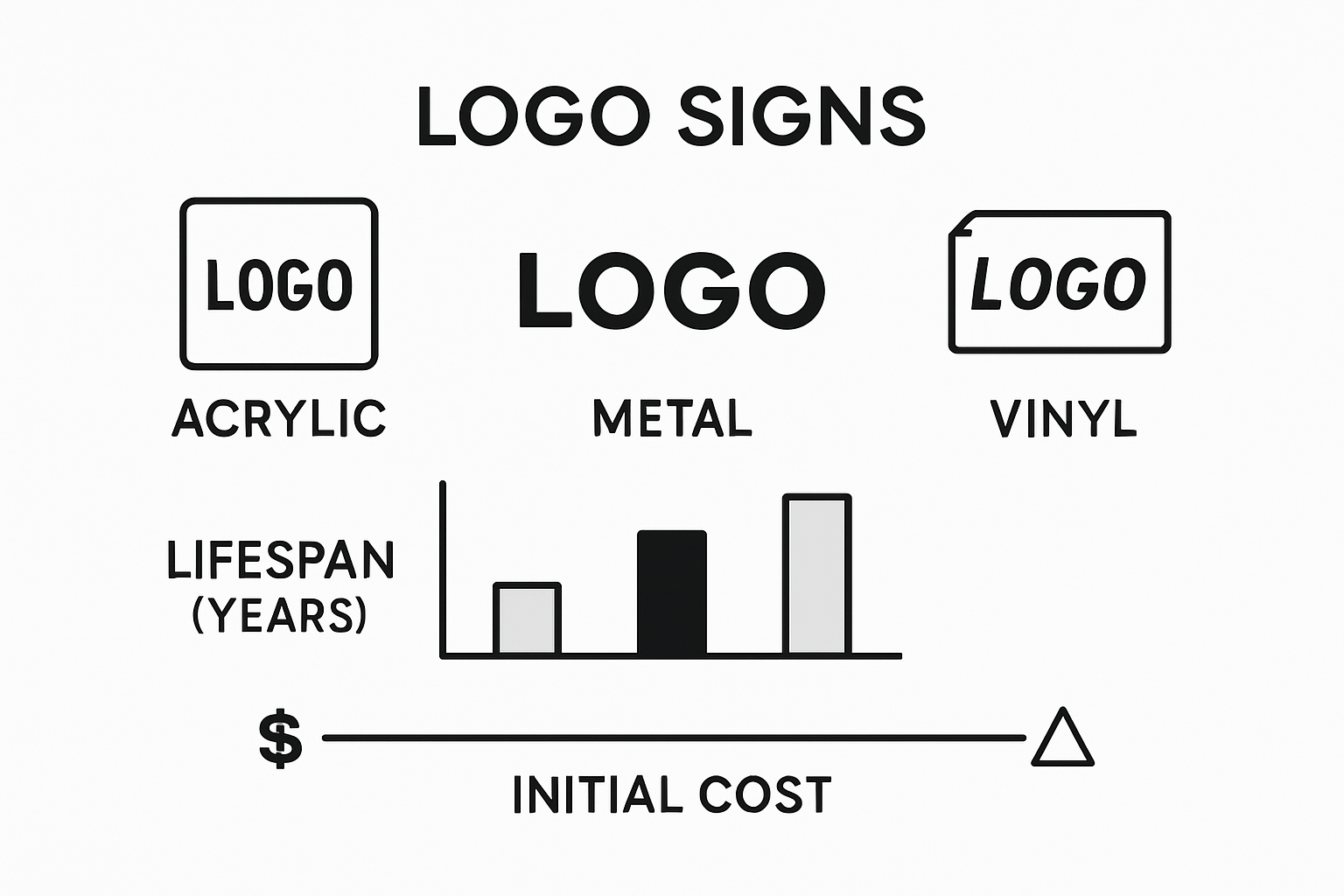
Cost factors for logo signage encompass a complex array of variables that extend far beyond initial purchase price. Businesses must consider material quality, design complexity, installation requirements, maintenance needs, and potential replacement intervals. These elements collectively determine the total cost of ownership and the sign’s potential return on investment.
Key pricing and lifespan considerations include:
- Material selection (aluminum, acrylic, wood, digital displays)
- Manufacturing complexity
- Size and dimensional requirements
- Customization level
- Installation difficulty
- Expected maintenance frequency
- Environmental durability
- Technology integration
Strategic investment in logo signage involves balancing upfront costs with long-term performance and brand representation. Professional-grade signs typically range from $500 to $5,000, with digital or highly customized options potentially exceeding $10,000. Businesses should view logo signage as a critical marketing asset, evaluating not just immediate expenses but the potential for enhanced brand recognition, customer attraction, and overall visual communication effectiveness.
Common Pitfalls When Choosing Logo Signage
Navigating logo signage selection requires strategic awareness of potential missteps that can undermine a business’s visual communication efforts. Logo signs present complex challenges, particularly for businesses seeking highway or public space visibility, where specific operational criteria can dramatically impact signage eligibility and effectiveness.
Common design mistakes frequently derail logo signage effectiveness, creating barriers to brand recognition and customer engagement. Businesses often overlook critical considerations such as visual complexity, scalability, and contextual appropriateness. Logo sign design strategies emphasize the importance of creating versatile visual identifiers that maintain clarity across multiple applications and environments.
Key pitfalls businesses must avoid include:
- Overcomplicated design elements
- Poor color contrast
- Inconsistent branding
- Ignoring scalability requirements
- Neglecting local regulatory compliance
- Choosing inappropriate materials
- Failing to consider viewing distances
- Underestimating maintenance needs
Successful logo signage demands a holistic approach that balances aesthetic appeal with practical functionality. Businesses must critically evaluate their design choices, considering how their logo will perform in diverse contexts – from small digital displays to large outdoor installations. The most effective signs communicate brand identity clearly and memorably, transcending mere visual decoration to become powerful marketing tools.
Unlock Your Brand’s Potential with Expert Logo Signage Solutions
If you understand that effective logo signage is more than just a graphic but a powerful tool for brand visibility and customer attraction you are already on the right path. Businesses face challenges like ensuring visual clarity scalability and compliance with local regulations while creating memorable designs that stand out. At Uncategorized we specialize in custom-made logo signs crafted to transform your brand identity into a compelling visual presence both indoors and outdoors.
Take control of how your business communicates at every opportunity with signage designed for impact and durability. Visit Custom Signs Today now to get a free quote and discover how our professional services can help you avoid common pitfalls and maximize your investment in logo signage. Don’t wait to boost your brand recognition with signage that truly matters.
Frequently Asked Questions
What is logo signage?
Logo signage refers to visual markers that display a company’s logo, trademark, or distinctive branding to create immediate recognition and convey professional representation.
Why is logo signage important for businesses?
Logo signage is crucial for businesses as it enhances brand visibility, establishes professional credibility, provides directional guidance, and differentiates the brand from competitors.
What are the different types of logo signs?
Types of logo signs include wordmark signs, pictorial signs, lettermark signs, combination mark signs, and abstract sign designs, each offering unique branding opportunities.
What should I consider when designing a logo sign?
When designing a logo sign, consider factors such as color psychology, scalability for different mediums, visual clarity, alignment with brand personality, and cultural appropriateness.
Recommended
- Logo Sign: Everything You Need to Know –
- Understanding Types of Promotional Signage for Businesses –
- Retail Signage Explained: Boosting Business Visibility –
- Complete Guide to the Importance of Sign Design –
- Understanding Digital Signage for Offices: Key Insights – Projector Display