{
“@type”: “Article”,
“image”: {
“url”: “https://csuxjmfbwmkxiegfpljm.supabase.co/storage/v1/object/public/blog-images/organization-6408/1773449150999_Owner-beside-branded-monument-sign.png”,
“@type”: “ImageObject”,
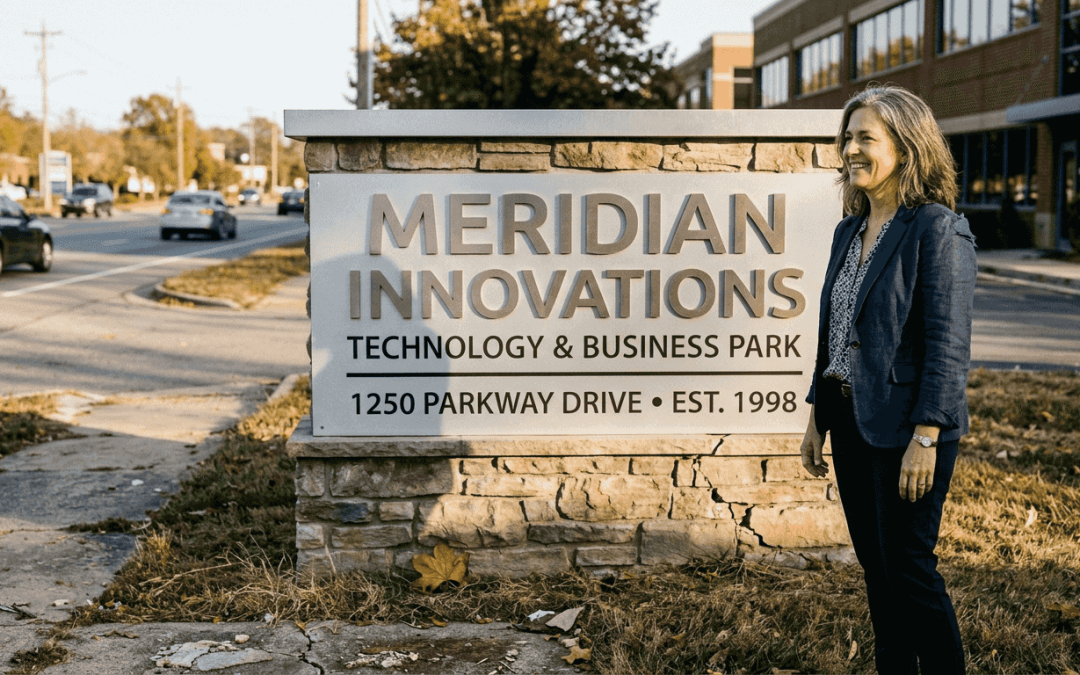
“caption”: “Owner beside branded monument sign”
},
“author”: {
“url”: “https://customsignstoday.us”,
“name”: “Yossi Medina’s Organization”,
“@type”: “Organization”
},
“@context”: “https://schema.org”,
“headline”: “What is monument signage and why it boosts your brand”,
“publisher”: {
“url”: “https://customsignstoday.us”,
“name”: “Yossi Medina’s Organization”,
“@type”: “Organization”
},
“inLanguage”: “en-US”,
“articleBody”: “Discover how monument signage increases foot traffic by 20-25%, explore design options, materials, and placement strategies for maximum brand visibility and impact.”,
“description”: “Discover how monument signage increases foot traffic by 20-25%, explore design options, materials, and placement strategies for maximum brand visibility and impact.”,
“datePublished”: “2026-03-14T00:47:07.008Z”
}
Monument signs aren’t just decorative additions to your property. Businesses with strategically placed monument signs experience a 20-25% increase in foot traffic and customer inquiries. These powerful branding tools serve as permanent landmarks that guide customers, reinforce your identity, and differentiate your location from competitors. Whether you’re a business owner seeking stronger street presence, a real estate agent marketing properties, or an event organizer creating memorable venues, understanding monument signage design, customization, and placement strategies will help you maximize your investment and create lasting visual impact.
Table of Contents
- Understanding Monument Signage: Definition And Purpose
- Customization Options: Materials, Design, And Illumination
- Engineering And Safety Considerations: Wind Load And Structural Design
- Strategic Placement And Practical Tips For Maximum Impact
- Find Your Perfect Custom Monument Sign Today
- Frequently Asked Questions
Key takeaways
| Point | Details |
|---|---|
| Visibility boost | Monument signs increase foot traffic and brand recognition by 20-25% with strategic placement. |
| Customization power | Material choices, lighting options, and dimensional elements create unique brand identity. |
| Structural integrity | Wind load calculations and quality foundations ensure safety and longevity. |
| LED efficiency | Illuminated signs reduce energy costs by 75% while improving nighttime visibility. |
| Professional installation | Expert design and proper placement maximize return on investment. |
Understanding monument signage: definition and purpose
Monument signage refers to freestanding, low-profile signs typically positioned at business entrances, property boundaries, or key access points. Unlike pole signs that tower overhead, these ground-level structures create a solid, permanent presence that communicates professionalism and stability. Their design integrates seamlessly with surrounding architecture, making them ideal for corporate campuses, shopping centers, medical facilities, and residential developments.
The primary purpose extends beyond simple identification. These signs function as wayfinding tools that reduce customer confusion and improve first impressions. When visitors can quickly locate your business from the street, you eliminate friction in the customer journey. Monument signs are most effective when strategically placed to maximize visibility and complement surrounding architecture.
Effective property signage design considers multiple factors:
- Sight lines from major traffic routes and intersections
- Local zoning regulations governing sign height and setback requirements
- Landscape integration that enhances rather than obscures visibility
- Brand consistency with existing marketing materials and building aesthetics
- Durability requirements based on climate and environmental exposure
Real estate developments particularly benefit from monument signage because these structures convey permanence and quality. A well-designed sign suggests that the same attention to detail extends to the properties themselves. Event venues use monument signs to create memorable entry experiences that set the tone for gatherings. The importance of directional signage in real estate cannot be overstated, as confused visitors often turn away rather than risk getting lost.
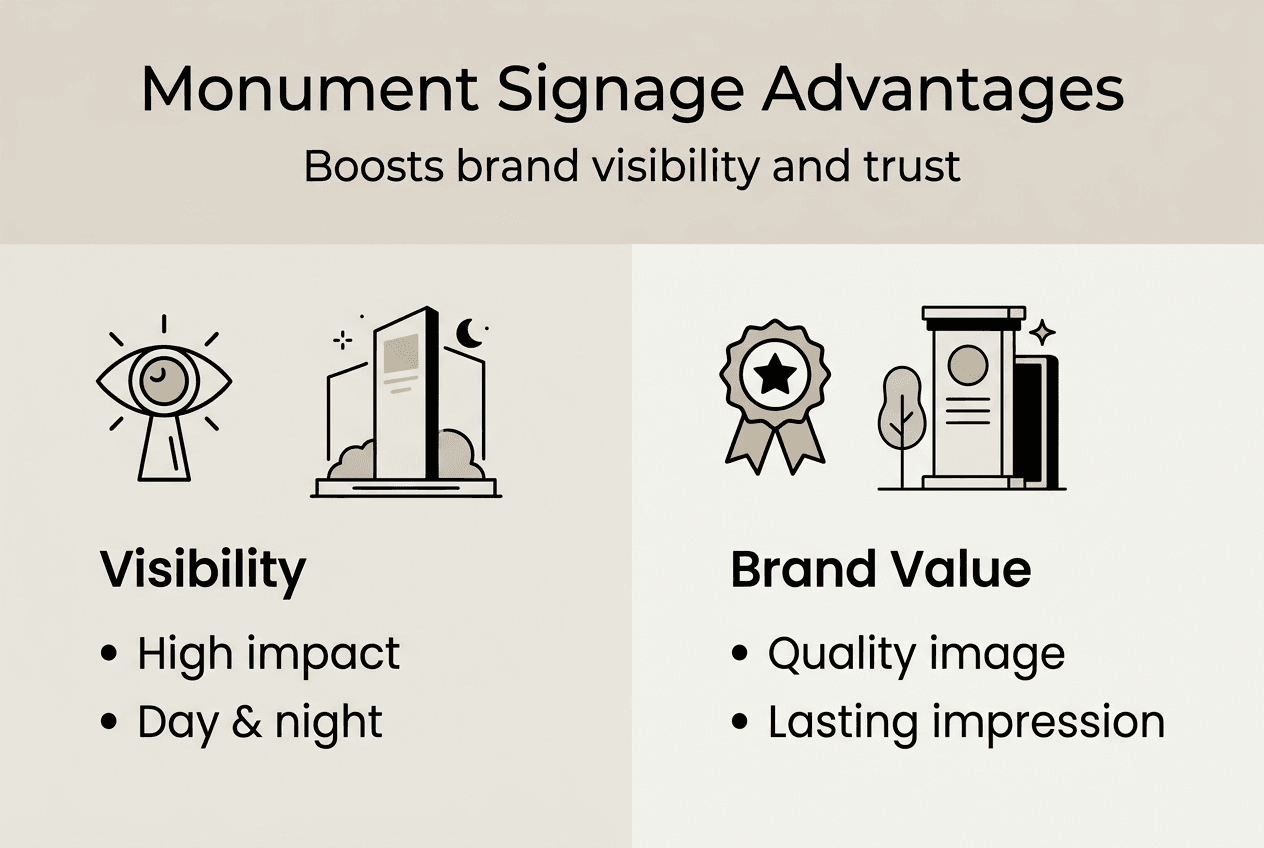
Business parks with multiple tenants rely on monument signs to organize complex layouts. Multi-tenant designs incorporate changeable panels or modular elements that accommodate tenant turnover without requiring complete sign replacement. This flexibility makes monument signage a cost-effective long-term investment for property managers and landlords.
Customization options: materials, design, and illumination
Material selection dramatically impacts both appearance and performance. High-quality materials like concrete, brick, and stone provide durability lasting 15-20 years, while aluminum and composites allow flexible design. Each material offers distinct advantages depending on your brand positioning and budget constraints.
Traditional masonry materials create an upscale, established appearance:
- Concrete offers versatility in shape and texture with excellent weather resistance
- Natural stone provides unique character and premium aesthetics
- Brick delivers classic appeal that suits professional services and retail
- Stucco finishes complement Mediterranean and Spanish architectural styles
Modern synthetic materials expand creative possibilities:
- Aluminum composite panels enable complex shapes and vibrant colors
- High-density urethane foam replicates stone appearance at reduced weight
- Acrylic faces allow for illuminated graphics and dimensional lettering
- Powder-coated steel frames provide structural support with minimal visual bulk
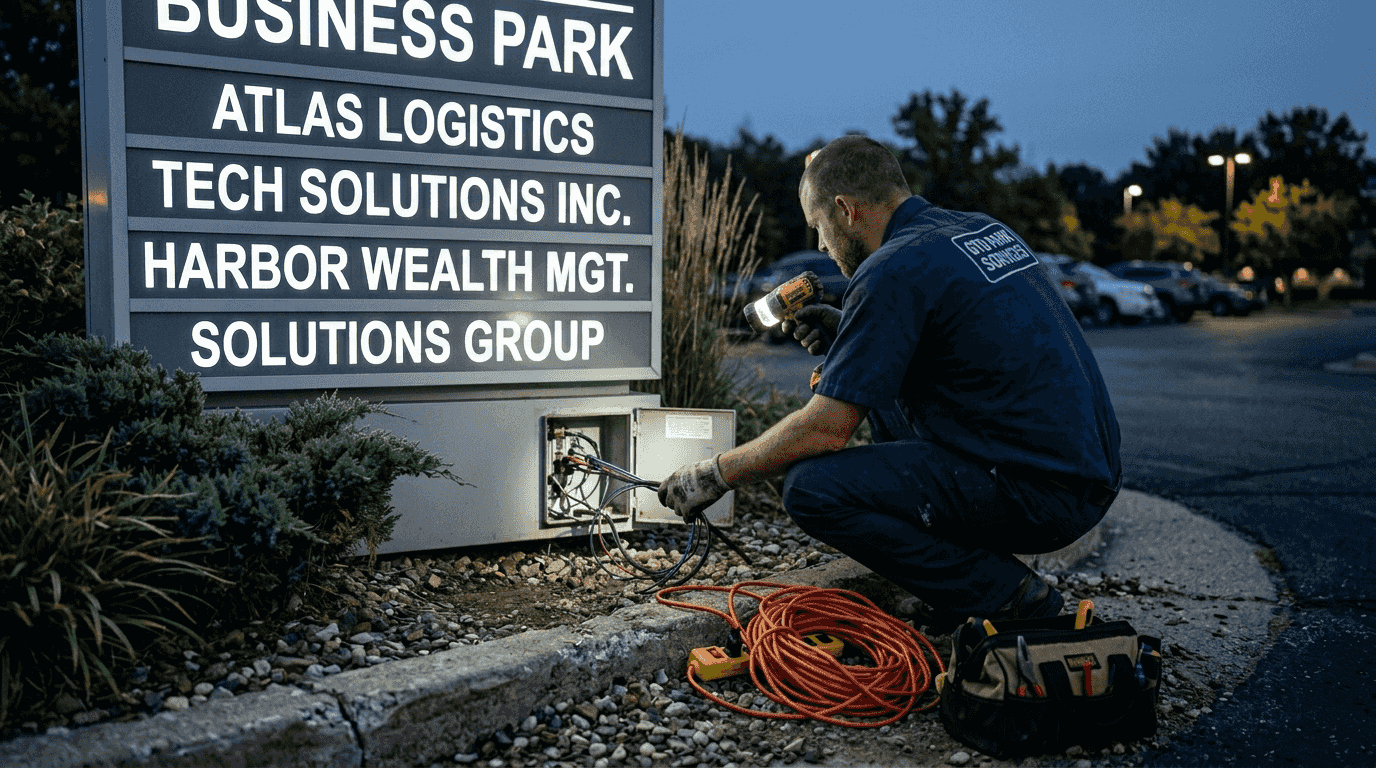
Illumination transforms monument signs from daytime identifiers into 24-hour marketing assets. LED illuminated monument signs reduce energy consumption by up to 75% compared to traditional lighting and increase nighttime visibility. Internal illumination creates an even glow across sign faces, while external spotlights add dramatic shadows and depth. Halo lighting, where LEDs backlight dimensional letters, produces sophisticated effects that elevate brand perception.
Pro Tip: Combine materials strategically to balance aesthetics and budget. A stone base with aluminum panels for graphics delivers premium appearance while keeping costs manageable and simplifying future updates.
Dimensional elements add visual interest and tactile quality. Raised letters cast shadows that create depth and improve readability from multiple angles. Routed graphics carved into solid materials provide permanence that printed graphics cannot match. Companies that invest in custom monument signage see a 15-20% improvement in brand perception and customer engagement.
Color psychology plays a crucial role in design effectiveness. Bold colors attract attention but may clash with surroundings, while neutral tones blend harmoniously but risk appearing generic. Your color palette should reinforce brand identity while respecting local aesthetic standards. Many municipalities enforce design guidelines that restrict color choices in historic districts or planned communities.
Explore comprehensive monument sign options that showcase material combinations and illumination techniques. For businesses seeking maximum impact, exterior signs offer additional visibility solutions. Consider neon signs for retro aesthetics or hospitality venues where distinctive character matters more than corporate polish.
Engineering and safety considerations: wind load and structural design
Structural integrity separates professional monument signs from amateur installations that fail prematurely. ASCE 7 Section 29.3 provides specific provisions for calculating design wind loads on freestanding signs and billboards. These calculations account for wind speed, exposure category, topographic effects, and sign geometry to determine the forces your structure must withstand.
Wind load calculations distinguish between solid signs and open signs with different force coefficients:
| Sign Type | Force Coefficient | Application |
| — | — |
| Solid signs | 1.8 (windward face) | Signs with continuous surfaces |
| Open signs | 1.2-1.8 (varies) | Signs with 30%+ open area |
| Combined surfaces | Variable | Signs mixing solid and open elements |
The basic wind load formula multiplies velocity pressure by force coefficient and gross area. Velocity pressure depends on your geographic location’s wind speed and increases exponentially with height. Even low-profile monument signs experience significant lateral forces during severe weather events. Removing the directionality factor in ASCE 7-22 changes calculation sequence but yields the same wind load effect as ASCE 7-16.
Foundation design must transfer wind loads safely into the ground. Shallow foundations work for smaller signs in stable soil, while larger structures require deep piers or caissons. Soil testing reveals bearing capacity and helps engineers size footings appropriately. Quality of foundation and installation methods directly impact the longevity and stability of monument signs.
Additional structural considerations include:
- Vehicle collision protection through bollards or setback distance
- Live load capacity for maintenance access on large signs
- Seismic design requirements in earthquake-prone regions
- Thermal expansion joints for signs exceeding 20 feet in length
- Corrosion protection for metal components in coastal environments
Pro Tip: Engage a structural engineer early in the design process, especially for signs exceeding 6 feet in height or 32 square feet in area. Professional engineering stamps may be required for permit approval and ensure your investment withstands decades of environmental stress.
Proper outdoor signage installation requires coordination between sign fabricators, concrete contractors, and electricians. Rushed installations that skip engineering review often result in premature failure or code violations. For detailed technical guidance on sign structural design, consult resources that explain load paths, connection details, and material specifications.
Electrical systems for illuminated signs must comply with National Electrical Code requirements. Weatherproof conduit, GFCI protection, and proper grounding prevent shock hazards and equipment damage. LED systems operate at low voltage, reducing electrical risks while simplifying installation compared to traditional neon or fluorescent lighting.
Strategic placement and practical tips for maximum impact
Location determines whether your monument sign becomes a powerful marketing asset or an expensive decoration. Strategically placed monument signs increase foot traffic and inquiries by 20-25%. Begin by analyzing traffic patterns and sight lines from multiple directions. Your sign should be visible from the primary approach route with adequate time for drivers to safely react and turn.
Follow this placement checklist for optimal results:
- Measure sight distance from the posted speed limit perspective
- Identify visual obstructions like trees, utility poles, and parked vehicles
- Consider seasonal changes in vegetation that may block views
- Verify setback requirements and height restrictions in local zoning codes
- Test visibility at night to ensure illumination reaches the street
- Confirm utility locations to avoid conflicts during excavation
Architectural harmony matters as much as visibility. Monument sign design should prioritize buildability and consider site conditions to avoid costly rework. A modern glass and steel sign looks out of place in front of a historic brick building, while rustic stone seems incongruous at a tech startup. Study surrounding structures and select materials that complement rather than compete.
Landscaping integration enhances rather than hides your sign:
- Low plantings at the base add visual interest without blocking sight lines
- Uplighting on landscaping creates depth and draws attention
- Seasonal flowers provide changing color that keeps the display fresh
- Mulch beds define the sign area and simplify maintenance
- Irrigation systems prevent dead plants that detract from your professional image
Maintenance extends sign lifespan and preserves appearance. Establish a regular cleaning schedule to remove dirt, pollen, and environmental buildup. Inspect lighting components quarterly and replace failed LEDs promptly. Check for cracks in masonry, loose fasteners, and paint deterioration annually. Address minor issues immediately before they escalate into expensive repairs.
“The best monument sign is one that looks as impressive five years after installation as it did on day one. Regular maintenance and quality materials make that possible.”
For comprehensive guidance on effective property signage design, explore resources that cover everything from concept development to installation oversight. Exterior lightbox signs offer alternative visibility solutions for businesses with different architectural constraints. Directional door signs complement monument signage by guiding visitors once they arrive at your property.
Pro Tip: Coordinate your monument sign installation with landscape improvements and parking lot updates. This integrated approach creates a cohesive first impression and often reduces overall project costs through shared mobilization and site preparation.
Permit requirements vary dramatically by jurisdiction. Some municipalities approve monument signs administratively within days, while others require public hearings and neighborhood notification. Start the permit process early and maintain open communication with planning staff. Experienced sign companies navigate permitting efficiently because they understand local requirements and have established relationships with officials.
Find your perfect custom monument sign today
Your brand deserves signage that commands attention and communicates professionalism. Whether you need a single monument sign for your business entrance or a comprehensive wayfinding system for a multi-building campus, expert guidance ensures your investment delivers maximum impact. Professional designers understand how to balance aesthetics, durability, and budget to create solutions perfectly tailored to your needs.
Explore extensive monument sign options featuring diverse materials, illumination techniques, and size configurations. Every project begins with understanding your goals, site conditions, and brand identity. From initial concept sketches through final installation, experienced professionals manage every detail to ensure flawless execution. Request custom sign quotes that provide transparent pricing and detailed specifications. Discover how the right monument sign transforms your property into a landmark that attracts customers and builds lasting brand recognition. Review the complete outdoor signs guide for additional visibility solutions that complement your monument signage investment.
Frequently asked questions
What are the typical sizes and materials used for monument signage?
Monument signs typically range from 4 to 12 feet in width and 3 to 8 feet in height, though custom sizes accommodate specific needs. Common materials include concrete, brick, stone, aluminum composite panels, and high-density foam with various finish options. Larger corporate campuses may install signs exceeding 15 feet wide, while small businesses often choose compact 4×3 foot designs.
How long does it typically take to design and install a custom monument sign?
Design and fabrication generally require 4 to 8 weeks depending on complexity and material choices. Simple aluminum signs with vinyl graphics may be ready in 3 weeks, while custom masonry structures with intricate stonework can take 10 to 12 weeks. Permit approval adds 2 to 6 weeks in most jurisdictions. Weather conditions and site preparation requirements also affect timelines.
Are illuminated monument signs cost effective compared to non-illuminated options?
Illuminated signs cost 30% to 50% more initially but deliver superior visibility and extended marketing hours. LED systems consume minimal electricity, typically adding less than $10 monthly to operating costs. The brand impact and customer attraction from 24-hour visibility usually justify the investment within the first year. Energy savings compared to older lighting technologies provide additional long-term value.
What maintenance is required to keep monument signs in good condition?
Clean sign faces quarterly using mild soap and water to remove environmental buildup. Inspect lighting components every three months and replace failed LEDs promptly to maintain uniform illumination. Check masonry for cracks, fasteners for looseness, and painted surfaces for deterioration annually. Landscape maintenance around the sign base prevents overgrowth that blocks visibility. Most signs require repainting or refinishing every 5 to 7 years.
Can monument signs be relocated after installation?
Relocating monument signs is technically possible but rarely cost effective. Masonry structures typically suffer damage during removal that requires extensive repair or replacement. The foundation remains at the original location, and new excavation and concrete work are necessary at the destination. Modular aluminum signs relocate more easily but still incur significant labor costs. Most businesses find designing a new sign for the second location more practical than attempting relocation.
How do monument signs compare to other exterior signage options?
Monument signs provide superior permanence and prestige compared to pole signs or building-mounted options. They work well for properties with multiple tenants or complex layouts requiring organized wayfinding. Pole signs offer greater visibility from longer distances but appear less substantial. Building signs depend on favorable architecture and may be invisible from certain approach angles. Explore monument sign options to compare styles and determine which solution best fits your property and brand positioning.