
TL;DR:
- Most successful sign projects result from thorough preparation before contacting vendors, emphasizing detailed specifications and artwork. Custom sign quoting is a tailored process influenced by factors like size, materials, artwork, and site conditions, not a one-size-fits-all estimate. Proper understanding of the workflow, compliance, and key cost drivers ensures accurate quotes and efficient project completion.
Most business owners assume ordering a sign is like buying a product off a shelf. You pick what you want, get a price, and move on. In reality, custom sign quoting is far more nuanced, and misunderstanding that process leads to budget surprises, production delays, and signs that don’t perform as expected. Whether you’re ordering a bold outdoor banner, a vehicle wrap for your fleet, or a directional sign for a new office, getting an accurate quote starts well before you contact a vendor. This guide breaks down exactly how the process works, what drives pricing, and how to set your project up for success from the first conversation.
Table of Contents
- What is custom sign quoting?
- How the quoting process works: Step-by-step breakdown
- Key factors influencing your custom quote
- Compliance, site conditions, and edge cases
- What most businesses miss about custom sign quoting
- Get your custom sign quote with industry experts
- Frequently asked questions
Key Takeaways
| Point | Details |
|---|---|
| Spec quality drives accuracy | The more precise your project specs, the more reliable and comparable your custom sign quote will be. |
| Quoting is multi-stage | Custom sign quoting involves multiple steps from request to installation, so planning ahead makes the process smoother. |
| Compliance changes everything | Regulatory and site requirements can dramatically alter timelines, materials, and cost—always check them early. |
| Artwork files matter | Vector artwork reduces quoting errors and ensures cost and design accuracy. |
| Automation speeds quoting | Quoting software helps standardize and accelerate requests, but expert review is essential for complex custom projects. |
What is custom sign quoting?
Custom sign quoting isn’t a standardized pricing exercise. It’s a tailored assessment built around what you actually need, where it’s going, and how it will be used. As one industry resource explains, custom sign quoting is the process of requesting, calculating, and issuing a price for signage built to a customer’s specific requirements. That sounds simple, but the variables that go into that calculation are anything but.
Every quoting request requires a specific set of inputs to move forward accurately. These typically include:
- Sign type (banner, lightbox, vehicle wrap, window decal, monument sign, etc.)
- Exact dimensions or approximate size range
- Quantity of units needed
- Installation location (indoors, outdoors, wall, freestanding, vehicle)
- Artwork or branding direction (finished files, brand guidelines, or concept only)
- Timeline and deadlines
- Site conditions (weather exposure, surface type, access for installation)
Without these details, a vendor can only give you a ballpark estimate, and those estimates rarely match the final invoice. When you provide complete information upfront, you enable the vendor to give you a price that actually reflects your project.
“Custom sign quoting is not a one-size-fits-all exercise. Each project brings different requirements, and the accuracy of a quote depends entirely on the quality of information provided at the outset.”
Beyond pricing, quoting is a strategic step. How you structure your signage request affects your branding outcome. A company that understands the custom sign workflow before submitting a request is far better positioned to get what they need, on budget, on time, and with minimal back-and-forth revisions.
How the quoting process works: Step-by-step breakdown
Understanding what happens after you submit a quote request helps you prepare better and avoid timeline disruptions. The quoting workflow usually moves from initial review to consultation, then design and proofing, followed by material and production planning, before arriving at installation. Here’s what that actually looks like in practice:
- Initial request submission. You submit your project details, including sign type, dimensions, location, and artwork status. The more detail you provide here, the faster the vendor can move.
- Vendor review. The sign shop reviews your submission for completeness, flags missing details, and categorizes the project by complexity and material requirements.
- Consultation. A sign specialist contacts you to clarify specs, discuss finish options, or suggest alternatives that may improve the outcome or reduce cost.
- Design and proofing. If you don’t have finished artwork, the design phase begins here. A proof is created for your approval before any materials are ordered.
- Material selection and production planning. Based on your confirmed specs and approved design, the shop selects materials and schedules production.
- Installation coordination. For signs requiring professional installation, site visits, permits, or mounting hardware, this stage involves additional planning and cost estimates.
| Stage | Your role | Impact on timeline |
|---|---|---|
| Request submission | Provide full specs and artwork | Fastest with complete info |
| Vendor review | Respond to any clarification questions | Delays common if info is missing |
| Consultation | Confirm design direction and options | Adds 1-3 days for complex projects |
| Design and proofing | Review and approve proof promptly | Each revision round adds 1-2 days |
| Material and production | Approve final details | Longest stage, varies by product |
| Installation | Coordinate site access | Depends on permit and scheduling |
One useful comparison point comes from other industries that manage custom pricing workflows. For instance, the glass railing quoting process follows a similar logic: collect precise measurements, confirm site conditions, then calculate material and labor costs. The same logic applies here.
Exploring custom signage step-by-step before your first quote request is a smart investment of 15 minutes that can save you hours of back-and-forth.
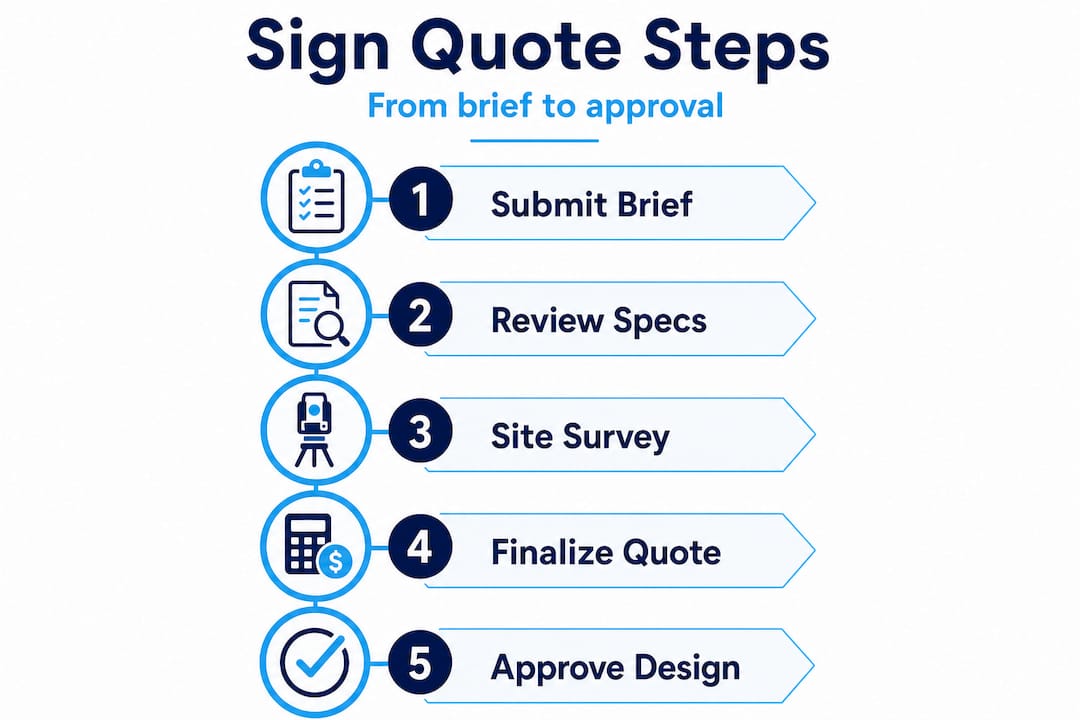
Pro Tip: Before reaching out for a quote, compile a simple brief that includes your sign type, dimensions, location, quantity, and target installation date. This one step dramatically speeds up the quoting process and often results in more competitive pricing.
Understanding how to design custom signs upfront also ensures your brief includes the right visual parameters, which reduces revision cycles and keeps your budget intact.
Key factors influencing your custom quote
With the workflow clear, let’s look at what actually moves the price needle. Sign quoting is driven by a combination of variables, and vendors weigh each one when building your estimate. Sign-quoting tools often encode rule-based or automated calculations to speed and standardize this process, but the quality of the input still determines the reliability of the output.
Here are the primary cost drivers in any custom sign project:
- Dimensions. Larger signs require more material, more production time, and often more complex installation. Even a few extra inches can push a project into a higher material tier.
- Materials. Vinyl, acrylic, aluminum, corrugated plastic, foam board, and LED components all carry different price points and durability ratings. Outdoor signs that face UV exposure or harsh weather need specific grade materials.
- Colors and printing complexity. Full-color digital printing is efficient for complex designs. Cut vinyl lettering is more affordable for simple text-based signs. Special finishes like metallic laminates or textured wraps add cost but also add visual impact.
- Artwork quality. Vendors need production-ready files to generate accurate quotes. Raster images (JPG, PNG) can’t be scaled without quality loss, which forces additional design work. Supplying vector files (AI, EPS, high-quality PDF) eliminates that problem entirely.
- Quantity. Ordering in bulk typically reduces the per-unit price, but setup costs remain constant. Ordering one large sign and one small sign separately is almost always more expensive than batching similar items.
- Site-specific requirements. If your installation needs a lift, specialty hardware, or surface prep, those costs factor into the quote.
| Factor | Manual quoting | Automated quoting |
|---|---|---|
| Speed | Slower, requires human review | Faster for standard specs |
| Accuracy | Higher for complex or custom jobs | Reliable for catalog items |
| Flexibility | Handles unique edge cases | Limited to predefined rules |
| Error risk | Lower with experienced estimators | Higher if inputs are incomplete |
| Best for | Large format, site-specific, complex | Repeat orders, simple specs |
The signage quoting tips from industry professionals consistently emphasize one thing: vector artwork files reduce pricing errors and production delays more than any other single factor. When your files are wrong, quotes are recalculated, proofs must be rebuilt, and your timeline stretches.
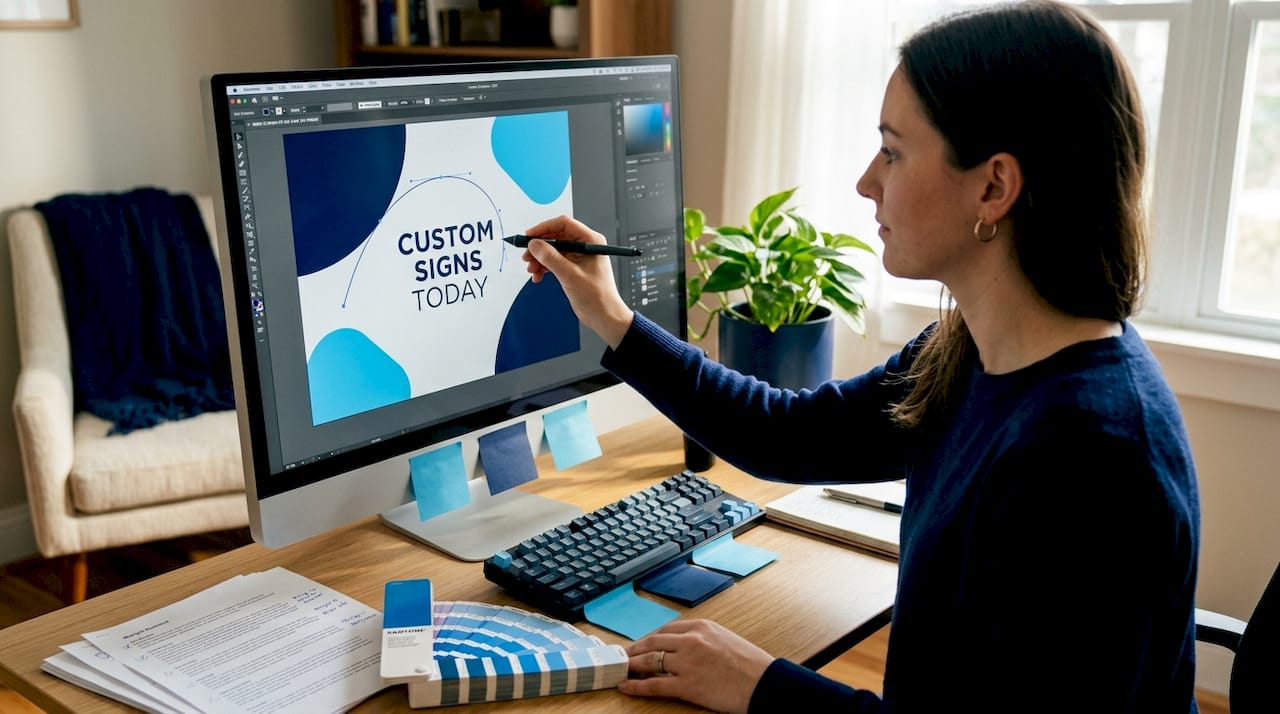
Make sure you understand how to properly prepare artwork files before submitting your request. It’s one of the most controllable variables in the entire quoting process, and it’s entirely in your hands.
Knowing the workflow for custom signs also helps you identify which factors you can optimize before the quote arrives, rather than negotiating after the fact.
Compliance, site conditions, and edge cases
Regulatory requirements are the wild card of custom sign quoting. Most businesses don’t think about compliance until a sign is rejected, or worse, until a permit is denied after installation. Custom sign quoting must handle edge cases where regulatory, compliance, or site conditions change what can be built and installed.
Common compliance considerations that affect quoting include:
- Color-coding standards. Safety signs (exit, hazard, fire equipment) must meet OSHA or ANSI color requirements. You can’t simply pick your brand colors for these.
- Reflectivity requirements. Roadside or parking signs often need retroreflective materials to meet local codes. This changes both material costs and available vendors.
- Symbol and text sizing. ADA (Americans with Disabilities Act) signage has strict requirements around Braille placement, font size, contrast ratios, and mounting height. Non-compliant signs must be redone at full cost.
- Environmental constraints. Wind load requirements, hurricane strapping, and flood zone regulations affect how large freestanding signs can be engineered and installed.
- Zoning restrictions. Many municipalities limit sign size, illumination, and placement, particularly for businesses in historic districts or residential-adjacent zones.
“Compliance requirements can dramatically shift the scope and budget of a signage project. A sign that looks straightforward on paper may require engineering review, specialty materials, or permit filings that add both time and cost to the final invoice.”
The compliance signage guidance available from regulatory-focused sources makes clear that these requirements aren’t optional, and that vendors who catch them early protect their clients from expensive rework.
Understanding the regulatory signage role in business environments gives you a framework for identifying which of your signs might carry compliance requirements before you request a quote. For projects involving physical installation, reviewing the sign installation safety guidelines can help you surface site constraints that affect both design and cost.
If your business operates in industries with strong safety requirements (construction, manufacturing, real estate, healthcare), reviewing safety signs compliance standards specific to your sector is a critical pre-quoting step.
What most businesses miss about custom sign quoting
Here’s the honest truth most vendors won’t tell you directly: the businesses that get the best quotes, the most accurate timelines, and the fewest surprises are almost always the ones who did the most preparation before reaching out.
It’s not about budget. It’s about specifications. A small business with a modest sign budget that submits a clean brief, vector artwork, site photos, and clear compliance needs will have a smoother experience than a large corporation that submits a vague request and expects the vendor to figure it out.
Most businesses treat the quote request as the starting line. Experienced marketers and operations managers treat it as the finish line of a preparation phase. By the time they contact a vendor, they already know their dimensions, their material preferences, their installation timeline, and any regulatory flags specific to their location or industry. That preparation doesn’t just speed up quoting. It builds credibility with the vendor, which often translates to better service and more accurate pricing.
There’s also a widespread misconception that software-generated quotes are always reliable. Automated quoting tools are useful for standard, catalog-style orders. They’re not built for complexity. Any project involving unusual dimensions, specialty materials, site-specific engineering, or compliance review still needs experienced human eyes. The sign industry has embraced automation well, but the most experienced shops use it as a starting point, not an endpoint.
One more thing worth saying directly: signage visibility is a business asset, not just a design exercise. The companies that get consistently strong results from their signage are the ones who approach it strategically, which means investing the same planning discipline they’d bring to a marketing campaign or a facility upgrade. Treat your sign quoting process the same way, and you’ll find the outcomes are consistently better.
Get your custom sign quote with industry experts
Ready to put this knowledge to work? Translating a well-prepared brief into a finished sign is exactly what the team at Custom Signs Today is built to do.
At Custom Signs Today, we specialize in turning your business branding goals into precise, high-quality signage across every format and size. Whether you need bold exterior lightbox signs that command attention around the clock, or a complete suite of branded displays for an event or location rollout, we guide you through every quoting step with clarity and speed. Our team handles compliance questions, artwork review, and material selection so your project moves from quote to installation without costly detours. Start your project now by requesting custom sign quotes and see how straightforward the process can be when you work with experienced specialists.
Frequently asked questions
What information should I provide to get an accurate custom sign quote?
You should supply sign type, exact dimensions, intended installation site, branding and artwork direction, timeline, and high-quality artwork files. Common inputs for a quote request include sign type, approximate dimensions, quantity, installation location, branding direction, timeline, and site photos or conditions.
Can custom sign quoting be automated, or does it always require expert review?
Automated quoting tools help speed up standard quotes, but complex or unique signage needs manual review and consultation. Sign-quoting tools encode rule-based calculations to standardize the process, but human review remains essential for edge cases.
How do compliance and safety requirements affect sign quotes?
Compliance needs, like mandatory colors, symbols, or materials, can change the scope and price of custom sign projects. Regulatory or site conditions can fundamentally change what can be built and installed, sometimes requiring engineering review or permit filings.
Why do artwork files need to be in vector format for quoting?
Vector artwork ensures accurate pricing and reduces errors in production and quoting. Industry guidance consistently stresses vector formats such as AI, EPS, and high-quality PDF because they scale without quality loss and give vendors precise color and dimension data from the start.