
{
“@type”: “Article”,
“image”: {
“url”: “https://csuxjmfbwmkxiegfpljm.supabase.co/storage/v1/object/public/blog-images/organization-6408/1774312662637_Project-manager-reviewing-sign-design-in-office.jpeg”,
“@type”: “ImageObject”,
“caption”: “Project manager reviewing sign design in office”
},
“author”: {
“url”: “https://customsignstoday.us”,
“name”: “Customsignstoday”,
“@type”: “Organization”
},
“@context”: “https://schema.org”,
“headline”: “Master the corporate sign branding process in 5 steps”,
“publisher”: {
“url”: “https://customsignstoday.us”,
“name”: “Customsignstoday”,
“@type”: “Organization”
},
“inLanguage”: “en-US”,
“articleBody”: “Master the corporate sign branding process with this practical guide covering planning, design, installation, and maintenance for maximum business visibility and impact.”,
“description”: “Master the corporate sign branding process with this practical guide covering planning, design, installation, and maintenance for maximum business visibility and impact.”,
“datePublished”: “2026-03-24T00:38:24.986Z”
}
Your business deserves signage that captures attention and builds lasting brand recognition. Many companies struggle to create impactful corporate signs that truly boost visibility and connect with customers. Without a clear roadmap, the process feels overwhelming, from choosing materials to navigating permits and installation. This guide walks you through every essential step of the corporate sign branding process, helping you transform confusion into confidence. You’ll discover practical strategies to plan, design, produce, install, and maintain signs that strengthen your brand presence and deliver measurable business impact.
Table of Contents
- Key takeaways
- Understanding the corporate sign branding process
- Preparation: gathering requirements and planning your corporate sign
- Execution: designing, producing, and installing your corporate sign
- Verification and maintenance: ensuring lasting impact of your corporate sign
- Explore custom signage solutions to elevate your brand
- Frequently asked questions
Key Takeaways
| Point | Details |
|---|---|
| Brand identity foundation | Establish clear brand identity with defined colors, fonts, and messaging guidelines to guide design and placement decisions. |
| Prerequisites and budget | Set prerequisites early including brand purpose, target audience, location regulations, and a realistic budget to steer decisions and prevent delays. |
| Choose sign types | Decide on sign types and materials that align with goals and environment to maximize impact and longevity. |
| Professional installation | Hire professional installation to boost durability, appearance, and reliability of the brand signage. |
Understanding the corporate sign branding process
Corporate sign branding is a strategic process designed to increase your business visibility and create memorable customer touchpoints. It goes far beyond simply putting your logo on a board. Effective corporate signage boosts brand visibility and customer recognition through careful attention to design, material selection, strategic placement, and regulatory compliance.
The process involves multiple interconnected phases that work together to deliver results. You’ll move through design conceptualization, material and production decisions, installation logistics, and ongoing maintenance planning. Each phase builds on the previous one, creating a cohesive approach that maximizes your marketing investment.
Before starting, you need several prerequisites in place. First, establish a clear brand identity with defined colors, fonts, and messaging guidelines. Second, understand your sign’s primary purpose, whether that’s wayfinding, promotional messaging, or pure brand awareness. Third, know your target audience and what visual elements resonate with them.
Location regulations represent another critical prerequisite. Research local zoning laws, homeowner association rules, and municipal sign codes early. These regulations dictate everything from maximum sign dimensions to acceptable lighting types and setback requirements from property lines.
Setting a realistic budget guides every subsequent decision. Your budget determines:
- Available materials and construction methods
- Sign size and complexity of design elements
- Installation approach and timeline flexibility
- Maintenance plan and replacement schedules
- Professional services versus DIY components
Understanding these foundational elements prevents expensive mistakes and ensures your corporate sign project stays on track from concept to completion.
Preparation: gathering requirements and planning your corporate sign
Successful signage starts with crystal clear branding objectives. Define what you want your sign to accomplish. Are you building brand awareness in a new market? Directing foot traffic to a specific entrance? Promoting seasonal offerings? Your objectives shape every design and placement decision that follows.
Next, decide on the sign types that best serve your goals. Face change signs offer flexibility for businesses with rotating promotions or seasonal messaging. Lightbox signs provide illuminated visibility for 24/7 brand presence. Vinyl lettering delivers clean, professional aesthetics for office environments. Monument signs create prestigious street presence for corporate campuses. Channel letter signs add dimensional impact to storefronts.
Material selection directly impacts longevity and visual appeal. Aluminum offers lightweight durability and weather resistance for outdoor applications. Acrylic provides vibrant color options and excellent light transmission for illuminated signs. High-density urethane foam allows intricate dimensional designs at lower weights. Dibond composite panels deliver rigid stability for large format installations. Custom signs tailored to business needs enhance customer engagement through thoughtful material choices.

Local regulations require early attention to avoid project delays. Visit your municipal planning department or check online permit portals for specific requirements. Many jurisdictions require detailed drawings, structural calculations, and electrical plans before issuing permits. Some areas restrict sign heights, mandate specific setbacks from roadways, or limit illumination brightness measured in lumens or candelas.
Budget planning encompasses multiple cost categories beyond the sign itself. Account for design consultation fees, permit application costs, electrical work for illuminated signs, site preparation or foundation work, professional installation labor, and initial maintenance supplies. Request detailed quotes that break down each expense category, making it easier to identify potential savings without compromising quality.
Pro Tip: Create a comprehensive project timeline that maps permit approval wait times, production schedules, and installation windows. Building in buffer time for unexpected delays keeps your project moving forward even when challenges arise.
Consider how to design custom signs for maximum visual branding impact. Work with experienced designers who understand color psychology, readability distances, and brand consistency across multiple touchpoints. Gather inspiration from competitors and complementary businesses, but focus on differentiation that makes your brand memorable.
Finally, explore custom sign quotes from multiple providers to understand market rates and service offerings. Quality quotes provide detailed specifications, production timelines, warranty information, and installation scope. Comparing quotes helps you identify the best value proposition while ensuring you’re working with reputable professionals who stand behind their work.
Execution: designing, producing, and installing your corporate sign
Transforming your planning into reality requires systematic execution across design, production, and installation phases. Each step demands attention to detail and quality control to ensure your finished sign meets expectations and delivers lasting value.
-
Finalize design specifications with your creative team. Collaborate closely with designers to refine visual elements that match your brand identity perfectly. Review color accuracy using Pantone or RAL codes rather than relying on screen representations. Confirm font selections remain readable at intended viewing distances. Test design mockups in various lighting conditions to ensure visibility day and night.
-
Approve production materials and methods. Verify that selected materials meet durability standards for your specific environment. Coastal locations require corrosion-resistant finishes. High-traffic areas need impact-resistant substrates. Request material samples to inspect texture, weight, and finish quality firsthand before full production begins.
-
Monitor fabrication quality throughout production. Reputable sign companies provide production updates and quality checkpoints. Review photos of your sign during key fabrication stages. Check that welds are clean, edges are properly finished, and graphics align precisely. Professional installation and quality materials ensure long-lasting signage that upholds brand integrity.
-
Coordinate installation logistics and site preparation. Schedule installation during low-traffic periods to minimize business disruption. Ensure adequate access for equipment like bucket trucks or cranes. Verify that electrical connections are ready for illuminated signs. Confirm that mounting surfaces or foundations meet structural requirements for sign weight and wind loads.
-
Conduct final inspections and compliance verification. Walk through the completed installation with your contractor. Check that signs are level, securely mounted, and positioned exactly as planned. Test all lighting functions and verify brightness levels comply with local regulations. Document the installation with photos for warranty records and future maintenance reference.
Pro Tip: Request a detailed maintenance guide from your sign company during installation. This guide should specify recommended cleaning products, inspection schedules, and common wear indicators to watch for as your sign ages.
Working with experienced custom signs professionals streamlines the execution phase significantly. They navigate permitting requirements, source quality materials at competitive prices, and employ proven installation techniques that prevent common problems. Their expertise helps you avoid costly mistakes that plague DIY projects or inexperienced contractors.
Consider the broader context of office signage setup for effective branding if your corporate sign is part of a larger wayfinding or branding system. Consistency across all signage touchpoints, from exterior monuments to interior directional signs, reinforces brand recognition and creates cohesive customer experiences.
| Installation Factor | Consideration | Impact on Success |
|---|---|---|
| Weather conditions | Temperature, wind, precipitation | Affects adhesive curing and safety |
| Site accessibility | Equipment clearance, parking | Determines installation timeline |
| Electrical requirements | Power availability, conduit routing | Impacts illuminated sign functionality |
| Structural support | Foundation depth, mounting strength | Ensures long-term stability |
| Permit compliance | Inspections, documentation | Prevents legal issues and fines |
Quality execution transforms your carefully planned design into a tangible brand asset. Rushing through production or cutting corners during installation undermines your investment and creates maintenance headaches down the road. Patience and attention to detail during this phase pay dividends for years.
Verification and maintenance: ensuring lasting impact of your corporate sign
Your corporate sign requires ongoing attention to maintain its professional appearance and marketing effectiveness. Systematic verification and maintenance protect your investment while ensuring consistent brand representation.
Schedule routine inspections at least quarterly to catch problems early. Look for fading caused by UV exposure, especially in red and blue color ranges. Check for physical damage from weather events, vehicle impacts, or vandalism. Inspect mounting hardware for rust, loosening, or structural fatigue. Examine electrical components in illuminated signs for flickering, dimming, or complete failures. Document findings with dated photos to track deterioration patterns over time.
Cleaning maintains vibrancy and readability between major maintenance events. Frequency depends on your environment. Urban locations with heavy traffic require monthly cleaning to remove exhaust residue and pollution. Coastal areas need frequent rinsing to prevent salt accumulation and corrosion. Industrial zones may accumulate specific contaminants requiring specialized cleaning solutions.
Use appropriate cleaning methods for your sign materials:
- Vinyl graphics: mild soap solution with soft cloths, avoid abrasive scrubbing
- Acrylic faces: specialized acrylic cleaners to prevent crazing and scratching
- Aluminum substrates: pH-neutral cleaners to protect powder coat finishes
- LED modules: dry dusting or compressed air, never wet cleaning near electrical connections
Comparing maintenance approaches helps you choose the right strategy for your situation.
| Maintenance Approach | Pros | Cons | Best For |
|---|---|---|---|
| DIY maintenance | Lower cost, flexible scheduling | Requires equipment and expertise, safety risks | Small signs, ground-level access |
| Professional service contracts | Expert care, safety compliance, warranty protection | Higher ongoing cost | Large signs, elevated installations |
| Hybrid approach | Cost control on simple tasks, expert help when needed | Requires coordination, potential delays | Medium-sized businesses with some in-house capability |
Plan for timely repairs or upgrades to stay current with your evolving brand. Faded graphics undermine your professional image and signal neglect to customers. Outdated messaging confuses potential clients and wastes marketing opportunities. Damaged components create safety hazards and legal liability.
Regular maintenance extends sign life and sustains professional appearance. A well-maintained sign can last 10 to 15 years or more, while neglected signs may require replacement in just 5 to 7 years. The cost difference between proactive maintenance and premature replacement is substantial.
Establish a maintenance budget as a percentage of your original sign investment. Industry standards suggest allocating 5% to 10% annually for routine maintenance and repairs. This budget covers cleaning supplies, minor repairs, bulb or LED replacements, and periodic professional inspections.
Create a maintenance calendar that tracks completed services and schedules upcoming tasks. Include seasonal considerations like pre-winter inspections to address weatherproofing and post-storm damage assessments. Document all maintenance activities with service records, receipts, and before-and-after photos. This documentation proves valuable for warranty claims, insurance purposes, and future planning.
A well-maintained sign strengthens brand recognition consistently. Customers associate your pristine signage with attention to detail and quality in your core business offerings. Conversely, deteriorating signs create negative impressions that undermine even the best products or services. Your corporate sign is often the first brand touchpoint customers encounter, making its condition a critical component of your marketing strategy.
Explore custom signage solutions to elevate your brand
Now that you understand the complete corporate sign branding process, it’s time to bring your vision to life with professional expertise. Our team specializes in creating custom signage that captures attention and drives business results.
We offer comprehensive solutions from initial design consultation through final installation and ongoing maintenance. Whether you need face change signs for flexible messaging, durable site signs for property identification, or completely custom signs tailored to your unique requirements, our experienced team delivers quality craftsmanship and reliable service. We handle permitting complexities, source premium materials, and ensure installations meet all safety and regulatory standards. Let us transform your branding goals into eye-catching reality that strengthens your market presence and attracts more customers. Contact us today to discuss your project and receive a detailed quote that fits your timeline and budget.
Frequently asked questions
What are the essential steps in the corporate sign branding process?
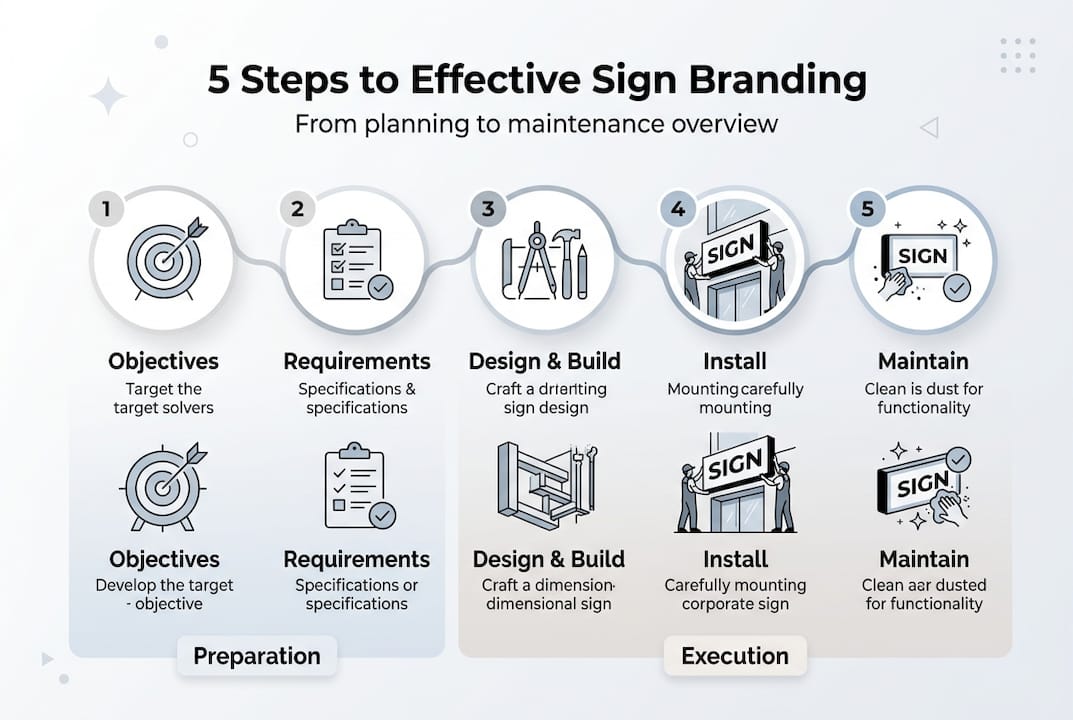
The essential steps include defining clear branding objectives, planning design and materials, producing the sign with quality controls, installing it professionally according to regulations, and maintaining it through regular inspections and cleaning. Following this structured approach ensures your signage delivers professional results and lasting business impact.
How long does it typically take to complete a corporate sign project?
Most corporate sign projects take 4 to 8 weeks from initial consultation to final installation. Complex designs, custom fabrication requirements, and permit approval processes can extend timelines. Early planning and working with experienced professionals accelerates the process and prevents unnecessary delays.
What maintenance is required to keep corporate signs effective?
Regular cleaning removes dirt and pollutants that dull appearance, typically needed monthly in high-traffic areas. Quarterly inspections identify damage, fading, or component failures before they worsen. Professional repairs and timely updates preserve your sign’s visual impact and extend its functional lifespan significantly.
How much should I budget for a corporate sign project?
Budgets vary widely based on sign size, materials, complexity, and installation requirements. Small office signs may cost $500 to $2,000, while large illuminated monument signs can range from $10,000 to $50,000 or more. Request detailed quotes from multiple providers to understand costs specific to your project scope and quality expectations.
Do I need permits for corporate signage installation?
Most municipalities require permits for new sign installations, especially for exterior signs visible from public rights of way. Permit requirements cover structural safety, electrical work, zoning compliance, and aesthetic standards. Check with your local planning department early in the process to understand specific requirements and avoid penalties or forced sign removal.