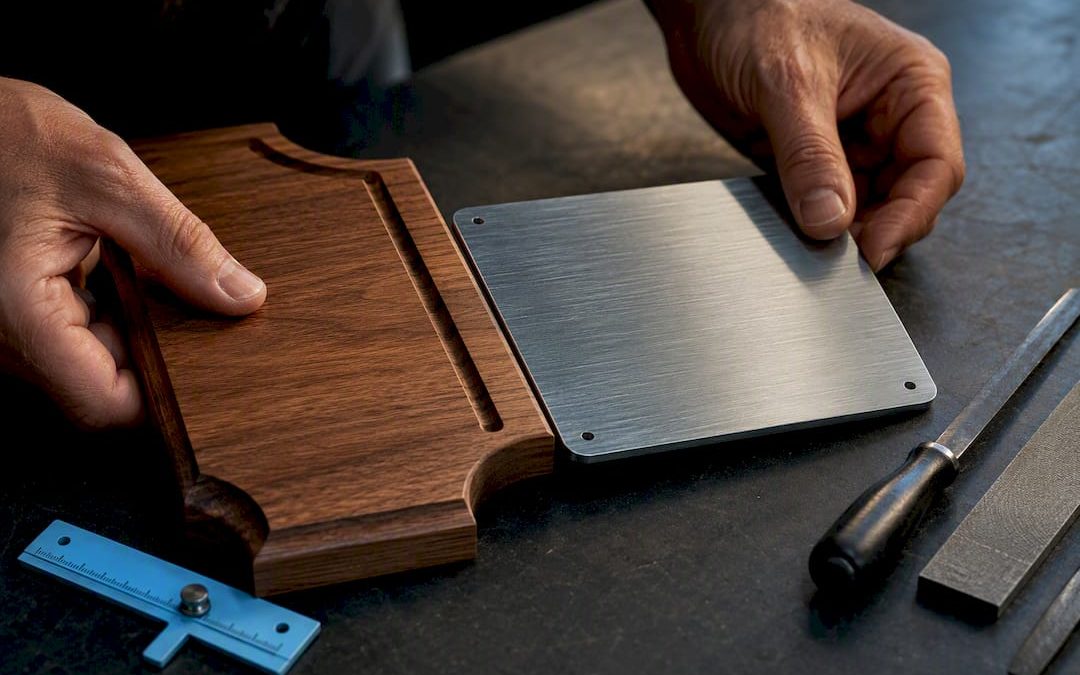
For a house sign that balances curb appeal with emergency-response visibility, choose a durable metal or properly finished wood plaque with high-contrast lettering sized to your setback distance. A professional fabricator can handle the finish system and mounting so the sign meets local visibility standards. Before requesting quotes, snap a photo of your mounting wall and measure the space so you get accurate pricing fast.
TL;DR:
- House numbers should be at least 4 inches in height, increasing with setback distance to ensure visibility from the street.
- Metal signs, especially aluminum or stainless steel, offer the longest durability with minimal maintenance, while wooden signs require proper sealing and periodic upkeep.
- Using high-contrast, simple fonts like sans-serif improves readability, and a single line layout speeds recognition from afar.
- Finish systems like powder coating or marine-grade urethane significantly extend a sign’s lifespan, especially in challenging climates.
- Proper mounting with sealed hardware and airflow behind the sign prevents moisture damage that causes rot or rust over time.
Table of Contents
- Design Styles and Customization Options for a House Sign
- Materials and Durability: Pros and Cons
- How Big Should House Numbers Be for Street Visibility?
- Finishes, Weatherproofing, and a Maintenance Checklist
- Placement and Installation Methods
- Typical Costs, Lead Times, and How to Order
- Why a Professional Finish System Beats a DIY Shortcut
- Get a Custom House Sign Designed and Installed the Right Way
- Sources
- FAQ
Design Styles and Customization Options for a House Sign
The style you pick should match your house, but the numbers need to win every argument with the design. Common directions work well for house signs:
- Modern numeric plaques: flat metal or acrylic panels with floating or laser-cut digits, suitable for contemporary or minimalist homes.
- Carved nameplates: routed wood or stone with painted or gilded lettering, fitting craftsman, cottage, or traditional facades.
- Mixed-material designs: a metal number plate mounted on a wood backer, offering warmth without sacrificing longevity.
Fonts are important for readability. Clean sans-serif or simple slab serif fonts read clearly from a distance. Ornate scripts, cursive, or condensed display fonts are less suitable for primary address numbers, even if they look nice on additional name plaques.
Layout also affects legibility: a single-line number reads fastest at a glance, while stacking numbers over a house name slows recognition somewhat but can suit narrower panels. High contrast—dark letters on a light field or the reverse—performs best for visibility.
Materials and Durability: Pros and Cons
Material choice determines how long your design house sign actually looks like the mockup you approved. Here’s how the main options stack up:
- Metal (aluminum, stainless steel, brass) — the longest-lasting option with the lowest maintenance; aluminum resists corrosion and stays light for wall mounting, while brass develops a patina some homeowners like and others don’t.
- Acrylic/PVC — affordable, available in bold colors, and easy to backlight, but standard grades can yellow or fade under sustained UV exposure within a few years.
- Wood — warm and customizable, with teak, white oak, and cedar among the most durable species for outdoor use, though it demands a real finish system and periodic upkeep.
- Stone or cast composite — a premium, near-permanent option, but the weight usually calls for masonry mounting rather than a simple screw-in install.
Climate should drive the final call. Coastal homes battling salt spray do best with marine-grade stainless or powder-coated aluminum. High-UV regions favor metal or well-sealed hardwoods over standard acrylic. Areas with hard freeze-thaw cycles need materials and mounting hardware rated for expansion and contraction, since cracked mounting holes are a common winter failure point.
Pro Tip: If you’re torn between wood and metal, ask about a hybrid: a carved wood name panel paired with a separate metal number plate gives you the warmth of wood without putting your legally required digits on the material most likely to weather unevenly.
How Big Should House Numbers Be for Street Visibility?
Bigger than most homeowners guess. Model fire codes commonly reference a baseline around 4 inches for digit height, and that number climbs as your setback from the street increases. InterNACHI recommends keeping numbers unobstructed by landscaping and positioned where they’re visible from the road, not just from the driveway.
Roughly a 4-inch minimum digit height is the baseline many jurisdictions cite for numbers visible from the street, scaling upward for longer setbacks.
Stroke width matters as much as height. A tall but thin digit can still disappear at dusk or in rain. If your house sits far back from the curb, a secondary number sign at the mailbox or driveway entrance solves the problem better than oversizing the main house sign.
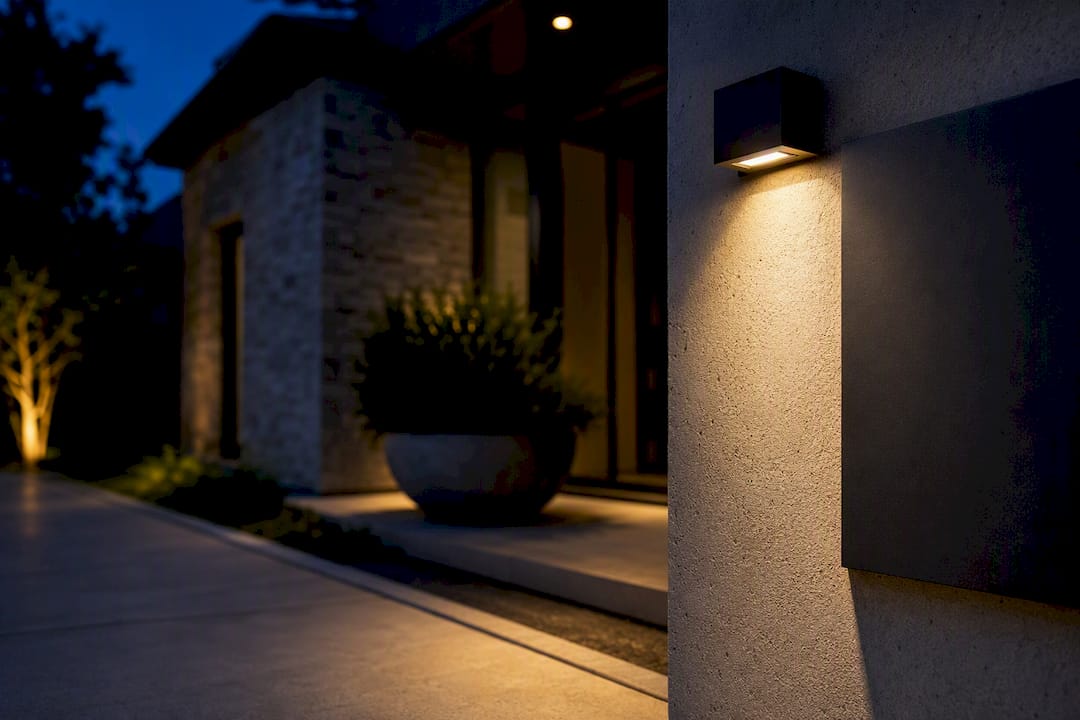
Contrast decides nighttime readability. Light numbers on a dark background (or the reverse) beat any tonal pairing, and reflective backing or a small dedicated light fixture extends legibility after dark, something many local ordinances specifically address. Check with your local building department before finalizing size, since exact digit-height rules vary by municipality and by how far your home sits from the road.
Finishes, Weatherproofing, and a Maintenance Checklist
The finish system is where most house signs actually fail, long before the material itself gives out. Get this part right and the sign should look sharp for a decade or more.
- Wood signs need a penetrating epoxy sealer followed by several coats of UV-resistant spar urethane rather than a standard interior polyurethane, which cracks and peels outdoors far faster than a flexible marine-grade system.
- Metal signs hold up best with powder-coating or a durable clear coat; stainless and aluminum resist corrosion naturally, but any exposed steel hardware should be zinc-plated or stainless to avoid rust streaks.
- Mounting prep should include sealing every fixing hole before drilling, finishing the back face so moisture can’t wick in, and using standoffs to create airflow behind the panel.
- Inspect seasonally for cracked finish, loose fasteners, or vegetation creeping over the numbers, and reseal or touch up as soon as you spot wear rather than waiting for a full failure.
Pro Tip: Standoffs aren’t just decorative. Flush-mounted wood and metal panels trap condensation against the wall, and that trapped moisture is the single biggest cause of premature rot and rust on outdoor signs. For a deeper walkthrough of sealants and coat schedules, see this guide to weatherproofing outdoor signs.
Placement and Installation Methods
Mounting the sign properly depends on the wall material and design preferences:
- Direct-screw mounting suits wood siding or fascia boards with solid backing.
- Standoff mounts raise the panel away from the wall to improve airflow and add dimension; these are suitable for stucco or brick.
- Routed-panel mounts set the sign into a cutout, commonly used on stone or masonry facades.
- Post mounts work well for homes set back from the street or with no appropriate wall near the road.
Select fasteners compatible with the substrate: masonry anchors for stucco, masonry screws for brick or stone, and anchors reaching solid backing for vinyl or wood siding. For illuminated signs, plan for licensed electrician involvement for wiring and consult HOA or permitting requirements. Simple screw-mounted plaques on wood siding can be DIY projects, but installations requiring masonry anchors, electrical work, or stone mounts are best handled by professionals.
Typical Costs, Lead Times, and How to Order
Pricing spans a wide range depending on material and complexity. Economy numeral sets with adhesive backing sit at the low end, while carved wood or illuminated cast plaques with premium finishes sit at the top. Complexity, size, material, and finish system all move the price, and custom shapes or multi-material builds add fabrication time.
Standard lead times run from about a week to several weeks depending on order volume and finish complexity, with rush options often available for an added fee. Before you request a quote, gather:
- A photo of the mounting wall or post.
- Exact width and height measurements of the available space.
- Your material and finish preference.
- The mounting method you expect (flush, standoff, post).
Ask any fabricator directly about warranty coverage, the specific finish system they use, and what maintenance the sign will need over time. If you want a walkthrough of what fabricators actually need from you, this guide to requesting a custom sign quote breaks down the process step by step.
Why a Professional Finish System Beats a DIY Shortcut
Most of the house signs that look tired after two summers didn’t fail because of a bad design. They failed because someone used an interior-grade finish outdoors, skipped sealing the mounting holes, or mounted flush against a wall with no airflow behind the panel. Fire code often takes priority over aesthetic HOA restrictions when visibility is genuinely at stake, which gives homeowners more room to push for a legible sign than they usually realize.
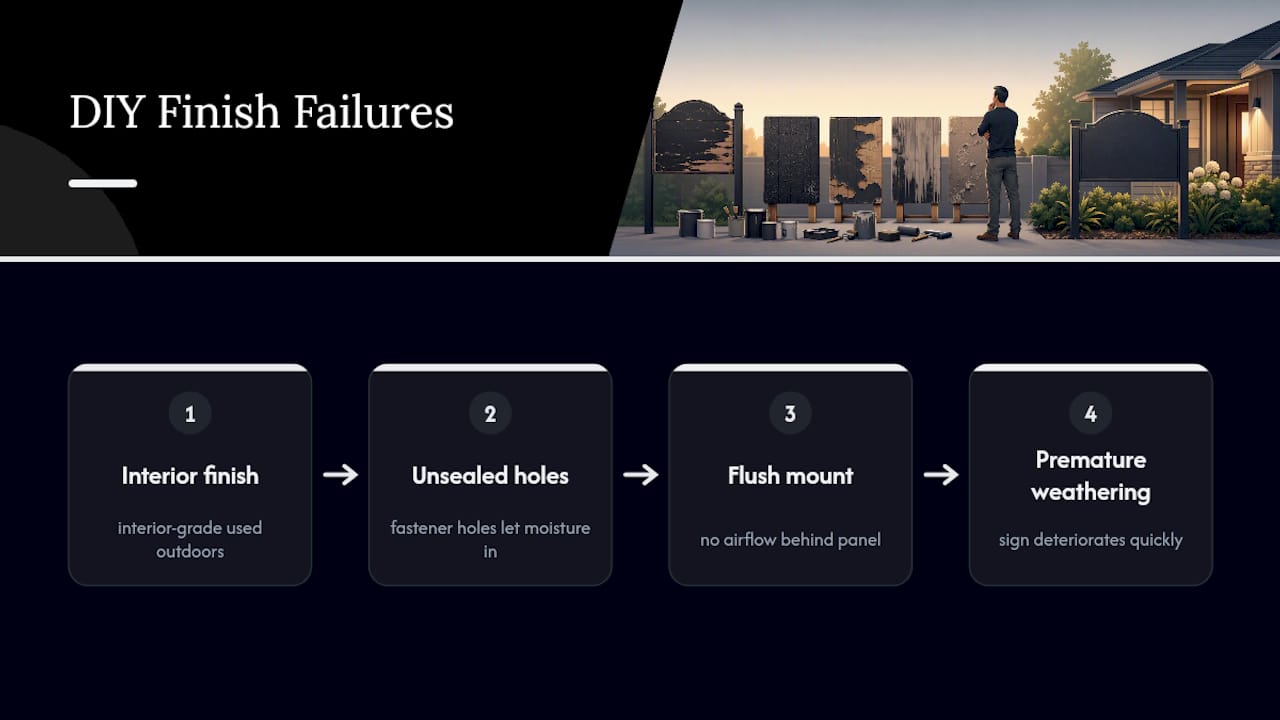
The gap between a sign that survives one winter and one that survives fifteen comes down almost entirely to finish system and mounting detail, not the initial design choice. A professional fabricator sees this pattern constantly: a beautiful mockup undone by an interior polyurethane coat or a flush mount that traps moisture behind the panel within the first rainy season.
Some fabricators approach every house sign inquiry with a mockup phase where font, layout, and material get locked in, a finish selection step where the coating system gets matched to the climate and substrate, fabrication, and installation guidance that covers fastener choice and mounting prep. That sequence exists because skipping any one step is where most signs go wrong later, not sooner.
— Yossi
Get a Custom House Sign Designed and Installed the Right Way
A good fabricator builds house signs with matched finish systems for the climate, correctly sized lettering for the setback, and mounting hardware chosen for the actual wall material, not a generic template. That combination is what separates a sign that still looks sharp in five years from one that needs replacing after two winters.

The process starts with a free custom sign quote. Send a photo of your mounting wall, your measurements, and your material preference, and you’ll get a mockup and finish recommendation before anything goes into fabrication. From there, you can review the face change and plaque options or explore broader sign services if you’re outfitting more than one entry point on your property. Request your quote today and get a real timeline instead of a guess.
Sources
Sizing and visibility guidance draws on the International Fire Code’s address-identification standard and InterNACHI’s house number recommendations. Finish system advice comes from wood sign weatherproofing guidance and a wood species and finish overview. For a related look at stone-mounted signage, see this stone cladding guide.
- Are House Numbers Required by Law in Your Area? – LegalClarity
- House Numbers – InterNACHI®
- Wood House Sign Weatherproofing and Maintenance: Step-by-Step Outdoor Care Guide
- Wooden Signs for Outdoors: Woods, Finishes & Care (2026) – George and Willy
FAQ
What material lasts longest for an outdoor house sign?
Metal, particularly aluminum or stainless steel, generally lasts longest with the least maintenance, though a properly sealed hardwood like teak or white oak comes close if refinished on schedule.
How tall should house numbers be to meet code?
Many codes reference a baseline around 4 inches, increasing with the distance between your house and the street, so check your local building department for the exact requirement.
Can I finish a wood house sign with regular polyurethane?
No. Standard interior-grade polyurethane cracks and peels outdoors much faster than a flexible marine-grade spar urethane applied over an epoxy sealer.
Should I hire a fabricator or design a house sign myself?
Simple screw-mounted plaques on wood siding are reasonable DIY projects, but masonry mounts, illuminated signs, or stone substrates are worth handing to a professional fabricator like Custom Signs Today.
What should I prepare before requesting a sign quote?
A photo of the mounting surface, exact measurements, your material and finish preference, and your intended mounting method will get you the most accurate quote and timeline.