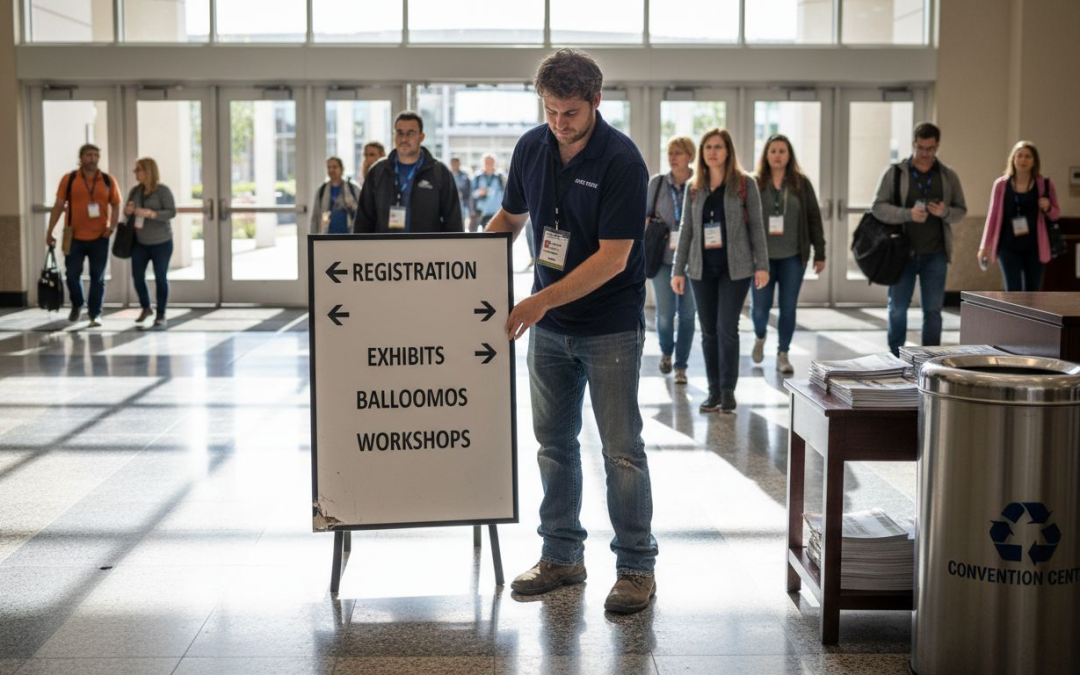
Managing a large-scale event in the United States comes with unique challenges, especially when it comes to guiding thousands of participants through sprawling venues. Clear, well-placed directional signs can mean the difference between a smooth experience and attendee confusion. With standardized guidelines from the Manual on Uniform Traffic Control Devices, organizers can craft signage systems that not only improve navigation but also help create a safer, more welcoming environment for everyone.
Table of Contents
- Defining Directional Signs at Events
- Types and Uses for Large-Scale Events
- How Directional Signs Enhance Attendee Experience
- Compliance, Safety, and Legal Considerations
- Cost Factors and Common Mistakes to Avoid
Key Takeaways
| Point | Details |
|---|---|
| Importance of Directional Signs | Directional signs are essential for guiding attendees and enhancing their experience at events by reducing confusion and stress. |
| Types of Directional Signage | Various signage types, including wayfinding maps and digital displays, are crucial for managing large-scale events effectively. |
| Safety and Compliance | Adhering to legal guidelines and accessibility standards is vital for ensuring attendee safety and professional event execution. |
| Budgeting Considerations | Comprehensive budgeting for dynamic signage should encompass hidden costs and long-term maintenance to avoid financial pitfalls. |
Defining Directional Signs at Events
Directional signs represent critical visual communication tools designed to guide attendees efficiently through event spaces. Unlike traditional street signage, event directional signs serve a more dynamic and immediate navigational purpose. Standardized sign guidelines help ensure these visual markers provide clear, consistent information that helps participants move seamlessly through complex environments.
At their core, directional signs help attendees understand spatial relationships within an event venue. These signs typically include several key characteristics:
- Clear route indicators
- Legible typography
- High-contrast color schemes
- Simple, intuitive design
- Strategic placement at decision points
The history of directional signs dates back centuries, with early examples like Roman milestones indicating distances between cities. Modern event directional signs have evolved to become sophisticated communication tools that blend functional design with strategic information delivery. Informative sign principles emphasize readability, visibility, and immediate comprehension.
Event directional signs play multiple critical roles beyond basic navigation. They help reduce attendee stress, minimize confusion, improve overall event flow, and create a more professional atmosphere. Effective signs communicate not just locations, but also provide psychological reassurance that participants are in the right place and can successfully navigate the event environment.
Pro tip: When designing event directional signs, always test your signage from an attendee’s perspective to ensure clarity and ease of understanding.
Types and Uses for Large-Scale Events
Large-scale events require sophisticated directional signage systems that go far beyond simple point-and-arrow guidance. Complex directional indicators help attendees navigate intricate event landscapes, transforming potentially confusing spaces into easily traversed environments. These signs serve multiple critical functions that extend well beyond basic navigation.
Event organizers typically deploy several types of directional signs:
- Wayfinding maps and site orientation boards
- Directional arrows and pathway markers
- Zone and area identification signs
- Digital information displays
- Building and section entrance indicators
- Color-coded navigation systems
Strategic sign placement can dramatically improve crowd management and attendee experience. Dynamic digital signs offer real-time updates and information, allowing event managers to communicate changes instantly. Building-mounted signs like awnings and projecting signs provide additional navigational support, helping participants understand spatial relationships quickly and efficiently.
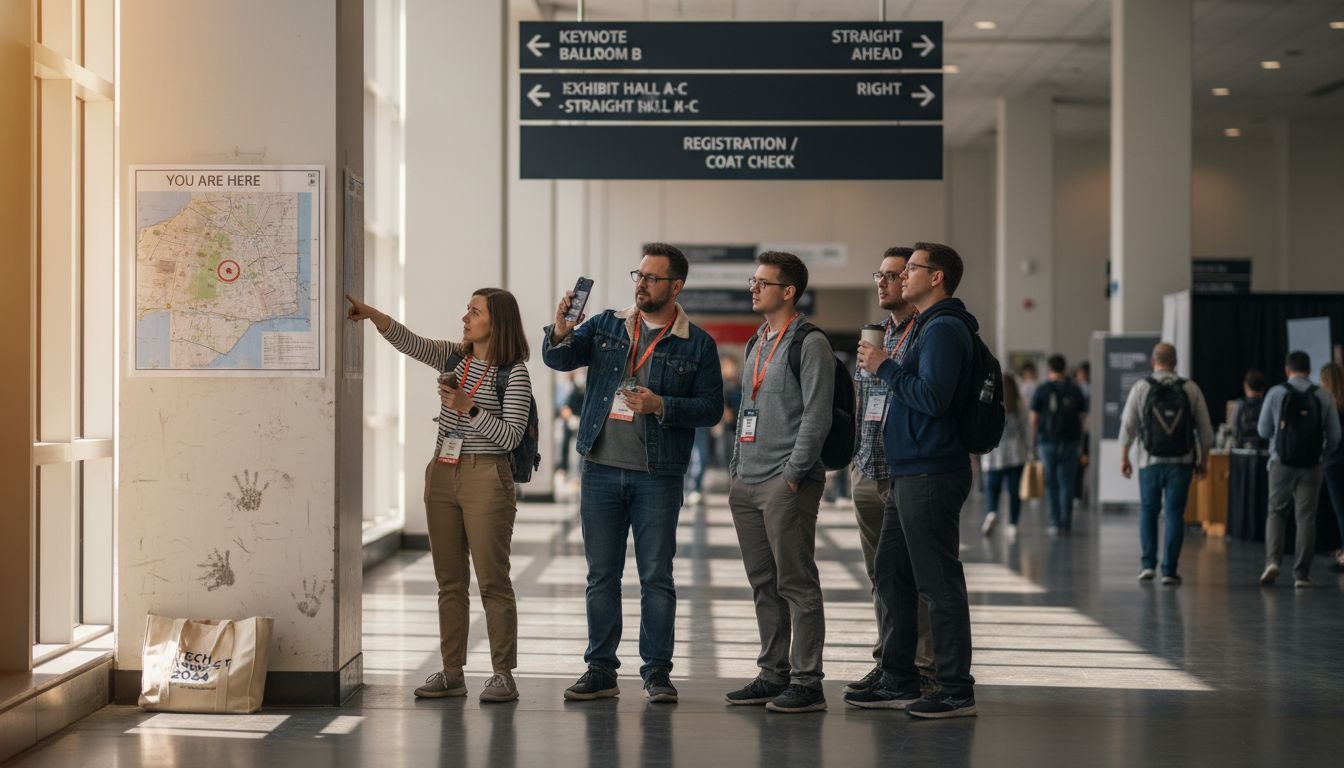
Here’s a summary of how different types of event directional signs serve unique functions at large-scale events:
| Sign Type | Main Purpose | When to Use |
|---|---|---|
| Wayfinding Maps | Venue overview, spatial orientation | Entrances, lobbies, infopoints |
| Digital Displays | Real-time updates, dynamic info | High-traffic or changing locations |
| Zone Identification Signs | Distinguish areas or sections | Exhibit halls, multi-zone venues |
| Color-Coded Markers | Simplify routes, reduce confusion | Large venues with complex layouts |
The most effective directional sign systems are designed with human psychology in mind. They anticipate attendee movement patterns, reduce cognitive load, and create intuitive navigation experiences. By strategically positioning signs at key decision points and using clear, consistent design principles, event organizers can transform potentially overwhelming spaces into seamless, user-friendly environments.
Pro tip: Create a comprehensive signage map before the event and test navigation routes from multiple attendee perspectives to identify potential confusion points.
How Directional Signs Enhance Attendee Experience
Immersive attendee experiences begin with strategic directional signage that transforms navigation from a mere functional task into an engaging journey. Psychological wayfinding goes beyond simple arrows and maps, creating an emotional connection that helps participants feel welcomed, oriented, and confident within event spaces.
Key psychological benefits of effective directional signs include:
- Reducing attendee anxiety and stress
- Creating a sense of belonging and community
- Providing immediate spatial understanding
- Supporting event branding and aesthetic design
- Enhancing overall event perception and satisfaction
- Facilitating smoother crowd movement
Event design principles demonstrate that well-crafted directional signage acts as a silent communication system. These visual guides do more than show routes – they tell a story about the event’s organization, professionalism, and attention to attendee comfort. By anticipating potential confusion points and creating intuitive navigation pathways, event organizers can significantly improve the overall attendee experience.
The most sophisticated directional sign systems integrate seamlessly with event atmospherics, using color psychology, strategic placement, and design elements that reflect the event’s core themes. They transform potentially overwhelming spaces into welcoming, easy-to-navigate environments that make attendees feel supported and valued throughout their entire event journey.
Pro tip: Design your directional signs as an extension of your event’s narrative, using consistent visual language that guides and delights attendees.
Compliance, Safety, and Legal Considerations
International sign standards play a critical role in ensuring event safety and legal compliance. Event directional signage goes far beyond aesthetic considerations, representing a fundamental legal requirement for crowd management, emergency preparedness, and participant protection. These signs serve as crucial communication tools that must meet specific regulatory guidelines to maintain public safety.
Key legal and safety considerations for event directional signs include:
- Accessibility requirements for persons with disabilities
- Clear emergency exit and evacuation route markings
- Compliance with local fire and building safety codes
- Visibility and legibility standards
- Consistent color and design regulations
- Multilingual signage options for diverse audiences
Event safety standards mandate comprehensive signage strategies that anticipate potential risks and support swift, organized crowd movements. These requirements protect event organizers from potential liability while ensuring attendee safety. Effective directional signs must communicate information quickly and clearly, helping participants navigate complex spaces during both routine and emergency scenarios.
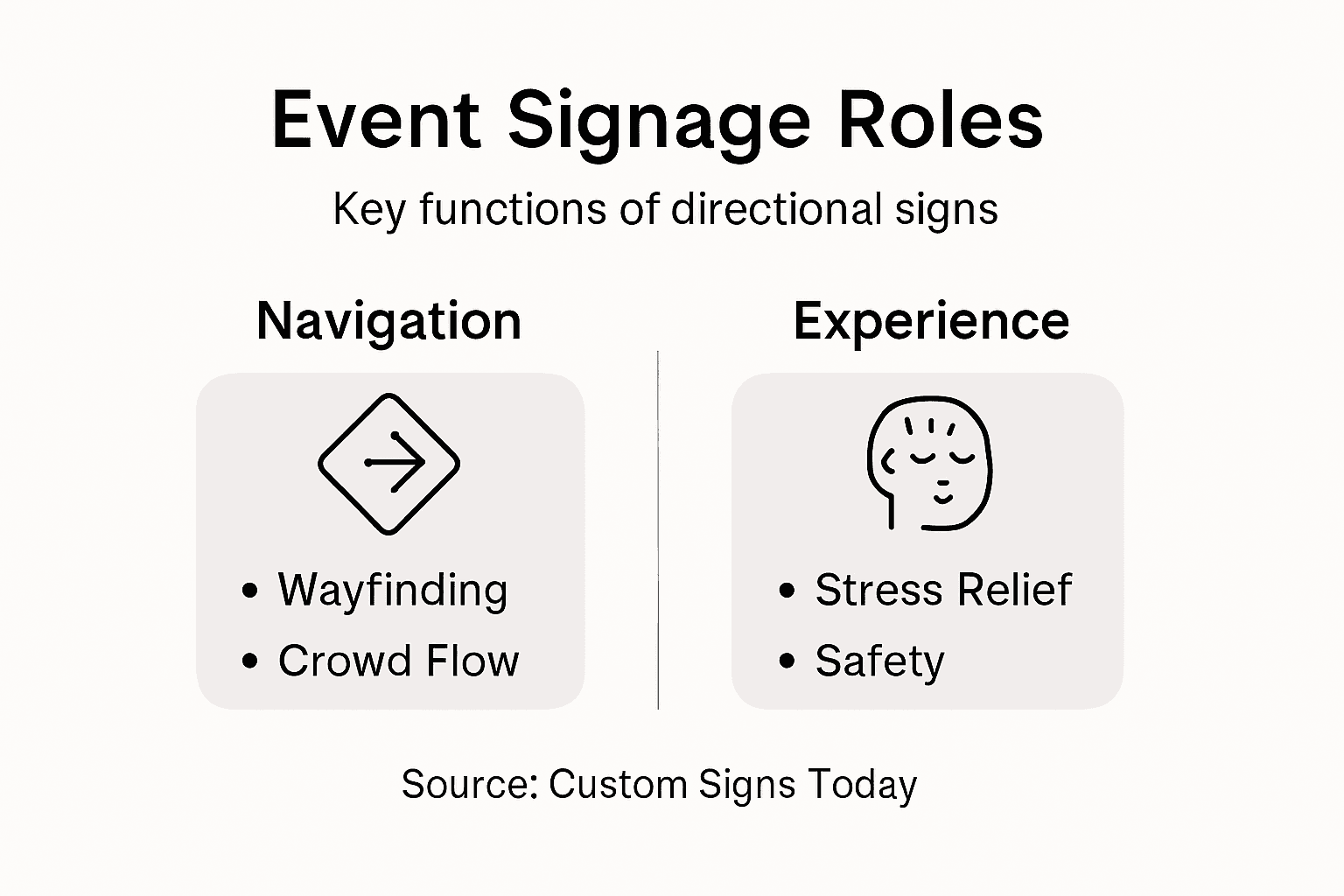
This table outlines key compliance areas for event directional signage and their impact on attendee safety:
| Compliance Area | Importance for Events | Example Requirement |
|---|---|---|
| Accessibility | Ensures all guests can navigate safely | ADA-compliant tactile lettering |
| Emergency Exit Markings | Facilitates rapid evacuation | Clearly marked exit routes |
| Multilingual Signage | Supports diverse attendee needs | Signs in several key languages |
| Visibility Standards | Reduces navigation errors and confusion | High-contrast, well-lit designs |
The most sophisticated event sign systems integrate legal compliance with intuitive design, creating visual communication tools that are both legally sound and user-friendly. By understanding and implementing comprehensive signage standards, event organizers can demonstrate professional diligence, reduce potential legal risks, and create environments that prioritize attendee safety and comfort.
Pro tip: Consult local safety regulations and accessibility guidelines when designing your event signage to ensure full legal compliance.
Cost Factors and Common Mistakes to Avoid
Dynamic signage cost considerations reveal that event directional signs represent a complex financial investment far beyond their initial purchase price. Sign project budgeting requires a comprehensive understanding of both direct and indirect expenses, including technology, installation, maintenance, and potential future upgrades.
Key cost factors event organizers must consider include:
- Initial design and production expenses
- Material quality and durability
- Installation labor and complexity
- Technology integration costs
- Regulatory compliance requirements
- Potential modification and replacement expenses
- Long-term maintenance and upgrade investments
Cost estimation strategies emphasize the importance of detailed planning and thorough risk assessment. Many event organizers underestimate the total investment required for high-quality directional signage, often overlooking critical expenses like permit fees, specialized design services, and potential environmental adaptation requirements. Comprehensive budgeting demands a holistic view that accounts for both visible and hidden costs associated with creating effective wayfinding systems.
Common financial mistakes in directional signage planning can significantly impact event budgets and overall effectiveness. These include selecting the cheapest initial option without considering long-term performance, failing to account for accessibility requirements, and neglecting potential technology upgrades that might become necessary during the event lifecycle.
Pro tip: Allocate at least 15% of your signage budget for unexpected expenses and potential system modifications.
Elevate Your Event Navigation With Expert Directional Signage Solutions
Navigating complex event spaces should never leave your attendees stressed or confused. This article highlights the vital role of directional signs in creating smooth, welcoming experiences that reduce anxiety and enhance overall satisfaction. If you want to transform your event into an effortless journey with clear route indicators and strategic placement, our custom signage can make that vision a reality. We understand that effective wayfinding requires legible typography, high-contrast colors, and intuitive design crafted specifically for your venue’s unique layout and attendee needs.
Explore how our professional team at Custom Signs Today can develop tailored directional signage that aligns with your event’s branding and safety requirements. Visit our Uncategorized category to discover versatile sign solutions and gain insight into the creative options available. Don’t let confusing signs detract from your event’s success. Contact us now to request a free quote and start designing your clear, customer-friendly signage system today.
Frequently Asked Questions
What are directional signs in events?
Directional signs are visual communication tools designed to guide attendees efficiently through event spaces. They provide clear indicators of routes, locations, and important areas within the venue.
Why is effective signage important for enhancing attendee experience?
Effective signage reduces anxiety, creates a sense of belonging, and improves overall event perception. It simplifies navigation and fosters a welcoming environment, helping attendees feel confident and comfortable during the event.
What types of directional signs are used in large-scale events?
Large-scale events typically use wayfinding maps, directional arrows, digital displays, zone identification signs, and color-coded markers to guide attendees and improve navigation through complex environments.
How can event organizers ensure compliance and safety in their directional signage?
Event organizers should adhere to international sign standards, ensuring accessibility for individuals with disabilities, clear emergency exit markings, and visibility standards. Consulting local safety regulations and incorporating these guidelines into the design will enhance safety and legal compliance.