{
“@type”: “Article”,
“image”: {
“url”: “https://csuxjmfbwmkxiegfpljm.supabase.co/storage/v1/object/public/blog-images/organization-6408/1772672753530_image.png”,
“@type”: “ImageObject”,
“caption”: “Brand manager reviewing printed company collateral”
},
“author”: {
“url”: “https://customsignstoday.us”,
“name”: “Customsignstoday”,
“@type”: “Organization”
},
“@context”: “https://schema.org”,
“headline”: “What is branding collateral? 76% boost in recognition”,
“publisher”: {
“url”: “https://customsignstoday.us”,
“name”: “Customsignstoday”,
“@type”: “Organization”
},
“inLanguage”: “en-US”,
“articleBody”: “Discover what branding collateral means for small businesses. Learn how signage boosts recognition by 76% and drives 15-20% ROI increases with strategic use.”,
“description”: “Discover what branding collateral means for small businesses. Learn how signage boosts recognition by 76% and drives 15-20% ROI increases with strategic use.”,
“datePublished”: “2026-03-05T01:06:32.249Z”
}
Seventy-six percent of consumers recognize businesses more effectively when they see clear, consistent signage. Yet many small business owners struggle to connect their signage investments with their overall brand identity. Branding collateral goes far beyond flashy ads or one-off promotions. It’s about creating a unified visual language that builds trust and engagement at every customer touchpoint. This guide explains what branding collateral truly means, with a focus on signage, and shows you how to use it strategically to strengthen your brand and boost customer engagement.
Table of Contents
- Understanding Branding Collateral: Definition And Scope
- The Role And Impact Of Signage In Branding Collateral
- Types Of Signage Used As Effective Branding Collateral
- Materials, Durability, And Maintenance Considerations
- Common Misconceptions And Clarifications About Branding Collateral
- Framework For Selecting And Implementing Signage Collateral
- Practical Applications And Case Examples
- Boost Your Brand With Custom Signage From Custom Signs Today
- Frequently Asked Questions About Branding Collateral And Signage
Key takeaways
| Point | Details |
|---|---|
| Branding collateral definition | Physical and digital materials displaying consistent brand elements, with signage bridging online identity to real-world touchpoints. |
| Signage impact on business | Consistent signage can increase ROI by 15-20% over 6-12 months through improved brand recognition and trust. |
| Material and durability matter | Choosing the right materials (vinyl, aluminum) for your environment extends signage life and protects brand perception. |
| Common misconceptions | Signage is not just promotional; it’s a lasting brand asset that complements digital efforts for local businesses. |
| Selection framework | Align signage types with your brand goals, customer touchpoints, and budget for maximum effectiveness. |
Understanding branding collateral: definition and scope
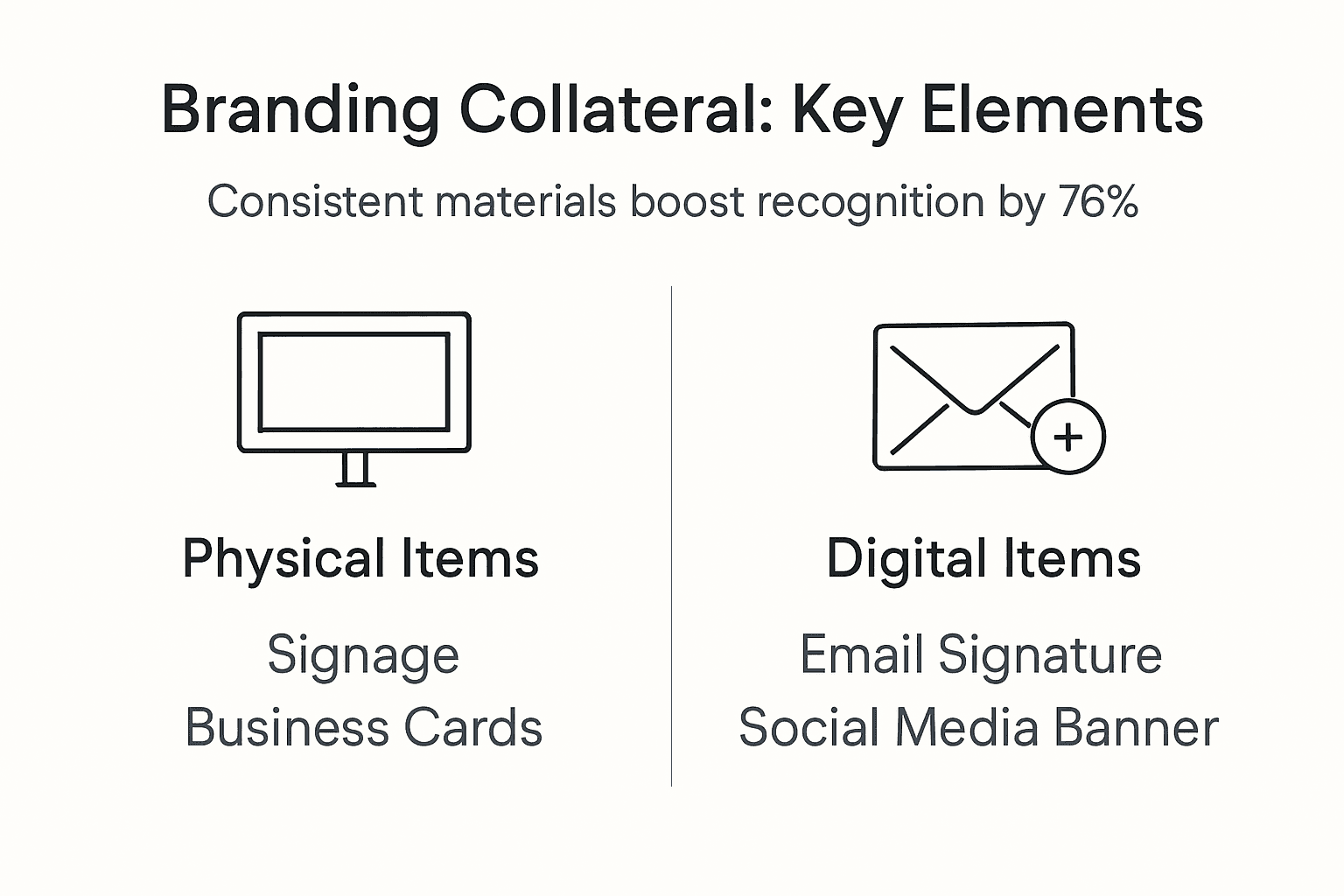
Branding collateral refers to any physical or digital material that carries your brand elements: your logo, colors, typography, and messaging. These materials work together to create a consistent brand experience across every customer interaction. Think of branding collateral as your brand’s visual vocabulary, speaking the same language whether customers encounter you online, in-store, or on the road.
Signage stands out as a critical physical collateral type. It bridges the gap between your online brand identity and real-world customer touchpoints. When someone walks past your storefront, drives by your vehicle, or attends an event where you’re exhibiting, branding with custom signage creates that immediate connection.
Examples of signage as branding collateral include:
- Outdoor banners displaying your logo and brand colors at your storefront
- Vehicle wraps turning your fleet into mobile brand ambassadors
- Window decals reinforcing your visual identity at entry points
- Posters and displays maintaining consistency at events or inside your location
- Directional signs guiding customers while reinforcing brand elements
The key to effective branding collateral lies in consistency. Your logo placement, color scheme, font choices, and messaging tone must remain uniform across all materials. This repetition builds recognition. Over time, customers begin to associate these visual cues with the quality and values your business represents, creating trust before they even walk through your door.
The role and impact of signage in branding collateral
Signage does more than point customers in the right direction. It serves as a silent salesperson, working around the clock to communicate your brand’s personality and professionalism. When executed well, signage becomes an ongoing visual brand ambassador that influences purchasing decisions and shapes customer perceptions.
The data backs this up. 76% of consumers recognize businesses more due to clear signage consistency. This recognition translates directly into trust. When customers see the same visual elements repeated across your storefront sign, vehicle graphics, and promotional banners, they perceive your business as established and reliable.
Signage collateral such as banners, decals, and outdoor posters tend to yield an average ROI increase of 15-20% when used consistently with an integrated branding strategy over 6-12 months. That’s a measurable impact on your bottom line, not just a fuzzy branding benefit.
76% of consumers report better business recognition when signage maintains consistent brand elements across all touchpoints.
Beyond recognition and ROI, signage influences in-store behavior. The importance of signage in branding extends to guiding customer flow, highlighting promotions, and creating an environment that reinforces your brand promise. For small businesses competing against larger chains, professional signage levels the playing field. It signals that you’re serious about your brand and committed to delivering a quality experience.
The relationship between signage in retail engagement and customer behavior is clear: well-designed, strategically placed signage captures attention, communicates value, and differentiates your business from competitors operating in the same space.
Types of signage used as effective branding collateral
Small and medium businesses have numerous signage options, each serving specific branding purposes. Understanding these types helps you select the right mix for your brand touchpoints and budget.
Banners offer versatility for temporary promotions or seasonal messaging. They’re cost-effective, easy to install, and perfect for announcing sales, events, or new product launches. Their flexibility makes them ideal for businesses that need to update messaging frequently.
Vehicle wraps transform your cars, vans, or trucks into mobile billboards. They provide high visibility as your vehicles move through the community, extending your brand reach far beyond your physical location. A well-designed wrap turns every delivery or service call into a branding opportunity.
Decals and window graphics work well for storefronts, glass doors, and interior spaces. They’re adaptable to various surfaces and can be removed or updated without major renovation. Many businesses use decals to display hours, highlight services, or add branded elements to windows.
Aluminum signs deliver durability for permanent outdoor installations. They withstand weather conditions better than most materials, making them suitable for storefront identification, directional signage, or property markers that need to last years.
Vinyl signs balance cost and durability. They work indoors or outdoors and can be printed in virtually any size or color combination, maintaining brand consistency across different applications.
| Signage Type | Best Use Case | Durability | Mobility | Branding Impact |
|---|---|---|---|---|
| Banners | Temporary promotions, events | Moderate (6-12 months outdoor) | High | Medium to High |
| Vehicle Wraps | Mobile advertising, service fleets | High (5-7 years) | Very High | Very High |
| Decals | Windows, smooth surfaces | Moderate to High | Low | Medium |
| Aluminum Signs | Permanent outdoor installations | Very High (10+ years) | Very Low | High |
| Vinyl Signs | Indoor/outdoor versatile use | High (3-5 years outdoor) | Medium | High |
Pro Tip: Choose signage types based on where your customers interact with your brand most frequently. If you run a service business visiting customer locations, invest in vehicle wraps. Retail storefronts benefit most from a combination of permanent aluminum signs and flexible banners for promotions.
Exploring signage types and uses helps you match materials to your specific needs. The custom signs options available today give you flexibility to create a cohesive brand presence across multiple touchpoints. Understanding signage importance for SMBs ensures you’re making strategic decisions rather than reactive purchases.
Materials, durability, and maintenance considerations
Selecting the right signage material affects how long your investment lasts and how well it represents your brand over time. The two most common materials, vinyl and aluminum, each offer distinct advantages depending on your application.
Vinyl provides flexibility and cost-effectiveness. It’s lightweight, easy to install, and works well for both temporary and semi-permanent applications. Vinyl can be printed with vibrant colors and complex graphics, making it ideal for detailed brand elements. However, vinyl typically has a shorter lifespan in harsh outdoor conditions compared to rigid materials.
Aluminum delivers superior durability and rigidity. It resists warping, holds up against wind and weather, and maintains its appearance for years with minimal maintenance. Aluminum costs more upfront but often proves more economical over time for permanent installations.
Your material choice should consider:
- Indoor versus outdoor placement
- Expected lifespan of the message (permanent branding versus seasonal promotion)
- Environmental factors: sun exposure, rain, wind, temperature extremes
- Budget constraints balanced against replacement costs
Environmental factors significantly impact signage longevity. UV exposure fades colors over time. Rain and moisture can degrade adhesives and cause warping. Wind stress can damage improperly mounted signs. Choosing materials rated for your specific conditions prevents premature failure.
Regular maintenance protects your branding investment. Faded, damaged, or dirty signage sends the wrong message about your business. It suggests neglect and undermines the professional image you’ve worked to build. Schedule periodic inspections to check for damage, fading, or wear. Clean signs regularly to maintain visibility and appearance.
Pro Tip: Invest in quality materials suited to your environment from the start. A slightly higher upfront cost often saves money by eliminating early replacements. Schedule quarterly visual inspections and annual professional cleaning to extend your signage life and maintain brand impact.
Learn more about custom signage materials and durability to make informed decisions that balance initial investment with long-term value.
Common misconceptions and clarifications about branding collateral
Several misconceptions prevent small business owners from fully leveraging signage as branding collateral. Clearing up these misunderstandings helps you make better strategic decisions.
-
Branding collateral and marketing collateral are the same thing. They’re related but distinct. Marketing collateral focuses on specific campaigns or promotions with a defined timeframe. Branding collateral maintains consistent identity elements across all touchpoints, providing the foundation upon which marketing campaigns are built.
-
Signage is only for promotions. Many business owners view signage as purely promotional, useful only for announcing sales or events. In reality, signage is a lasting brand asset. Your storefront sign, vehicle graphics, and directional signage work continuously to build recognition and communicate your brand personality.
-
Digital-only branding is sufficient. While digital presence matters, physical signage remains vital for local businesses. Customers encounter your physical location, vehicles, and event presence in the real world. Neglecting physical signage creates a disconnect between your online brand and real-world experience.
-
All branded materials count equally as collateral. Not all materials serve the same strategic purpose. Branding collateral specifically carries core brand elements (logo, colors, typography) consistently across applications. A one-off flyer with inconsistent colors isn’t branding collateral; it’s just marketing material.
-
Cheap signage saves money. Low-cost materials often fail quickly, requiring frequent replacement. Poor-quality signage also damages brand perception. Customers judge your business quality by what they see. Faded, peeling, or damaged signs suggest you cut corners elsewhere too.
Understanding these distinctions helps you allocate resources effectively. Branding collateral, particularly signage, deserves investment as a long-term asset. It works harder and longer than most marketing tactics, building equity in your brand identity over time.
Framework for selecting and implementing signage collateral
Choosing the right signage requires a systematic approach that aligns your brand goals with practical considerations like budget, location, and customer touchpoints. Follow this framework to make strategic decisions.
-
Identify your core brand elements. Document your logo specifications, color palette (with exact color codes), approved fonts, and messaging guidelines. These elements must appear consistently across all signage.
-
Assess customer touchpoints. Map where customers encounter your business: storefront, vehicles, events, interior spaces, parking areas. Prioritize signage investments at your highest-traffic touchpoints.
-
Select appropriate materials. Match material durability to your environment and expected signage lifespan. Use the comparison table earlier to evaluate options based on cost, durability, and impact.
-
Design for consistency and readability. Maintain brand element consistency while ensuring text is readable from appropriate distances. Signage design tips emphasize simplicity and clear hierarchy.
-
Implement strategically. Install signs where they’ll have maximum visibility and impact. Consider sight lines, lighting, and customer flow patterns.
-
Monitor and maintain. Schedule regular inspections and cleaning. Track whether signage achieves your goals: increased foot traffic, better brand recognition, or higher sales.
| Decision Factor | Vinyl Banners | Vehicle Wraps | Aluminum Signs | Window Decals |
|---|---|---|---|---|
| Initial Cost | Low | High | Medium | Low to Medium |
| Durability (years) | 1-2 outdoor | 5-7 | 10+ | 3-5 |
| Mobility | High | Very High | Very Low | Low |
| Brand Impact | Medium | Very High | High | Medium |
| Maintenance Needs | Low | Medium | Low | Low |
Avoid these common mistakes:
- Choosing materials based solely on lowest price
- Skipping professional design to save money
- Ignoring maintenance until signage looks terrible
- Installing signage without considering customer sight lines
- Mixing brand elements inconsistently across different signs
After implementation, evaluate effectiveness. Are more customers mentioning they saw your sign? Has foot traffic increased? Do customers comment on your professional appearance? These qualitative measures complement harder metrics like sales data.
Choosing custom signs becomes simpler when you follow this framework systematically. It removes guesswork and ensures your signage investment supports your broader branding strategy.
Practical applications and case examples
Real-world examples show how small businesses successfully use signage collateral to strengthen their brands and drive measurable results. These cases illustrate the concepts covered throughout this guide.
A local coffee shop invested in a cohesive signage package: an illuminated aluminum storefront sign, branded window decals displaying their logo and hours, and seasonal vinyl banners announcing new menu items. Within three months, they reported a 22% increase in new customer visits, with many customers mentioning they noticed the new signage while driving past.

A plumbing service company wrapped three service vehicles with consistent branding: logo, colors, phone number, and tagline. Over six months, they tracked that 35% of new service calls mentioned seeing their trucks around town. The mobile visibility generated leads continuously without ongoing advertising costs.
A retail boutique learned the hard way about material quality. They initially purchased low-cost vinyl banners that faded within four months of outdoor display. Customers commented that the faded signs made the store look closed or neglected. After investing in UV-resistant materials and proper mounting, the improved appearance contributed to a 12% sales increase over the following quarter.
Key lessons from successful implementations:
- Consistency matters more than quantity. Three well-designed, strategically placed signs outperform a dozen inconsistent ones.
- Material quality directly impacts brand perception. Faded or damaged signage actively hurts your brand.
- Strategic placement based on customer behavior multiplies impact. Signs should be where customers naturally look.
- Regular updates keep messaging fresh while maintaining brand consistency through core elements.
These businesses measured signage impact through customer surveys, tracking call sources, and monitoring foot traffic patterns. They treated signage as a strategic investment requiring planning, quality execution, and ongoing maintenance.
Explore signage success stories for more examples. The creative custom signage ideas showcase demonstrates how different business types adapt these principles. Understanding branding importance for small business reinforces why these signage investments pay off.
Boost your brand with custom signage from Custom Signs Today
You now understand how signage functions as critical branding collateral, building recognition and trust with every customer interaction. Custom Signs Today helps small and medium businesses create durable, visually consistent signage that strengthens brand identity and drives engagement.
We offer comprehensive custom sign services covering everything from initial design consultation through installation. Whether you need permanent exterior lightbox signs that illuminate your brand 24/7 or flexible face change signs that let you update messaging seasonally, we provide quality materials built to last.
Our team understands the unique challenges small businesses face. We work within your budget to recommend signage solutions that deliver maximum impact at your most important customer touchpoints. From material selection through design consistency and professional installation, we handle the details so you can focus on running your business.
Ready to strengthen your brand presence? Contact Custom Signs Today for a free consultation and quote. Let’s create signage that works as hard as you do to build your brand and grow your business.
Frequently asked questions about branding collateral and signage
What’s the difference between branding and marketing collateral?
Branding collateral maintains consistent visual identity elements (logo, colors, fonts) across all materials and touchpoints, building long-term recognition. Marketing collateral focuses on specific campaigns or promotions with defined timeframes and calls to action. Your branding collateral provides the foundation; marketing collateral uses those brand elements for tactical purposes.
How often should I update or maintain my signage?
Inspect signage quarterly for damage, fading, or wear, and clean it at least twice yearly to maintain appearance. Replace signage when it shows visible deterioration, typically every 3-7 years depending on material and environmental exposure. Promotional messaging can change seasonally, but core branding elements should remain consistent.
Can I rely solely on digital branding without physical signage?
For local businesses, physical signage remains essential. Customers encounter your real-world presence through storefronts, vehicles, and event spaces. Digital branding can’t replace the immediate visibility and credibility that quality physical signage provides. The most effective approach combines both digital and physical branding collateral.
How do I choose the best signage for my business location?
Assess your highest-traffic customer touchpoints first: storefront visibility, parking areas, street views, or mobile service routes. Match signage types to these locations based on permanence needs, viewing distance, and environmental conditions. Aluminum works well for permanent outdoor installations; vinyl banners suit temporary promotions; vehicle wraps maximize mobile visibility.
What materials best withstand outdoor signage conditions?
Aluminum and UV-resistant vinyl offer the best durability for outdoor signage. Aluminum resists weather, warping, and fading for 10+ years with minimal maintenance. High-quality vinyl with UV protection lasts 3-5 years outdoors when properly installed. Both materials should be rated specifically for outdoor use in your climate conditions.
Recommended
- Branding With Custom Signage: Boost Your Business Impact –
- Branding Signs Explained: Boosting Business Visibility –
- Event Branding Guide: Boost Revenue 20% with Signage –
- Branding Impact of Signs: Driving Retail Success –
- Understanding Why Invest in Branding for Business Growth – Reddog Consulting Group