TL;DR:
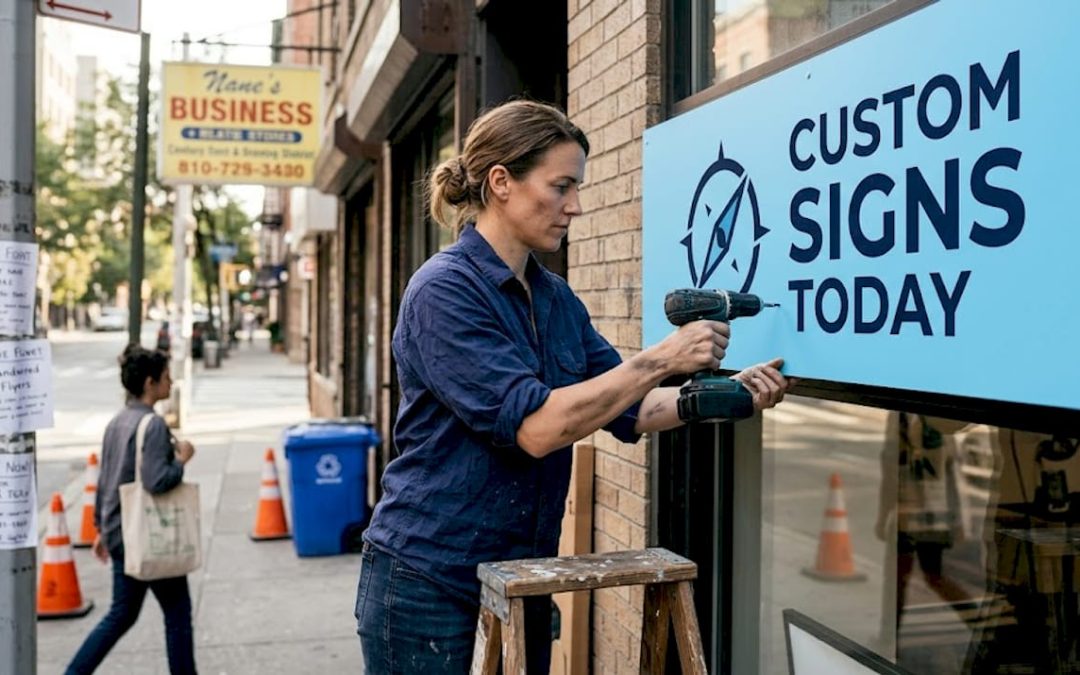
- Personalized signage is more effective than generic signs due to higher perceived relevance and emotional connection. Custom signs boost brand awareness, foot traffic, and ROI by targeting local audiences and conveying timely messages. Combining custom signage with digital marketing strategies enhances overall business visibility and performance.
Most business owners assume digital advertising is the only channel worth investing in right now. Social media ads, search engine campaigns, and email funnels dominate marketing conversations, leaving physical signage treated as an afterthought. But personalization boosts persuasion across both digital and physical formats, and the science behind why custom signs work is more compelling than most marketers realize. This article walks you through the evidence, the practical benefits, and the step-by-step process for using custom signage as a powerful, measurable part of your marketing strategy.
Table of Contents
- Why custom beats generic: The science of personalization
- Key benefits of custom signs for your marketing strategy
- When custom signs shine—and when digital wins
- How to plan and design custom signs for maximum impact
- Why most small businesses underuse custom signs—and how to stand out
- Take your marketing further with custom signage solutions
- Frequently asked questions
Key Takeaways
| Point | Details |
|---|---|
| Personalization drives results | Custom signs outperform generic options by making marketing messages feel more relevant to your audience. |
| Choose the right channel | Use custom signage for visibility and branding, but combine it with digital marketing for measurement and rapid updates. |
| Impact starts with design | Effective custom signs are clear, relevant, and visually appealing, tailored to both your brand and your market. |
| Maximize local engagement | Signs that speak directly to local audiences drive more foot traffic and customer actions. |
Why custom beats generic: The science of personalization
With that foundation, let’s look at why custom signage isn’t just a trend, it’s science-backed marketing.
The term “perceived relevance” sounds academic, but it describes something every shopper feels every day. When a sign speaks directly to your situation, your neighborhood, or your immediate need, you notice it. You trust it more. You act on it faster. Generic signs, by contrast, blend into the background because they’re designed for everyone and therefore feel meaningful to no one.
A meta-analytic review covering 53 studies and 11,786 participants confirmed that personalized advertising is generally more effective than generic advertising, with perceived relevance being the primary mechanism that explains its persuasion effects. That’s not a small sample or a single industry finding. It’s a pattern that holds across contexts, and it applies directly to custom messages on signs just as it does to digital ads.
Here’s what that means in practice for your business. A hardware store in a coastal town that puts up a sign reading “Storm prep supplies in stock, ready for hurricane season” will outperform a generic “Tools and Hardware” sign every single time during the right season. The message matches the viewer’s current context. That match is what drives action.
Generic vs. custom signage: perceived impact comparison
| Factor | Generic signage | Custom signage |
|---|---|---|
| Audience relevance | Low | High |
| Brand recall | Moderate | Strong |
| Call-to-action clarity | Vague | Specific |
| Emotional connection | Minimal | Meaningful |
| Conversion potential | Lower | Higher |
Why does custom signage attract more engagement? Several reasons stack up quickly:
- Specificity signals credibility. A sign that names your neighborhood or references a local event tells passersby you know them.
- Targeted messages reduce decision fatigue. When a sign answers the exact question a customer has, they don’t need to think hard about whether to walk in.
- Visual differentiation stands out. Custom design, colors, and fonts that match your brand identity make your sign instantly recognizable versus a stock template.
- Timely messaging creates urgency. “Grand opening this Saturday” or “Summer clearance ends Sunday” works far better than a permanent generic promotion.
The takeaway here is simple. Personalization is not a digital-only advantage. It’s a principle of human psychology that applies everywhere your audience encounters your brand, including the sidewalk in front of your store.
Key benefits of custom signs for your marketing strategy
Now that you know custom signs outshine generics, let’s break down the concrete benefits they bring to your whole marketing plan.
Branding with custom signage is one of the highest-leverage investments a small or medium business can make. Unlike a social media post that disappears in a feed within hours, a well-placed sign works around the clock, seven days a week, with no ongoing ad spend required. Let’s look at the core benefits in detail.
1. Stronger brand recognition and recall
Consistent use of your brand colors, logo, and typography across your signage builds visual memory. Customers who see your sign repeatedly begin to associate those visual cues with trust and familiarity. This is called brand recall, and it shortens the customer’s decision-making process the next time they need what you offer.
2. Increased foot traffic and local visibility
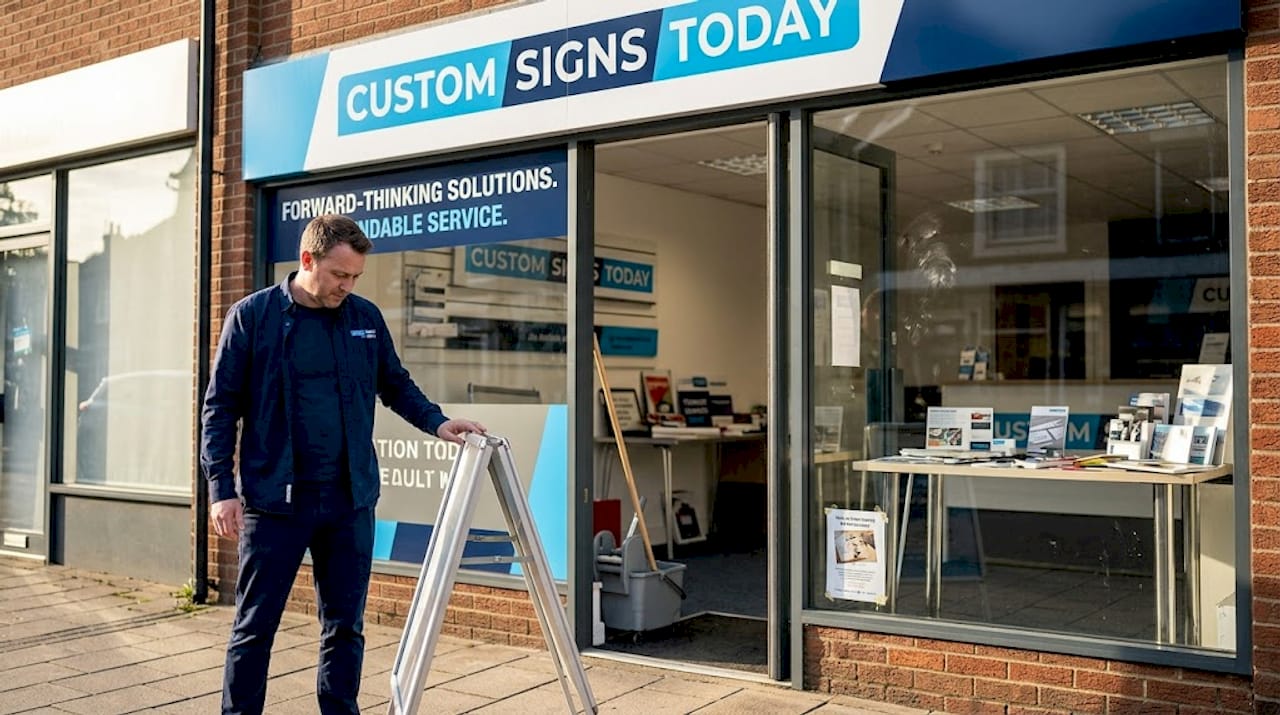
For brick-and-mortar businesses, signage is often the first touchpoint a potential customer has with your brand. A compelling, well-placed sign can pull people off the sidewalk or out of their car. Studies consistently show that a significant percentage of customers discover local businesses through physical signage, making it one of the most cost-effective local marketing tools available.
3. Message flexibility by audience or location
Custom signs let you tailor your message to the specific people passing a particular location at a particular time. A restaurant near a sports stadium can run game-day specials on a banner outside. A gym near a university can target students with back-to-school membership offers. This kind of custom signage step-by-step targeting is something generic, mass-produced signage simply cannot deliver.
4. Better return on investment compared to mass-market advertising
Mass-market advertising, like billboards on national networks or broad digital campaigns, costs significantly more per impression than targeted local signage. Custom signage that feels relevant to the viewer may outperform one-size-fits-all options, meaning you get more results per dollar spent when your message is precise.
Custom signs vs. mass-market advertising: ROI comparison
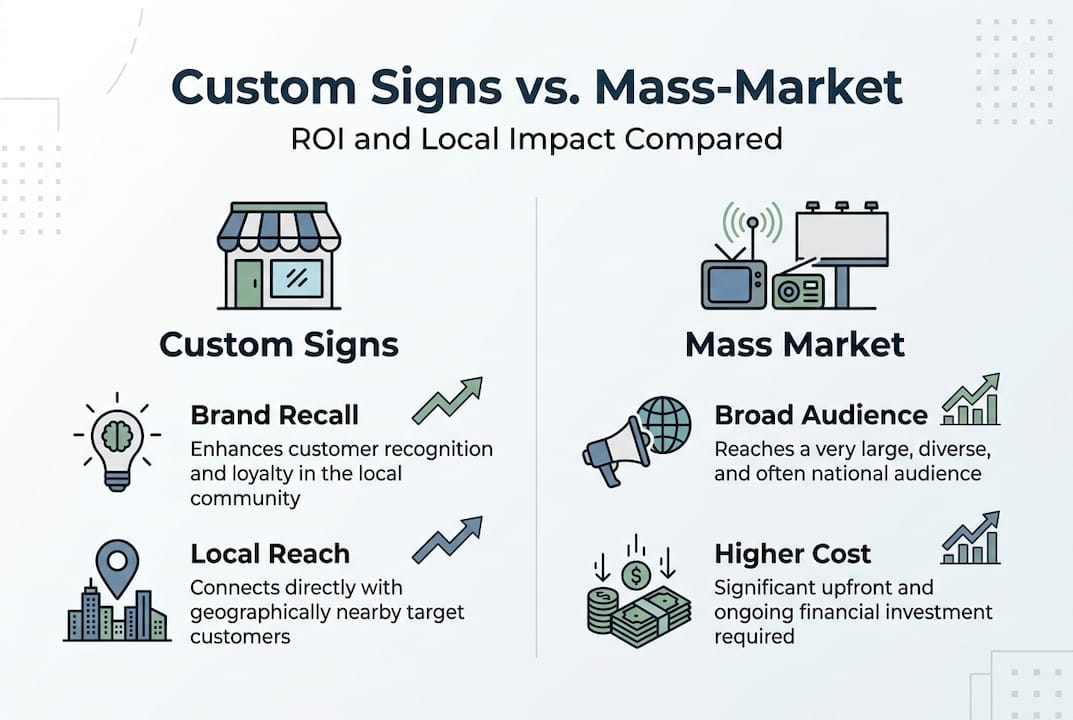
| Metric | Mass-market advertising | Custom local signage |
|---|---|---|
| Cost per impression | Higher | Lower |
| Local targeting precision | Low | High |
| Message customization | Limited | Unlimited |
| Ongoing cost after install | Recurring | Minimal |
| Audience relevance | Broad | Specific |
Here’s a numbered breakdown of the top reasons custom signs deliver better ROI for small and medium businesses:
- No recurring media buy costs after initial production and installation.
- Permanent placement in high-traffic areas generates daily impressions without additional spend.
- Targeted messaging reduces wasted impressions on uninterested audiences.
- Strong brand consistency across signage and other materials reinforces recognition.
- Seasonal and event-based updates keep messaging fresh without full redesign costs.
Pro Tip: Use your customer data to identify the most common reason people visit your business, then build that insight directly into your sign’s message. If 60% of your customers come in for a specific service, make that service the headline on your most visible sign.
When custom signs shine—and when digital wins
Custom signage delivers big advantages, but smart marketers know when to trust digital, too. Let’s weigh the best cases for each.
Honest marketing strategy means knowing your tools. Custom signs are powerful, but they’re not the right solution for every objective. Understanding when to use each channel makes your overall marketing smarter and more efficient.
Where custom signs are unbeatable:
- High-traffic physical locations. If thousands of people walk or drive past your location daily, a well-designed sign reaches more local prospects than most digital campaigns at a fraction of the cost.
- Grand openings and events. Nothing creates buzz and urgency like a large-format banner or window display announcing something new. The physical presence is impossible to scroll past.
- Brand awareness in a defined geographic area. For businesses that serve a specific neighborhood, town, or district, custom signage builds recognition in a way that geotargeted digital ads often can’t match in terms of repetition and memorability.
- Real estate and property marketing. A well-designed yard sign or property banner reaches exactly the right audience, people who are physically present in the neighborhood where the property is located. Comparing options for real estate sign comparison shows just how much format and placement matter.
Where digital marketing excels:
- Rapid testing and iteration. You can launch a digital ad, measure results within 24 hours, and adjust the message before lunch. Physical signage requires more lead time.
- Fine-tuned demographic targeting. Digital platforms let you target by age, income, interest, and behavior in ways physical signs cannot replicate.
- Supporting online sales funnels. If your primary conversion happens on a website or app, digital channels create a direct path from ad to purchase.
- Real-time optimization. Digital channels outperform signage for measurement, targeting, and real-time optimization, making them the stronger choice when speed and precision matter most.
“Digital marketing gives you dashboards and data. Custom signage gives you presence and permanence. The smartest businesses use both, but they don’t confuse one for the other.”
How to decide which channel fits your goal:
- If your goal is local brand awareness, custom signs win.
- If your goal is driving online purchases, digital wins.
- If your goal is announcing a time-sensitive local event, custom signs win.
- If your goal is reaching a specific demographic nationally, digital wins.
- If your goal is building daily impressions in a fixed location, custom signs win.
- If your goal is A/B testing multiple messages quickly, digital wins.
The most effective marketing strategies use custom signage and digital channels together, with each doing what it does best.
How to plan and design custom signs for maximum impact
With your marketing channels chosen, it’s time to make your custom signs work for you. Here’s how to do it right.
A great custom sign doesn’t happen by accident. It’s the result of a clear process that starts with your business goals and ends with a sign that your target audience notices, understands, and acts on. Here’s the step-by-step approach we recommend.
Step 1: Define your goal
Before you think about colors or fonts, answer one question. What do you want someone to do after seeing this sign? Walk in? Call a number? Remember your brand? Every design decision flows from this answer.
Step 2: Know your audience
Who passes this location? What are they looking for? What language, tone, and visual style resonates with them? A sign outside a college campus looks and reads differently than one outside a corporate office park. Personalized signage is effective when it aligns closely to the viewer’s context and needs, so the more precisely you understand your audience, the stronger your sign will perform.
Step 3: Choose the right format
Banners work for temporary promotions. Window graphics build brand presence. Vehicle wraps extend your reach beyond a fixed location. Yard signs are cost-effective for real estate and local events. The format should match the viewing distance, the duration of use, and the environment where the sign will live. Learning how to design property signage is a good starting point for understanding format decisions in detail.
Step 4: Design your message
Keep it to one core message. Use your brand colors and fonts. Make the most important information the largest element on the sign. Limit body copy to seven words or fewer for signs viewed from a moving vehicle. Use high-contrast color combinations so the sign is readable in all lighting conditions.
Step 5: Test before you commit
If possible, mock up the sign digitally and view it at the actual size and distance it will be seen. Ask someone unfamiliar with your business to read it and tell you what they think it’s saying. If they hesitate or misread it, revise before production.
Step 6: Deploy and evaluate
Track whether foot traffic, inquiries, or sales change after the sign goes up. For grand opening banners or promotional signs, compare results to periods without the sign. This data helps you refine future signage investments.
Common mistakes to avoid:
- Overloading the sign with too much information, which causes viewers to disengage.
- Ignoring local context, like using imagery or references that don’t resonate with the specific neighborhood.
- Poor placement that puts the sign where your target audience can’t see it clearly.
- Using low-contrast colors that make the sign hard to read outdoors.
Pro Tip: Pull your top three customer reviews and look for the exact words customers use to describe why they chose you. Use that language on your sign. Real customer vocabulary resonates far more than marketing jargon.
Why most small businesses underuse custom signs—and how to stand out
To cap it off, here’s a take most marketing guides skip: what separates forgettable signage from standout marketing assets.
Most small businesses treat signage as a one-time setup task. They order a sign when they open, install it, and never think about it again. That’s a missed opportunity hiding in plain sight. The businesses that get talked about, remembered, and recommended are the ones that treat their outdoor branding with signs as a living part of their marketing, updated seasonally, refreshed for events, and adjusted when their audience or offer changes.
The real reason most companies stick with default signage is simple: it feels like a low-priority task compared to running digital ads or posting on social media. But a sign that 500 people walk past every day delivers 182,500 impressions per year at zero ongoing cost. That’s not a low-priority channel. That’s an undervalued asset.
The contrarian lesson here is this: treat your signage the way you treat your social media calendar. Plan it, update it, and make it relevant to what’s happening right now for your audience. The businesses that do this consistently stand out in their neighborhoods in ways no digital ad can replicate.
Take your marketing further with custom signage solutions
Ready to put these insights to work? Here’s where to start with proven solutions.
At Custom Signs Today, we work with small and medium businesses every day to turn marketing goals into physical signage that performs. Whether you need a bold banner for a grand opening, vehicle wraps that take your brand on the road, or a complete suite of branded signs for a new location, we handle everything from concept to installation.
Explore our full range of custom sign services to see what’s possible for your business. Not sure where to start? Understanding custom sign quotes makes the process straightforward and transparent. Request a free consultation today and let’s build signage that works as hard as you do.
Frequently asked questions
What makes custom signs more effective than generic signs for marketing?
Custom signs feel more relevant to your audience, making them more persuasive and noticeable than one-size-fits-all signage. Personalization boosts effectiveness through perceived relevance, which is the key driver of persuasion in advertising.
Can custom signs really compete with digital marketing?
Custom signs excel in boosting local visibility and branding, but digital outperforms signage for precise targeting and real-time measurement. The smartest approach uses both channels strategically based on your specific goal.
How do I make my custom sign stand out?
Focus on local relevance, a single clear message, and strong visual contrast to capture attention and reinforce your brand identity at a glance.
Are custom signs worth the investment for small businesses?
Yes, especially when personalized. Personalized advertising outperforms generic approaches in persuasion, meaning a well-targeted custom sign can yield a stronger return by attracting the right customers and building lasting brand recognition.