TL;DR:
- Choosing the right signage material is crucial for durability, brand image, and cost-effectiveness over time.
- Proper environmental protection and ongoing maintenance significantly extend the lifespan of outdoor signs.
Every year, businesses throw away thousands of dollars replacing signs that should have lasted a decade. The culprit is rarely bad design or poor printing. It’s the wrong material for the job. Many business owners and event organizers assume that any sign will hold up outdoors, that vinyl banners perform the same in Arizona heat as they do in a Seattle drizzle, or that a budget-friendly coroplast sheet makes sense for a permanent storefront installation. These misconceptions quietly drain marketing budgets, damage brand credibility, and create operational headaches that compound over time. This guide cuts through the confusion, giving you a clear, practical framework for choosing signage materials that serve your brand and your bottom line.
Table of Contents
- Why material durability is critical in signage
- Most durable signage materials compared
- How environmental factors affect signage longevity
- Balancing durability, appearance, and sustainability
- Choosing the right material for your business or event
- The overlooked truth about signage durability
- Ready to upgrade your signage? Explore durable solutions
- Frequently asked questions
Key Takeaways
| Point | Details |
|---|---|
| Durability saves money | Investing in quality signage materials reduces replacements and long-term costs. |
| Material selection matters | Each signage material has unique strengths, weaknesses, and optimal uses. |
| Environment affects lifespan | Weather and usage conditions play a major role in how long your signage endures. |
| Balance priorities | A smart approach weighs durability, appearance, cost, and sustainability. |
| Holistic strategy wins | Installation, upkeep, and alignment with your brand maximize signage impact. |
Why material durability is critical in signage
Your sign is often the very first interaction a potential customer has with your brand. Before they read a word on your website, scroll your social media, or walk through your door, they see your sign. A faded, warped, or peeling sign doesn’t just look unprofessional. It communicates carelessness, which is a brand message you never intended to send.
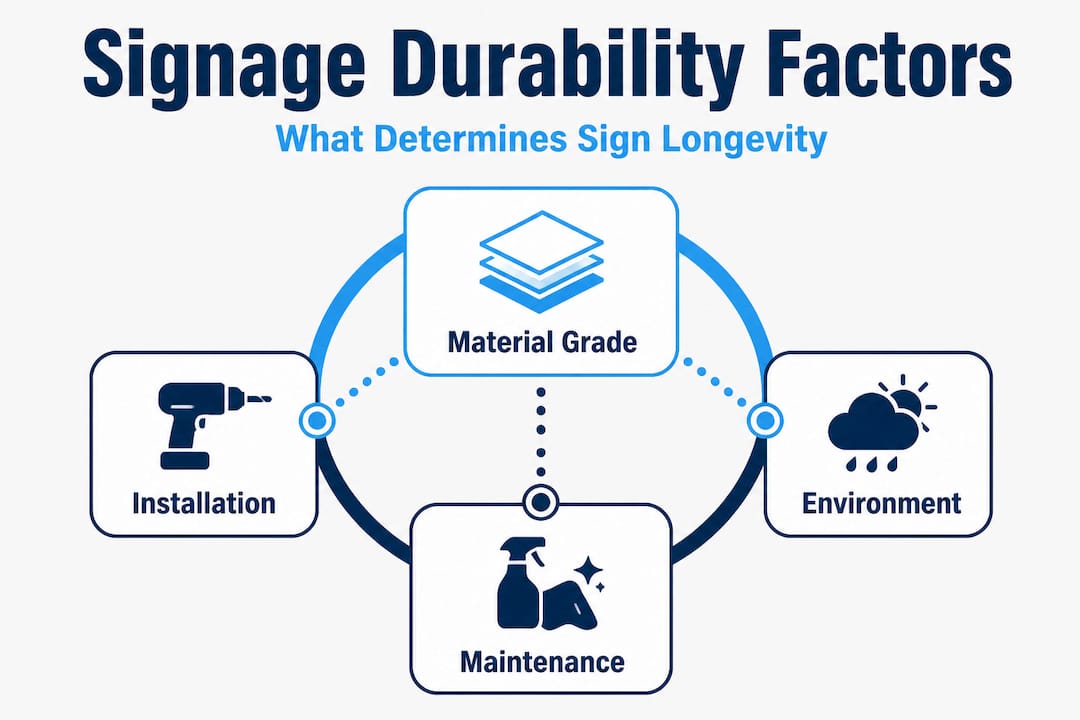
Why durable signage matters goes far beyond aesthetics. Durable signs last longer and maintain visibility, reducing long-term replacement costs significantly. A sign that costs $200 but needs replacing every year is far more expensive over five years than a $600 sign that holds up for a decade. That’s the total cost of ownership calculation most buyers skip.
Here’s what cheap or inappropriate materials actually cost your business:
- Repeated replacement purchases and installation labor
- Downtime when signage is damaged or removed for repair
- Brand inconsistency when signs look different after multiple reprints
- Lost customer trust from faded or distorted graphics
- Compliance failures when illegible signs violate local codes
Durable materials resist UV degradation, moisture intrusion, temperature fluctuations, and physical impact. They hold color longer, maintain structural integrity through wind and rain, and resist graffiti and surface vandalism better than softer alternatives.
“A sign that fails early doesn’t just cost you money. It costs you impressions, credibility, and the compounding value of consistent brand exposure.”
Pro Tip: Before approving a signage budget, calculate your total cost of ownership. Divide the sign price by its expected lifespan in years. A $300 aluminum sign lasting 10 years costs $30 per year. A $100 PVC sign lasting 2 years costs $50 per year. Durable almost always wins.
Most durable signage materials compared
Understanding material options makes it easier to choose what’s best for your application. Not all materials perform equally, and the right choice depends heavily on your installation environment, expected lifespan, and visual requirements.
Certain materials excel outdoors due to UV, wind, and water resistance, while others suit indoor environments where weather protection isn’t a factor. The table below breaks down the most common signage materials across the factors that matter most.
| Material | Durability | Best use | Environmental resistance | Ease of installation | Cost | Sustainability |
|---|---|---|---|---|---|---|
| Aluminum | Excellent | Permanent outdoor | Very high | Moderate | Medium to high | Recyclable |
| Dibond | Excellent | Outdoor/retail | Very high | Easy | High | Partially recyclable |
| PVC foam board | Good | Indoor/light outdoor | Moderate | Very easy | Low to medium | Limited |
| Coroplast | Fair | Temporary/events | Low | Very easy | Very low | Recyclable |
| Acrylic | Very good | Indoor/retail | Moderate | Moderate | High | Limited |
| Vinyl | Good | Banners/wraps | Moderate to high | Easy | Low | Limited |
When reviewing the outdoor signage options available today, a few patterns become clear. Aluminum and dibond dominate permanent outdoor installations for good reason. They resist rust, hold printed graphics through years of UV exposure, and can withstand wind loads that would buckle softer panels.
Quick wins for choosing the right material:
- Match material to location first. Outdoor permanent signs demand aluminum or dibond. Indoor retail displays can use acrylic or PVC foam board effectively.
- Consider handling frequency. Trade show signs that get rolled up, transported, and reinstalled dozens of times need flexible, durable vinyl or fabric, not rigid panels.
- Think about substrate weight. Heavy acrylic or aluminum panels need secure mounting hardware. Lightweight coroplast stakes easily into ground but won’t survive wind long-term.
- Factor in print quality expectations. Smooth aluminum and dibond surfaces hold fine-detail printing better than textured materials.
- Plan for reusability. Banners and fabric signs can be reused across multiple events. Single-use coroplast yard signs can be recycled after a campaign ends.
How environmental factors affect signage longevity
But even the best materials can underperform if environmental challenges aren’t managed. A dibond panel that performs flawlessly in a mild coastal climate may still degrade faster than expected if it’s installed facing southwest in a desert environment without UV-protective laminate.
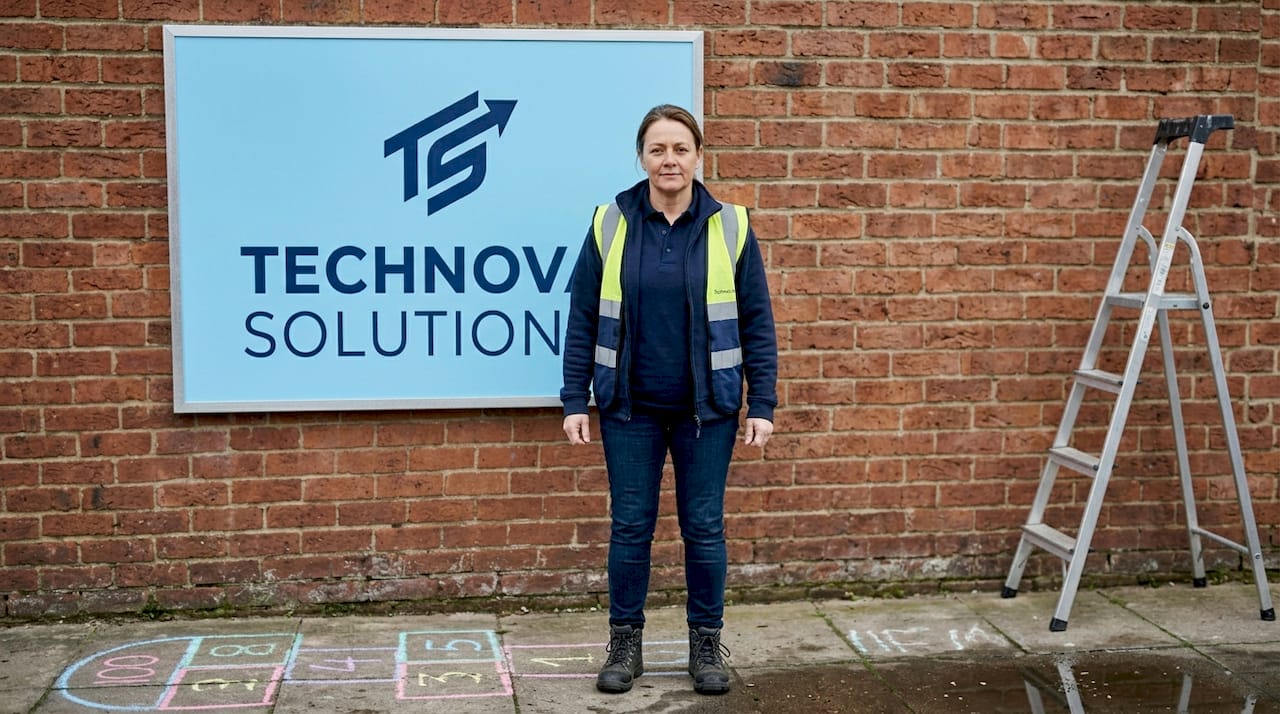
Outdoor signs in high-exposure locations require specific materials and treatments to avoid premature wear. Understanding what’s attacking your sign is the first step to protecting it.
| Environmental threat | Vulnerable materials | Recommended solutions |
|---|---|---|
| UV radiation | Vinyl, PVC, printed surfaces | UV-resistant laminate, UV-stable inks |
| Heavy rain/moisture | Coroplast edges, PVC foam board | Sealed edges, waterproof coatings |
| Wind stress | Large flat panels, lightweight boards | Wind slits in banners, anchored frames |
| Temperature extremes | Acrylic (cracking), vinyl (shrinking) | Expansion gaps, flexible mounting |
| Chemicals/pollution | Untreated aluminum, painted surfaces | Anodized finish, protective clear coat |
| Physical impact/vandalism | All materials | Anti-graffiti coatings, recessed installations |
The most overlooked risks for outdoor signage include:
- Standing water accumulation behind flat-mounted signs, which causes delamination and rust
- Thermal expansion gaps not accounted for in rigid panel installations, causing warping
- Coastal salt air, which accelerates corrosion even on treated aluminum
- Seasonal temperature cycling in northern climates, which cracks acrylic panels not designed for freeze-thaw conditions
- Bird activity, which sounds minor but causes real surface damage to unprotected sign faces
Pro Tip: Combine UV-resistant laminate with anti-graffiti coating on outdoor signs in urban settings. The laminate protects color and print clarity from sun damage, while the anti-graffiti coating makes cleaning easy and protects the surface from chemical cleaners. It’s a two-layer investment that can add years to your sign’s life.
Smart maintenance also plays a huge role. Maintaining outdoor signs with regular cleaning and damage inspections catches problems early before small surface issues become full replacements. Pairing good materials with good upkeep habits creates a system that consistently outperforms either element alone.
Businesses operating in environmentally challenging locations, such as marinas, industrial zones, and mountain areas, should also look into sustainable signage materials that incorporate recycled components without sacrificing protective performance.
Balancing durability, appearance, and sustainability
Your decision isn’t just about material. It’s strategic to your brand and values. Some clients get seduced by flashy, backlit acrylic signs with no regard for how they’ll hold up in a covered outdoor installation. Others choose the cheapest option to save money upfront and end up replacing signs twice in three years.
Sustainable materials can offer both durability and reduced environmental impact, supporting brand responsibility alongside practical performance. As consumer awareness of environmental issues grows, your signage choices can reinforce your brand’s values in a tangible, visible way.
“Nearly 70% of consumers say they prefer brands that demonstrate sustainable practices in their operations, including physical materials and retail environments.”
Here’s how to make a balanced selection that serves all three priorities: longevity, visual impact, and environmental responsibility.
- Define your primary goal. Is this sign permanent or temporary? Interior or exterior? A campaign-driven event installation or a long-term brand fixture? Your answer immediately narrows the field of appropriate materials.
- Rank your priorities explicitly. Most clients try to optimize everything at once. Force yourself to rank: durability first, appearance second, cost third, sustainability fourth. Or whatever order fits your situation. A ranked priority list prevents paralysis and regret.
- Research material certifications. Look for materials with environmental certifications such as FSC-certified substrates or PVC-free options. Some vendors offer eco-friendly signage options that perform comparably to conventional materials.
- Match visual ambitions to surface capability. If you want photorealistic graphics or fine-detail logos, choose a smooth, printable substrate like dibond or aluminum composite rather than a textured or porous surface that degrades print resolution.
- Plan for end-of-life. Aluminum is fully recyclable. Coroplast can often be collected by recycling programs. PVC is harder to recycle. Factoring in disposal can make a meaningful difference to your environmental footprint over time.
The balance isn’t always perfect. A fully sustainable, maximum-durability, photorealistic sign at the lowest cost doesn’t exist. But making conscious trade-offs based on your actual priorities produces far better outcomes than leaving the decision to chance or defaulting to the cheapest quote.
Choosing the right material for your business or event
With your priorities in mind, you’re ready to make a smart selection. The process doesn’t need to be complicated, but it does need to be systematic. Proper material selection supports both branding objectives and practical demands like portability or reusability.
Use this framework to guide your decision. Ask yourself:
- Where will the sign be installed? Indoor, outdoor, semi-covered, rooftop, vehicle, window?
- How long does it need to last? One weekend event vs. five years on a building facade demands entirely different solutions.
- Who is the audience? A casual passerby on a street needs high contrast and large text. A trade show attendee may be reading from close range with time to absorb detail.
- Will it be moved or reused? Reusable signs need durable materials that handle repeated handling, transport, and reinstallation.
- What are your brand colors and print complexity? Complex gradients and fine typography require smooth, high-quality substrates.
- Are there local regulations? Some municipalities restrict sign materials, sizes, or illumination. Check zoning and permit rules before finalizing material choices.
Common pitfalls in material selection include choosing coroplast for any installation expected to last more than 90 days outdoors, using foam PVC board in direct sunlight without UV protection, and selecting acrylic for outdoor installations in climates that regularly freeze. Each of these mistakes generates unnecessary expense and brand headaches.
The exterior signage basics guide provides additional context on common regulatory considerations and installation standards that affect material choice, particularly for permanent commercial installations.
Pro Tip: Before finalizing your material order, ask your signage vendor for environment-specific recommendations. A good vendor won’t just sell you what you ask for. They’ll tell you what will actually hold up in your specific conditions, and that conversation can save you from a costly mistake.
The overlooked truth about signage durability
Here’s something that doesn’t get said enough in signage conversations: material grade is only one third of the durability equation. We’ve seen premium aluminum dibond signs fail in 18 months because of poor installation hardware that allowed water to pool behind the panel. We’ve also seen budget vinyl banners outlast their expected lifespan by years because they were installed in a sheltered location, cleaned regularly, and stored properly when not in use.
The biggest missed opportunity for long-term ROI isn’t choosing a better material. It’s treating your signage as a managed system rather than a one-time purchase. That means pairing the right material with the right mounting solution for your specific environment, scheduling regular cleaning and inspections, and storing temporary signs properly between uses.
Sign maintenance insights consistently show that maintenance schedules extend sign life more reliably than material upgrades alone. The compounding effect of regular care, correctly installed hardware, and appropriate placement creates signage that outlasts comparable installations that were simply “better materials, poorly managed.”
“The brands that consistently win at signage aren’t the ones who spend the most on materials. They’re the ones who treat their signs as brand assets that deserve ongoing attention.”
The practical takeaway: build a signage maintenance protocol into your operations. Schedule quarterly visual inspections. Budget for cleaning supplies and minor repairs. Keep records of installation dates and material specs so you can anticipate replacement cycles before they become emergencies. Signage durability is a system, not a spec sheet.
Ready to upgrade your signage? Explore durable solutions
Armed with clarity on materials, environmental factors, and strategic priorities, your next step is finding a partner who can translate that knowledge into signage that actually performs.
At Custom Signs Today, we produce custom signs built for the conditions they’ll actually face, whether that’s a permanent outdoor installation, a high-traffic retail environment, or a multi-day outdoor event. Our team evaluates your specific location, brand requirements, and lifespan goals to recommend the right substrate, print process, and protective treatments. Explore our range of face change signs for versatile, long-lasting display solutions, or request a custom sign quote and get expert guidance matched to your exact situation. Building signage that lasts starts with the right conversation.
Frequently asked questions
Which signage material is most weather resistant?
Aluminum is a leading choice for weather-resistant outdoor signs, and dibond (aluminum composite) offers similarly exceptional protection against rain, UV, wind, and temperature extremes.
How long do outdoor signs made from durable materials typically last?
Properly maintained durable signage can achieve a lifespan of 5 to 10 years or more, depending on material quality, installation method, and exposure conditions.
Are eco-friendly signage materials as durable as traditional options?
Sustainable materials can offer durability comparable to traditional signage materials, especially when selected for the appropriate application and treated with UV-protective or weatherproof coatings.
What is the main cause of sign damage outdoors?
UV rays, wind, and precipitation are the primary threats to outdoor signage, with UV degradation being the most consistent cause of fading and print deterioration over time.